


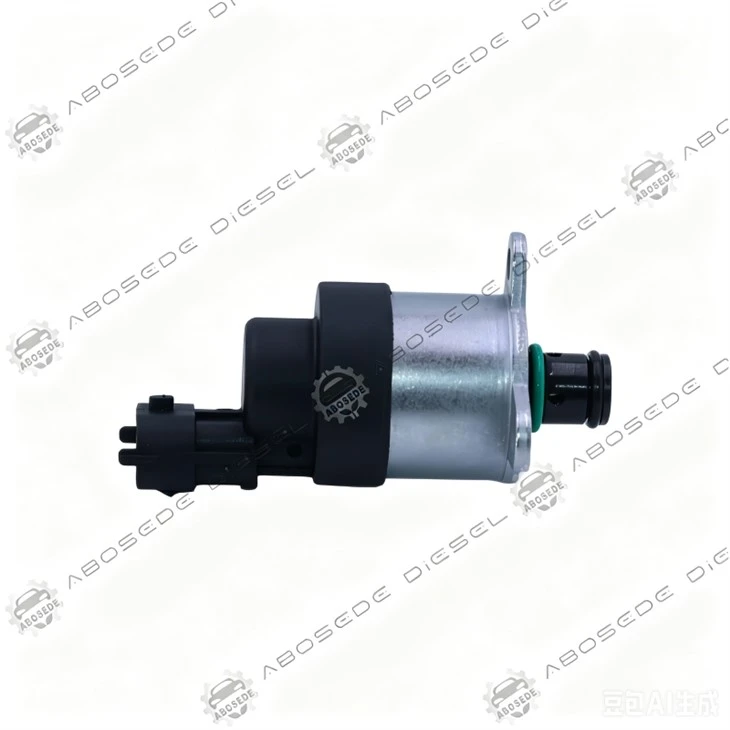

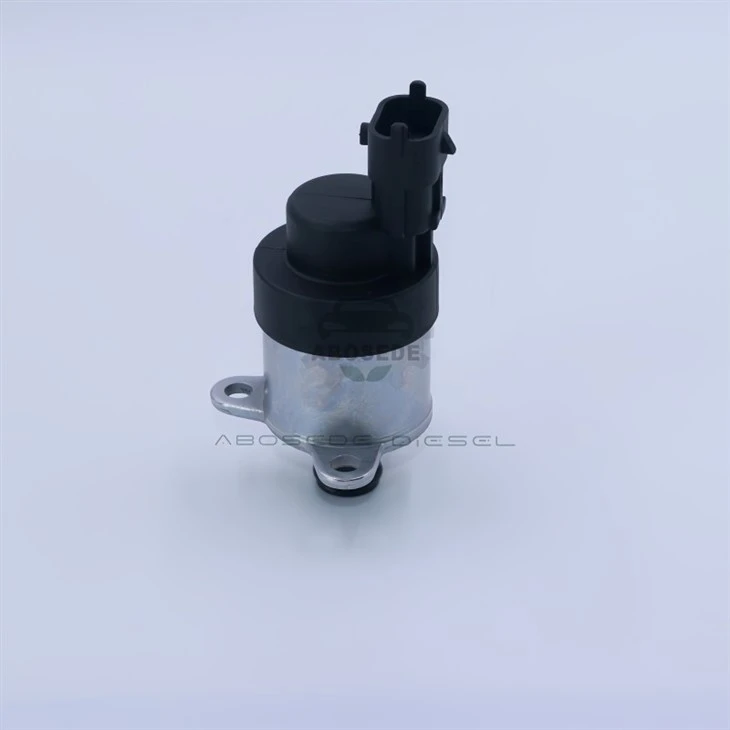
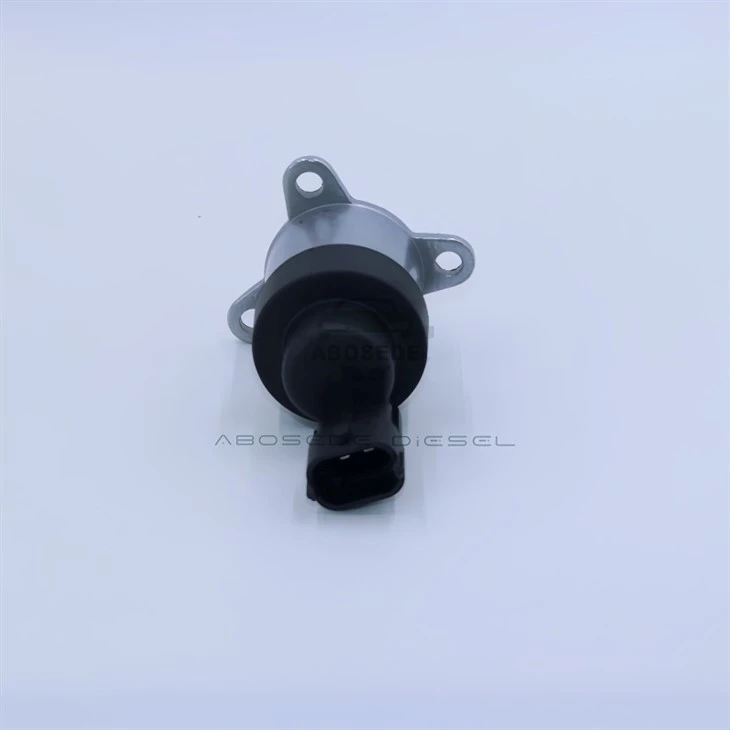
Bosch 0928400619 – The Metering Valve That Sustains Dither Frequency Integrity For Consistent Friction Breaking
1. Product:0928400619
2. Compatible Equipment: Diesel Fuel Injection Systems
3. Manufacturer: Aftermarket OEM Replacement
4. Condition: Brand New, Fully Tested
5. Origin: ABOSEDE Diesel
6. Shipping period: 3-5 business days
7. Payment terms: T/T, Western Union, PayPal
- Fast Delievery
- Quality Assurance
- 24/7 Customer Service
Product Introduction
In a common-rail system, the metering valve receives a PWM signal that includes a superimposed dither frequency - a high-frequency oscillation that prevents the spool from sticking to the sleeve by breaking the static friction. This dither frequency is not arbitrary; it is selected to match the valve's mechanical resonance characteristics, ensuring that the spool moves freely at all times. If the dither frequency changes - due to electrical noise, wiring resistance, or ECU drift - the static friction is no longer effectively broken, and the spool response becomes inconsistent. The 0928400619 is engineered with a coil and magnetic circuit that maintain a stable impedance across the dither frequency range, ensuring that the ECU's dither signal is transmitted to the armature without distortion. It is a valve that vibrates at the right frequency, every time.
The Dither Concept - Why Frequency Matters for Friction Breaking
The PWM signal that controls the metering valve is not a simple on-off signal - it includes a high-frequency component, typically 130-180 Hz, that is superimposed on the duty cycle. This dither frequency creates a small oscillation of the armature - typically 2-5 µm - that prevents the spool from sticking to the sleeve. The dither is essential for consistent spool response because the static friction is highest when the spool is stationary, and the dither reduces it to a lower, more consistent value. However, the dither is only effective if it is at the correct frequency - the frequency that matches the valve's mechanical resonance. If the frequency is too low, the oscillation amplitude is insufficient to break the static friction; if it is too high, the armature cannot follow the signal. The 0928400619 uses a coil with a specific inductance that is tuned to the dither frequency, and a magnetic circuit that provides the correct damping, ensuring that the armature responds to the dither signal at all temperatures.
How the Dither Frequency Integrity Is Maintained
The dither frequency integrity is maintained by a combination of coil inductance and magnetic circuit damping. The coil in the 0928400619 has an inductance of 4.5 mH at 1 kHz - a value that is selected to resonate with the dither frequency of the ECU. The magnetic circuit is designed to provide a damping ratio of 0.5 - a value that ensures the armature follows the dither signal without oscillating. The coil is wound with a high-temperature wire that maintains its inductance across the full temperature range, and the magnetic circuit is made from a material that has a stable permeability. The result is a valve that responds to the dither signal consistently, regardless of the temperature or the voltage.
Failure Patterns - When Dither Integrity Is Lost
The dither frequency integrity can be lost if the coil inductance changes - for example, if the coil is damaged or if the magnetic circuit is degraded. A change in inductance shifts the resonance frequency, and the armature no longer responds to the dither signal effectively. The first symptom is often a rough idle - the static friction is not broken, and the spool sticks, causing the idle speed to fluctuate. The genuine 0928400619 uses a coil that is protected by a high-temperature encapsulation, and the magnetic circuit is made from a material that is stable over the service life, ensuring that the dither integrity is maintained.
Installation – The Dither Check
Installing the 0619 is similar to other CP3 valves - clean the mounting surface, replace the O-ring and backup ring, torque the retaining nut to 24 Nm ± 2 Nm. However, there is a specific verification step: perform a dither check after installation. Using an oscilloscope, measure the voltage across the metering valve terminals at idle. The waveform should show the PWM signal with the superimposed dither frequency - the dither should be clearly visible as a small oscillation on the pulse. If the dither is not visible, the wiring may have high resistance, or the ECU's dither circuit may be faulty. The check is a quick electrical test that ensures the valve is receiving the correct dither signal.
Frequently Asked Questions
Q1: How can I tell if my valve's dither integrity is compromised without special equipment?
→ Listen to the engine at idle - a rough or hunting idle is often the first sign of lost dither integrity. Also, if the engine idles smoothly when the air conditioning is off but rough when it is on, the dither may not be working effectively.
Q2: Can I use the 0928400619 on a Duramax that originally used the 0633?
→ Yes, in most CP3.2 applications. The 0619 has the dither frequency tuning that is particularly valuable for idle stability, and it is a direct replacement for the 0633 in many applications. Always verify compatibility with the engine's calibration.
Q3: Why does my engine have a rough idle that improves when I apply a small throttle?
→ This is a classic symptom of lost dither integrity - the spool is sticking, and a small throttle movement breaks the stiction. The 0619 is designed to prevent this by maintaining the dither frequency integrity.
Q4: What is the most common cause of dither integrity loss in this valve?
→ Coil degradation - the inductance changes with age, shifting the resonance frequency. The 0619 uses a high-temperature wire to resist this degradation, but if the valve has been overheated, the inductance may have changed.
Q5: I replaced the valve but the rough idle persists - is the valve defective?
→ Check the wiring harness for high resistance - a high-resistance connection can attenuate the dither signal. Also, check the ECU's dither output with an oscilloscope - the dither may not be present. The valve is rarely the cause if the new valve does not fix the issue.
Q6: Does the dither frequency change with the engine speed?
→ The dither frequency is typically fixed by the ECU - it is independent of the engine speed. The 0619 is tuned to the ECU's dither frequency, which is typically in the 130-180 Hz range.


Flexible Payment Methods for Your Convenience
To make your purchasing experience smooth and easy, we offer a variety of secure payment options:

Bank Transfer
Supports multiple currenciesand bank payment methods.

Western Union
Quick and global money transfers.

PayPal
Safe and convenient online payment.

Alibaba
Enjoy extra protection with trusted Alibaba transactions.
We're here to make your order process worry-free - choose the payment method that works best for you!
Shipping Made Simple

Customer reviews

Hot Tags: bosch 0928400619 – the metering valve that sustains dither frequency integrity for consistent friction breaking, China bosch 0928400619 – the metering valve that sustains dither frequency integrity for consistent friction breaking manufacturers, suppliers, factory, 0445120066, 0445120067, Bosch CR Injectors, bosch valve, Bosch Volvo Deutz Renault, F00BC80045
You Might Also Like
-

Bosch 0928400738 – The Metering Valve With Optimised...
-

Bosch 0928400756 – The Metering Valve With Controlle...
-

Bosch 0928400806 – The Metering Valve That Controls ...
-

Bosch 0928400791 – The Metering Valve That Suppresse...
-

Bosch 0928400699 – The Metering Valve That Resists P...
-

Bosch 0928400664 Fuel Metering Valve | OEM Suction S...
