


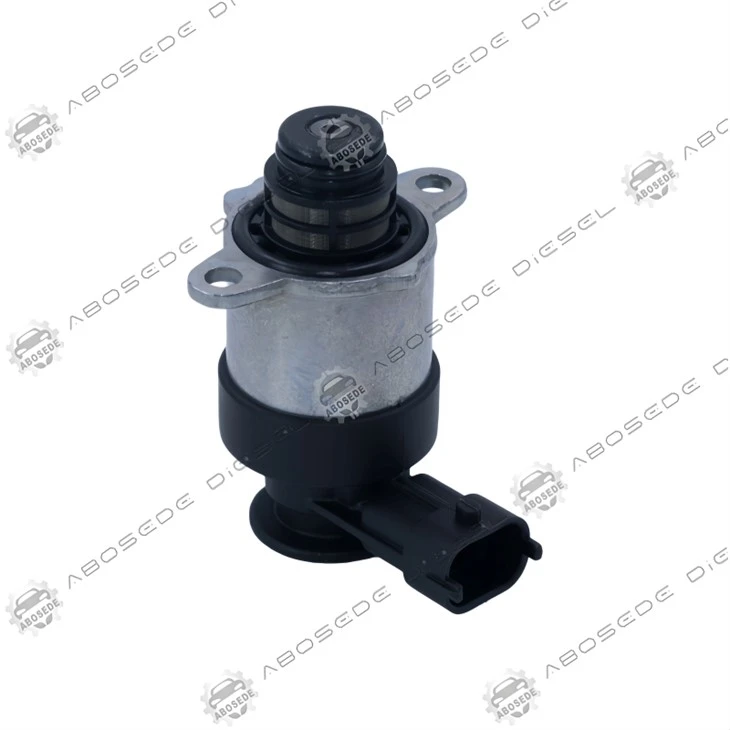

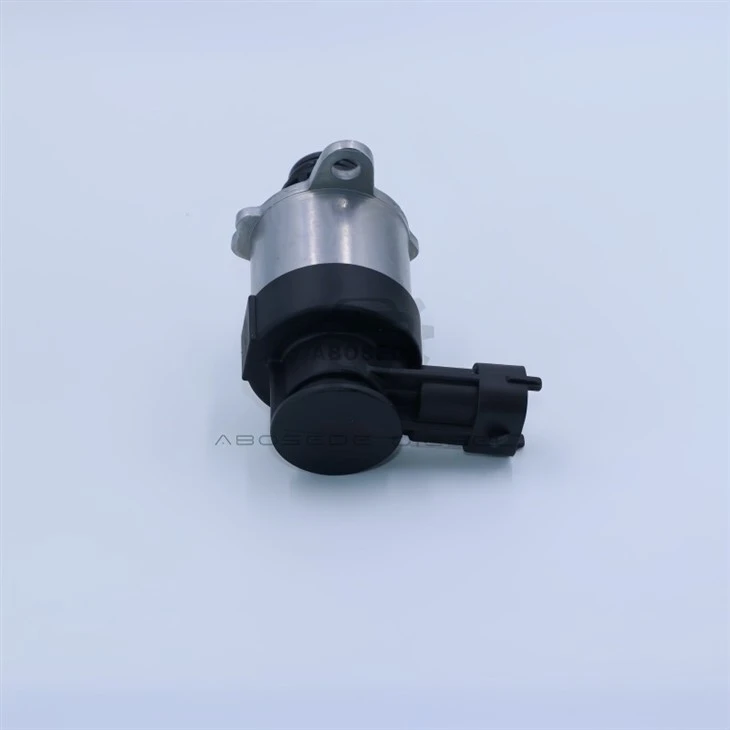
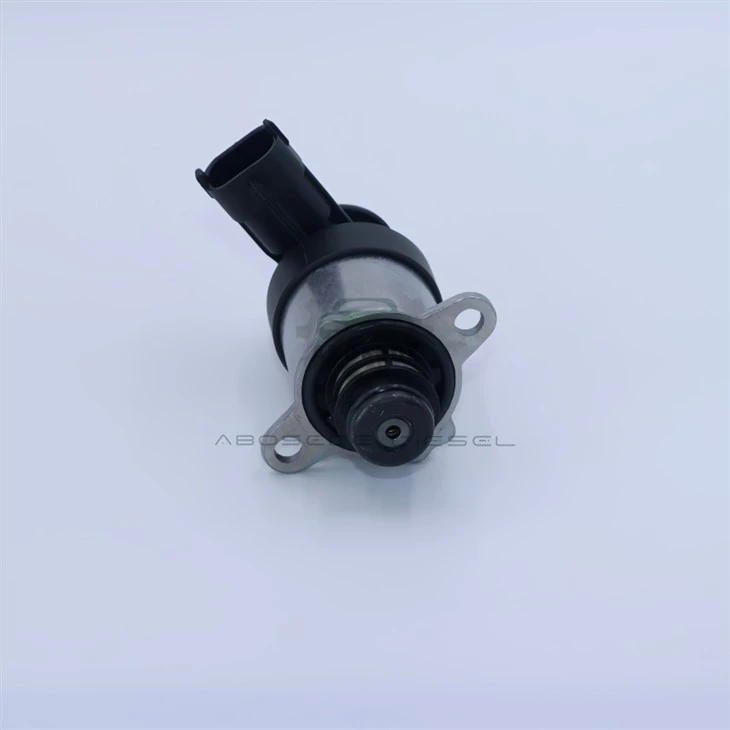
Bosch 0928400756 – The Metering Valve With Controlled Armature Damping For Consistent Closing Behaviour
1. Product:0928400756
2. Compatible Equipment: Diesel Fuel Injection Systems
3. Manufacturer: Aftermarket OEM Replacement
4. Condition: Brand New, Fully Tested
5. Origin: ABOSEDE Diesel
6. Shipping period: 3-5 business days
7. Payment terms: T/T, Western Union, PayPal
- Fast Delievery
- Quality Assurance
- 24/7 Customer Service
Product Introduction
When the ECU commands the metering valve to close, the armature does not simply stop - it decelerates, and the deceleration rate is determined by the damping forces acting on it. The armature must close smoothly to prevent a pressure spike, but it must also close quickly enough to respond to the next duty cycle command. If the damping is inconsistent - varying with temperature, fuel viscosity, or wear - the closing behaviour changes, and the ECU's timing calculation is no longer accurate. The 0928400756 is engineered with a controlled armature damping that ensures the closing behaviour is consistent across the full operating range. It is a valve that closes the same way every time, regardless of the operating condition.
The Damping Concept - Why Closing Behaviour Matters
The armature in a metering valve is not a simple on-off device - it moves with a specific velocity profile determined by the forces acting on it. When the ECU de-energises the coil, the spring pushes the armature to the open position, and the armature decelerates as it approaches the stop. This deceleration is caused by the damping forces - the hydraulic resistance from the fuel, the friction from the sliding surfaces, and the back-EMF from the coil. If the damping forces change, the deceleration rate changes, and the armature's closing time changes. The ECU's injection timing calculation assumes a specific closing time, and if the actual closing time is different, the fuel delivery is incorrect. The 0928400756 is designed with a damping system that maintains a consistent deceleration rate, ensuring that the armature closes at the same time after each de-energisation.
How the Damping Is Controlled
The damping in the 0928400756 is controlled by two mechanisms: hydraulic damping from the fuel and eddy-current damping from the magnetic circuit. The hydraulic damping is provided by a small clearance between the armature and the guide - the clearance is sized so that the fuel is displaced at a controlled rate as the armature moves. The eddy-current damping is provided by the magnetic circuit - as the armature moves in the magnetic field, it induces currents that oppose the movement. Both damping mechanisms are calibrated to provide consistent deceleration across the operating range. The clearance is maintained by precision grinding, and the magnetic circuit is designed to provide a stable eddy-current damping.
Failure Patterns - When the Damping Is Lost
The armature damping can be lost if the armature-to-guide clearance increases due to wear, or if the magnetic circuit is degraded. An increase in clearance reduces the hydraulic damping, allowing the armature to close faster. A degraded magnetic circuit reduces the eddy-current damping, also allowing the armature to close faster. The first symptom is often a pressure spike on deceleration - the armature closes too quickly, and the fuel flow is cut off abruptly, causing a pressure surge. The genuine 0928400756 uses a hardened guide and a magnetic circuit that is designed to resist degradation, ensuring that the damping is maintained over the valve's service life.
Installation – The Closing Behaviour Verification
Installing the 0756 is similar to other CP4 valves - clean the mounting surface, replace the O-ring and backup ring, torque the retaining nut to 23 Nm ± 2 Nm. However, there is a specific verification step: perform a deceleration test after installation. With the engine at a steady speed, release the throttle suddenly and monitor the rail pressure. The pressure should drop smoothly without a spike or a slow decay. If the pressure spikes, the closing speed may be too high - indicating a lack of damping. If the pressure decays slowly, the closing speed may be too low - indicating excessive damping. The deceleration test is a quick functional check that can be performed on a test drive.
Frequently Asked Questions
Q1: How can I tell if my valve's damping is incorrect without special equipment?
→ Perform a deceleration test - release the throttle and monitor the rail pressure. If the pressure spikes, the damping is too low; if the pressure decays slowly, the damping is too high. A well-functioning 0756 will show a smooth pressure decay.
Q2: Can I use the 0928400756 on a VW Touareg that originally used the 0806?
→ Yes, in most CP4.2 applications. The 0756 has the controlled damping that is particularly valuable for transient performance, and it is a direct replacement for the 0806 in many applications. Always verify compatibility with the engine's calibration.
Q3: Why does my engine have a pressure spike on deceleration but stable pressure during acceleration?
→ This is a classic symptom of insufficient damping - the armature closes too quickly on deceleration, causing a pressure spike. The 0756 is designed to provide the correct damping to prevent this.
Q4: What is the most common cause of damping loss in this valve?
→ Wear on the armature guide - as the clearance increases, the hydraulic damping decreases. The 0756 uses a hardened guide to resist this wear, but if the fuel contains abrasive particles, the wear can be accelerated. Regular fuel filter changes are the most effective prevention.
Q5: I replaced the valve but the pressure still spikes on deceleration - is the valve defective?
→ Check the rail pressure sensor for a slow response - a slow sensor can cause the ECU to apply a correction that is delayed, resulting in a pressure spike that is not the valve's fault. Also, check the injector response times - slow injectors can cause a pressure spike that appears to be from the metering valve.
Q6: Does the damping change with the fuel temperature?
→ Yes, the fuel viscosity changes with temperature, which changes the hydraulic damping. The 0756 is designed to maintain consistent damping across the full temperature range through a combination of the clearance and the eddy-current damping, which is temperature-independent.


Flexible Payment Methods for Your Convenience
To make your purchasing experience smooth and easy, we offer a variety of secure payment options:

Bank Transfer
Supports multiple currenciesand bank payment methods.

Western Union
Quick and global money transfers.

PayPal
Safe and convenient online payment.

Alibaba
Enjoy extra protection with trusted Alibaba transactions.
We're here to make your order process worry-free - choose the payment method that works best for you!
Shipping Made Simple

Customer reviews

Hot Tags: bosch 0928400756 – the metering valve with controlled armature damping for consistent closing behaviour, China bosch 0928400756 – the metering valve with controlled armature damping for consistent closing behaviour manufacturers, suppliers, factory, Bosch CR Injectors, Bosch Volvo Deutz Renault, Diesel Control Valve, F00BC80045, F00RJ01479, Fuel Injector Valve
You Might Also Like
-

Bosch 0928400574 – The High-Speed Metering Valve Tha...
-

0928400493 Bosch Fuel Metering Valve – Injector Back...
-

0928400473 Bosch Fuel Metering Valve – Reliable Low-...
-

0928400746 Bosch Fuel Metering Valve – Predictable W...
-

Bosch F00BC80045 Fuel Metering Valve – Precision Rai...
-

Fuel Rail Pressure Sensor 45PP3-5 (aka 45PP35 / R45P...
