


The CAT Nozzle Manufacturer!
Abosede is a leading company in the automotive parts industry, specializing in the development, production, and sales of diesel injection system components, including fuel pumps, injector assemblies, spare parts, and repair kits.
-
![CAT C18 Injector Nozzle – Power Density Management Through Micrometric Fuel Metering]()
-
![CAT C15 Injector Nozzle – Spray Geometry And Flow Coefficient For Optimized Combustion]()
-
![CAT C9 Injector Nozzle – Flow Stability And Spray Pattern Integrity For HEUI Combustion]()
-
![CAT C7 Injector Nozzle (Oil Head) – Precision Spray Pattern For HEUI Combustion Efficiency]()
-
![CAT 3126 Injector Nozzle (Oil Nozzle Tip) — Restore HEUI Spray Control For 3126B / 3126E Work Engines]()
-
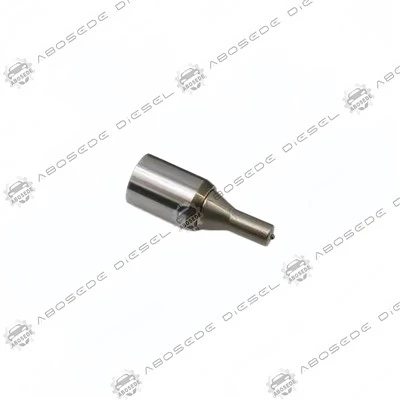
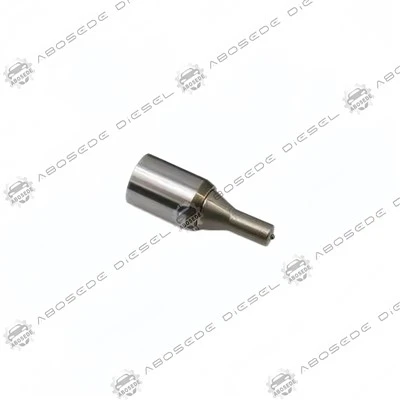
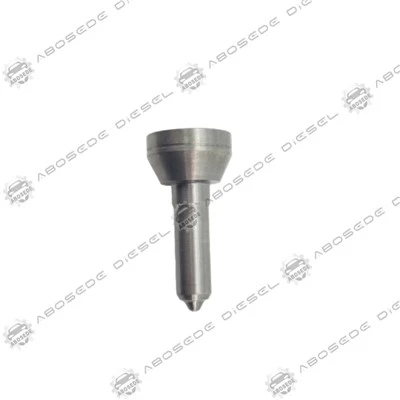
![Fuel Injector Nozzle 8N8796 For Caterpillar 3306]()
Fuel Injector Nozzle 8N8796 For Caterpillar 3306
Add to Inquiry



Why choose us
Rich experience
Our company boasts a highly skilled technical team, covering R&D, production, quality control, marketing, and customer service.
Product application
Our products are widely used in commercial vehicles, construction machinery, and diesel-powered equipment, reaching customers in multiple countries and regions worldwide and earning their trust and recognition.
Customized High-Pressure Solutions
We offer OEM customization services for specialized high-pressure pumps and AdBlue® injection systems, tailored to meet unique customer requirements for emissions compliance, power delivery, and special applications.
Sales market
Our global presence includes in Brazil, Ecuador, Peru, Colombia, Turkey, UAE, Iran, Morocco, Egypt, Lebanon, and Russia ,etc. helping us understand diverse market needs.
|
Product Category |
Fuel Injector Nozzle |
|
Part Number |
8N8796 |
|
Applicable models |
Caterpillar 955L 966C 977L D330C D333C D4D D6D 3306 |
|
Fuel Type |
Diesel |
|
Pressure Rating |
High-Pressure Common Rail (HPCR) System |
|
Packaging Details |
Neutral Packaging (If the quantity is large, it can be made according to customer's requirement) |
|
Supply capacity |
3000 pieces per month |
|
Place of origin |
China |

Compatible Caterpillar Engine Models
The 8N8796 Fuel Injector Nozzle is specifically designed for the following Caterpillar engines:
- 3304– Used in industrial and marine applications
- 3306 – Popular in trucks, generators, and heavy equipment
- D330C – Found in older Caterpillar machinery
- D333C – Commonly used in marine and industrial engines
This nozzle is also compatible with various Caterpillar equipment, including:
- Excavators
- Loaders
- Generators
- Marine propulsion systems
Types of fuel injector nozzles
Single-hole nozzles: These nozzles have a single small hole through which fuel is delivered. They produce a fine mist of fuel droplets and are typically used in low- to medium-power engines.
Multi-hole nozzles: These nozzles have multiple small holes through which fuel is delivered. They produce a wider and more intense spray of fuel droplets and are typically used in high-power engines.
Spray-cone nozzles: These nozzles are designed to produce a cone-shaped spray pattern of fuel droplets. They are typically used in diesel engines, as they help to improve the mixing of fuel and air, which can improve combustion efficiency.
Fan-shaped nozzles: These nozzles are designed to produce a fan-shaped spray pattern of fuel droplets. They are typically used in gasoline engines, as they help to improve the distribution of fuel, which can improve combustion efficiency.
Pintle nozzle: These nozzles have a small pin that can be moved axially by a solenoid actuator, which controls the fuel flow by the time of opening and closing the pintle. They are used to provide precise and fine control of the fuel delivery rate, as well as to prevent leakage and dripping when closed.
Split-injector nozzles: These nozzles have multiple orifices, each dedicated to a specific engine cycle. They are commonly used in multi-cylinder engine and helps to precisely control fuel delivery to each cylinder.
Checking injection nozzles
Compare the injected fuel quantity
Using a cylinder comparison measurement and simultaneous exhaust measurement, the injected fuel quantity can be compared based on the drop in speed and the HC and CO values for the individual cylinders. In the best case, the values will be identical for all cylinders. If there are major deviations between the values, it may be that not enough fuel is being injected (a large quantity of unburnt fuel = high HC and CO values, whereas little unburnt fuel = low HC and CO values). The cause may be a faulty injection valve.
Read off and compare the voltage and the pulse duration
The injection signal can be depicted using an oscilloscope. For this purpose, connect the measurement line to the signal line, and the other line to a suitable ground pin. With the engine running, it is possible to read off the voltage and the pulse duration (opening time) from the signal pattern. When opening the throttle valve, the pulse duration must increase during the acceleration phase, and with a constant engine speed (around 3000 RPM) it must fall back to, or just below, the idle value. The results of individual cylinders can be compared with each other, and this may provide an indication of potential faults, e.g. a poor voltage supply.
Measure the fuel pressure and check the intake and exhaust systems for leaks
Other important tests are measuring the fuel pressure, in order to identify other components that may be faulty (fuel pump, fuel filter, pressure regulator), and checking the intake and exhaust systems for leaks, to prevent false measurement results. If the sensor has a 2-pin connector, it is most likely to be an inductive sensor. In this case, the internal resistance, a potential short circuit to frame, and the signal can be determined.
To do this, remove the plug connection and check the internal resistance of the sensor. If the internal resistance value is 200 to 1,000 ohms (depending on the reference value), the sensor is OK. If the value is 0 ohms, there is a short circuit, and in the case of M Ohm there is a break. The test for a short circuit to frame is carried out using the ohmmeter from a connection pin to vehicle ground. The resistance value must tend toward infinity. The test using an oscilloscope must result in a sinus signal of sufficient strength. In the case of a Hall generator, only the signal voltage in the form of a square wave signal and the supply voltage are to be tested. This must result in a square wave signal depending on the engine speed. We should repeat at this point that the use of an ohmmeter can destroy the Hall generator.
Shipping Made Simple
We understand that every customer has unique shipping needs. That's why we offer:

We're professional cat nozzle manufacturers and suppliers in China, specialized in providing high quality customized service. We warmly welcome you to wholesale discount cat nozzle for sale here from our factory.
cat nozzle