


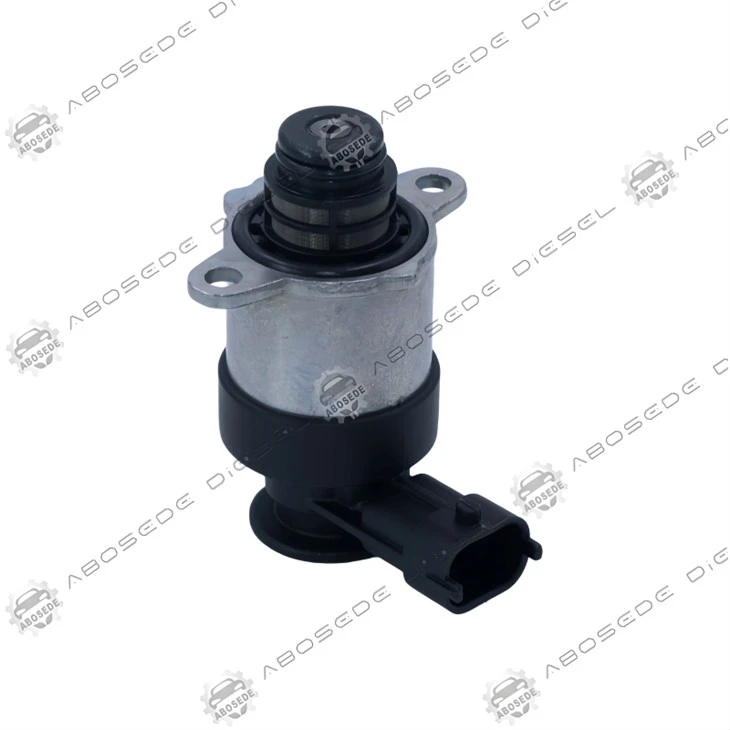

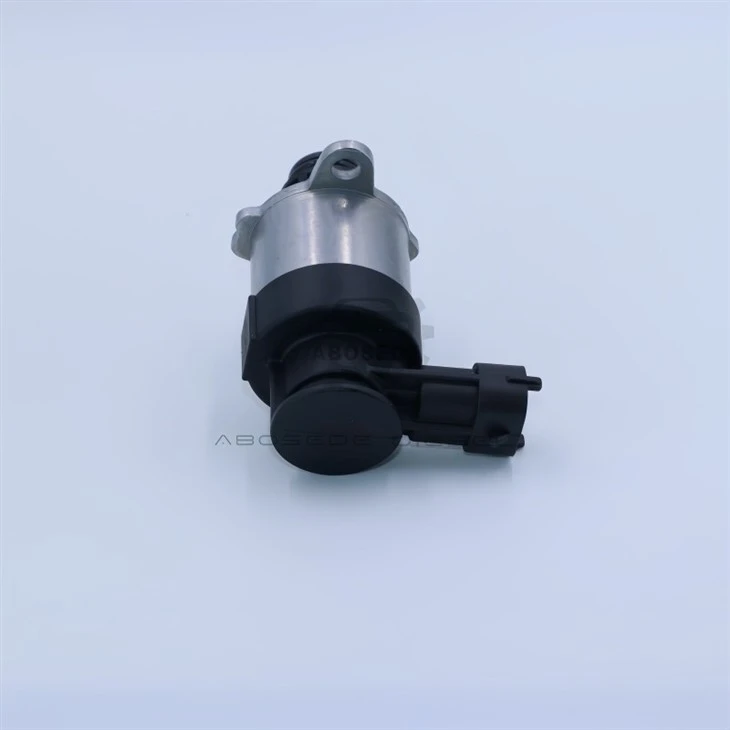
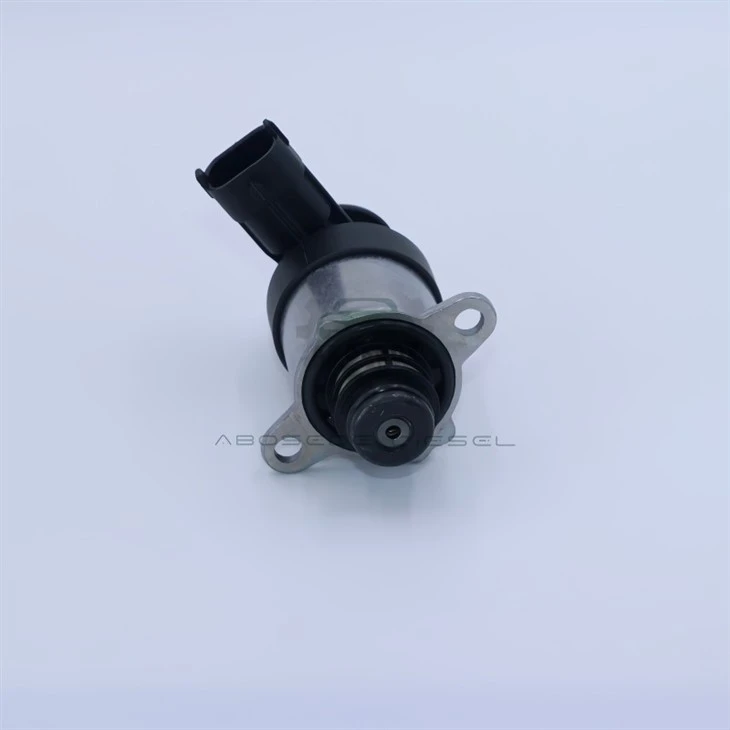
Bosch 0928400743 – The Metering Valve That Decouples Electromagnetic Actuation From Transient Fluid Dynamics
1. Product:0928400743
2. Compatible Equipment: Diesel Fuel Injection Systems
3. Manufacturer: Aftermarket OEM Replacement
4. Condition: Brand New, Fully Tested
5. Origin: ABOSEDE Diesel
6. Shipping period: 3-5 business days
7. Payment terms: T/T, Western Union, PayPal
- Fast Delievery
- Quality Assurance
- 24/7 Customer Service
Product Introduction
In every metering valve, the armature is pushed and pulled by competing forces: the magnetic force from the solenoid, the spring force from the mechanical spring, and the hydraulic force from the fuel flowing past the spool. The hydraulic force is not constant - it varies with the pressure, the flow rate, and the pump's stroke timing. This variability creates a coupling between the electromagnetic actuation and the fluid dynamics - the armature position is affected not only by the ECU's command but also by the transient behaviour of the fuel flow. The 0928400743 is engineered with a decoupling mechanism that isolates the armature from the hydraulic force variations, ensuring that the armature responds only to the electromagnetic command, regardless of the flow transients. It is a valve that moves when the ECU tells it to move, not when the pump tells it to move.
The Coupling Problem - Why Hydraulic Forces Interfere with Actuation
When the ECU commands a change in the duty cycle, the magnetic force changes, and the armature moves to a new position. However, at the same time, the pump's plungers are delivering fuel in pulses, creating pressure variations that act on the armature face. These variations create an additional force that adds to or subtracts from the magnetic force, shifting the armature position. This coupling means that the armature position is not determined solely by the ECU's command - it is a function of both the command and the pump's transient behaviour. The ECU cannot compensate for this coupling because it does not know the instantaneous hydraulic force. The 0928400743 uses a decoupling chamber that isolates the armature from the hydraulic force variations - the chamber creates a hydraulic null zone where the pressure forces on the armature are balanced, regardless of the flow transients.
How the Decoupling Mechanism Works
The decoupling mechanism consists of a pressure-balancing chamber that is connected to both the upstream and downstream sides of the armature through calibrated passages. The chamber is sized so that the pressure forces on the armature are equal and opposite at all operating conditions - the net hydraulic force on the armature is zero. The passages are calibrated so that the pressure in the chamber follows the transient pressure variations, maintaining the balance even during rapid flow changes. The decoupling chamber is not a static feature - it is a dynamic balancing system that responds to the pressure transients with a time constant that is matched to the pump's pulse frequency. The result is that the armature is isolated from the hydraulic force variations, and the armature position is determined only by the magnetic force and the spring force.
Failure Patterns - When Decoupling Is Lost
The decoupling can be lost if the calibrated passages in the decoupling chamber become blocked. When the passages are blocked, the pressure in the chamber no longer follows the transient pressure variations, and the hydraulic forces on the armature become unbalanced. The first symptom is often a pressure ripple that increases with the engine speed - the coupling is reintroduced, and the armature responds to the flow transients. The genuine 0928400743 uses passages that are sized to resist blockage, and the decoupling chamber is positioned so that the flow through the chamber clears any deposits.
Installation - The Decoupling Verification Test
Installing the 0743 is similar to other CP4 valves - clean the mounting surface, replace the O-ring and backup ring, torque the retaining nut to 23 Nm ± 2 Nm. However, there is a specific verification step: perform a transient response test after installation. With the engine at a steady speed, command a rapid duty cycle step and monitor the rail pressure response. The pressure should rise and fall smoothly without any high-frequency ripple that is synchronised with the pump pulses. If the ripple is present, the decoupling may not be effective - indicating a blockage in the decoupling passages.
Frequently Asked Questions
Q1: How can I tell if my valve's decoupling is compromised without removing it?
→ Perform a transient response test - command a rapid duty cycle change and monitor the rail pressure. If the pressure shows a high-frequency ripple that is not present with a known good valve, the decoupling may be compromised. A well-functioning 0743 will show a smooth pressure response.
Q2: Can I use the 0928400743 on a VW Touareg that originally used the 0788?
→ Yes, in most CP4.2 applications. The 0743 has the decoupling mechanism that is particularly valuable for transient stability, and it is a direct replacement for the 0788 in many applications. Always verify compatibility with the engine's calibration.
Q3: Why does my engine have a pressure ripple at high speed that disappears at low speed?
→ This is a classic symptom of lost decoupling - the coupling becomes more significant at high pump speeds, where the hydraulic force variations are more rapid. The 0743 is designed to maintain decoupling across the full speed range.
Q4: What is the most common cause of decoupling loss in this valve?
→ Blockage of the decoupling passages - debris or varnish can restrict the flow. The 0743 uses passages that are designed to resist blockage, but regular fuel filter changes are the most effective prevention.
Q5: I replaced the valve but the ripple persists - is the valve defective?
→ Check the pump delivery valves - a worn delivery valve can generate pulsations that are larger than the decoupling chamber can absorb. Also, check for air in the fuel system - air bubbles can amplify the pulsations.
Q6: Does the decoupling work with biodiesel blends?
→ Yes. The decoupling is a hydraulic effect that is based on the chamber geometry and the passages - it works with any fuel that has a similar compressibility. The 0743 is calibrated to work with biodiesel blends up to B20.


Flexible Payment Methods for Your Convenience
To make your purchasing experience smooth and easy, we offer a variety of secure payment options:

Bank Transfer
Supports multiple currenciesand bank payment methods.

Western Union
Quick and global money transfers.

PayPal
Safe and convenient online payment.

Alibaba
Enjoy extra protection with trusted Alibaba transactions.
We're here to make your order process worry-free - choose the payment method that works best for you!
Shipping Made Simple

Customer reviews

Hot Tags: bosch 0928400743 – the metering valve that decouples electromagnetic actuation from transient fluid dynamics, China bosch 0928400743 – the metering valve that decouples electromagnetic actuation from transient fluid dynamics manufacturers, suppliers, factory, 0445120067, Bosch CR Injectors, Bosch Volvo Deutz Renault, Diesel Control Valve, F00BC80045, F00RJ01479
You Might Also Like
-

Bosch 0928400738 – The Metering Valve With Optimised...
-

0928400669 Bosch Fuel Metering Valve – Consistent Ma...
-

0928400627 Bosch Fuel Metering Valve – Return Spring...
-

0928400666 Bosch Inlet Metering Valve – Armature Mic...
-

04226-0L020 Suction Control Valve – Closed‑Loop Resp...
-

Bosch Solenoid Valve F00HN37925 — The “Switch” That ...
