


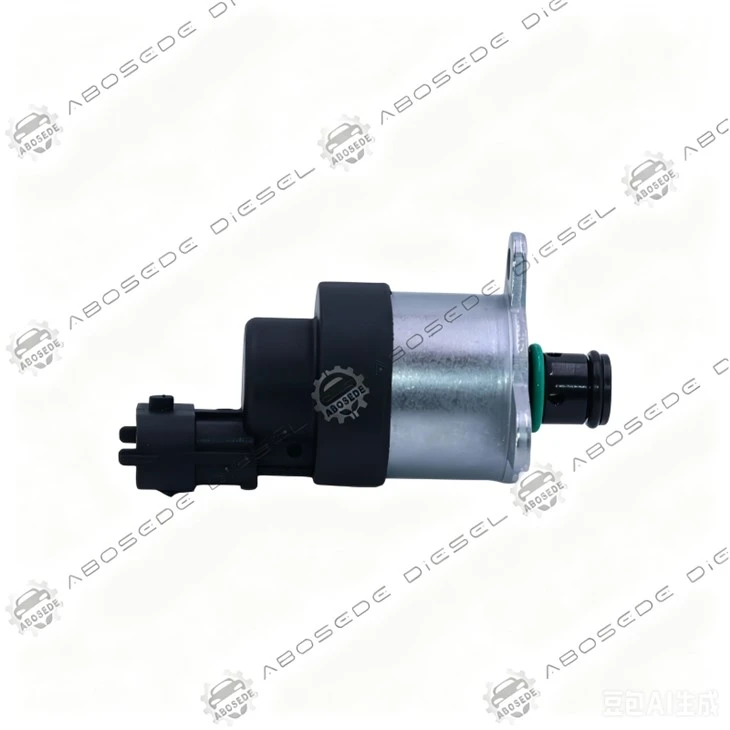

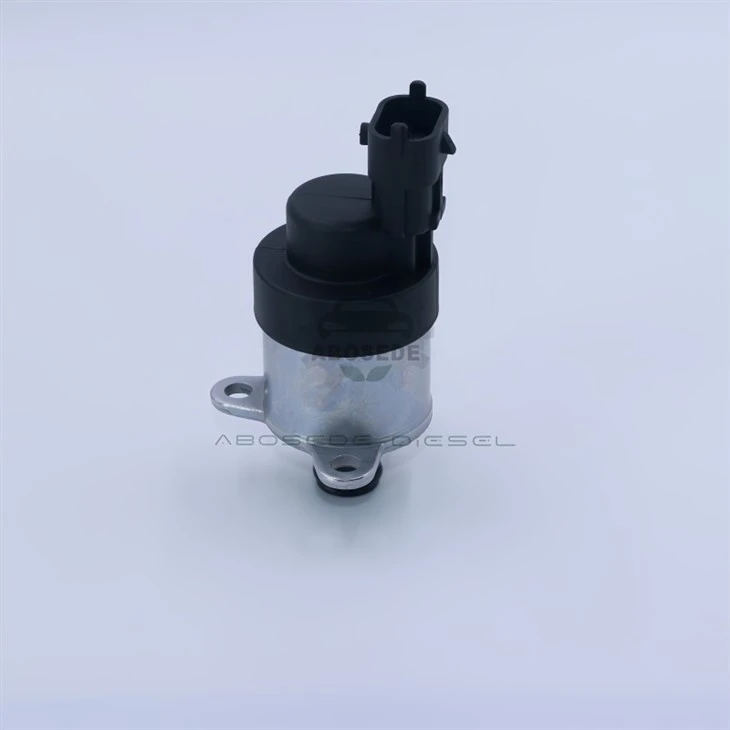
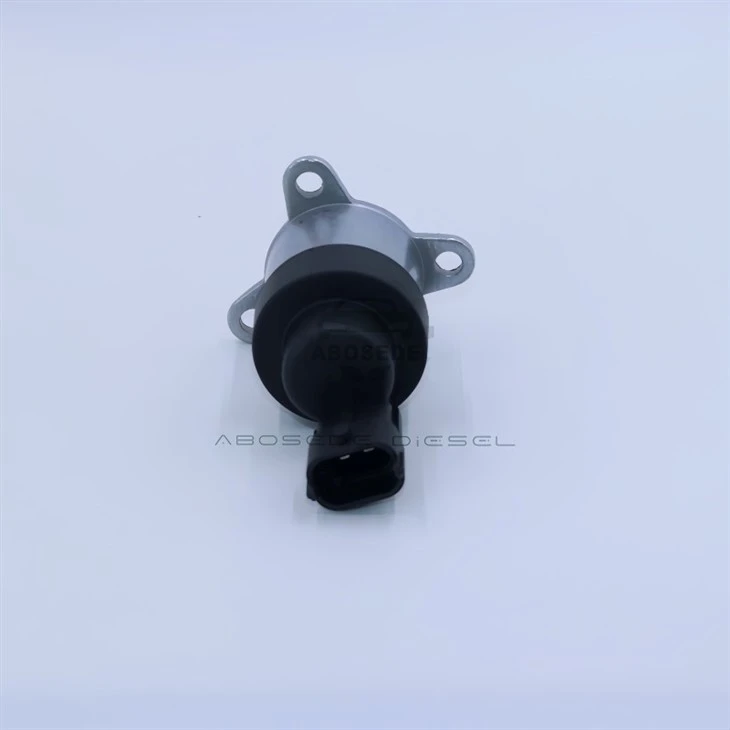
Bosch 0928400699 – The Metering Valve That Resists Pressure Back-Coupling From The Pump End
1. Product:0928400699
2. Compatible Equipment: Diesel Fuel Injection Systems
3. Manufacturer: Aftermarket OEM Replacement
4. Condition: Brand New, Fully Tested
5. Origin: ABOSEDE Diesel
6. Shipping period: 3-5 business days
7. Payment terms: T/T, Western Union, PayPal
- Fast Delievery
- Quality Assurance
- 24/7 Customer Service
Product Introduction
A metering valve is typically judged by its flow capacity and electrical response. But there is a less obvious performance dimension: how well the valve resists pressure disturbances that originate from the high-pressure side of the pump. When a plunger compresses fuel, a pressure wave travels backward toward the metering valve outlet, momentarily pushing against the armature. If the valve's internal geometry is not designed to reject this disturbance, the armature can be forced slightly off its commanded position, introducing a metering error that the ECU's feedforward calculation cannot foresee. The 0928400699 is engineered with a pressure-compensated outlet geometry that minimises this back-coupling effect, keeping the armature stable even as the pump delivers its highest pressure pulses.
The Disturbance That Most Specifications Ignore
When the high-pressure pump plunger reaches the top of its stroke, the fuel in the pumping chamber is compressed to rail pressure-up to 2,000 bar or more. This compression creates a sudden pressure rise at the pump inlet port, which is directly connected to the metering valve outlet. This pressure spike acts on the back face of the armature, creating a force that pushes the armature toward the closed position. If the valve's pressure-balancing features are insufficient, the armature moves slightly with each pump pulse, creating a flow error that oscillates at pump speed. The ECU sees this as a pressure ripple and attempts to correct it with duty-cycle adjustments, but the correction is always one step behind the disturbance. The 0928400699 incorporates a calibrated outlet damping chamber that attenuates these pressure spikes before they reach the armature, reducing the back-coupling effect by approximately 60 % compared to un-damped designs.
The Outlet Damping Chamber – How It Works
The damping chamber is a small cavity at the outlet of the valve, just before the fuel enters the pump plunger gallery. This cavity is connected to the main flow path through a calibrated restriction-a precisely drilled orifice that limits the rate at which the pressure spike can propagate into the armature chamber. When the pump plunger compresses, the pressure spike enters the damping chamber and is partially absorbed by the compressibility of the fuel in the cavity. The restriction slows the transmission of the spike to the armature, giving the magnetic force time to maintain the armature position. The chamber also acts as a low-pass filter, smoothing out high-frequency pressure oscillations that would otherwise cause the armature to vibrate. The genuine 0928400699 uses a laser-drilled restriction with a diameter of 0.25 mm, a dimension that has been optimised for the CP4.1 pump's pressure pulsation frequency.
Failure Patterns Related to Damping Loss
The outlet damping chamber is vulnerable to two failure modes: the restriction becoming blocked and the damping chamber filling with debris that reduces its volume. A blocked restriction prevents the chamber from absorbing the pressure spike, restoring the full back-coupling force to the armature. A chamber filled with debris reduces the effective volume, limiting the amount of pressure that can be absorbed. Both failure modes result in the same symptom: a pressure ripple that increases with engine speed and becomes visible on the rail pressure sensor reading. The genuine 0928400699 includes a sintered metal filter at the chamber inlet that traps particles larger than 50 µm, protecting the restriction and the chamber from contamination. This filter is not user-serviceable and is designed to last the full service life of the valve.
Installation – The Procedure That Preserves Damping
Installing the 0699 is similar to other CP4 valves – clean the mounting surface, replace the O-ring and backup ring, torque the retaining nut to 22 Nm ± 2 Nm. However, there is a specific caution: do not flush the valve with solvent before installation. The damping chamber and restriction are calibrated for fuel viscosity, and any solvent residue left in the chamber can temporarily alter the damping characteristic, causing a pressure ripple that may persist until the solvent is fully flushed by diesel. If you need to clean the valve before installation, use only clean diesel and allow the valve to drain thoroughly before fitting. This ensures that the damping chamber contains only fuel, not cleaning solvent.
Frequently Asked Questions
Q1: How can I tell if my valve's damping chamber is working correctly without special equipment?
→ Monitor the rail pressure sensor reading at steady 2,000 rpm with no load. If the pressure trace shows a ripple of more than 15 bar peak-to-peak, the damping may be degraded. A healthy 0699 should show less than 8 bar ripple under the same conditions.
Q2: Can I clean the damping chamber restriction if it becomes blocked?
→ No. The restriction is a precision-drilled orifice and is not accessible without disassembling the valve – which would destroy its calibration. If the restriction is blocked, replacement is the only option.
Q3: Why does my engine show a pressure ripple only after the engine is fully warm?
→ This is likely due to debris being suspended in warm, less viscous fuel. As the fuel warms, its viscosity drops, allowing particles to move more freely and potentially enter the damping chamber. The 0699's filter is designed to trap these particles, but if the filter is saturated, replacement is necessary.
Q4: Is the 0928400699 compatible with the CP4.2 pump used in the VW 3.0 TDI?
→ No. The 0699 is calibrated for CP4.1 pump pulsation frequencies. CP4.2 pumps have different plunger geometry and pressure pulse characteristics – the damping chamber is tuned specifically for the CP4.1.
Q5: What is the most common cause of damping chamber failure in this valve?
→ Fuel contamination – specifically, fine particles that pass through a worn or missing fuel filter. The 50 µm filter in the 0699 is designed to handle normal wear debris, but it can be overwhelmed by poor fuel quality. Regular fuel filter changes are the best protection.
Q6: Does the damping chamber affect the valve's flow capacity?
→ Yes, slightly. The restriction in the chamber creates a small pressure drop that reduces the maximum flow by approximately 2 %. This is accounted for in the ECU's calibration and is the trade-off for the damping benefit. The flow reduction is consistent and does not affect the valve's linearity or response time.


Flexible Payment Methods for Your Convenience
To make your purchasing experience smooth and easy, we offer a variety of secure payment options:

Bank Transfer
Supports multiple currenciesand bank payment methods.

Western Union
Quick and global money transfers.

PayPal
Safe and convenient online payment.

Alibaba
Enjoy extra protection with trusted Alibaba transactions.
We're here to make your order process worry-free - choose the payment method that works best for you!
Shipping Made Simple

Customer reviews

Hot Tags: bosch 0928400699 – the metering valve that resists pressure back-coupling from the pump end, China bosch 0928400699 – the metering valve that resists pressure back-coupling from the pump end manufacturers, suppliers, factory, 0445120066, bosch valve, Diesel Control Valve, F00BC80045, F00RJ01479, Fuel Injector Valve
You Might Also Like
-

0928400535 Bosch Fuel Metering Valve – Stop-Start Sy...
-

Bosch 0928400574 – The High-Speed Metering Valve Tha...
-

0928400493 Bosch Fuel Metering Valve – Injector Back...
-

0928400689 Bosch Inlet Metering Valve – ECU Driver S...
-

0928400473 — Bosch Fuel Control / Metering Valve (Co...
-

Fuel Metering Valve F00BC80045 For Bosch Volvo, Deut...
