


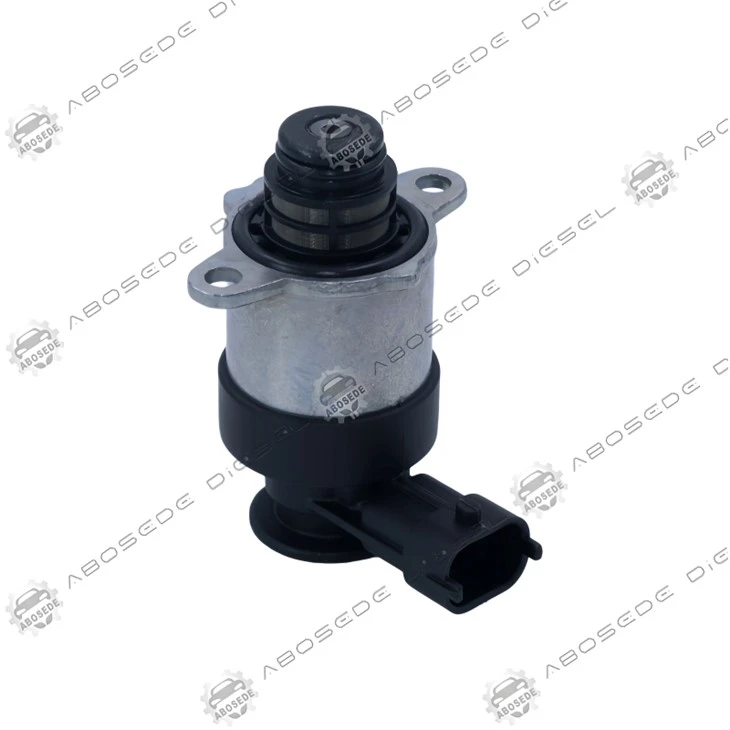

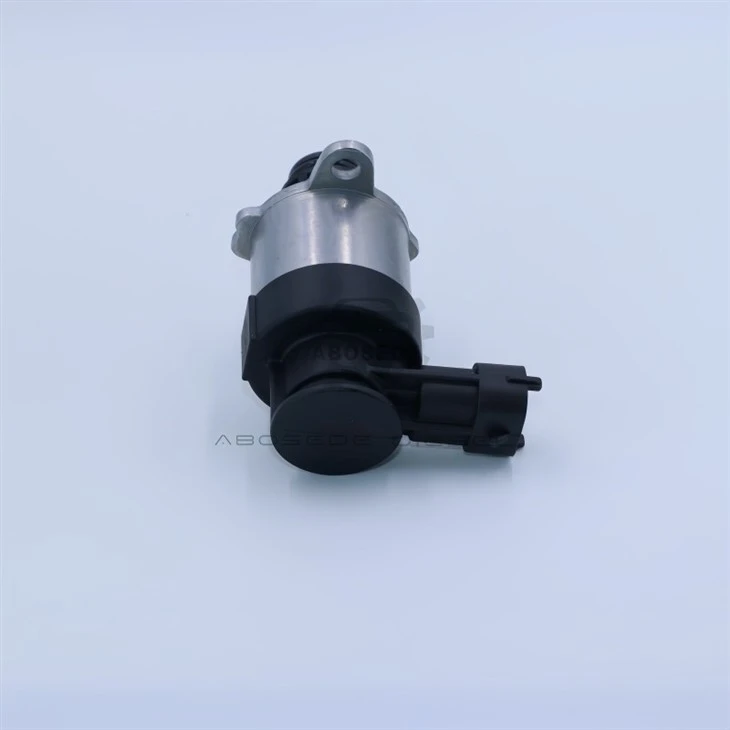
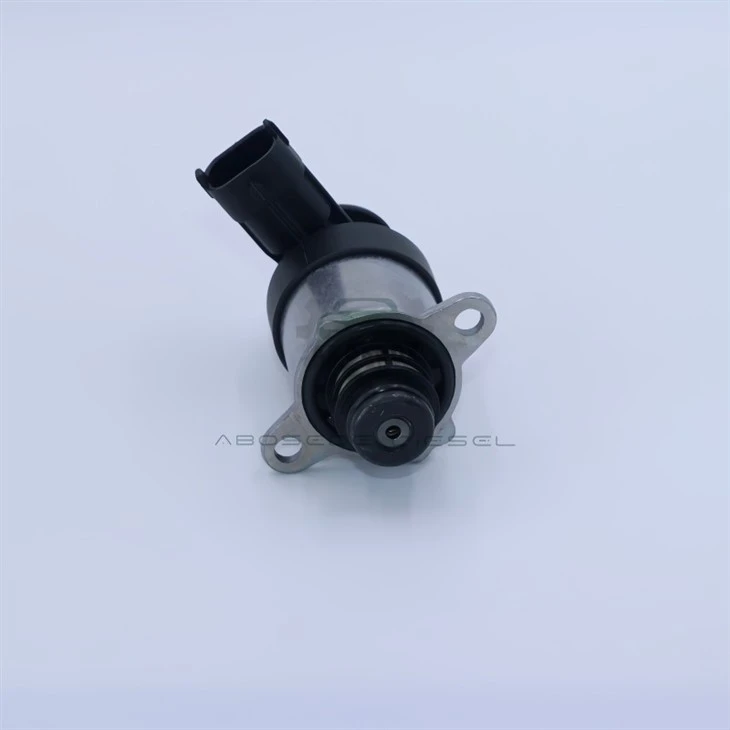
Bosch 0928400821 – The Metering Valve With Flow‑Induced Vibration Damping For Stable Metering
1. Product:0928400821
2. Compatible Equipment: Diesel Fuel Injection Systems
3. Manufacturer: Aftermarket OEM Replacement
4. Condition: Brand New, Fully Tested
5. Origin: ABOSEDE Diesel
6. Shipping period: 3-5 business days
7. Payment terms: T/T, Western Union, PayPal
- Fast Delievery
- Quality Assurance
- 24/7 Customer Service
Product Introduction
In a common‑rail system, the fuel flowing through the metering valve is not a steady stream - it is a turbulent, pulsating flow that can excite the armature and spool into mechanical vibration. These vibrations, often at frequencies between 100 and 300 Hz, superimpose on the commanded position, creating a small oscillatory movement that changes the effective flow area. The ECU, which assumes a static position for each duty cycle, cannot compensate for these vibrations, leading to a metering error that appears as a high‑frequency ripple in the rail pressure. The 0928400821 is engineered with a flow‑induced vibration damping system that attenuates these mechanical oscillations, ensuring that the spool remains stable even under the most turbulent flow conditions. It is a valve that stays quiet and stable, not a valve that dances with the flow.
The Vibration Phenomenon - Why Flow Turbulence Affects Position
When fuel passes through the metering edge, it creates a turbulent wake that generates fluctuating pressure forces on the armature and spool. These fluctuating forces can excite the mechanical resonance of the moving assembly - the armature and spool have a natural frequency determined by their mass and the spring stiffness. If the frequency of the flow fluctuations matches the natural frequency, the amplitude of the vibration increases, and the spool oscillates around its commanded position. The result is a small but significant variation in the flow area - typically 2‑5 µm - which introduces a metering error that appears as a pressure ripple at the pump's pulse frequency. The 0928400821 addresses this by adding a tuned damping mass to the armature assembly, a small tungsten weight that shifts the natural frequency away from the flow‑excitation frequencies. Additionally, the valve seat is designed with a flow‑smoothing radius that reduces the turbulence intensity, lowering the excitation force.
How the Vibration Damping Works
The vibration damping is achieved through two mechanisms: a tuned mass damper and a flow‑smoothing seat geometry. The tuned mass damper is a small tungsten ring that is attached to the armature assembly. The ring is sized so that its inertia shifts the natural frequency of the armature‑spool system from approximately 150 Hz (the typical flow‑excitation frequency) to 250 Hz - well above the excitation range. This detuning prevents resonance amplification. The flow‑smoothing seat geometry is a gentle radius at the metering edge that reduces the turbulence intensity by about 25 %, lowering the amplitude of the fluctuating forces. The combination of the two reduces the spool vibration from a typical 4‑6 µm peak‑to‑peak to less than 1.5 µm, effectively eliminating the pressure ripple caused by vibration.
Failure Patterns - When Vibration Damping Is Lost
The vibration damping can be lost if the tungsten ring becomes detached (due to impact or manufacturing defect) or if the seat radius is worn away. A detached ring shifts the natural frequency back into the excitation range, and the armature begins to vibrate. A worn seat radius increases the turbulence, raising the excitation force. The first symptom is often a high‑frequency pressure ripple that appears at high load - the ripple is synchronised with the pump speed and disappears at low load. The genuine 0928400821 is manufactured with the tungsten ring securely attached (laser‑welded) and a seat radius that is hardened to resist wear, ensuring that the damping remains effective for the service life.
Installation - The Vibration Check
Installing the 0821 is similar to other CP4 valves - clean the mounting surface, replace the O‑ring and backup ring, torque the retaining nut to 23 Nm ± 2 Nm. However, there is a specific verification step: perform a high‑load pressure ripple test after installation. With the engine at full load and rated speed, monitor the rail pressure trace for any high‑frequency ripple (above 100 Hz). A well‑functioning 0821 will show a clean pressure trace with no discernible ripple. If the ripple is present, the vibration damping may be compromised - check the installation and verify that the valve is seated correctly.
Frequently Asked Questions
Q1: How can I tell if my valve is experiencing flow‑induced vibration without removing it?
→ Monitor the rail pressure at high load - if there is a high‑frequency ripple that is synchronised with the pump speed, the valve may be vibrating. A well‑functioning 0821 will have a clean pressure trace.
Q2: Can I use the 0928400821 on a BMW that originally used the 0840?
→ Yes, in most CP4.2 applications. The 0821 has the vibration damping that is particularly valuable for high‑load stability, and it is a direct replacement for the 0840 in many applications. Always verify compatibility with the engine's calibration.
Q3: Why does my engine have a pressure ripple at full load but not at idle?
→ This is a classic symptom of flow‑induced vibration - the turbulence increases with the flow rate, and the vibration only appears at high flow. The 0821 is designed to suppress this vibration across the full flow range.
Q4: What is the most common cause of vibration damping loss in this valve?
→ Wear of the seat radius - the flow‑smoothing geometry is lost, and the turbulence increases. The 0821 uses a hardened seat to resist this wear, but regular fuel filter changes are still the most effective prevention.
Q5: I replaced the valve but the ripple persists - is the valve defective?
→ Check the pump delivery valves - a worn delivery valve can generate pressure pulsations that are larger than the vibration damping can suppress. Also, check for air in the fuel system - air bubbles can amplify the ripple.
Q6: Does the vibration damping work with biodiesel blends?
→ Yes. The vibration damping is based on mechanical tuning and flow geometry, which are not affected by the fuel type. However, biodiesel has a different compressibility, which can slightly alter the excitation frequency. The 0821 is designed to work with biodiesel blends up to B20.


Flexible Payment Methods for Your Convenience
To make your purchasing experience smooth and easy, we offer a variety of secure payment options:

Bank Transfer
Supports multiple currenciesand bank payment methods.

Western Union
Quick and global money transfers.

PayPal
Safe and convenient online payment.

Alibaba
Enjoy extra protection with trusted Alibaba transactions.
We're here to make your order process worry-free - choose the payment method that works best for you!
Shipping Made Simple

Customer reviews

Hot Tags: bosch 0928400821 – the metering valve with flow‑induced vibration damping for stable metering, China bosch 0928400821 – the metering valve with flow‑induced vibration damping for stable metering manufacturers, suppliers, factory, 0445120066, 0445120067, Bosch CR Injectors, Diesel Control Valve, F00BC80045, F00RJ01479
You Might Also Like
-

Bosch 0928400827 – The Metering Valve With Balanced ...
-

Bosch 0928400619 – The Metering Valve That Sustains ...
-

Bosch 0928400826 – The Metering Valve That Learns Fa...
-

0928400535 Bosch Fuel Metering Valve – Stop-Start Sy...
-

Bosch F00VC30054 Injector Solenoid Valve – The Elect...
-

Common-rail Pressure Sensor 0281002909 For Bosch– Ac...
