


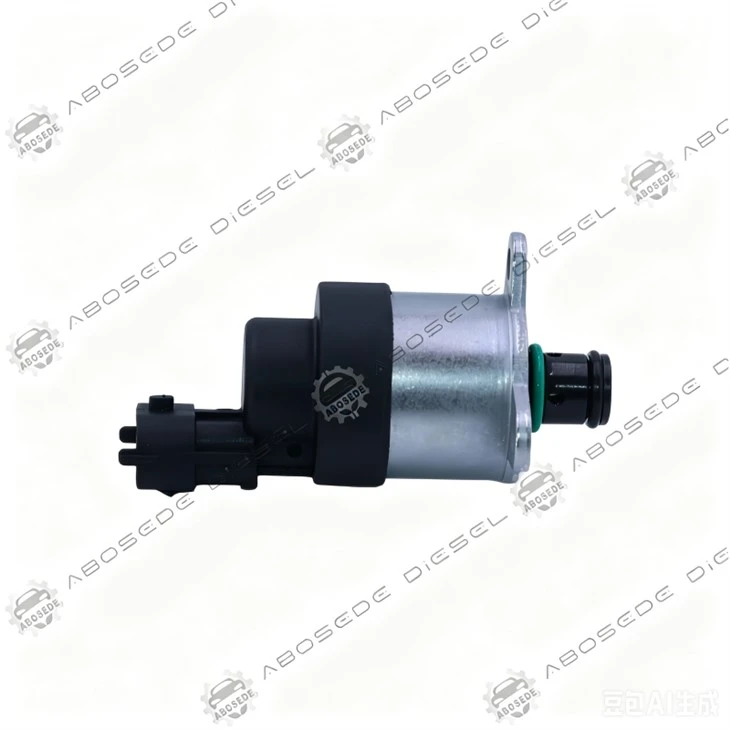

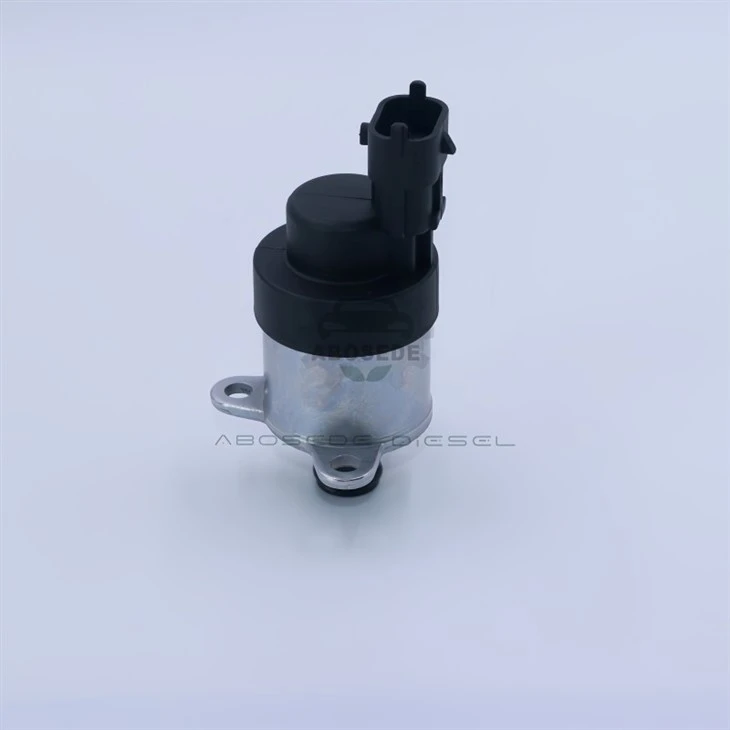
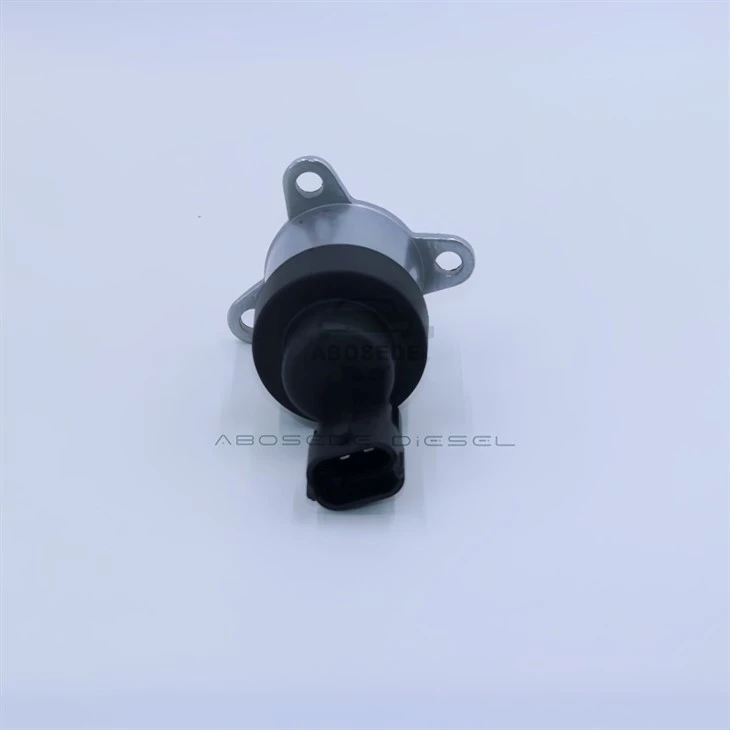
Bosch 0928400774 – The Metering Valve That Shapes The Flow Rate Gradient For Stable Acceleration
1. Product:0928400774
2. Compatible Equipment: Diesel Fuel Injection Systems
3. Manufacturer: Aftermarket OEM Replacement
4. Condition: Brand New, Fully Tested
5. Origin: ABOSEDE Diesel
6. Shipping period: 3-5 business days
7. Payment terms: T/T, Western Union, PayPal
- Fast Delievery
- Quality Assurance
- 24/7 Customer Service
Product Introduction
When the ECU commands an increase in rail pressure, it does not simply expect a fixed flow increase - it expects the flow to increase at a specific rate, or gradient. The gradient determines how quickly the rail pressure responds to the command, and it is a critical parameter for transient performance - too slow, and the engine hesitates; too fast, and the pressure overshoots. The 0928400774 is engineered with a spool and port geometry that delivers a consistent flow rate gradient across the full operating range, ensuring that the rail pressure rises at the rate the ECU expects, every time. It is a valve that shapes the flow increase, not just the final flow.
The Gradient Concept - Why the Rate of Change Matters
The flow rate gradient is the change in flow per unit of time when the duty cycle changes. In a well-calibrated system, the ECU calculates the required gradient based on the engine speed and load, and it commands a duty cycle change that should produce that gradient. If the valve's actual gradient is different from the expected gradient, the rail pressure will rise too quickly (causing overshoot) or too slowly (causing lag). The ECU's feedback loop can correct the error, but the correction is slower than the feedforward calculation. The 0928400774 is designed so that the gradient is consistent - the same duty cycle change produces the same flow rate change, regardless of the operating condition. This consistency is achieved through a combination of spool geometry, port sizing, and a specific spring rate that damps the spool's acceleration.
How the Gradient Is Shaped
The flow rate gradient is determined by the relationship between the spool position and the flow area - the steeper the relationship, the higher the gradient. The 0928400774 uses a spool with a control edge that is ground to a specific profile - not a simple radius, but a compound curve that creates a consistent gradient across the spool's travel. The inlet ports are sized so that the flow area increases linearly with the spool movement - a linear increase creates a constant gradient, while a non-linear increase creates a variable gradient. The spring rate is also selected to provide a specific damping - a higher damping reduces the gradient; a lower damping increases it. The 0774's spring rate is chosen to provide a gradient that matches the ECU's expectation.
Failure Patterns - When the Gradient Is Lost
The flow rate gradient can change if the spool's control edge wears or if the spring loses tension. A worn control edge changes the relationship between spool position and flow area, altering the gradient. A weakened spring changes the damping, causing the spool to accelerate more quickly - increasing the gradient. The first symptom is often a pressure overshoot on tip-in - the rail pressure rises above the commanded pressure because the gradient is too high. The genuine 0928400774 uses a hardened control edge and a spring that is pre-cycled during manufacture to stabilise its tension, ensuring that the gradient remains consistent over the valve's service life.
Installation – The Gradient Verification
Installing the 0774 is similar to other CP4 valves - clean the mounting surface, replace the O-ring and backup ring, torque the retaining nut to 23 Nm ± 2 Nm. However, there is a specific verification step: perform a tip-in test after installation. With the engine at idle, command a rapid acceleration and monitor the rail pressure. The pressure should rise smoothly to the commanded value without overshoot or oscillation. If the pressure overshoots, the gradient may be too high - indicating a problem with the spring or the control edge. If the pressure rises slowly, the gradient may be too low - indicating a restricted flow path or a damaged spool. The tip-in test is a quick functional check that can be performed on a test drive or on a dynamometer.
Frequently Asked Questions
Q1: How can I tell if my valve's gradient is incorrect without special equipment?
→ On a test drive, perform a rapid acceleration from idle to 2,500 rpm. If the engine hesitates or the rail pressure overshoots, the gradient may be incorrect. A well-functioning 0774 will provide a smooth acceleration with a stable rail pressure trace.
Q2: Can I use the 0928400774 on a BMW that originally used the 0818?
→ Yes, in most CP4.2 applications. The 0774 has the gradient-shaping that is particularly valuable for transient response, and it is a direct replacement for the 0818 in many applications. Always verify compatibility with the engine's calibration.
Q3: Why does my engine have a pressure overshoot on tip-in but a stable rail pressure at steady state?
→ This is a classic symptom of an incorrect gradient - the valve's gradient is too high, causing the pressure to rise too quickly. The 0774 is designed to provide a controlled gradient that prevents overshoot.
Q4: What is the most common cause of gradient change in this valve?
→ Wear on the control edge of the spool. The 0774 uses a hardened control edge to resist this wear, but if the fuel contains abrasive particles, the wear can be accelerated. Regular fuel filter changes are the most effective prevention.
Q5: I replaced the valve but the pressure still overshoots on tip-in - is the valve defective?
→ Check the rail pressure sensor - a slow sensor can cause the ECU to command an incorrect gradient. Also, check the wiring harness for noise - electrical noise can cause the ECU to command erratic duty cycles, which will produce an overshoot regardless of the valve's performance.
Q6: Does the gradient change with the fuel temperature?
→ Yes, slightly. The fuel viscosity changes with temperature, which affects the flow through the valve. The 0774 is designed to maintain gradient stability across the full temperature range, but a small change is normal and is compensated by the ECU's adaptation.


Flexible Payment Methods for Your Convenience
To make your purchasing experience smooth and easy, we offer a variety of secure payment options:

Bank Transfer
Supports multiple currenciesand bank payment methods.

Western Union
Quick and global money transfers.

PayPal
Safe and convenient online payment.

Alibaba
Enjoy extra protection with trusted Alibaba transactions.
We're here to make your order process worry-free - choose the payment method that works best for you!
Shipping Made Simple

Customer reviews

Hot Tags: bosch 0928400774 – the metering valve that shapes the flow rate gradient for stable acceleration, China bosch 0928400774 – the metering valve that shapes the flow rate gradient for stable acceleration manufacturers, suppliers, factory, 0445120066, 0445120067, bosch valve, Bosch Volvo Deutz Renault, Diesel Control Valve, F00BC80045
You Might Also Like
-

Bosch 0928400687 – The Metering Valve That Keeps Its...
-

Bosch 0928400672 – The Metering Valve That Manages H...
-

0928400473 Bosch Fuel Metering Valve – Reliable Low-...
-

0928400493 Bosch Fuel Metering Valve – Rapid Rail Pr...
-

Bosch F00VC30054 Injector Solenoid Valve – The Elect...
-

Common-rail Pressure Sensor 0281002909 For Bosch– Ac...
