


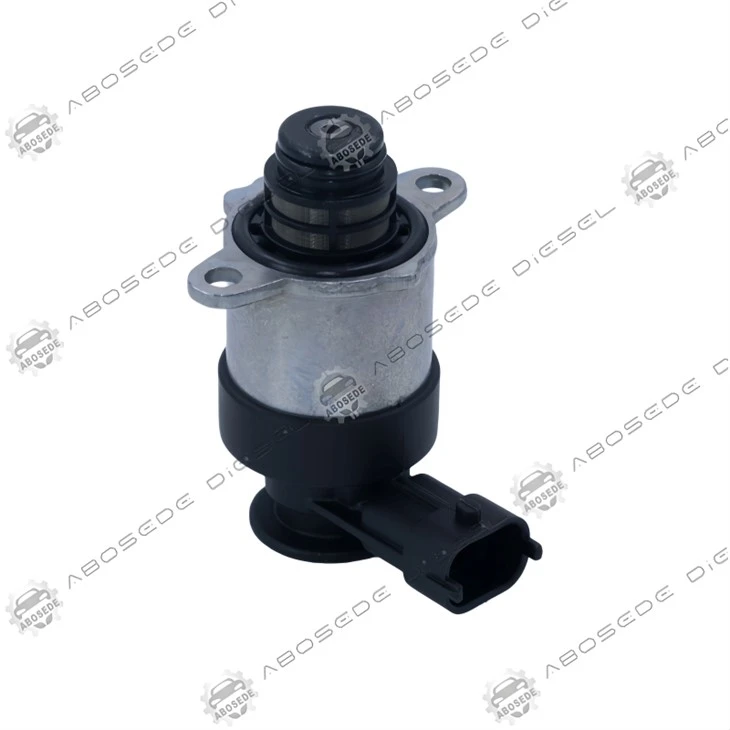

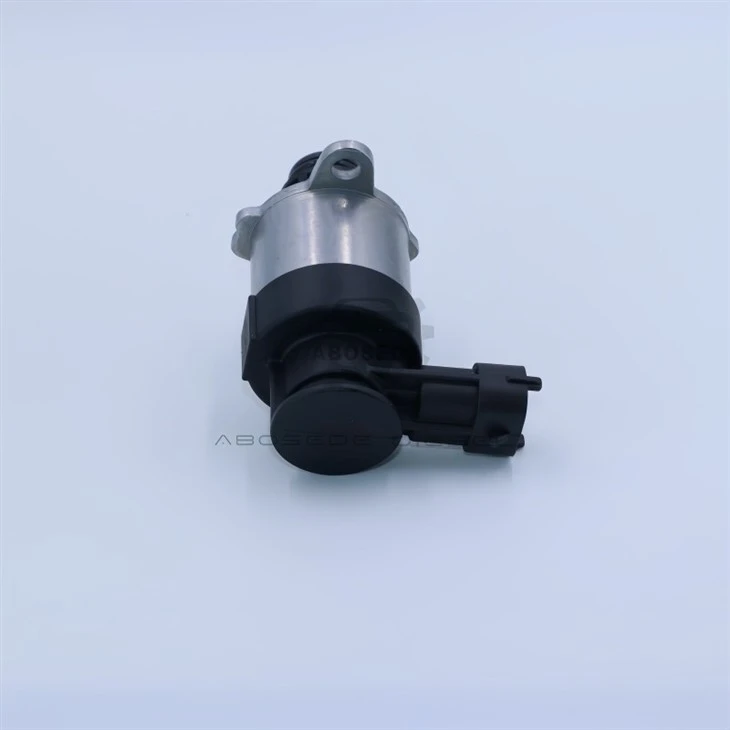
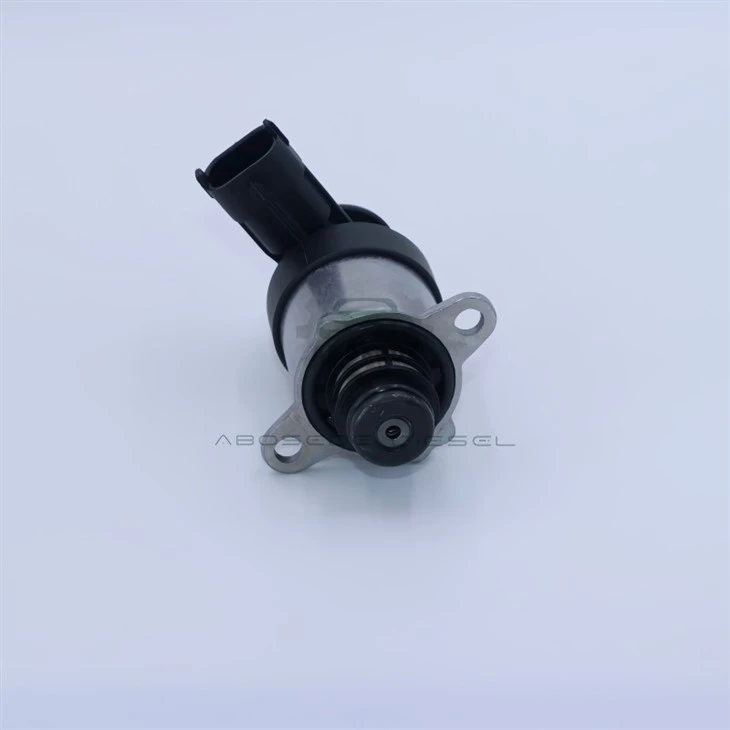
Bosch 0928400672 – The Metering Valve That Manages Heat To Maintain Magnetic Consistency
1. Product:0928400672
2. Compatible Equipment: Diesel Fuel Injection Systems
3. Manufacturer: Aftermarket OEM Replacement
4. Condition: Brand New, Fully Tested
5. Origin: ABOSEDE Diesel
6. Shipping period: 3-5 business days
7. Payment terms: T/T, Western Union, PayPal
- Fast Delievery
- Quality Assurance
- 24/7 Customer Service
Product Introduction
A solenoid is a current‑to‑force converter – but the relationship is not fixed. As the coil heats up, its resistance increases, and at a constant voltage, the current drops, reducing the magnetic force. This thermal drift is a fundamental challenge in any solenoid‑based metering valve, and it is often the unseen cause of long‑term fuel trim creep. The 0928400672 addresses this through a carefully balanced thermal design that minimises the resistance rise per degree of temperature increase, combined with a magnetic circuit that has a flatter force‑current curve in the operating region. The result is a valve that maintains stable metering performance across the entire thermal cycle, from cold start to fully heat‑soaked operation, without requiring excessive ECU compensation.
The Temperature-Feedback Loop That Most Specifications Ignore
Every metering valve specification sheet includes the cold resistance value – typically measured at 20 °C. What is often omitted is the resistance at 100 °C, which is where the valve actually spends most of its working life. The temperature coefficient of copper is approximately 0.39 % per degree Celsius – a 20 °C to 120 °C rise increases resistance by nearly 40 %. In a 2.6 Ω coil, that means resistance climbs to 3.6 Ω, and at a constant 12 V, current drops from 4.6 A to 3.3 A – a reduction of 28 % in magnetic force. If the valve's magnetic circuit was designed with no margin, this force reduction shifts the flow curve significantly when the engine is hot. The 0928400672 uses a coil with a slightly larger wire gauge and an improved winding density that keeps the resistance rise to approximately 30 % over the same temperature range – 10 % better than the standard design. Additionally, the armature is shaped to operate on the flatter portion of the force‑stroke curve, where a reduction in current produces a smaller change in armature position. The combination means that a hot valve still delivers the same flow per duty step, leaving the ECU's thermal compensation tables largely unused.
The Flat Force-Stroke Region – A Key Design Feature
In a typical solenoid, the magnetic force increases rapidly as the armature approaches the fully closed position – this is the natural characteristic of any magnetic circuit. This rapid increase means that small changes in current (caused by temperature) produce large changes in force, and therefore large changes in flow. The 0928400672 modifies the magnetic circuit geometry – specifically the shape of the stator pole face – to create a region in the middle of the stroke where the force is relatively flat against armature position. In this flat region, a 10 % change in current produces only a 3 % change in force, rather than the typical 10‑12 % change. The valve's nominal operating point is positioned within this flat region, so as the coil heats up and the current drops, the armature position hardly moves. This is not an electronic compensation – it is a purely physical characteristic of the magnetic circuit, and it requires no ECU intervention.
Thermal Failure Patterns – And How the 0672 Resists Them
The most common thermal‑related failure in metering valves is not sudden breakdown but gradual drift – the valve still works, but its hot flow curve shifts enough that the ECU's long‑term fuel trim climbs to the limit, triggering a performance fault code. In many cases, the valve's cold resistance still measures within specification, giving no indication of the problem. The genuine 0928400672 resists this through two features: the larger wire gauge, which provides more copper cross‑section and reduces resistance per unit length, and the high‑temperature insulation that prevents the wire from annealing – a process where the copper softens over time, changing its resistance characteristics. The coil is also wound with a specific tension that maintains winding geometry as the coil expands and contracts with temperature, preventing the micro‑cracking that leads to intermittent open circuits in cheaper designs.
Installation – The Thermal Adaptation That Is Often Overlooked
The installation procedure for the 0672 is similar to other CP3 valves – clean the mounting face, replace the O‑ring and backup ring, torque the retaining nut to 24 Nm ± 2 Nm. However, there is a specific step that is critical for heavy‑duty applications: perform the adaptation reset only after the engine has reached normal operating temperature. The reason is that the 0672's thermal resistance characteristic is part of the ECU's compensation model. If the learning is performed on a cold engine, the ECU will store a baseline that does not represent the valve's hot behaviour. When the engine warms up, the ECU will have to re‑learn, causing a temporary fuel trim shift. The correct sequence – warm the engine to at least 75 °C coolant temperature, then reset the metering valve adaptation – allows the ECU to learn the valve's hot performance directly, reducing the adaptation period from several hundred kilometres to a single drive cycle.
Frequently Asked Questions
Q1: How can I tell if my current valve is experiencing thermal drift without removing it?
→ Compare the fuel trim at cold start (engine temperature below 30 °C) with the trim after 30 minutes of highway driving. If the trim shifts by more than 5 % between these two conditions, the valve's thermal characteristic is likely degraded – a healthy 0672 shows less than 2 % shift.
Q2: Can I install the 0928400672 on a passenger car CP4 pump?
→ No. The 0672 is specifically designed for CP3.1/CP3.2 pumps used in commercial vehicles. The longer stroke and flat‑force region are not compatible with CP4 hydraulic dynamics – installing it in a CP4 will result in non‑linear pressure control.
Q3: Why does my truck's fuel consumption increase only after the engine is fully warm, but return to normal when cold?
→ This is a classic symptom of thermal drift. The valve's cold flow is correct, but as it heats up, the flow curve shifts, causing the ECU to over‑fuel. The 0928400672 addresses this by minimising the thermal shift in the first place.
Q4: What is the recommended replacement interval for this valve in a long‑haul MAN truck?
→ For highway applications with consistent fuel quality, we recommend inspection at 300,000 km and replacement at 400,000 km. The heavier copper winding and thermal insulation provide extended life compared to passenger car variants – but fuel quality remains the primary variable.
Q5: I replaced the valve but still have a slight hesitation on uphill grades – is the valve at fault?
→ Possibly, but check the fuel filter pressure drop first. A partially blocked filter reduces the inlet pressure to the valve, which changes the hydraulic force balance and effectively shifts the flow curve. If the filter is clean, then perform a reset – the hesitation often disappears after the ECU learns the new valve's thermal characteristics.
Q6: Does the valve need to be pre‑heated before installation to prevent thermal shock?
→ No – the 0672 is designed to handle thermal cycling from ambient to 130 °C. However, do not install the valve immediately after running the engine, as the pump surface may be hot enough to soften the O‑ring. Allow the pump to cool to below 60 °C before fitting the new seal.


Flexible Payment Methods for Your Convenience
To make your purchasing experience smooth and easy, we offer a variety of secure payment options:

Bank Transfer
Supports multiple currenciesand bank payment methods.

Western Union
Quick and global money transfers.

PayPal
Safe and convenient online payment.

Alibaba
Enjoy extra protection with trusted Alibaba transactions.
We're here to make your order process worry-free - choose the payment method that works best for you!
Shipping Made Simple

Customer reviews

Hot Tags: bosch 0928400672 – the metering valve that manages heat to maintain magnetic consistency, China bosch 0928400672 – the metering valve that manages heat to maintain magnetic consistency manufacturers, suppliers, factory, 0445120066, 0445120067, Bosch Volvo Deutz Renault, Diesel Control Valve, F00RJ01479, Fuel Injector Valve
You Might Also Like
-

Bosch 0928400656 – The Metering Valve That Adapts To...
-

0928400761 Bosch Fuel Metering Valve – Quick Electri...
-

0928400680 Bosch Fuel Metering Valve – Extended Idle...
-

0928400508 Bosch Fuel Metering Valve – Smooth Engine...
-

0928400745 Bosch Fuel Metering Valve – Hydraulically...
-

Bosch Solenoid Valve F00HN37925 — The “Switch” That ...
