


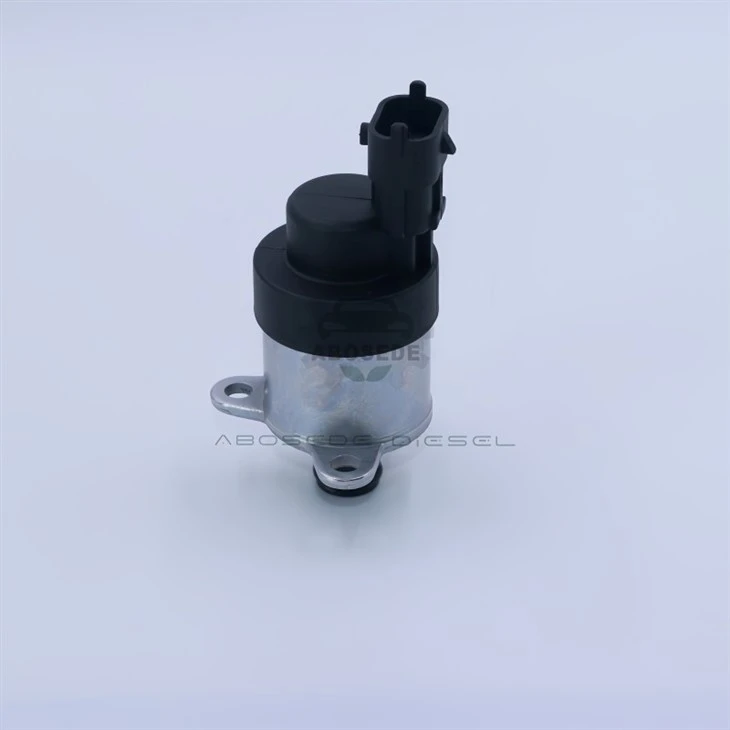

0928400473 Bosch Fuel Metering Valve – Reliable Low-Voltage Operation & Cold-Cranking Fuel Delivery For CP3/CP1H Pumps On Heavy-Duty Diesel Engines
1. Product:0928400473
2. Compatible Equipment: Diesel Fuel Injection Systems
3. Manufacturer: Aftermarket OEM Replacement
4. Condition: Brand New, Fully Tested
5. Origin: ABOSEDE Diesel
6. Shipping period: 3-5 business days
7. Payment terms: T/T, Western Union, PayPal
- Fast Delievery
- Quality Assurance
- 24/7 Customer Service
Product Introduction
The 0928400473 is a Bosch inlet metering valve for CP3 and CP1H high-pressure common rail pumps. When a heavy-duty truck is started after sitting overnight, the engine computer commands the metering valve to deliver fuel before the engine even begins to turn. At this moment, the electrical system is under maximum stress. The starter motor draws hundreds of amps. Battery voltage sags from its nominal 12 or 24 volts down to as low as 9–10 volts. The metering valve must still open accurately on this reduced voltage. If the solenoid cannot generate enough magnetic force at low voltage, the spool does not move to the correct position. Rail pressure builds too slowly. The engine cranks longer. In severe cases, it may not start at all. The 0928400473 is designed with a solenoid that produces sufficient force to operate correctly at the reduced voltages encountered during cranking. This ensures reliable cold-start fuel delivery without extended cranking. It fits heavy-duty diesel engines using Bosch CP3 or CP1H high-pressure pumps.
The Electrical Challenge During Engine Cranking
The metering valve solenoid converts electrical current into mechanical force. At normal system voltage - around 13.5–14.5 volts with the engine running - the current reaches its designed level quickly. The spool moves to the commanded position within milliseconds. During cranking, the starter motor pulls the battery voltage down sharply. At 9–10 volts, the current flowing through the solenoid coil is approximately 20–30% lower than at normal voltage. The magnetic force, which depends on current, is reduced by a similar amount. The return spring still pushes with full force. The solenoid must overcome this spring and any stiction to move the spool. If the solenoid cannot deliver enough force at reduced voltage, the spool either does not move at all or moves too slowly. The pump cannot build rail pressure. The engine cranks until the battery voltage recovers slightly or the engine starts to turn faster, at which point the valve finally opens and fuel delivery begins. This delay is felt as extended cranking.
Design Features for Low-Voltage Performance
The 0928400473 addresses low-voltage operation through its solenoid design. The coil is wound with a specific number of turns and wire gauge selected to produce adequate ampere-turns - the product of current and number of turns - at reduced voltage. More turns with finer wire can generate the same magnetomotive force at lower current. The magnetic circuit uses a high-permeability silicon-iron stator core that saturates at a lower flux density, reaching its working flux quickly even with reduced coil current. The spool has a low-friction coating that reduces the force needed to initiate movement. The return spring preload is set to balance the magnetic force at low voltage: strong enough to close the valve fully when de-energized, but not so strong that it prevents opening at 9–10 volts. These design choices work together to ensure the valve opens reliably during cranking. The result is a valve that delivers fuel from the very first engine revolution, building rail pressure quickly and reducing cranking time.
Distinguishing Valve-Related Cranking Delays from Other Causes
Extended cranking has multiple possible causes. A weak battery cannot supply enough current to the starter motor or the engine electronics. A failing starter motor turns the engine too slowly to build compression and fuel pressure. A worn high-pressure pump cannot generate rated pressure even when the valve is delivering fuel correctly. A leaking injector depressurizes the rail during shutdown. The pattern of the delay helps identify the cause. If the engine cranks at normal speed but rail pressure builds slowly, the fuel delivery system is suspect. Within the fuel system, if the metering valve duty cycle during cranking is high (above 60–70%) but the rail pressure remains low, the valve may not be opening correctly due to low voltage. If the duty cycle is normal but pressure is still low, the pump or a leak is more likely. A diagnostic scan tool that displays duty cycle and rail pressure during cranking provides the information needed to make this distinction.
Diagnostic Checks
Two simple measurements help assess the valve's low-voltage performance. First, check the battery voltage during cranking with a multimeter or scan tool. Voltage should not drop below 9.5 volts on a 12V system or 19 volts on a 24V system. If it does, the battery or connections need attention before evaluating the valve. Second, monitor the rail pressure rise during cranking. A healthy 0928400473, with adequate battery voltage, will produce a rail pressure of 250–350 bar within 1.5 seconds of cranking. If the battery voltage is within specification but the rail pressure rise is slow, and the metering valve duty cycle is high during cranking, the valve may not be responding correctly to low voltage. Checking the valve's coil resistance (2.5–3.5 ohms at 20°C) rules out an open or shorted coil.
Frequently Asked Questions
Q1: My truck starts fine when the batteries are fresh, but cranks longer as the batteries age. Could the metering valve be partly responsible?
Yes. An aging battery delivers lower voltage during cranking. A metering valve that operates at the margin of its low-voltage capability may work well with a new battery but struggle as voltage drops. Replacing the batteries may restore starting performance temporarily, but if the valve's low-voltage response is marginal, the problem will return as the new batteries age. The 0928400473 is designed to provide reliable operation within the full range of expected cranking voltages.
Q2: Can a metering valve that works perfectly once the engine is running still have a low-voltage problem during cranking?
Yes. The voltage difference between cranking (9–10V) and running (13.5–14.5V) is substantial. A valve can perform flawlessly at running voltage but fail to open correctly at the lower cranking voltage. This is why some drivability complaints are limited to starting, with normal operation in all other conditions.
Q3: What voltage should the metering valve receive during cranking?
The valve receives system voltage, which depends on the vehicle's electrical system. For a 12V system, cranking voltage should not drop below 9.5V at the ECU. For a 24V system, it should not drop below 19V. The actual voltage at the valve will be slightly lower due to wiring harness resistance. If the voltage is below these thresholds, the electrical system should be serviced before evaluating the valve.
Q4: Will a low-voltage condition during cranking damage the metering valve?
No. Operating at reduced voltage does not damage the valve. The concern is functional - the valve may not open fully, causing a starting delay. Once the engine starts and system voltage rises to normal, the valve operates within its design range.
Q5: Can a failing engine computer driver circuit cause low-voltage-like starting problems?
Yes. If the engine computer's driver circuit cannot deliver full current to the solenoid, the valve behaves as if it is receiving low voltage even when battery voltage is normal. This condition is difficult to diagnose without specialized equipment. If the battery and wiring are confirmed good, the coil resistance is within specification, and the starting problem persists, the computer's driver circuit may need professional evaluation.
Q6: Does the 0928400473 require any programming or calibration for low-voltage performance?
No. The valve's low-voltage capability is built into its mechanical and electrical design. No special programming or calibration is needed. After installation, the standard ECM fuel trim reset is sufficient. The valve will operate correctly across the normal voltage range without further adjustment.


Flexible Payment Methods for Your Convenience
To make your purchasing experience smooth and easy, we offer a variety of secure payment options:

Bank Transfer
Supports multiple currenciesand bank payment methods.

Western Union
Quick and global money transfers.

PayPal
Safe and convenient online payment.

Alibaba
Enjoy extra protection with trusted Alibaba transactions.
We're here to make your order process worry-free - choose the payment method that works best for you!
Shipping Made Simple

Customer reviews

Hot Tags: 0928400473 bosch fuel metering valve – reliable low-voltage operation & cold-cranking fuel delivery for cp3/cp1h pumps on heavy-duty diesel engines, China 0928400473 bosch fuel metering valve – reliable low-voltage operation & cold-cranking fuel delivery for cp3/cp1h pumps on heavy-duty diesel engines manufacturers, suppliers, factory, 0445120066, 0445120067, Bosch CR Injectors, bosch valve, F00BC80045, Fuel Injector Valve
You Might Also Like
-

0928400642 Bosch Fuel Metering Valve – Linear Flow R...
-

0928400653 Bosch Inlet Metering Valve – Injector Ret...
-

0928400607 Bosch Inlet Metering Valve – Fuel Aeratio...
-

Bosch F00VC30054 Injector Solenoid Valve – The Elect...
-

Fuel Metering Valve F00N210381 = F00N210223 For Bosc...
-

Fuel Metering Valve F00BC80045 For Bosch Volvo, Deut...
