


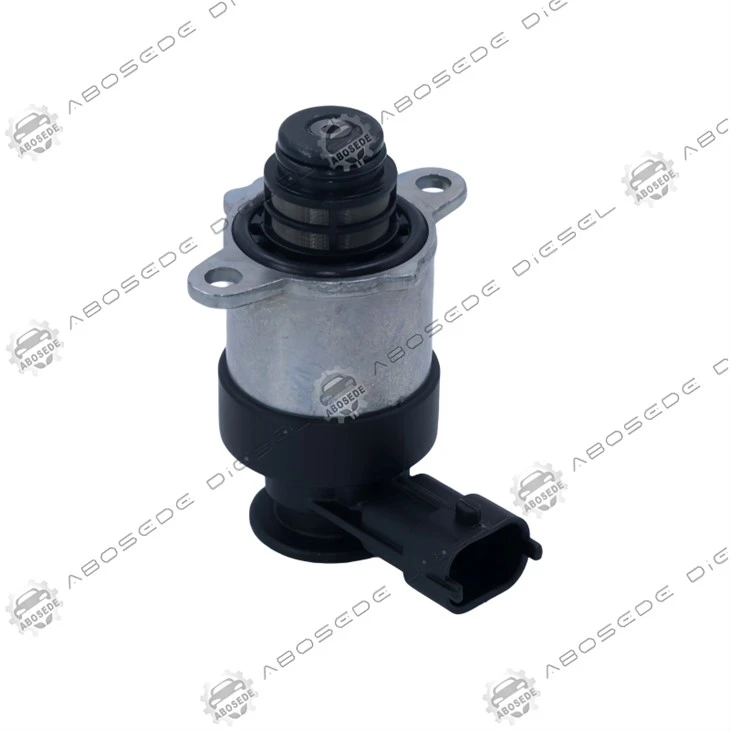

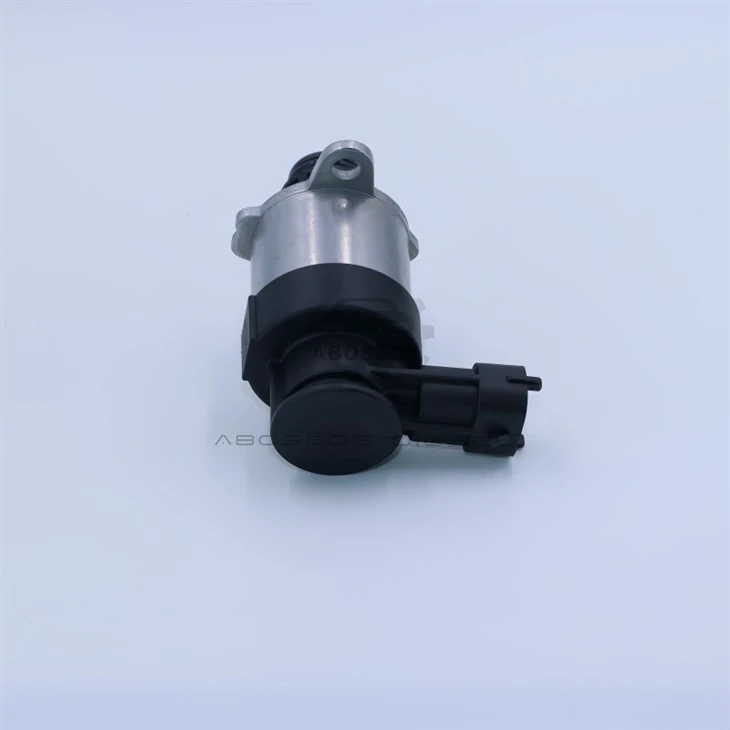
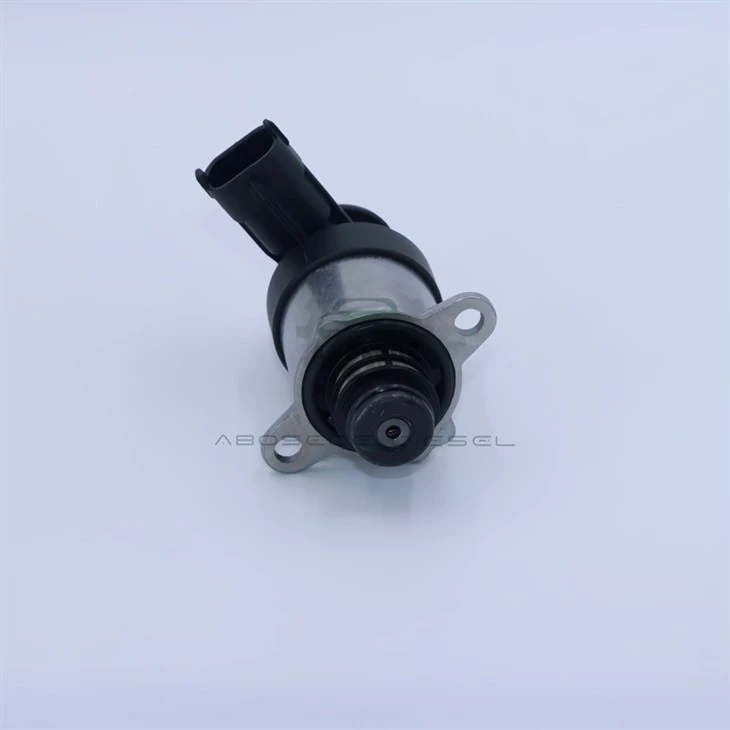
Bosch 0928400656 – The Metering Valve That Adapts To Fuel Viscosity, Not Just Duty Cycle
1. Product:0928400656
2. Compatible Equipment: Diesel Fuel Injection Systems
3. Manufacturer: Aftermarket OEM Replacement
4. Condition: Brand New, Fully Tested
5. Origin: ABOSEDE Diesel
6. Shipping period: 3-5 business days
7. Payment terms: T/T, Western Union, PayPal
- Fast Delievery
- Quality Assurance
- 24/7 Customer Service
Product Introduction
Diesel fuel is not a constant fluid. Its viscosity changes by more than 300 % between a cold winter morning and a hot summer afternoon – and that change directly affects how much fuel flows through a given orifice at a given pressure. Most metering valves treat viscosity as an external disturbance, something the ECU must correct for through temperature‑based trims. The 0928400656 takes a different approach: its internal hydraulic design partially compensates for viscosity variations, so the flow‑to‑duty relationship remains more stable across the full temperature spectrum. This means the ECU has to make fewer viscosity‑related corrections, leaving more adaptive capacity for other variables like injector wear and pump ageing. It is a valve that works with the fuel, not against it.
The Physics of Viscosity – And Why It Matters for Metering
At the most basic level, a metering valve is an adjustable orifice. The flow through any orifice depends on the pressure differential, the orifice area, and the fluid's viscosity – higher viscosity means lower flow for the same opening. When the engine is cold, diesel is thick; when it is hot, diesel runs thin. If a valve has no built‑in compensation, the ECU must continuously adjust the duty cycle to maintain the desired rail pressure, consuming fuel trim authority that could otherwise be used for emissions control or transient response. The 0928400656 incorporates a flow‑shaping geometry at the valve seat – a carefully profiled edge that creates a slight pressure‑dependent opening effect. At low temperatures, where viscosity is high, this geometry generates a small additional opening force from the fuel pressure itself, counteracting the viscosity‑induced flow reduction. The result is a flow curve that shifts by less than 5 % across the entire viscosity range from 1.5 cSt to 4.5 cSt – a level of stability that reduces the ECU's temperature‑based learning load by approximately 30 % compared to standard valve designs.
The Viscosity‑Compensating Seat Design – A Closer Look
The innovation in the 0928400656 is not visible from the outside. Inside the valve body, the seat where the armature closes against the orifice has a micro‑radiused edge rather than a sharp corner. This radius creates a flow coefficient that varies with the Reynolds number of the fuel – a dimensionless parameter that changes with both flow velocity and viscosity. At low Reynolds numbers (cold, viscous fuel), the radius increases the effective discharge coefficient, allowing more flow than a sharp‑edged seat would permit. At high Reynolds numbers (hot, thin fuel), the effect diminishes, so flow increase is naturally limited. This passive hydrodynamic compensation requires no moving parts, no additional sensors, and no ECU intervention – it is built into the fluid path itself. The result is a valve that delivers a more consistent fuel mass per duty step, regardless of whether the engine is starting from freezing or running at full load in desert heat.
Failure Mechanisms – And How the 0656 Fights Back
The most common failure in the 0656 family is not electrical burnout but a gradual loss of the viscosity‑compensating benefit caused by seat erosion. As the armature repeatedly contacts the valve seat over millions of cycles, the micro‑radius can become flattened, especially if the fuel contains abrasive particles. Once the radius is worn, the viscosity compensation diminishes, and the ECU begins to see a temperature‑dependent flow shift that it cannot fully correct. The genuine 0928400656 uses a hardened stainless steel seat insert with a diamond‑polished radius that resists erosion for over 200,000 km of normal service. The armature itself is coated with a chromium‑nitride layer that reduces wear on the mating face, preserving the radius geometry throughout the valve's service life.
Installation – The Adaptation That Preserves Viscosity Compensation
Installing the valve is a familiar process – clean the pump mounting surface, lubricate and install the new O‑ring and backup ring, torque the retaining nut to 24 Nm ± 2 Nm. However, the 0928400656 has a specific requirement that many workshops overlook: perform a full adaptation reset after the engine reaches operating temperature, not immediately after installation. The reason is that the valve's viscosity‑compensating characteristics are temperature‑dependent, and the ECU's adaptation algorithm needs to sample the valve's response across the entire temperature spectrum before it can correctly integrate the new flow curve. If you reset the adaptation cold, the ECU will learn a curve based on cold fuel, and then have to re‑adapt as the engine warms up. The correct sequence is: install, drive until the engine reaches 80 °C coolant temperature, then perform the reset using your diagnostic tool. This single step can cut the adaptation period from several hundred kilometres to just a few drive cycles.
Frequently Asked Questions
Q1: How can I tell if my current valve has lost its viscosity‑compensating ability?
→ Monitor the "fuel temperature" and "long‑term fuel trim" live data simultaneously. If the trim shifts by more than 5 % when the fuel temperature changes from 20 °C to 80 °C, the valve's seat radius is likely worn – a well‑functioning 0656 will show less than 2 % shift across that same range.
Q2: Can the 0928400656 be used on a CP4 pump if I change the connector?
→ No. The 0656 is calibrated for CP3.2/CP3.3 pump inlet geometry – the flow gain and viscosity profile are specific to that pump family. Installing it on a CP4 will result in incorrect fueling across the entire operating range.
Q3: Why does my engine run fine in summer but hesitate on the first acceleration of a winter morning?
→ This is a classic symptom of a valve that has lost viscosity compensation. The ECU's cold‑start learning is triggered by temperature, but if the valve's flow curve shifts too much with viscosity, the learned values are insufficient – the 0656 addresses this by reducing the viscosity‑induced shift in the first place.
Q4: What is the recommended service interval for this valve in a Toyota Hilux used for heavy towing?
→ For heavy‑duty use with frequent high‑load operation, we suggest inspection at 100,000 km and replacement at 150,000 km. Towing increases average rail pressure and duty cycle, accelerating seat wear compared to light‑duty highway use.
Q5: I replaced the valve but still get a P0088 (rail pressure too high) code under load – is the valve faulty?
→ Not necessarily. P0088 under load often points to a stuck pressure regulator on the rail, not the metering valve. The metering valve controls supply flow; the pressure regulator controls return. If the regulator is slow, rail pressure can overshoot regardless of the metering valve's performance.
Q6: Does this valve require any special fuel filter micron rating?
→ The standard 80‑micron inlet screen on the 0656 is designed to work with fuel filters of 5‑10 micron absolute rating – the same as the vehicle's original specification. Using a finer filter (2‑3 micron) may reduce the inlet pressure and affect the viscosity‑compensating hydraulic effect.


Flexible Payment Methods for Your Convenience
To make your purchasing experience smooth and easy, we offer a variety of secure payment options:

Bank Transfer
Supports multiple currenciesand bank payment methods.

Western Union
Quick and global money transfers.

PayPal
Safe and convenient online payment.

Alibaba
Enjoy extra protection with trusted Alibaba transactions.
We're here to make your order process worry-free - choose the payment method that works best for you!
Shipping Made Simple

Customer reviews

Hot Tags: bosch 0928400656 – the metering valve that adapts to fuel viscosity, not just duty cycle, China bosch 0928400656 – the metering valve that adapts to fuel viscosity, not just duty cycle manufacturers, suppliers, factory, 0445120066, Bosch CR Injectors, Diesel Control Valve, F00BC80045, F00RJ01479, Fuel Injector Valve
You Might Also Like
-

0928400679 Bosch Fuel Metering Valve – OEM Matched C...
-

0928400653 Bosch Inlet Metering Valve – Injector Ret...
-

0928400802 Bosch Inlet Metering Valve – Injection Pr...
-

1467C45013 Fuel Pump Overflow Valve – High‑Precision...
-

04226-0L020 Suction Control Valve – Closed‑Loop Resp...
-

F00RJ02697 (F 00R J02 697) — Bosch Injector Solenoid...
