


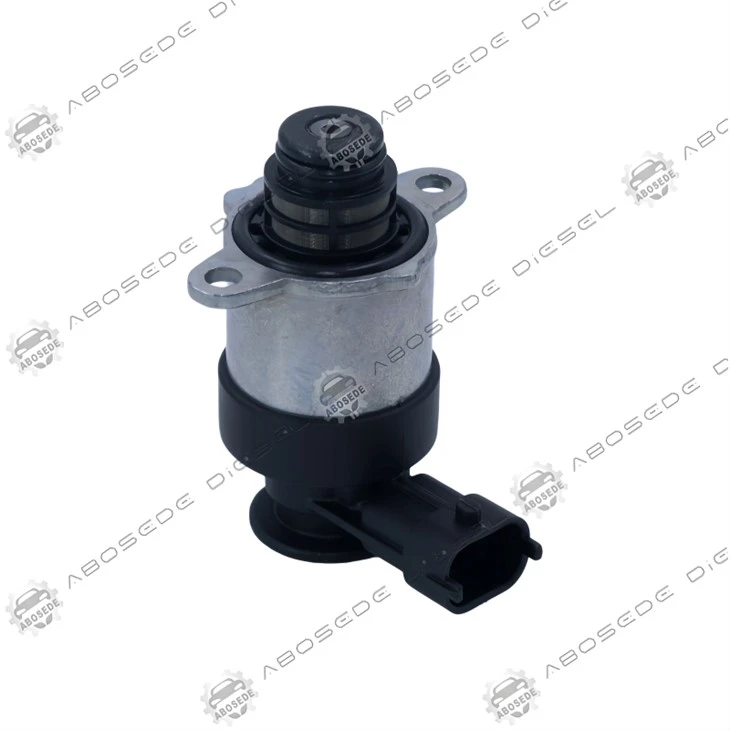

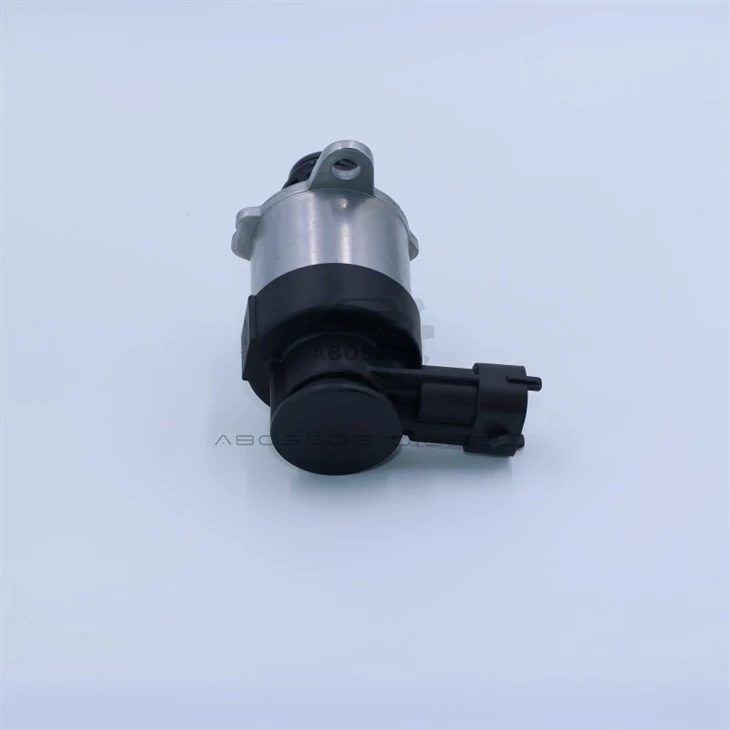
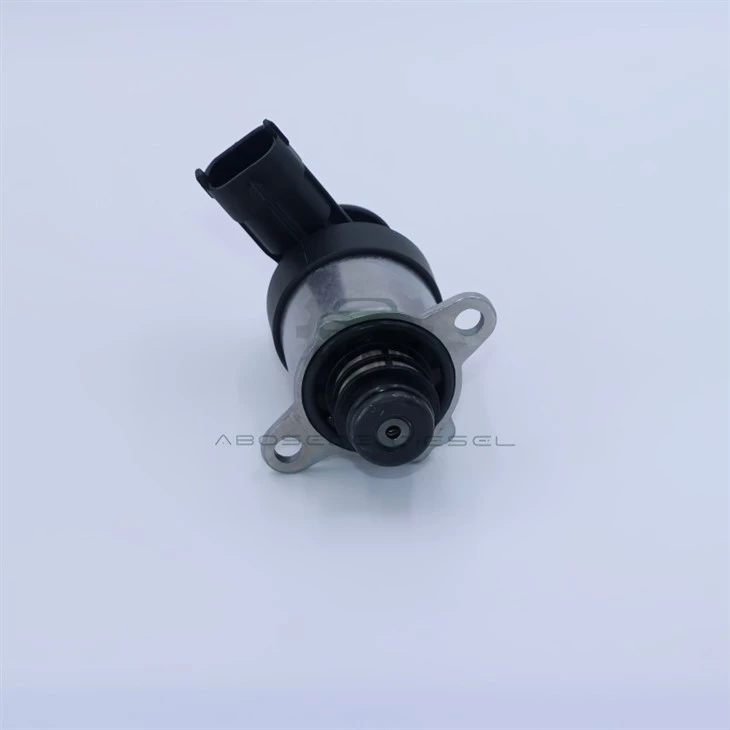
Bosch 0928400671 – The Metering Valve That Starts At The Right Zero Point
1. Product:0928400671
2. Compatible Equipment: Diesel Fuel Injection Systems
3. Manufacturer: Aftermarket OEM Replacement
4. Condition: Brand New, Fully Tested
5. Origin: ABOSEDE Diesel
6. Shipping period: 3-5 business days
7. Payment terms: T/T, Western Union, PayPal
- Fast Delievery
- Quality Assurance
- 24/7 Customer Service
Product Introduction
Every metering valve has a physical zero point – the armature position when no current is applied. That position determines how much fuel flows at minimum duty, and it sets the baseline from which all metering adjustments are made. If the zero point is even slightly off, the entire flow curve shifts, and the ECU must apply a constant offset to compensate – consuming adaptive range that should be reserved for wear and fuel quality variations. The 0928400671 is manufactured with a tightly controlled zero‑position tolerance, ensuring that the valve's minimum‑flow point aligns with the ECU's default calibration. This means the ECU does not have to "find" the new valve; it already knows where it is.
The Cost of an Incorrect Zero Point
When a valve is replaced, the ECU does not automatically know the new valve's zero position – it has to learn it through adaptation. During this learning period, the engine runs with a small but persistent fueling error. If the new valve's zero point is significantly different from the old one, the ECU must apply a large correction – sometimes exceeding 8 % of the total fuel delivery. This correction consumes the ECU's adaptive headroom, leaving less capacity to compensate for injector wear, fuel density changes, and air filter restriction. The 0928400671 is calibrated so that its zero point falls within the ECU's default table – the table that assumes a new, factory‑spec valve. The adaptation process, when performed correctly, is quick and requires only minimal corrections, preserving the ECU's full adjustment range for other variables.
Zero Point – What It Is and Why It Drifts
The zero point of a metering valve is determined by the pre‑load on the internal spring – the force that holds the armature in the fully open position when no current is applied. Over time, this spring loses tension due to metal fatigue, and the zero point shifts. A valve that originally flowed, say, 100 % at 0 % duty may drift to 103 % or 97 % as the spring relaxes. The ECU can compensate for this drift up to a point – but when the drift exceeds approximately 5 %, the correction becomes large enough to affect other parts of the fuel map. The genuine 0928400671 uses a spring that is pre‑cycled during manufacturing – a process that stabilises the spring's length and tension before assembly. This means the zero point is far less likely to drift during the valve's service life, keeping the ECU's zero‑offset correction small and stable.
Failure Mechanisms Related to Zero Shift
The most common zero‑related failure is not a sudden breakdown but a gradual drift that goes unnoticed until the ECU's long‑term fuel trim reaches its limit. At that point, the engine may still run, but the fuel consumption increases, and the diagnostic system may set a code for fuel trim out of range. The spring is the most common cause of this drift – especially in applications with high vibration, such as heavy‑duty trucks and off‑highway equipment. The 0928400671 addresses this with a spring that is not only pre‑cycled but also made from a chrome‑vanadium alloy that resists stress relaxation better than standard spring steel. The armature guide is also coated with a low‑friction layer that reduces the side load on the armature, preventing the uneven wear that can shift the zero point by changing the armature's resting angle.
Installation – The Zero‑Reset Protocol
Replacing the valve is a standard procedure – clean the mounting face, replace the O‑ring and backup ring, torque the retaining nut to 24 Nm ± 2 Nm. However, for the 0928400671, the zero‑reset procedure is unusually important. After installation, use your diagnostic tool to perform a "metering valve zero learn" – this is not the same as a full adaptation reset. The zero learn specifically calibrates the ECU's understanding of the valve's minimum‑flow point, and it should be performed with the engine off, ignition on, and fuel pressure at zero. This allows the ECU to measure the valve's baseline resistance and establish a new zero reference. If this step is skipped, the ECU will retain the old zero offset, and the new valve's tight zero tolerance will be wasted.
Frequently Asked Questions
Q1: How can I tell if my valve's zero point has drifted without laboratory equipment?
→ Monitor the "short‑term fuel trim" at idle with the engine warm and no load. If the trim is consistently positive (above +3 %) and does not return to near zero after a reset, the zero point may have drifted. A healthy 0671 shows a trim within ± 2 % at idle.
Q2: Can I adjust the zero point myself by shimming the spring?
→ No. The spring pre‑load is factory‑set and any attempt to modify it will alter the magnetic force balance and void the valve's calibration. The valve is a sealed assembly – replacement is the only correct solution for zero‑point issues.
Q3: Why does my engine hesitate only on the first acceleration after a cold start, but run fine once warm?
→ This is often caused by a zero point that is correct at operating temperature but drifts when cold. The ECU's temperature compensation is based on the assumption that the zero point is stable across temperature – if it is not, the cold‑start fueling is incorrect. The 0671's pre‑cycled spring minimises this drift.
Q4: Is the 0928400671 compatible with the CP4.2 pump used in later Volvo trucks?
→ No. The 0671 is calibrated for CP3.2/CP3.3 pumps. CP4.2 pumps have a different inlet geometry and zero‑point requirement – use the valve specified for your pump casting number.
Q5: What is the typical service life of the zero‑point calibration in this valve?
→ The pre‑cycled spring maintains its zero‑point within specification for approximately 250,000‑300,000 km in highway service. In severe applications with high vibration (off‑road, construction), we recommend inspection at 150,000 km.
Q6: I replaced the valve and reset the adaptation, but the fuel trim still shows a positive offset – what else could be wrong?
→ Check the fuel filter pressure drop and the low‑pressure supply pump. If the inlet pressure is below specification (typically 6‑9 bar for CP3 pumps), the valve's zero point appears to shift because the hydraulic force on the armature changes. Address the supply pressure first, then re‑evaluate the trim.


Flexible Payment Methods for Your Convenience
To make your purchasing experience smooth and easy, we offer a variety of secure payment options:

Bank Transfer
Supports multiple currenciesand bank payment methods.

Western Union
Quick and global money transfers.

PayPal
Safe and convenient online payment.

Alibaba
Enjoy extra protection with trusted Alibaba transactions.
We're here to make your order process worry-free - choose the payment method that works best for you!
Shipping Made Simple

Customer reviews

Hot Tags: bosch 0928400671 – the metering valve that starts at the right zero point, China bosch 0928400671 – the metering valve that starts at the right zero point manufacturers, suppliers, factory, 0445120067, Bosch CR Injectors, Bosch Volvo Deutz Renault, F00BC80045, F00RJ01479, Fuel Injector Valve
You Might Also Like
-

0928400681 Bosch Fuel Metering Valve – Tip-In/Tip-Ou...
-

0928400535 Bosch Fuel Metering Valve – Stop-Start Sy...
-

0928400726 Bosch Inlet Metering Valve – High-Duty Ma...
-

1467C45013 Fuel Pump Overflow Valve – High‑Precision...
-

0928400617 — Bosch Fuel Metering / Pressure Regulato...
-

Bosch 0445224047 — Common-Rail Fuel Distributor Pipe...
