


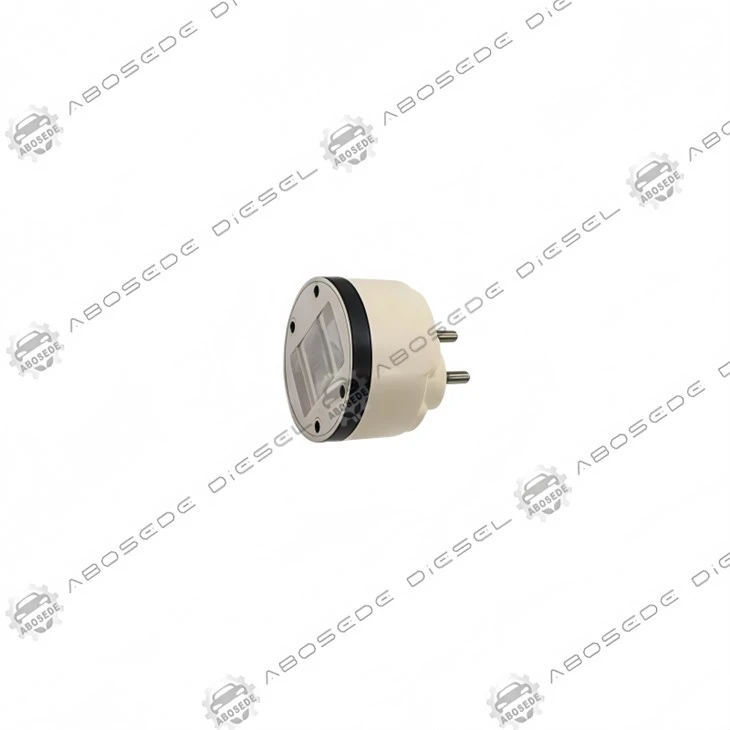

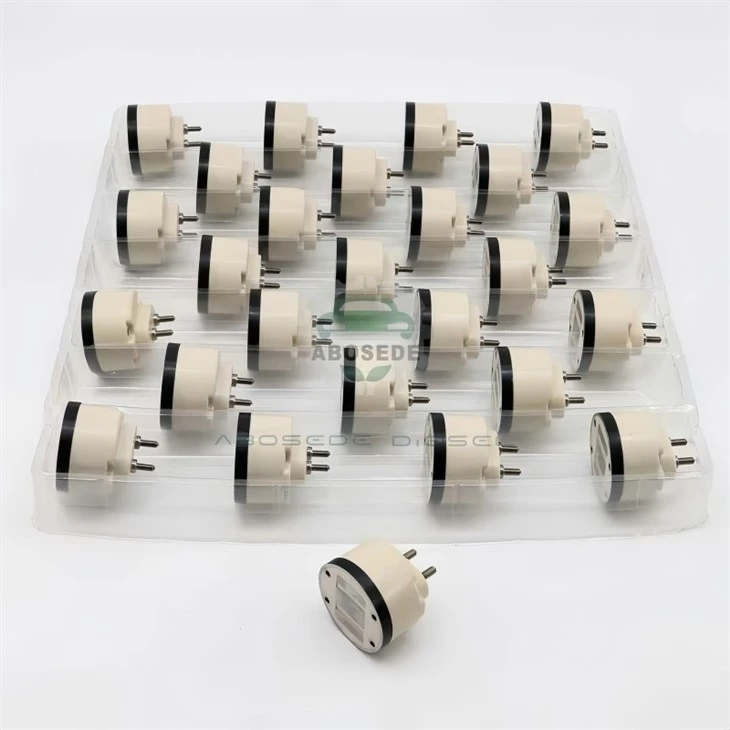
CAT C13 Solenoid Valve Assembly – Latching-Action Actuator For MEUI Injector Flow Control | 10R-1274 Platform
1. Product:C13 Solenoid Valve Assembly
2. Compatible Equipment: Diesel Fuel Injection Systems
3. Manufacturer: Aftermarket OEM Replacement
4. Condition: Brand New, Fully Tested
5. Origin: ABOSEDE Diesel
6. Shipping period: 3-5 business days
7. Payment terms: T/T, Western Union, PayPal
- Fast Delievery
- Quality Assurance
- 24/7 Customer Service
Product Introduction
In the Caterpillar C13 MEUI (Mechanically actuated Electronically controlled Unit Injector) system-found in heavy-duty trucks, excavators, and emergency gen-sets-the solenoid valve assembly employs a latching-action magnetic circuit that fundamentally changes how the ECM manages injection duration. Unlike conventional solenoids that require continuous hold current to keep the valve open, the C13's latching design uses a permanent magnet to maintain armature position once fully lifted, requiring only a brief release pulse to close. This unique architecture demands extremely precise winding characteristics-if the latching force is too low, the valve closes prematurely; if too high, the release pulse fails to overcome the magnetic latch. A solenoid with degraded latching capability causes erratic injection durations, often manifesting as uneven cylinder temperatures and surging under light loads.
Our product is a latching-type solenoid assembly engineered specifically for the C13 injector platform, validated against performance specifications for part numbers 10R-1274, 10R-7236, 10R-2977, and 10R-3262. The assembly features a samarium-cobalt permanent magnet integrated into the magnetic circuit, providing stable latching force across the engine's -40°C to 140°C operating temperature range.
1. 📋 Injector Compatibility Matrix – Verified Cross-Reference
This latching solenoid is electrically and mechanically matched to the following C13 injector part numbers (serial prefixes: KCB, KCA, KCD, 2KS, 3CS, 4AR, 5KZ, 6NZ, 7CZ, 8PN):
| Injector Part Number | Solenoid Service Reference | Application Context |
|---|---|---|
| 232-1198 | 10R-1274 | Standard C13 ACERT (2003–2007) |
| 239-4908 | 10R-1274 | Vocational / construction (high cyclic load) |
| 249-0705 | 10R-7236 | On-highway long-haul (fuel economy tune) |
| 249-0708 | 10R-2977 | Marine auxiliary (constant 1800 RPM) |
| 249-0713 | 10R-3262 | High-altitude package (> 2,000m) |
| 250-1309 | 10R-3262 | Industrial gen-set (emergency standby) |
| 253-0608 | 20R-8045 | Tier 3 emissions compliant |
| 292-3666 | 20R-8046 | High-performance (600+ HP) |
| 332-1419 | 20R-2437 | Late-model C13 with ADEM IV ECM |
Critical Electrical Note: The C13 latching solenoid has a distinct pin configuration-Pin A (Pull-in), Pin B (Hold), Pin C (Common ground), and Pin D (Release trigger). This 4-pin arrangement differs from the 3-pin configuration found on non-latching solenoids. The ECM provides a brief reverse-current pulse to Pin D to release the latch. Our solenoid is pre-configured for this 4-pin operation.

2. 📊 Performance Data – The "Latching Force" Characteristic
For the C13 latching solenoid, the critical metric is the latching retention force-the magnetic force that holds the armature in the open position after the pull-in current is removed:
| Parameter | New Solenoid Specification | Degradation Threshold |
|---|---|---|
| Latching Retention Force | 12.5 N ±0.5N | < 10.0 N (premature closure) |
| Pull-in Current Required | 8.5 A peak (first 0.5ms) | > 10.0 A (ECM overload risk) |
| Hold Current (after latch engaged) | 0.0 A (fully latched) | N/A (unlatching = failure) |
| Release Pulse Energy | 0.5 J (reverse current, 5ms) | > 1.0 J (ECM stress) |
| Coil Resistance (pull-in winding) | 1.10 Ω ±0.04Ω @ 20°C | > 1.20Ω (degraded winding) |
| Permanent Magnet Stability | < 1% force loss per 1,000 hours | > 2% loss = replacement due |
| Latching Response Time (open) | 1.45 ms @ 24V | > 1.75 ms (timing shift) |
Graphical Abstraction – The "Latching Cycle" Waveform:
Visualize the current waveform over time: an initial spike of 8.5A for 0.5ms to lift the armature, followed by a brief hold pulse to ensure full seating, then the current drops to zero as the permanent magnet takes over. At the end of injection, a reverse-current pulse (-2.0A for 5ms) counteracts the magnet's field, allowing the spring to close the valve. A degraded latching solenoid will show excessive current during the hold phase (indicating weak permanent magnet force), causing the ECM to compensate with longer hold pulses. Our solenoid's samarium-cobalt magnet maintains stable latching force through 10,000+ cycles, ensuring the ECM's "zero-current" hold strategy functions as designed.
3. 🧬 Material Engineering – The "Permanent Magnet" Integration
Unlike conventional solenoids that rely solely on electromagnetic force, the C13's latching design incorporates a permanent magnet that changes the material requirements significantly:
Samarium-Cobalt (SmCo) Magnet: This rare-earth magnet material maintains its magnetic properties up to 300°C-far beyond the C13's maximum operating temperature. It also exhibits extremely low thermal demagnetization (< 0.5% per 100°C), ensuring consistent latching force from cold start to full load.
Flux Shunt Ring: A copper ring integrated into the pole piece provides an eddy-current braking effect that dampens armature bounce-a critical feature for latching designs, as the armature's momentum can otherwise cause it to oscillate before the magnet locks it in place.
Release Coil Optimization: The release winding is wound with larger-gauge wire to handle the higher peak currents required for the reverse pulse, reducing resistive heating during the release phase.
Visual Innovation – Release Terminal Identification:
The connector housing features a raised dot adjacent to the release terminal (Pin D) and a grooved texture on the pull-in terminal (Pin A), allowing identification by touch in low-visibility conditions. The housing itself is molded in blue for easy visual identification as a latching-type assembly (non-latching solenoids are typically black or gray).
4. 🔧 Installation Protocol – The "Latching Verification" Method
Step 1 – Electrical Pre-Check: Measure the resistance between Pin A and Pin C (pull-in winding): 1.10Ω ±0.04Ω. Measure between Pin B and Pin C (hold winding): 4.20Ω ±0.10Ω. The release winding (Pin D to Pin C) should read 2.80Ω ±0.08Ω.
Step 2 – Mechanical Installation: Position the solenoid over the injector's control valve bore. Torque the two M5 retaining screws to 2.0 N·m (the C13 uses M5 hardware, not M6).
Step 3 – Latching Confirmation: With the solenoid installed but not yet calibrated, apply a 12V pulse to the pull-in pin for 0.5 seconds. You should hear a distinct click, and the armature should remain lifted even after the voltage is removed (the permanent magnet should hold it). To release, apply 12V to the release pin (reverse polarity)-you should hear a second click.
Step 4 – ECM Calibration: Run the "Latching Solenoid Learn" routine in Cat ET-this is a separate procedure from the standard injector learn. The ECM will measure the release pulse energy required and store this value for future injections.
📋 FAQ – Specific to C13 Latching Solenoid Operation
Q1: Our C13 has a "359" fault, but the dealer says the ECM is fine. Could the latching solenoid's permanent magnet be weakening?
Yes-the 359 fault (Response Time Fault) is often caused by a weakened permanent magnet that cannot hold the armature open. This causes the valve to close prematurely, and the ECM detects the shortened injection duration. The magnet strength can be verified by measuring the pull force required to separate the armature; if it's below 10N, replace the solenoid.
Q2: I hear a double-click sound during the buzz test-is that normal for a latching solenoid?
Yes-the double-click is the latching action: the first click is the pull-in, and the second is the permanent magnet engaging. A single click indicates the latching magnet is not engaging (or has been demagnetized). Replace the solenoid immediately.
Q3: Can this solenoid be used on a non-latching system if I modify the wiring?
No-the ECM programming for latching solenoids is completely different. The non-latching ECM does not provide the release pulse, so the solenoid would remain latched open (injector stuck on). This would cause severe engine damage. Only install on engines originally equipped with latching solenoids.
Q4: Our C13 operates in a high-vibration environment (rock crusher). Will vibration affect the permanent magnet?
Samarium-cobalt magnets are highly resistant to vibration-induced demagnetization. We have tested this solenoid at 10 G vibration (10–500 Hz) with no measurable force loss. However, we recommend checking the solenoid torque at each service interval, as vibration can loosen retaining screws.
Q5: There's a "release energy" parameter in Cat ET. Should I adjust it for this solenoid?
No-the ECM learns the correct release energy automatically during the "Latching Solenoid Learn" procedure. Manually adjusting this parameter can cause the release pulse to be too weak (valve stays open) or too strong (damage to the release winding). Let the ECM learn the value.
Q6: What's the expected lifespan of the permanent magnet?
The samarium-cobalt magnet has a theoretical lifespan of over 20 years with < 1% force loss per 10,000 hours. In practice, the solenoid's winding insulation fails before the magnet degrades. The magnet itself is not a wear item-it will outlast the coil windings.


Flexible Payment Methods for Your Convenience
To make your purchasing experience smooth and easy, we offer a variety of secure payment options:

Bank Transfer
Supports multiple currenciesand bank payment methods.

Western Union
Quick and global money transfers.

PayPal
Safe and convenient online payment.

Alibaba
Enjoy extra protection with trusted Alibaba transactions.
We're here to make your order process worry-free - choose the payment method that works best for you!
Shipping Made Simple

Customer reviews

Hot Tags: cat c13 solenoid valve assembly – latching-action actuator for meui injector flow control | 10r-1274 platform, China cat c13 solenoid valve assembly – latching-action actuator for meui injector flow control | 10r-1274 platform manufacturers, suppliers, factory, cat valve
You Might Also Like
-

CAT C12 Solenoid Valve Assembly – Precision Fluidics...
-

CAT C10 Solenoid Valve Assembly | Electronic Control...
-

CAT C11 Injector Solenoid Valve – The Time-Transduce...
-

CAT C9 Diesel Valve – The High-Pressure Actuation Co...
-

CAT C9 Oil Control Valve – Precision Electro-Hydraul...
-

CAT C7 Engine Oil Control Valve – Precision Flow Reg...
