


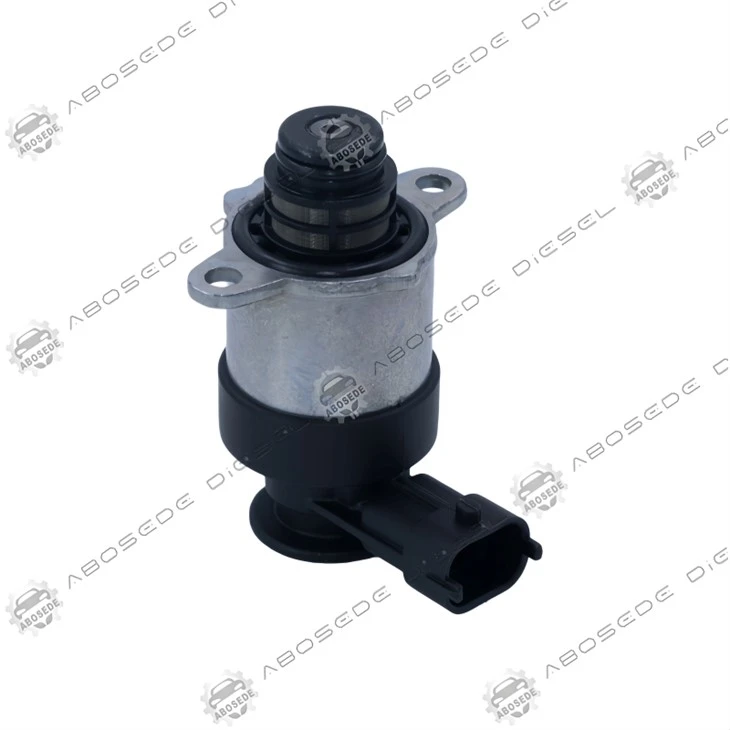

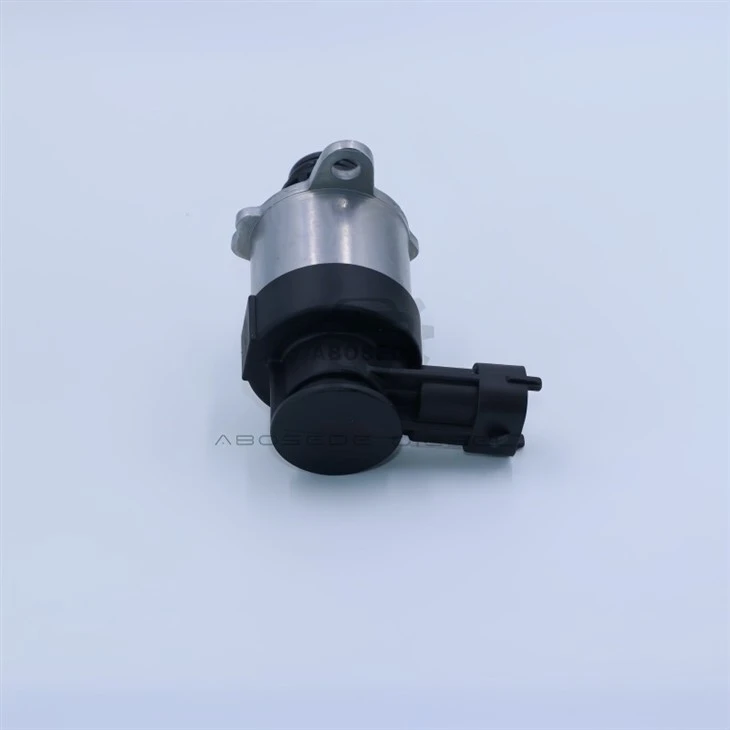
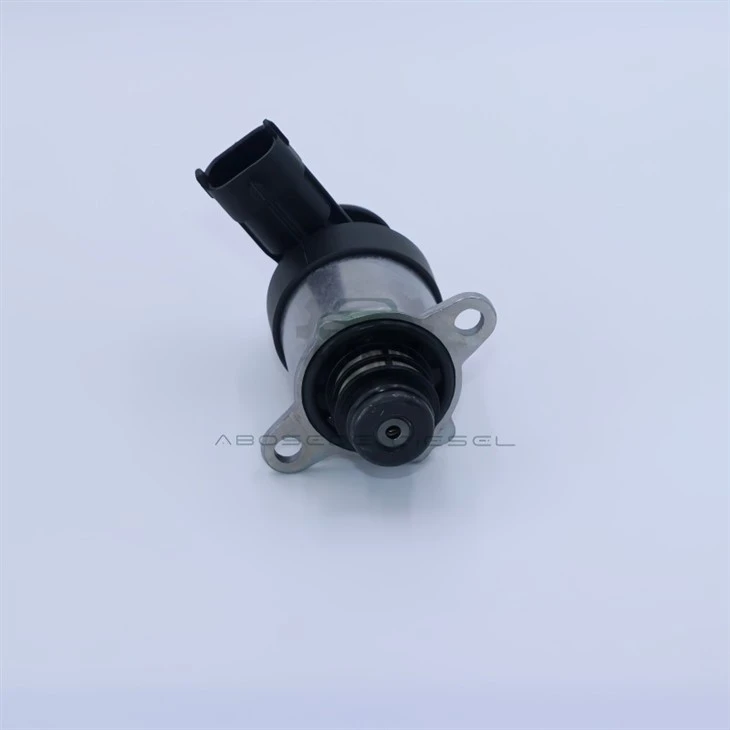
Bosch 0928400652 – The Metering Valve That Manages Friction For Consistent Actuation
1. Product:0928400652
2. Compatible Equipment: Diesel Fuel Injection Systems
3. Manufacturer: Aftermarket OEM Replacement
4. Condition: Brand New, Fully Tested
5. Origin: ABOSEDE Diesel
6. Shipping period: 3-5 business days
7. Payment terms: T/T, Western Union, PayPal
- Fast Delievery
- Quality Assurance
- 24/7 Customer Service
Product Introduction
Every metering valve contains moving parts – an armature that slides within a guide, a spring that compresses and extends, and a seat that the armature contacts millions of times. These moving surfaces generate friction, and friction is the enemy of consistency. If the friction between the armature and its guide varies from one actuation to the next, the valve's opening time changes – and that change translates directly into a fuel delivery error that the ECU cannot fully correct. The 0928400652 is engineered with a friction‑managed design that maintains low, consistent sliding resistance across the valve's service life. This is not a feature that appears on a specification sheet, but it is a fundamental factor in the valve's long‑term performance and the engine's combustion stability.
The Friction Variable – Why It Matters for Metering
When the ECU sends a PWM signal to the metering valve, the current builds in the coil, creating a magnetic force that pulls the armature against the spring and against the hydraulic force of the fuel. The armature must move a short distance – typically less than 0.5 mm – and the time it takes to move this distance is determined by the net force (magnetic minus spring minus friction minus hydraulic) divided by the armature mass. If the friction changes – because of wear, contamination, or surface degradation – the net force changes, and the armature takes longer or shorter to move. This variation in opening time is not compensated by the ECU's feedback loop, which operates on a slower timescale. The result is a small but persistent fueling error that affects combustion noise, emissions, and fuel economy. The 0928400652 is designed to keep the friction force within a narrow band, ensuring that the armature responds consistently to every PWM command.
The Tribological Design – Surfaces That Work Together
The friction between the armature and its guide is determined by three factors: the materials in contact, the surface finish, and the lubricant (in this case, diesel fuel). The genuine 0928400652 uses a guide made from a non‑magnetic stainless steel with a ground and honed surface finish of Ra 0.15 µm – a level of smoothness that minimises the boundary friction when the armature starts to move. The armature itself is coated with a diamond‑like carbon (DLC) layer that provides a low coefficient of friction – typically 0.08‑0.12 against the steel guide, compared to 0.25‑0.35 for uncoated steel‑on‑steel contact. The DLC coating also has a high hardness, which resists abrasive wear from particles that may pass through the fuel filter. This combination of surface finish and coating ensures that the friction force does not increase significantly over the valve's service life, maintaining consistent actuation timing.
Failure Patterns Related to Friction Increase
The most common friction‑related failure in the 0652 is not a sudden sticking but a gradual increase in friction as the DLC coating wears away or as varnish deposits accumulate on the guide surface. The first symptom is often a slight roughness at idle – the valve's opening time has changed just enough to create a variation in injection quantity that the ECU cannot correct. As the friction increases further, the roughness becomes more pronounced, and the ECU may set a P0090 code for fuel pressure regulator performance. The genuine 0928400652 resists this through the DLC coating, which is approximately 3 microns thick and has a wear rate of less than 0.1 micron per 100,000 km under normal operating conditions. The guide surface is also polished to a finish that resists varnish adhesion, reducing the rate of deposit accumulation.
Installation – The Surface‑Protection Protocol
Installing the 0652 is similar to other CP3 valves – clean the mounting surface, replace the O‑ring and backup ring, torque the retaining nut to 24 Nm ± 2 Nm. However, there is a specific precaution: do not touch the armature guide or the DLC‑coated surface with bare fingers. The oils and acids from human skin can leave a residue that attracts contaminants or can react with the DLC coating over time. Use clean, lint‑free gloves when handling the valve, and if you must handle the valve without gloves, only touch the outer housing. This simple precaution protects the critical friction surfaces from contamination that could accelerate wear.
Frequently Asked Questions
Q1: How can I tell if my valve's friction has increased without removing it?
→ Perform a "response time test" using a diagnostic tool that measures the delay between the duty cycle command and the rail pressure change. If the delay has increased by more than 2 ms compared to the specification, friction is likely the cause – the DLC coating has worn or varnish has accumulated.
Q2: Can I use a fuel additive to reduce friction in the metering valve?
→ Fuel additives that improve lubricity can help reduce wear, but they will not restore a worn DLC coating. If the valve is already showing symptoms of increased friction, replacement is the only permanent solution – additives are a short‑term palliative at best.
Q3: Why does my valve's performance seem to vary with ambient temperature?
→ Diesel fuel's viscosity changes with temperature, and this affects the hydraulic forces on the armature. In a valve with high friction, the viscosity change can cause the net force to cross the "stiction" threshold at certain temperatures. The 0652's low‑friction design minimises this effect.
Q4: What is the expected service life of the DLC coating in this valve?
→ Under normal fuel conditions and regular filter changes, the coating is designed to last for the full service life of the valve – approximately 200,000‑250,000 km. In applications with poor fuel quality or infrequent filter changes, the coating may wear earlier due to abrasive particles.
Q5: I replaced the valve but the idle roughness persists – is the valve defective?
→ Not necessarily. Check the injector balance rates and the fuel pressure sensor reading. A rough idle can also be caused by uneven injector wear or a drifting rail pressure sensor. If the injectors are balanced and the sensor reading is stable, then the valve is likely performing correctly.
Q6: Does the 0652 require any special break‑in procedure for the DLC coating?
→ No. The DLC coating does not require a break‑in period – its friction characteristics are stable from the first actuation. The valve is ready for full performance immediately after installation, provided the ECU adaptation has been reset.


Flexible Payment Methods for Your Convenience
To make your purchasing experience smooth and easy, we offer a variety of secure payment options:

Bank Transfer
Supports multiple currenciesand bank payment methods.

Western Union
Quick and global money transfers.

PayPal
Safe and convenient online payment.

Alibaba
Enjoy extra protection with trusted Alibaba transactions.
We're here to make your order process worry-free - choose the payment method that works best for you!
Shipping Made Simple

Customer reviews

Hot Tags: bosch 0928400652 – the metering valve that manages friction for consistent actuation, China bosch 0928400652 – the metering valve that manages friction for consistent actuation manufacturers, suppliers, factory, 0445120066, 0445120067, Bosch Volvo Deutz Renault, F00BC80045, F00RJ01479, Fuel Injector Valve
You Might Also Like
-

0928400750 Bosch Fuel Metering Valve – Bump-Induced ...
-

0928400481 Bosch Fuel Metering Valve – Stable Pump T...
-

0928400642 Bosch Fuel Metering Valve – Linear Flow R...
-

0928400699 Bosch Inlet Metering Valve – Start-Stop C...
-

0928400487 Bosch Inlet Metering Valve – Hot Soak Vap...
-

0281006246 – Data-Driven Control For Smarter Diesel ...
