


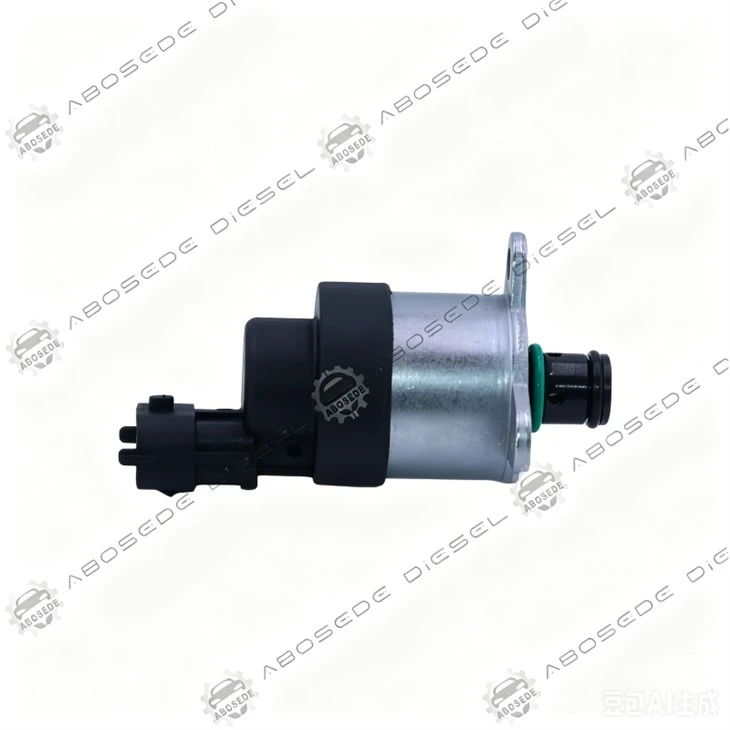

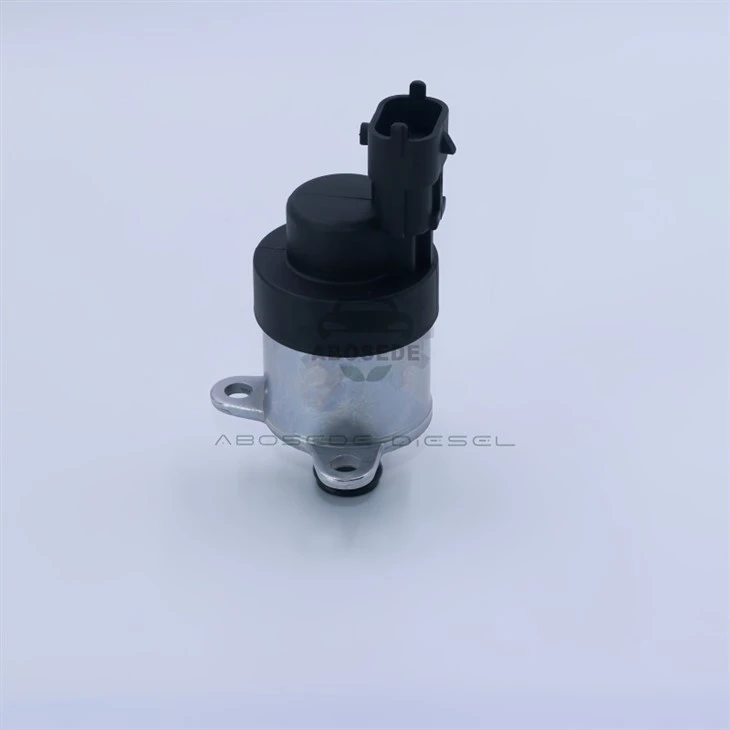
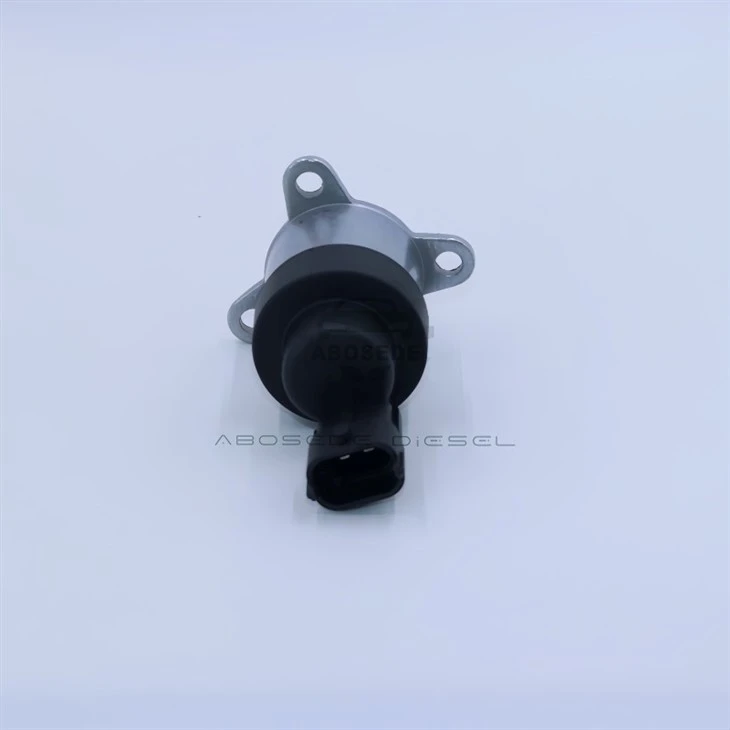
Bosch 0928400692 – The Metering Valve That Sustains The Internal Leakage Curve For Consistent Closed-Loop Control
1. Product:0928400692
2. Compatible Equipment: Diesel Fuel Injection Systems
3. Manufacturer: Aftermarket OEM Replacement
4. Condition: Brand New, Fully Tested
5. Origin: ABOSEDE Diesel
6. Shipping period: 3-5 business days
7. Payment terms: T/T, Western Union, PayPal
- Fast Delievery
- Quality Assurance
- 24/7 Customer Service
Product Introduction
In a common-rail system, the metering valve is not a perfect seal - it has a controlled internal leakage that ensures the armature guide remains lubricated and the spool moves freely. This leakage is not a defect; it is a design feature that is accounted for in the ECU's closed-loop control algorithm. However, as the valve wears, the leakage changes - it increases, and the ECU must adjust the duty cycle to compensate. If the leakage curve changes unpredictably, the closed-loop control becomes unstable, and the rail pressure oscillates. The 0928400692 is engineered with a leakage characteristic that remains stable over the valve's service life, ensuring that the closed-loop control algorithm operates with a consistent leakage offset. It is a valve that leaks predictably, so the ECU can control it precisely.
The Leakage Curve – Why Controlled Leakage Is a Design Feature
The metering valve has a small clearance between the spool and the sleeve - typically 4-6 µm. This clearance is necessary to allow the spool to move freely, but it also allows a small amount of fuel to leak past the spool. This leakage is not wasted - it lubricates the sliding surfaces and prevents the spool from sticking. The leakage also provides a small damping force that stabilises the spool movement. However, the leakage is not constant - it increases with the pressure and with the wear of the spool and sleeve. The ECU's closed-loop control algorithm is designed to compensate for the leakage, but it assumes a known leakage curve. If the leakage curve changes, the compensation is no longer accurate. The 0928400692 uses a spool and sleeve with a controlled clearance that maintains a consistent leakage curve - the leakage does not change significantly with wear, and the ECU's compensation remains effective.
How the Leakage Curve Is Maintained
The leakage curve is maintained by the precision fit between the spool and the sleeve, and by the materials used. The 0928400692 uses a spool and sleeve that are manufactured from a wear-resistant steel alloy - a material that resists the abrasive wear that would increase the clearance. The spool is coated with a thin layer of diamond-like carbon (DLC) that reduces the coefficient of friction and resists wear. The sleeve is honed to a surface finish of Ra 0.06 µm, which is smooth enough to minimise the wear rate. The clearance is set to 5 µm - a value that provides the required leakage without compromising the metering accuracy. The clearance is verified on each valve by a leakage test - the valve is pressurised and the leakage rate is measured.
Failure Patterns – When the Leakage Curve Shifts
The most common failure related to the leakage curve is a gradual increase in the leakage rate. As the spool and sleeve wear, the clearance increases, and the leakage rate increases. The ECU compensates for this by reducing the duty cycle, but the compensation range is limited. When the leakage exceeds a certain threshold, the ECU can no longer compensate, and the rail pressure drops. The first symptom is often a P0087 (fuel pressure low) code that appears only at idle - the leakage is high enough to affect the idle pressure but not the high-load pressure. The genuine 0928400692 uses wear-resistant materials to slow this process, but the leakage will eventually increase. The valve is designed for a service life of 200,000-250,000 km with regular fuel filter changes.
Installation – The Leakage Check
Installing the 0692 is similar to other CP3 valves - clean the mounting surface, replace the O-ring and backup ring, torque the retaining nut to 24 Nm ± 2 Nm. However, there is a specific verification step: perform a leakage check after installation. With the engine at idle and at operating temperature, use a diagnostic tool to read the metering valve duty cycle. The duty cycle should be within the normal range for the engine. If the duty cycle is significantly lower than the specification, the leakage is high - the valve may be worn, or the installation may be incorrect. The leakage check is a quick test that can be performed with most diagnostic tools.
Frequently Asked Questions
Q1: How can I tell if my valve's leakage curve has shifted without removing it?
→ Monitor the metering valve duty cycle at idle - if the duty cycle is consistently low (less than 15 %), the leakage is high. Also, check the rail pressure at idle - if it is low and the pump is at maximum duty, the leakage may be excessive.
Q2: Can I use the 0928400692 on a Duramax that originally used the 0656?
→ Yes, in most CP3.3 applications. The 0692 has the controlled leakage curve that is particularly valuable for idle stability, and it is a direct replacement for the 0656 in many applications. Always verify compatibility with the engine's calibration.
Q3: Why does my engine have a low rail pressure at idle but a normal pressure at high speed?
→ This is a classic symptom of excessive internal leakage - at idle, the leakage is a significant proportion of the total flow, but at high speed, the flow demand is higher and the leakage has less impact. The 0692 is designed to prevent this by maintaining a consistent leakage curve.
Q4: What is the most common cause of the leakage curve shifting in this valve?
→ Wear on the spool and sleeve surfaces - the clearance increases with the wear. The 0692 uses wear-resistant materials to slow this process, but regular fuel filter changes (every 20,000 km) are the most effective prevention.
Q5: I replaced the valve but the idle pressure is still low - is the valve defective?
→ Check the fuel pressure sensor - a drifting sensor can cause a low reading that is not actually present. Also, check the inlet pressure to the pump - if it is below specification, the pump cannot fill the plungers, and the pressure will be low.
Q6: Does the leakage curve change with the fuel temperature?
→ Yes, the fuel viscosity changes with temperature, which affects the leakage rate. The 0692 is designed to maintain the leakage curve across the full temperature range, but a small change is normal and is compensated by the ECU's temperature compensation.


Flexible Payment Methods for Your Convenience
To make your purchasing experience smooth and easy, we offer a variety of secure payment options:

Bank Transfer
Supports multiple currenciesand bank payment methods.

Western Union
Quick and global money transfers.

PayPal
Safe and convenient online payment.

Alibaba
Enjoy extra protection with trusted Alibaba transactions.
We're here to make your order process worry-free - choose the payment method that works best for you!
Shipping Made Simple

Customer reviews

Hot Tags: bosch 0928400692 – the metering valve that sustains the internal leakage curve for consistent closed-loop control, China bosch 0928400692 – the metering valve that sustains the internal leakage curve for consistent closed-loop control manufacturers, suppliers, factory, 0445120066, Bosch CR Injectors, Diesel Control Valve, F00BC80045, F00RJ01479, Fuel Injector Valve
You Might Also Like
-

Bosch 0928400818 – The Metering Valve That Controls ...
-

0928400498 Bosch Fuel Metering Valve – High-Altitude...
-

0928400493 Bosch Fuel Metering Valve – Injector Back...
-

0928400666 Bosch Inlet Metering Valve – Armature Mic...
-

0928400644 Bosch Inlet Metering Valve – Multi-Stage ...
-

0928400746 — Bosch Fuel Inlet Metering / Pressure Re...
