


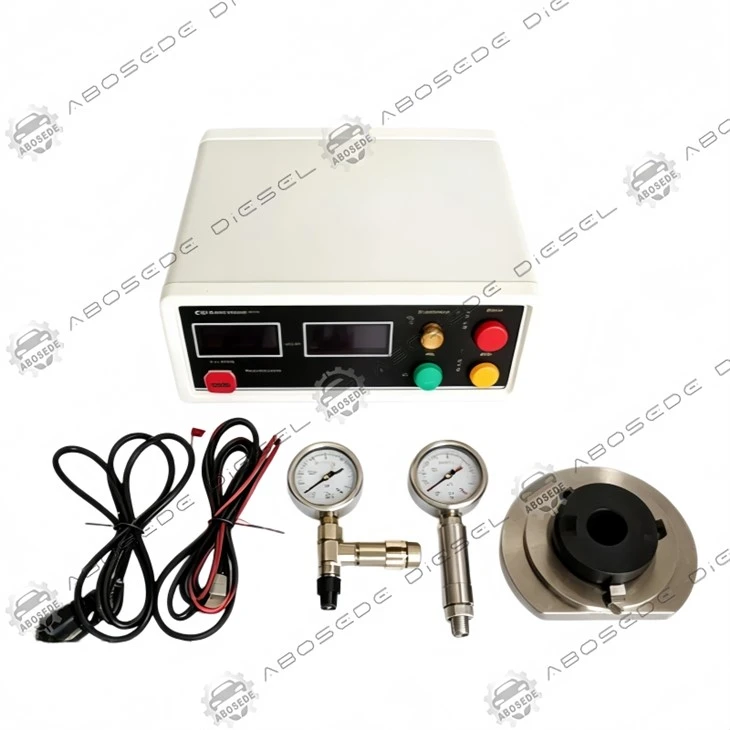

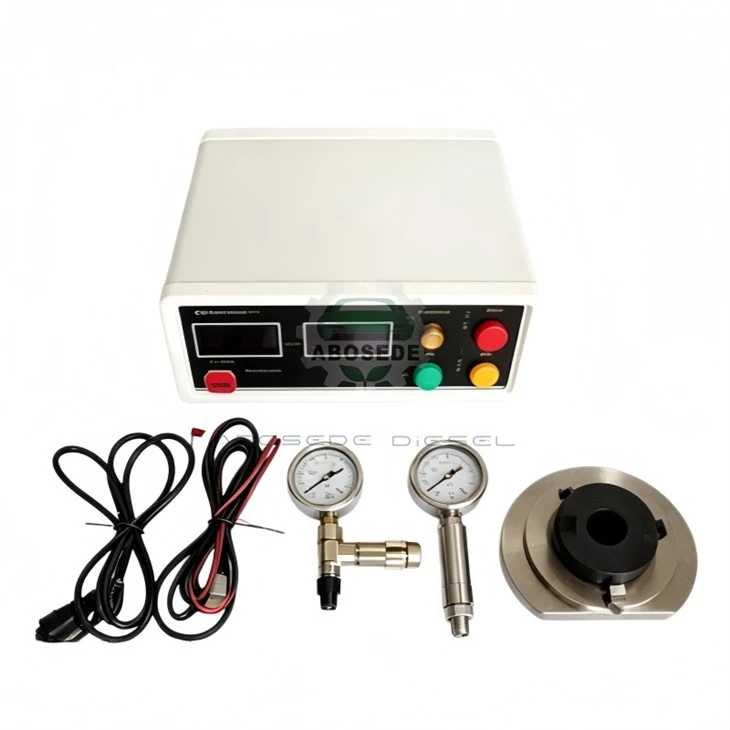
Caterpillar C7/C9 Actuation Pump Tester: Proportional Valve Drive & Euro-II Bench Integration For Pressure/Flow Dual-Parameter Validation
1. Product:Caterpillar C7/C9 Actuation Pump Tester
2. Compatible Equipment: Diesel Fuel Injection Systems
3. Manufacturer: Aftermarket OEM Replacement
4. Condition: Brand New, Fully Tested
5. Origin: Original :ABOSEDE DIESEL
6. Shipping period: 3-5 business days
7. Payment terms: T/T, Western Union, PayPal
- Fast Delievery
- Quality Assurance
- 24/7 Customer Service
Product Introduction
In Caterpillar's HEUI (Hydraulically actuated Electronically controlled Unit Injector) system, the actuation pump-often referred to as the "trigger pump" or "intensifier pump"-generates the high-pressure engine oil (typically 600–800 bar) that drives the fuel injector intensifier pistons. The pump's output is regulated by an electronic proportional pressure control valve, which receives a PWM duty cycle command from the ECM and translates it into a corresponding actuation oil pressure. This is a classic electro-hydraulic transfer function: a commanded percentage should produce a predictable pressure and a proportional flow rate.
Over time, the proportional valve spool wears, the solenoid loses magnetic efficiency, or the pump plunger clearances increase-all of which create a linearity gap between the command signal and the actual hydraulic output. The APT-C900 actuation pump tester is specifically designed to measure and quantify this gap. By driving the proportional valve with a calibrated sweep of duty cycles (5% to 95%) while the pump is rotated on a Euro-II test bench, the device captures both the resulting pressure curve and the corresponding flow rate, plotting them against the command signal. The result is a linearity deviation graph that immediately reveals whether the pump responds proportionally or whether there are flat spots, dead bands, or hysteretic lags that indicate impending failure.
Technical Specifications: Proportional Valve Driver & Dual-Sensor Acquisition
The APT-C900 is engineered specifically for Caterpillar C7, C9, and C-9 HEUI actuation pumps (serial prefixes 7NZ, 8WJ, 3CS, and LEE), used in on-highway trucks, articulated haulers, and industrial power units. Core specifications include:
Supply Voltage: 12V/24V auto-ranging (9–32V DC) with transient protection.
Proportional Valve Drive: PWM output 5–95% duty cycle, 100–1,000 Hz (programmable), current up to 2.5A continuous.
Pressure Input: 0–1,000 bar transducer interface (0.5–4.5V or 4–20mA) for actuation oil pressure.
Flow Measurement: External turbine flow meter input (0.5–10V, 0–20 L/min) for supply oil flow rate.
Sampling Rate: 500 Hz simultaneous on pressure and flow channels.
Trigger Modes: Manual step, automatic sweep (with programmable step size and hold time), or external sync.
Display: 7" colour touchscreen with real-time dual-axis graphing (pressure and flow vs. duty cycle).
Storage: 100 test curves with full parameter sets and operator annotations.
A distinctive feature of the APT-C900 is its spool dither optimization-the tester automatically applies a high-frequency, low-amplitude dither signal (200–500 Hz) to the proportional valve drive to overcome the static friction (stiction) that often plagues worn spools. During the sweep test, the dither is selectively enabled for the first half of the sweep and disabled for the second; comparing the two curves reveals the extent of stiction-induced non-linearity. A significant difference between dithered and non-dithered curves (pressure deviation > 15 bar at the same duty cycle) indicates a sticking spool that requires cleaning or replacement.
Dual-Parameter Mapping: Pressure and Flow as Independent Diagnostic Axes
A pump can achieve the correct pressure while still being fundamentally unhealthy. If the plunger seals are worn but the proportional valve compensates by increasing the command signal, the system may reach the target pressure but at the cost of excessive flow loss-the pump is working harder to maintain pressure, generating unnecessary heat and reducing overall system efficiency. The APT-C900 addresses this by measuring both pressure and flow rate simultaneously, plotting them against the duty cycle command on a single graph with dual y-axes.
The resulting two-curve plot provides a fingerprint of pump health:
Healthy pump: Pressure rises monotonically with duty cycle; flow rate decreases gradually as the control valve shifts from bypass to pressure-building mode.
Worn plungers: Pressure builds normally but flow rate remains high across the entire duty cycle range, indicating internal bypass-the pump is moving oil but much of it is leaking past the plungers rather than being directed to the actuation rail.
Sticky spool: Pressure curve shows a "step" or "plateau" at specific duty cycle ranges; flow rate may spike when the spool abruptly shifts, indicating erratic metering.
The tester automatically calculates the flow-to-pressure ratio at each duty cycle point and identifies any significant deviation from the stored reference curve. The results are displayed as a pass/fail matrix with colour-coded indicators for each parameter across three operating zones: low-pressure (idle), mid-range (part load), and high-pressure (full load). This zone-based assessment helps the technician determine whether the pump is safe for continued use or whether it needs reconditioning.
The Euro-II Test Bench Integration: Synchronized Speed and Load Profiling
The APT-C900 is designed to interface with standard Euro-II pump test benches (Bosch EPS, Hartridge, or Denso equivalents) via a universal connection harness. The bench rotates the actuation pump at a controlled speed (typically 400–2,500 RPM), while the tester drives the proportional valve and logs the pressure and flow responses. The system supports three test modes:
Static Sweep: Fixed RPM, duty cycle stepped from 5% to 95% in 5% increments; each step held for 3 seconds. This mode is used for baseline linearity assessment.
Dynamic Ramp: RPM is ramped from idle to rated speed while duty cycle is held at a fixed value; this tests the pump's ability to maintain pressure and flow across the operating speed range.
Load-Profile Simulation: The tester follows a pre-programmed sequence of duty cycle changes that simulate real-world driving cycles (e.g., acceleration, lugging, deceleration), providing a stress test that reveals intermittent faults not visible in steady-state tests.
The tester stores the full time-based log of all three test modes, allowing the operator to replay the curve and zoom into specific events-such as a momentary pressure drop that occurs only at a specific RPM-which is invaluable for diagnosing intermittent electrical or hydraulic issues.
Installation and Operational Workflow
The complete test procedure with the APT-C900 is straightforward:
Mount the actuation pump on the Euro-II test bench using the appropriate drive adapter.
Connect the proportional valve harness to the tester; connect the pressure transducer and flow meter sensors (both supplied with the kit).
Select the pump model from the tester's internal library-this loads the correct PWM frequency, current limits, and reference curves for that specific pump variant.
Select the test mode (Static Sweep is the standard initial diagnostic) and press "Start."
Review the results: The screen displays the pressure and flow vs. duty cycle graphs, the linearity deviation percentage, the pass/fail matrix for each zone, and a summary recommendation.
The tester can generate a two-page PDF report containing the full graphs, numerical data, and recommendations, which can be printed or emailed directly from the unit via the integrated Wi-Fi module.
Frequently Asked Questions (FAQ)
Q1: How does the APT-C900 distinguish between a faulty proportional valve solenoid and a worn plunger?
The tester performs a separate solenoid resistance and inductance measurement before the hydraulic test. If the electrical parameters are within spec but the pressure-flow mapping shows internal bypass (high flow, low pressure), the fault is mechanical-worn plungers or seals. If the electrical parameters are out of spec but the pump builds pressure when manually triggered, the fault is the solenoid or its wiring. This clear separation is essential for cost-effective repairs.
Q2: Can the APT-C900 test pumps that have been modified or rebuilt with non-OEM parts?
Yes. The tester includes a "Teach" mode that allows you to run the sweep test on a known-good reference pump and store its pressure-flow mapping as the baseline for future comparisons. This is particularly useful for workshops that rebuild pumps with aftermarket components-you can qualify a rebuilt pump against your own reference standard before returning it to the customer.
Q3: The actuation pump uses engine oil as the hydraulic medium; does the tester require a specific oil grade for accurate flow measurement?
The flow meter is calibrated for oil viscosity in the range of 10–15 cSt (typical for 15W-40 engine oil at operating temperature). For cold oil testing (higher viscosity), the tester includes a temperature correction factor-simply enter the oil temperature, and the unit adjusts the expected flow values accordingly. For consistent results, we recommend testing at oil temperatures between 40–50°C.
Q4: What is the typical pressure decay rate for a healthy actuation pump's proportional valve?
When the duty cycle is abruptly reduced from 80% to 20%, the pressure should drop by at least 80% of the peak value within 200 ms. A decay slower than this indicates a sluggish spool response, often caused by internal varnish buildup. The tester's Dynamic Ramp mode captures this response time automatically and flags any delay exceeding the acceptable threshold.
Q5: Can the tester be used on a pump that has been removed from the engine but not mounted on a test bench?
The pump must be rotated to generate pressure and flow-the tester cannot perform a static test. However, for a quick solenoid check, you can power the proportional valve directly from the tester (with the pump stationary) and listen for the audible click of the spool moving, confirming electrical functionality. For any quantitative measurement, the Euro-II bench mounting is required.
Q6: How often should the flow meter be calibrated, and can this be done in the workshop?
The turbine flow meter is a precision device that should be calibrated annually using a certified calibration fluid. The APT-C900 includes a calibration offset feature; you can verify the meter's accuracy by measuring a known volume of oil over a timed interval and adjusting the offset accordingly. We offer a calibration service, or you can use the built-in self-check mode with a reference flow restrictor provided in the accessory kit.


Flexible Payment Methods for Your Convenience
To make your purchasing experience smooth and easy, we offer a variety of secure payment options:

Bank Transfer
Pay directly in 15 supported currencies.

Western Union
Quick and global money transfers.

PayPal
Safe and convenient online payment.

Alibaba
Enjoy extra protection with trusted Alibaba transactions.
We're here to make your order process worry-free - choose the payment method that works best for you!
Shipping Made Simple

Customer reviews

Hot Tags: caterpillar c7/c9 actuation pump tester: proportional valve drive & euro-ii bench integration for pressure/flow dual-parameter validation, China caterpillar c7/c9 actuation pump tester: proportional valve drive & euro-ii bench integration for pressure/flow dual-parameter validation manufacturers, suppliers, factory
You Might Also Like
-

Dongfeng Longqing Injector Adapter Set — Interface S...
-

Caterpillar 320 Pump Head Solenoid Seat Lapping Tool...
-

Dongfeng Cummins Needle Valve Lift Gauge Holder — Re...
-

Industrial Infrared Thermometer For Diesel Diagnostics
-

Cummins ISG Injector Tools – Precision Service Kits ...
-

Adaptor For Denso 7050 – High-precision Testing Conn...
