


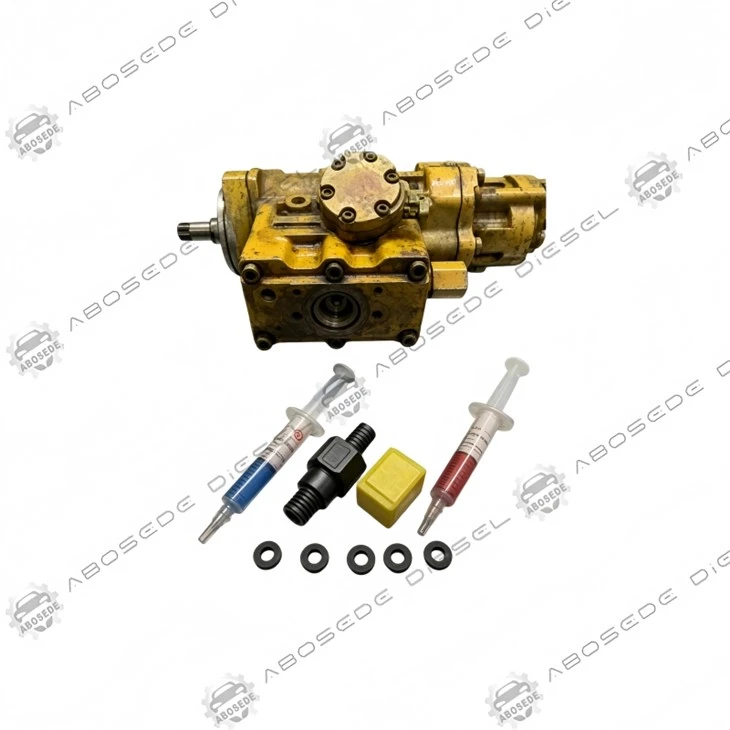

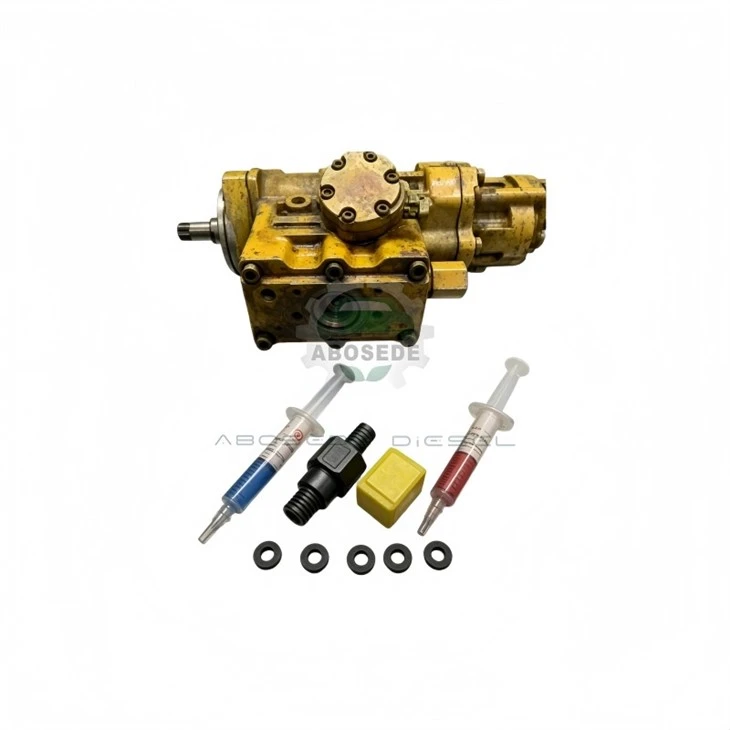
Caterpillar 320 Pump Head Solenoid Seat Lapping Tool — Valve Seat Micro‑Geometry Restoration For High‑Pressure Fuel Gates
1. Product:Caterpillar 320 Pump Head Solenoid Seat Lapping Tool
2. Compatible Equipment: Diesel Fuel Injection Systems
3. Manufacturer: Aftermarket OEM Replacement
4. Condition: Brand New, Fully Tested
5. Origin: Original :ABOSEDE DIESEL
6. Shipping period: 3-5 business days
7. Payment terms: T/T, Western Union, PayPal
- Fast Delievery
- Quality Assurance
- 24/7 Customer Service
Product Introduction
In Caterpillar 320 series common rail fuel pumps (used extensively in 320D and 320E excavators), the pump head solenoid valve controls the metering of fuel into the high‑pressure pumping chamber. The solenoid's poppet or flat‑face valve seats against a precision‑ground annular surface within the pump head. Over time, this sealing face develops micro‑grooves, pitting, or localised deformation-not from abrasive wear, but from cavitation erosion caused by the rapid pressure differentials during solenoid closure. A seat flatness deviation of just 0.003 mm allows high‑pressure fuel to bleed past the valve, reducing rail pressure by up to 80 bar at rated load, triggering performance derating and increased fuel consumption. This Caterpillar 320 Pump Head Solenoid Seat Lapping Tool is engineered to restore the seat's geometric integrity to a surface flatness of 0.0012 mm and a surface finish of Ra 0.06 µm, effectively re‑establishing the hydraulic seal without replacing the entire pump head.
🔬 Understanding the Seat Failure Mechanism
The solenoid valve seat in the 320 pump head experiences a unique wear pattern: concentric ring erosion caused by the high‑velocity fuel jet that momentarily passes through the valve clearance just before full closure. This jet-travelling at speeds exceeding 30 m/s-creates a localized pressure drop that induces cavitation bubbles, which implode against the seat surface, removing microscopic particles of the hardened steel. The resultant surface exhibits a series of annular grooves that are invisible to the naked eye but are readily detected by a dial indicator with a fine stylus. The lapping tool addresses this by using a fixed‑axis rotating lap that maintains a constant contact angle with the seat, ensuring the abrasive action preferentially removes the high spots around the entire circumference, rather than following the existing grooves (which a hand‑held lap would do). This corrective lapping effectively "erases" the cavitation pattern and creates a fresh, isotropic surface.
⚙️ Tool Geometry and Dimensional Conformance
The lapping tool is designed to replicate the exact contact footprint of the solenoid poppet-a critical requirement because the seat's effective sealing diameter must be preserved within a narrow tolerance:
Seat sealing diameter: 10.50 mm ±0.01 mm (matches the poppet's active sealing edge)
Seat face width: 0.80 mm ±0.05 mm (the annular contact area)
Seat angle: 90° (flat face, perpendicular to the valve axis) for the predominant 320 pump variant
The tool's lapping face is a copper‑impregnated cast iron disc, precisely turned to a 90° angle and lapped to a flatness of 0.0008 mm, ensuring the abrasive slurry is distributed evenly across the entire seat width. The tool incorporates a pilot mandrel that fits into the solenoid bore (diameter 8.00 mm) with a clearance of only 0.015 mm, guaranteeing coaxial alignment between the lap and the seat. A spring‑loaded constant‑force mechanism applies a consistent 8 N load to the lap, preventing the operator from applying excessive pressure that could dish the seat or alter its sealing angle.
🔧 Application Coverage and Pump Head Compatibility
This lapping tool is validated for the solenoid valve seats in the following Caterpillar 320 pump head variants:
320D (standard pump) – pump head part numbers 295‑9325, 295‑9326 – seat diameter 10.50 mm
320D (high‑flow pump) – pump head part number 295‑9330 – seat diameter 10.50 mm, but with a different pilot bore depth
320E (Tier 4 Interim) – pump head part number 295‑9345 – uses a flat‑face solenoid with the same seat geometry
320F (Tier 4 Final) – pump head part number 295‑9350 – requires a slightly shorter pilot mandrel; the tool kit includes an interchangeable spacer ring for this variant
The tool's pilot mandrel is interchangeable, and the set includes three pilot sizes (8.00 mm, 8.05 mm, and 8.10 mm) to accommodate wear or machining variations in the solenoid bore. The mandrel selection guide, included as a laminated card, specifies the correct pilot based on the measured clearance of the solenoid valve's own guide.
🧪 The "Optical Flat" Verification Method
Unlike conventional inspection methods that rely on a straight edge or a dial indicator (which require skill and can be misinterpreted), the lapping kit includes a monochromatic optical flat-a precisely ground glass disc that, when placed on the lapped seat and viewed under the included sodium‑vapour lamp, reveals interference fringe patterns. A perfectly flat seat exhibits straight, equally spaced parallel fringes; the number of fringes indicates the flatness deviation in fractions of a wavelength (0.00029 mm per fringe). This method provides a quick, objective, and highly visual assessment of the lapping result. The tool kit includes a laminated reference chart showing acceptable fringe patterns and examples of rejected patterns (e.g., curved or broken fringes indicating dishing or uneven lapping).
❓ FAQ
Q1: How do I know whether the solenoid seat requires lapping or if the solenoid valve itself is the source of leakage?
If the leakage occurs consistently across all operating conditions and rail pressure recovery is slow, the seat is the likely culprit. However, if the leakage is intermittent or worsens with temperature, the solenoid's dynamic response may be degraded. Our recommended diagnostic: apply a 300 bar static pressure to the pump head; if pressure drops by more than 50 bar in 60 seconds without the solenoid energised, the seat is leaking and lapping is indicated.
Q2: Can this tool be used on pump heads that have already been lapped multiple times?
Yes, but the total material removal from the seat face should not exceed 0.08 mm, beyond which the poppet's seating geometry may become compromised. The tool's lapping depth indicator (a micrometer screw on the mandrel) tracks the cumulative removal, allowing you to monitor total material taken off. If the indicator shows that you are approaching 0.08 mm, the pump head should be assessed for replacement.
Q3: What is the effect of lapping on the solenoid valve's magnetic air gap?
The solenoid's armature lift and the magnetic air gap are determined by the poppet position relative to the coil, not by the seat depth. However, excessive lapping (over 0.05 mm) will shift the poppet's seating position, reducing the effective stroke. The kit's manual includes a correction table: for every 0.02 mm of seat material removed, the solenoid shim should be reduced by 0.02 mm to maintain the nominal air gap.
Q4: Is the lapping process compatible with pump heads that have ceramic‑coated seats?
The 320 pump heads use steel seats; ceramic coatings are not used in this application. If you encounter a pump head with a non‑standard coating, please contact us before lapping-some coatings can flake under the lapping process.
Q5: How often should the abrasive paste be replaced or refreshed?
The paste has a shelf life of 18 months when stored below 30°C. Within the kit, we supply the paste in a dual‑chamber dispenser that mixes the diamond particles with the carrier oil only upon dispensing, ensuring fresh abrasive for each use. The dispenser's shelf life is marked on the label.
Q6: Can I lap the seat while the pump head is still installed on the engine?
No. The pump head must be removed to access the solenoid bore and to prevent abrasive contamination of the pump's internal components. The tool is designed for bench‑top use with the pump head securely clamped in a soft‑jaw vise.


Flexible Payment Methods for Your Convenience
To make your purchasing experience smooth and easy, we offer a variety of secure payment options:

Bank Transfer
Pay directly in 15 supported currencies.

Western Union
Quick and global money transfers.

PayPal
Safe and convenient online payment.

Alibaba
Enjoy extra protection with trusted Alibaba transactions.
We're here to make your order process worry-free - choose the payment method that works best for you!
Shipping Made Simple

Customer reviews

Hot Tags: caterpillar 320 pump head solenoid seat lapping tool — valve seat micro‑geometry restoration for high‑pressure fuel gates, China caterpillar 320 pump head solenoid seat lapping tool — valve seat micro‑geometry restoration for high‑pressure fuel gates manufacturers, suppliers, factory
You Might Also Like
-

110 Injector Housing Lapping Tool – Precision Planar...
-

Professional Diesel Service Tool Kit For Volvo 20430...
-

T02 Injector Holding & Positioning Stand
-

Electron Microscope – High-Resolution Imaging For Ad...
-

Multi-Functional Adaptors – Versatile Tools For Dies...
-

Back Flow Adaptor Of 1211 Injector – Precision Tool ...
