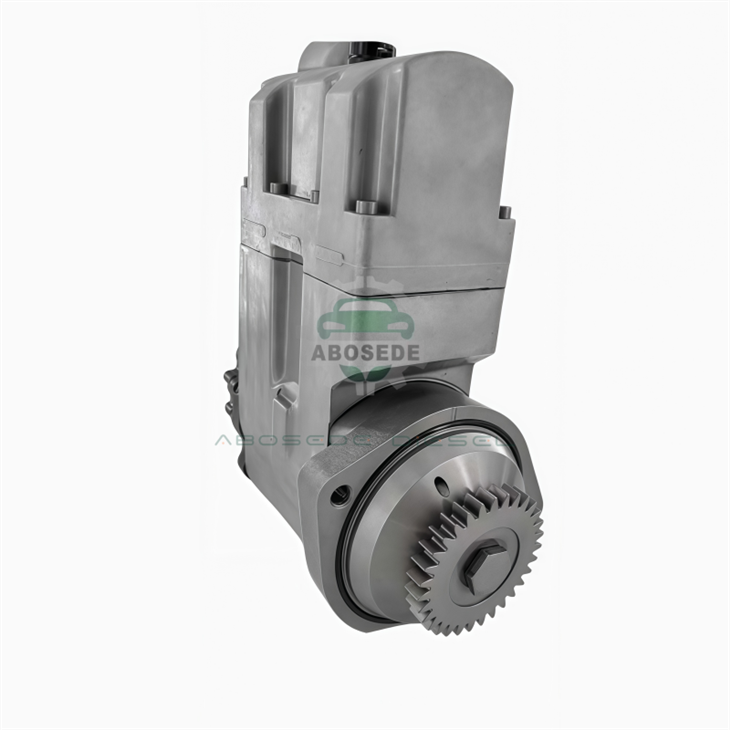
CAT 10R-8900 High-Pressure Pump – Variable Displacement Control for On-Demand Fuel Delivery
video
CAT 10R-8900 High-Pressure Pump – Variable Displacement Control for On-Demand Fuel Delivery

CAT 10R-8900 High-Pressure Pump – Variable Displacement Control for On-Demand Fuel Delivery

1. Product:10R-8900
2. Compatible Equipment: Diesel Fuel Injection Systems
3. Manufacturer: Aftermarket OEM Replacement
4. Condition: Brand New, Fully Tested
5. Origin: ABOSEDE Diesel
6. Shipping period: 3-5 business days
7. Payment terms: T/T, Western Union, PayPal

  • Fast Delievery
  • Quality Assurance
  • 24/7 Customer Service
Product Introduction

In conventional common-rail pumps, the plungers deliver a fixed volume of fuel per revolution, regardless of whether the engine is idling or operating at full load. At idle, this fixed displacement generates an excess flow that must be bypassed through the pressure relief valve-fuel that is compressed to 1,600 bar only to be immediately returned to the tank. This wasted energy is converted into heat, raising the fuel temperature by 8–10°C above the coolant temperature and increasing the parasitic load on the engine's timing gears. The CAT 10R-8900 addresses this through an inlet-metering valve that actively adjusts the pump's effective displacement from 20% to 100% of its maximum capacity, matching the fuel delivery to the engine's instantaneous demand. This reduces the bypass flow, lowering the parasitic load by up to 15% at idle and reducing the fuel temperature in the return gallery.


⚙️ Variable Displacement – The Proportional Solenoid Valve

The 10R-8900's variable flow control is achieved through a proportional solenoid valve (PSV) that regulates the inlet fuel flow to the pumping chambers. The valve operates with a response time of ≤ 15 ms for a 50% load step, which is fast enough to track the engine's fuel demand during transient events such as acceleration or gear changes. The PSV is controlled by the ECU, which calculates the required fuel flow based on the accelerator pedal position, engine speed, and rail pressure. The valve's flow-matching accuracy is ±2.0% of the commanded flow, meaning that the pump delivers almost exactly the fuel volume that the injectors need, with minimal excess. This precision reduces the workload on the pressure relief valve, which in a fixed-displacement pump must bypass the excess flow multiple times per minute.


📊 Efficiency Mapping – Optimizing the Pump's Operating Range

The 10R-8900 is calibrated to provide the optimal balance between flow capacity and parasitic loss across the engine's operating range. At idle (700 RPM), the pump operates at 20–25% of its maximum displacement, delivering just enough fuel to maintain rail pressure while minimizing the energy wasted in bypass. As the engine load increases, the ECU commands the PSV to open further, increasing the displacement up to 100% at full load (2,200 RPM). This variable displacement profile improves the pump's overall efficiency by 5-8% compared to a fixed-displacement pump, which translates into a measurable improvement in fuel economy for long-haul applications. The pump's internal geometry is designed to maintain consistent flow at the reduced displacements, with a minimum flow variation of ±2.5% across the entire displacement range.


🔩 Installation and Drive Interface

The 10R-8900 features a small flange mounting pattern, which is compatible with certain Caterpillar engines that have a narrower mounting footprint. The drive gear is a 36-tooth configuration, which is specific to later C9.3 and certain industrial applications. The gear bolt should be torqued to 120 Nm with a thread-locking compound. During installation, the timing mark on the gear must be aligned with the mark on the pump hub to ensure correct phasing. The PSV's electrical connector (2-pin, Deutsch type) must be securely fastened to ensure a low-resistance connection; a high-resistance connection can cause the valve to drift from its commanded position, leading to a flow error that triggers fault codes. The high-pressure outlet line (M12 fitting) should be torqued to 30 Nm, and the inlet and return hoses should be fitted with new spring clamps.


❓ FAQ – Practical Inquiries for Workshop and Fleet Managers

Q1: How can I tell if the variable displacement system is functioning correctly on the 10R-8900?
A: Monitor the PSV duty cycle in Cat ET at idle (700 RPM). A normal reading is 25–30%. If the reading is above 40%, the pump may be worn; if it's consistently below 20%, the valve may be sticking or there may be an electrical issue. Also, check the rail pressure during a snap acceleration: the pressure should rise smoothly without a significant delay, indicating that the PSV responds quickly.

Q2: Does the variable displacement design require a different ECU calibration compared to a fixed-displacement pump?
A: Yes. The ECU must be programmed with the correct PSV current map for this pump. Installing a variable-displacement pump with a fixed-displacement calibration will result in incorrect flow delivery, as the ECU will command the valve incorrectly. Always verify the engine's calibration file or use Cat ET to confirm the pump model.

Q3: Can the 10R-8900 be installed on an engine that originally had a small flange pump with a different tooth count?
A: The small flange mounting pattern is physically compatible, but the 36-tooth gear is specific to this pump's timing. If your engine has a pump with a different tooth count (e.g., 31 teeth), the timing will be incorrect, and the pump will not function properly. Verify the tooth count on the existing pump.

Q4: What is the typical service life of the PSV, and can it be replaced separately?
A: The PSV is a high-wear component that typically lasts 5,000–8,000 hours. It is available as a separate service part and can be replaced without removing the entire pump. However, when replacing the valve, the pump should be flow-tested to ensure the new valve is calibrated correctly.

Q5: Does the 10R-8900's variable displacement design offer any advantage for engines running on biodiesel?
A: Yes. The variable displacement reduces the amount of fuel that must be bypassed, which means there is less fuel recirculation through the relief valve. This reduces the heating of the fuel, which is beneficial for biodiesel blends that have a lower thermal stability compared to standard diesel.

Q6: What is the effect of the variable displacement on the pump's noise characteristics?
A: The reduced bypass flow and lower idle displacement result in a quieter pump operation, as there is less fluid turbulence from the relief valve. The pump also has a lower torsional vibration signature due to the reduced load on the timing gears.


202510091606539026


2

3

4


Flexible Payment Methods for Your Convenience


To make your purchasing experience smooth and easy, we offer a variety of secure payment options:

product-750-750

Bank Transfer

Pay directly in 15 supported currencies.

west union

Western Union

Quick and global money transfers.

PayPalLogo2014-1024x1014

PayPal

Safe and convenient online payment.

ae99cd49-2667-464e-b9db-b39cee0126e1

Alibaba

Enjoy extra protection with trusted Alibaba transactions.

We're here to make your order process worry-free - choose the payment method that works best for you!


Shipping Made Simple

6

Customer reviews


8

Hot Tags: CAT 10R-8900 High-Pressure Pump – Variable Displacement Control for On-Demand Fuel Delivery, China CAT 10R-8900 High-Pressure Pump – Variable Displacement Control for On-Demand Fuel Delivery manufacturers, suppliers, factory, cat pump

You Might Also Like

(0/10)

clearall