


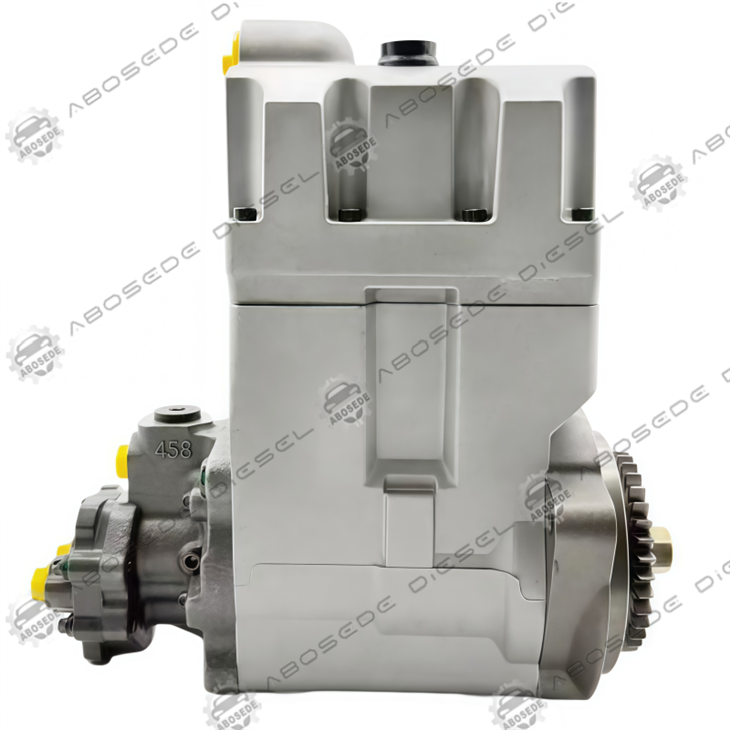


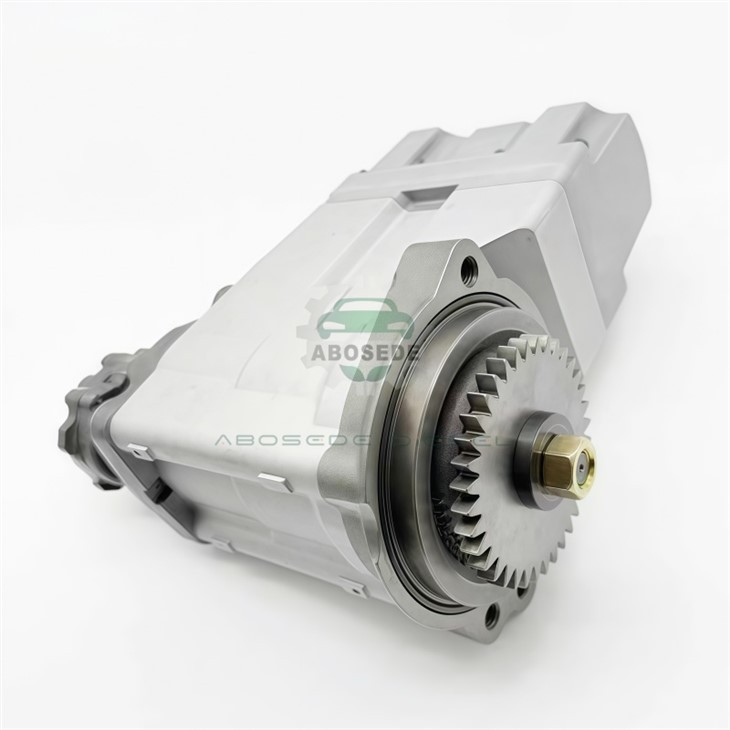
CAT 384-0677 High-Pressure Fuel Pump – Plunger Inertia Optimisation for Improved Low-Speed Flow Stability in C7/C9/C9.3 Common-Rail Systems
1. Product:384-0677
2. Compatible Equipment: Diesel Fuel Injection Systems
3. Manufacturer: Aftermarket OEM Replacement
4. Condition: Brand New, Fully Tested
5. Origin: ABOSEDE Diesel
6. Shipping period: 3-5 business days
7. Payment terms: T/T, Western Union, PayPal
- Fast Delievery
- Quality Assurance
- 24/7 Customer Service
Product Introduction
In the high-pressure fuel pump, the plunger is not a simple reciprocating component-it is a moving mass that must be accelerated and decelerated twice per revolution by the camshaft. The force required to accelerate this mass is proportional to its weight: a heavier plunger requires more force to move, increasing the load on the camshaft and generating additional friction. At low engine speeds (idle to 1,000 RPM), the plunger's inertia can cause a phenomenon known as stick-slip-a hesitation at the start of the suction stroke that reduces the filling efficiency and causes flow instability. At high speeds (above 1,800 RPM), the same inertia causes the plunger to lag behind the cam profile, reducing the effective stroke and volumetric efficiency. The CAT 384-0677 addresses this through a lightweight plunger design that reduces the plunger mass by 10% compared to standard components, lowering the inertia and improving the flow stability across the entire speed range. The result is a pump that delivers consistent rail pressure from idle to rated speed, with reduced camshaft loads and improved fuel economy.
Plunger Mass Reduction – The Science of Inertia Control
The 384-0677's lightweight plunger is achieved through a combination of material selection and design optimisation. Key features include:
Material: High-strength alloy steel with a hardness of 62 HRC, providing the necessary wear resistance with a 10% mass reduction
Design: Hollow-stem construction that removes material from the non-critical centre of the plunger without compromising the sealing surface or the cam interface
Inertia reduction: 10% lower plunger mass vs. standard designs
Camshaft load reduction: 8% lower peak torque at idle
Flow stability improvement: ±2.5% flow variation from idle to rated speed (vs. ±4.5% typical)