


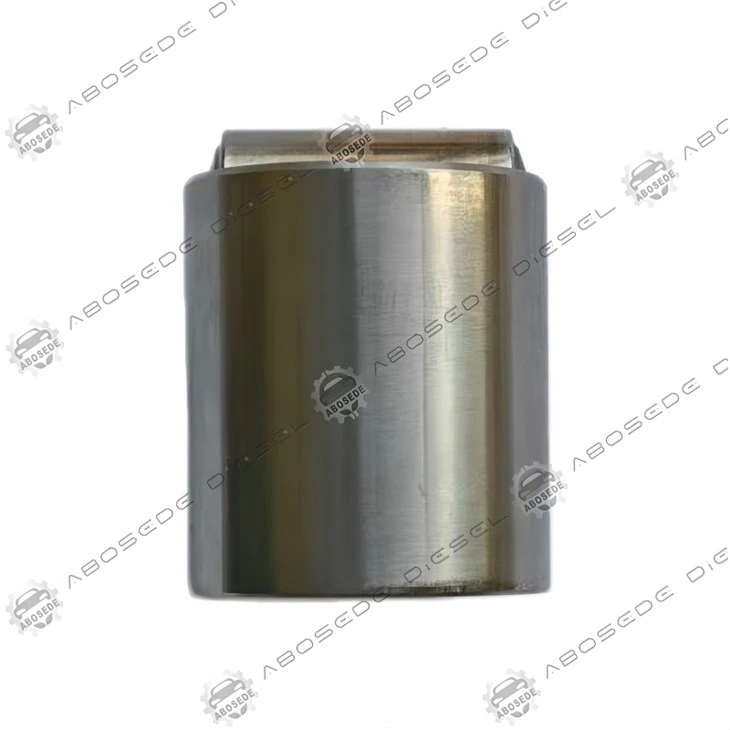

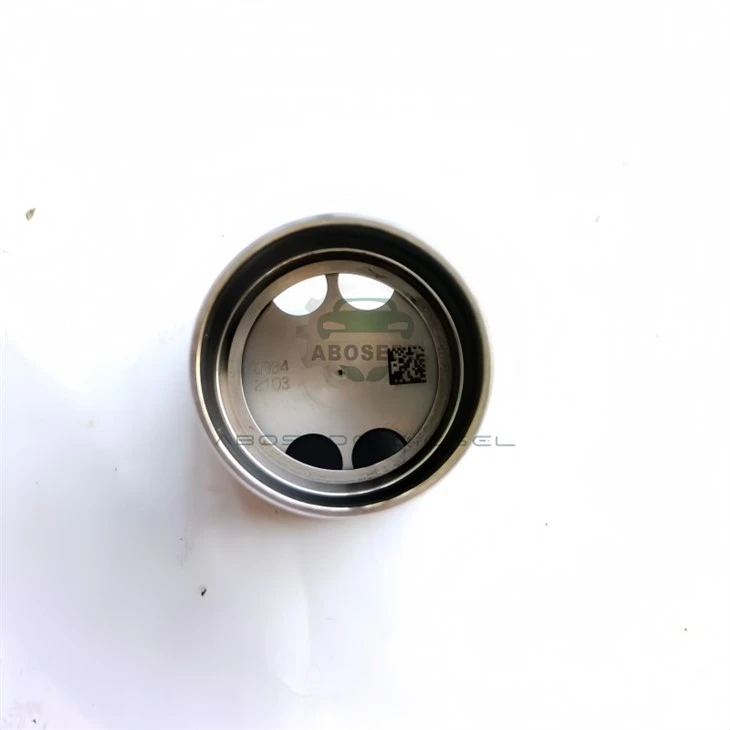
Bosch 1462C24999 – The SCV Sleeve That Defines The CP3 Metering Valve's Precision Fit
1. Product:1462C24999
2. Compatible Equipment: Diesel Fuel Injection Systems
3. Manufacturer: Aftermarket OEM Replacement
4. Condition: Brand New, Fully Tested
5. Origin: ABOSEDE Diesel
6. Shipping period: 3-5 business days
7. Payment terms: T/T, Western Union, PayPal
- Fast Delievery
- Quality Assurance
- 24/7 Customer Service
Product Introduction
Inside every Bosch CP3 suction control valve, there is a component that never appears in the electrical schematic, yet it determines the valve's leakage rate, its response time, and its long-term stability. This component is the valve sleeve - the precision‑bored cylinder that guides the spool and forms the metering edge. The 1462C24999 is the replacement sleeve for the Bosch CP3 SCV, a component that is often overlooked but is fundamental to the valve's hydraulic performance. It is not a solenoid, not a spring, but the precision‑machined bore that must maintain a 4‑6 micron clearance with the spool across millions of cycles. If the sleeve wears, the valve leaks; if the sleeve is damaged, the spool sticks. The 1462C24999 restores this clearance to the factory specification, making it a critical component in any SCV rebuild.
The Sleeve's Role – Where Precision Meets Durability
The valve sleeve is the stationary part of the metering pair. It contains the bore in which the spool slides, the ports through which the fuel enters and exits, and the seat against which the spool closes. Its dimensions - the bore diameter, the port geometry, and the seat angle - are machined to tolerances measured in microns. The sleeve is made from a high‑carbon steel that is hardened to 62 HRC and then ground and honed to a surface finish of Ra 0.08 µm. This hardness and finish are essential because the spool moves within the sleeve millions of times per year, and any wear particles generated by the sliding contact would accelerate the wear of both components. The 1462C24999 is manufactured to the same specification as the original sleeve, ensuring that the spool‑to‑sleeve clearance is restored to the 4‑6 µm range that the original Bosch design requires.
The Sleeve's Critical Dimensions – Why They Matter
The sleeve's bore diameter determines the clearance with the spool. A clearance that is too tight will cause the spool to stick, leading to erratic metering and potential pump failure. A clearance that is too loose will allow excessive leakage, reducing the pump's maximum flow and causing a loss of power at high load. The 1462C24999 is manufactured with a bore that is honed to a diameter of 6.000 mm +0.002 mm, ensuring that with a new spool (diameter 5.996 mm ±0.001 mm), the clearance is within the 4‑6 µm specification. The sleeve also contains the inlet ports - four holes that are laser‑drilled to a precise diameter. These ports are positioned to match the spool's control edge, ensuring the flow area increases linearly with spool movement. The sleeve's seat is ground to a 90‑degree angle with a surface finish that prevents the spool from sticking at the closed position.
Failure Patterns – When the Sleeve Wears
The sleeve's bore wears over time as the spool slides back and forth. The wear is not uniform; it is greatest at the points where the spool's control edge passes the inlet ports, as the high‑velocity fuel creates a localised erosion effect. When the clearance exceeds 12 µm, the leakage becomes significant, and the valve's maximum flow is reduced. The first symptom is a loss of power at high load - the pump cannot deliver the required flow because too much fuel is leaking past the spool. The genuine 1462C24999 is manufactured from a material that resists this erosion, and the honed surface finish reduces the initial wear rate. In a generic sleeve, the material may be softer or the finish rougher, leading to a faster increase in clearance.
Installation – The Sleeve Replacement Procedure
Replacing the sleeve requires disassembling the SCV valve - a procedure that is typically performed by a specialist with a press tool and a honing mandrel. The old sleeve is pressed out of the valve body, and the new sleeve is pressed in. The critical step is checking the press‑fit clearance: the sleeve must be a light interference fit (0.01‑0.02 mm) in the valve body to prevent leakage around the sleeve's outside diameter. If the fit is too tight, the sleeve may distort; if it is too loose, fuel will bypass the spool. The 1462C24999 is manufactured with an outside diameter that is 0.015 mm larger than the valve body bore, ensuring a consistent press‑fit. After installation, the bore must be re‑honed to ensure it is round and free of any distortion caused by the pressing process.
Frequently Asked Questions
Q1: How can I tell if my sleeve has worn beyond the service limit without disassembling the valve?
→ Monitor the commanded metering valve current at full load. If the current exceeds 85 % duty cycle and the rail pressure is still low, the leakage is likely excessive - the sleeve clearance has increased. A pressure drop test on a bench is the definitive method, but the duty cycle is a good indicator.
Q2: Can I replace the sleeve without replacing the spool?
→ No. The spool and sleeve are a matched pair - replacing only one will result in a clearance that is either too tight or too loose. Both components should be replaced together to ensure the correct 4‑6 µm clearance.
Q3: Why does my Duramax show a fuel pressure drop only at high rpm, not at idle?
→ At high rpm, the pump is working at maximum flow, and the leakage past the spool is more significant. At idle, the flow demand is low, and the leakage does not affect the pressure. The worn sleeve is the most likely cause.
Q4: What is the typical service life of the sleeve in a CP3 pump?
→ With regular fuel filter changes (every 20,000 km) and clean fuel, the sleeve will maintain its clearance for 200,000‑250,000 km. In applications with poor fuel quality or high biodiesel blends, the life may be shorter.
Q5: I installed a new sleeve, but the valve still shows high leakage - what could be the problem?
→ The spool may also be worn, or the sleeve may have been damaged during installation (scored or distorted). Check the spool diameter and the sleeve bore for damage. Also, verify that the press‑fit is correct - a loose fit will cause leakage around the sleeve's outside diameter.
Q6: Does the sleeve require any specific lubrication before installation?
→ The sleeve should be lubricated with clean diesel fuel before pressing it into the valve body. Do not use grease or oil - these can contaminate the fuel system and affect the calibration. The fuel itself is the lubricant for the spool‑to‑sleeve interface.


Flexible Payment Methods for Your Convenience
To make your purchasing experience smooth and easy, we offer a variety of secure payment options:

Bank Transfer
Supports multiple currenciesand bank payment methods.

Western Union
Quick and global money transfers.

PayPal
Safe and convenient online payment.

Alibaba
Enjoy extra protection with trusted Alibaba transactions.
We're here to make your order process worry-free - choose the payment method that works best for you!
Shipping Made Simple

Customer reviews

Hot Tags: bosch 1462c24999 – the scv sleeve that defines the cp3 metering valve's precision fit, China bosch 1462c24999 – the scv sleeve that defines the cp3 metering valve's precision fit manufacturers, suppliers, factory, 0445120066, Bosch CR Injectors, Bosch Volvo Deutz Renault, Diesel Control Valve, F00RJ01479, Fuel Injector Valve
You Might Also Like
-

Bosch 0928400791 – The Metering Valve That Suppresse...
-

0928400535 Bosch Fuel Metering Valve – Stop-Start Sy...
-

0928400498 Bosch Fuel Metering Valve – High-Altitude...
-

Bosch F00VC30054 Injector Solenoid Valve – The Elect...
-

1467C45013 Fuel Pump Overflow Valve – High‑Precision...
-

0928400487 — Bosch Fuel Pressure Regulator / Meterin...
