


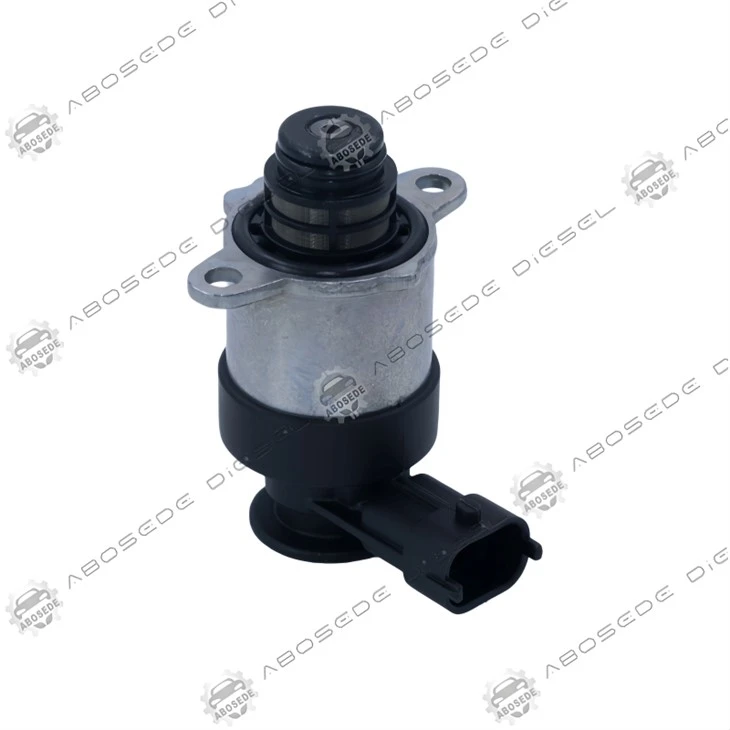

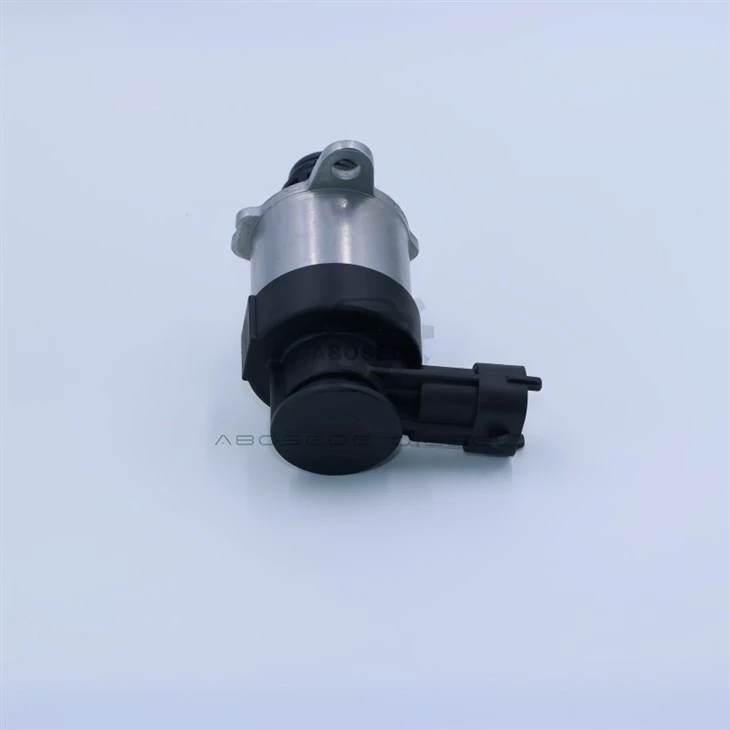
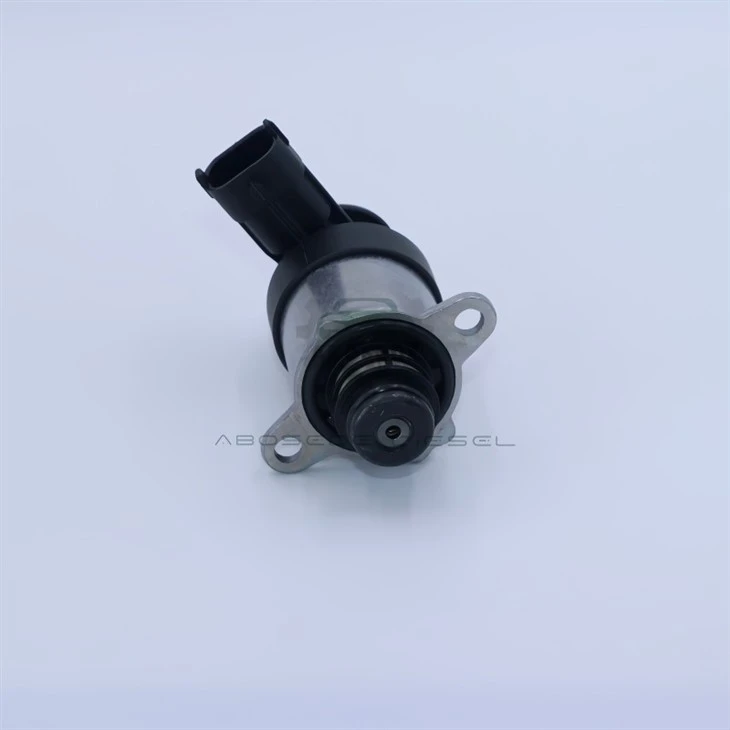
Bosch 0928400727 – The Metering Valve With Predictable Hysteresis For Stable Closed-Loop Control
1. Product:0928400727
2. Compatible Equipment: Diesel Fuel Injection Systems
3. Manufacturer: Aftermarket OEM Replacement
4. Condition: Brand New, Fully Tested
5. Origin: ABOSEDE Diesel
6. Shipping period: 3-5 business days
7. Payment terms: T/T, Western Union, PayPal
- Fast Delievery
- Quality Assurance
- 24/7 Customer Service
Product Introduction
In a closed-loop control system, the relationship between the command signal and the physical response is never perfectly linear. Every valve exhibits hysteresis - the difference between the opening and closing behaviour at the same duty cycle. This hysteresis is not inherently a problem, but it becomes one when it varies unpredictably. The ECU compensates for hysteresis through its adaptive algorithms, but the compensation relies on the hysteresis being consistent from one cycle to the next. The 0928400727 is engineered to have a predictable, stable hysteresis characteristic, ensuring that the ECU's compensation remains accurate across the valve's service life. It does not try to eliminate hysteresis - a physical impossibility - but it ensures that the hysteresis is repeatable, so the ECU can always compensate for it correctly.
The Hysteresis Effect - What It Is and Why It Matters
Hysteresis in a metering valve arises from a combination of factors: the magnetic remanence of the core material, the friction between the armature and its guide, and the spring's response to compression and release. When the ECU increases the duty cycle, the armature moves in one direction; when the ECU decreases the duty cycle, the armature returns. However, the armature position for a given duty cycle is not identical in both directions - the friction and magnetic remanence create a small offset. This offset is typically 2-4 % of the total stroke, and the ECU's calibration includes a hysteresis compensation table. The table is effective only if the hysteresis remains consistent. If the hysteresis changes due to wear, contamination, or magnetic property shifts, the compensation becomes inaccurate, and the rail pressure control develops a small but persistent oscillation. The 0928400727 is designed with a magnetic circuit that has a stable remanence characteristic and a friction-reducing coating that maintains consistent sliding resistance, ensuring the hysteresis remains within the ECU's compensation range.
The Magnetic Circuit - Designed for Stable Remanence
The magnetic remanence of the core material is the residual magnetism that remains after the current is switched off. This residual magnetism assists the spring in returning the armature, but if the remanence changes with temperature or with repeated cycling, the hysteresis changes. The 0928400727 uses a core material with a remanence that is stable across the full temperature range and that does not degrade with cycling. The core is also annealed after machining to relieve the internal stresses that can cause magnetic property shifts over time. These two factors - the stable material and the stress-relieving process - ensure that the magnetic contribution to hysteresis is constant, not a variable that the ECU must constantly re-learn.
How Friction Control Contributes to Hysteresis Stability
The friction between the armature and its guide is the second source of hysteresis variation. If the friction changes, the armature's position at a given duty cycle changes in one direction but not the other, increasing the hysteresis offset. The 0928400727 uses a DLC-coated armature guide that maintains a consistent coefficient of friction across the full temperature range. The guide also has a slightly larger clearance than older designs - 12 microns versus 10 microns - which reduces the chance of friction variation caused by thermal expansion or by contamination. This clearance is still tight enough to maintain the armature's radial alignment, but the extra 2 microns provides a margin for the thermal and contamination variables that would otherwise cause friction changes and hysteresis drift.
Failure Patterns Related to Hysteresis Change
The most common symptom of a valve losing its hysteresis stability is not a fault code but a subtle oscillation in the rail pressure trace - a 5-10 bar ripple that is visible on live data but does not trigger a diagnostic code. The ECU's PID controller tries to correct the oscillation, but the correction is always one step behind because the hysteresis change has altered the valve's response. Over time, the oscillation can cause increased wear on the pressure regulator valve and a slight increase in fuel consumption. The genuine 0928400727 resists this degradation through the stable magnetic remanence and the low-friction coating. The coating is applied in a vacuum deposition process that ensures adhesion and thickness consistency, while the core material is selected for its stable magnetic properties. Both features are tested at multiple temperatures during production to ensure the hysteresis stays within specification.
Frequently Asked Questions
Q1: How can I tell if my valve's hysteresis has increased without lab equipment?
→ Monitor the rail pressure at steady 2,000 rpm with a stable throttle position. If the pressure shows a 5-10 bar oscillation that does not correspond to engine speed harmonics, the hysteresis is likely the cause. A healthy 0727 will show less than 3 bar ripple under the same conditions.
Q2: Can the 0928400727 be used in place of the 0928400761?
→ Yes, in most CP4.2 applications. The 0727 is the later generation, with improved hysteresis control. However, always verify the Bosch number on your existing valve, as some engine applications have specific calibrations that are not interchangeable.
Q3: Why does my valve show a different performance at the same duty cycle when the engine is cold versus hot?
→ The hysteresis changes slightly with temperature in any valve. The 0727 is designed to minimise this change, but the ECU still has a temperature-based compensation table. If the hysteresis change is larger than expected, the valve may be degrading. The 0727's stable magnetic remanence reduces this effect.
Q4: What is the most common cause of hysteresis change in this valve?
→ The most common cause is a change in the friction characteristic caused by varnish or deposit formation on the armature guide. This is more common in vehicles that have irregular service intervals or that use biodiesel blends. Regular fuel filter changes are the most effective prevention.
Q5: I replaced the valve, but the ECU adaptation does not seem to clear the hysteresis offset - what should I do?
→ Ensure the adaptation reset is performed at idle, as specified. The ECU's hysteresis learning is speed-dependent - if the learning is performed at a different speed, the compensation is not valid. If the reset is performed correctly and the offset persists, check the rail pressure sensor for drift, as a faulty sensor can produce an oscillation that appears to be hysteresis-related.
Q6: Is the hysteresis characteristic affected by the valve's orientation during installation?
→ No. The valve's magnetic and mechanical characteristics are orientation-independent. However, ensure the valve is installed with the correct torque - over-torquing can deform the valve body, changing the armature clearance and altering the hysteresis. The correct torque is 23 Nm ± 2 Nm.


Flexible Payment Methods for Your Convenience
To make your purchasing experience smooth and easy, we offer a variety of secure payment options:

Bank Transfer
Supports multiple currenciesand bank payment methods.

Western Union
Quick and global money transfers.

PayPal
Safe and convenient online payment.

Alibaba
Enjoy extra protection with trusted Alibaba transactions.
We're here to make your order process worry-free - choose the payment method that works best for you!
Shipping Made Simple

Customer reviews

Hot Tags: bosch 0928400727 – the metering valve with predictable hysteresis for stable closed-loop control, China bosch 0928400727 – the metering valve with predictable hysteresis for stable closed-loop control manufacturers, suppliers, factory, 0445120067, bosch valve, Diesel Control Valve, F00BC80045, F00RJ01479, Fuel Injector Valve
You Might Also Like
-

Bosch 0928400664 Fuel Metering Valve | OEM Suction S...
-

Bosch 0928400687 – The Metering Valve That Keeps Its...
-

0928400492 Bosch Fuel Metering Valve – PWM Signal In...
-

0928400698 Bosch Fuel Metering Valve – Hot Restart P...
-

0928400642 Bosch Fuel Metering Valve – Linear Flow R...
-

Bosch F00GX17004 Piezo Control Valve – The Crystal T...
