


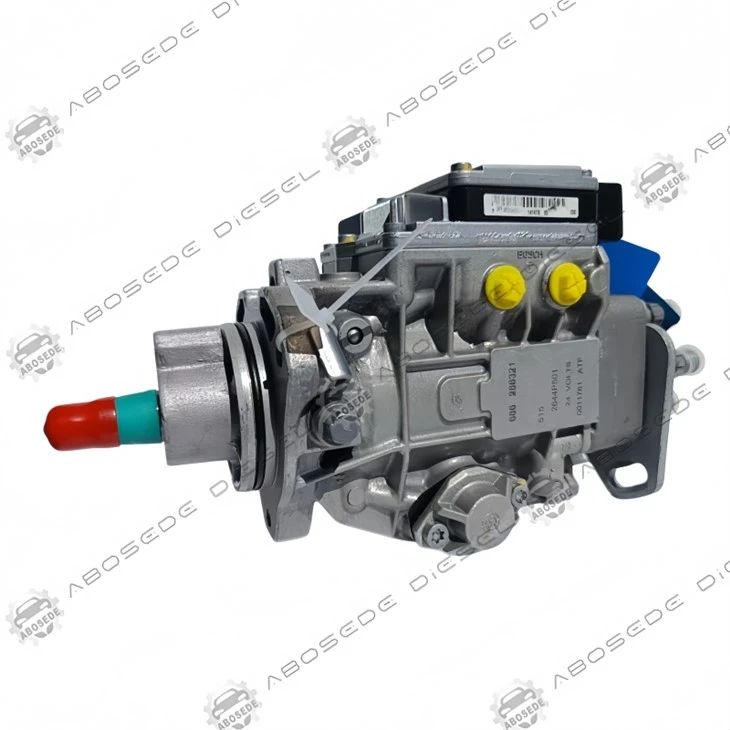

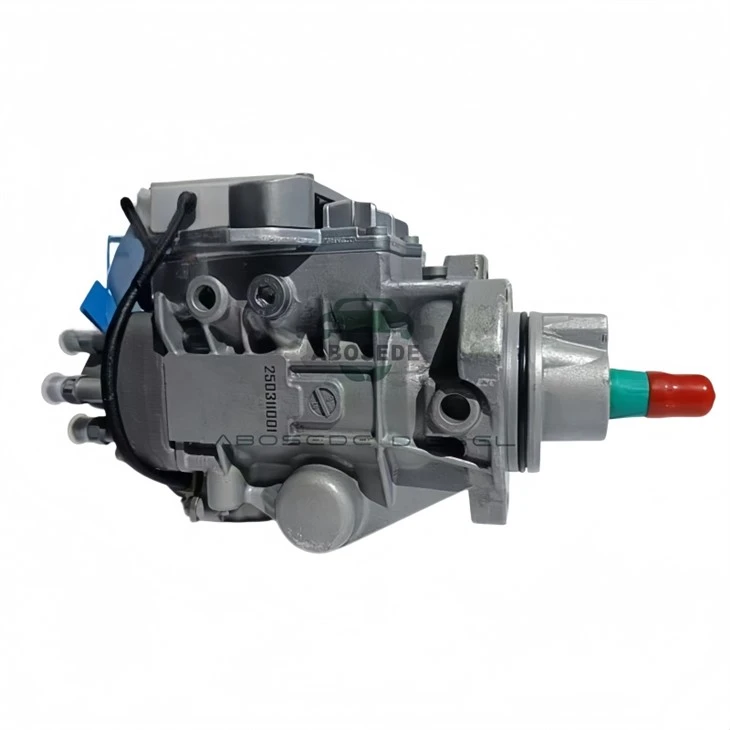
0470006003 VP29/30 Distributor Pump – Temperature‑Sensitive Viscosity Compensation For Consistent Hot‑Start And Full‑Load Delivery in 1.9 TDI 90 PS
1. Product:0470006003
2. Compatible Equipment: Diesel Fuel Injection Systems
3. Manufacturer: Aftermarket OEM Replacement
4. Condition: Brand New, Fully Tested
5. Origin: ABOSEDE Diesel
6. Shipping period: 3-5 business days
7. Payment terms: T/T, Western Union, PayPal
- Fast Delievery
- Quality Assurance
- 24/7 Customer Service
Product Introduction
In distributor pumps, the fuel's viscosity is not a constant-it varies by approximately 2.5% per 10°C change in temperature. This variation directly affects internal leakage past the plungers, altering the effective fuel delivery for the same governor setting. A cold start at 0°C delivers a denser, less leaky fuel than a hot restart at 90°C, resulting in a measurable reduction in fuel quantity at high operating temperatures-a phenomenon that often manifests as a subtle power loss on hot days or after prolonged idling. The 0470006003 VP29/30 pump addresses this challenge through a temperature‑compensated viscosity regulator integrated into the governor housing. This mechanical device, consisting of a bimetallic strip and a variable restriction orifice, adjusts the fuel rack position based on the fuel temperature, increasing the rack travel slightly when the fuel is hot to compensate for the increased leakage. As the mechanical fuel source for 1.9 TDI 90 PS engines (1Z, AHU), the 0470006003 ensures that the fuel delivery remains within ±2% of the target across the entire operating temperature range, delivering consistent power from a frozen start to a heat‑soaked restart.
◈ Viscosity Compensation – How 0470006003 Maintains Delivery Consistency
|
▪ Bimetallic sensing ▪ Variable restriction orifice ▪ Thermal time constant |
🔄 Parallel with Common‑Rail Fuel Temperature Compensation
In common‑rail systems, the ECU uses the fuel temperature sensor signal to adjust the injection duration, compensating for the same viscosity variation. The 0470006003's bimetallic regulator performs this function mechanically, without requiring a sensor or ECU intervention. While the common‑rail system offers more precise compensation (with a resolution of 0.5%), the VP pump's solution is inherently simpler, more reliable, and does not depend on electrical continuity-a significant advantage for older vehicles where wiring corrosion is a concern.
🧰 Installation – Setting the Temperature Compensation
Regulator inspection – Before installation, check that the bimetallic strip moves freely through its entire range (0–100°C). A stuck strip (often due to fuel varnish) will lock the compensation in one position, causing either over‑fuelling (if stuck in the hot position) or under‑fuelling (if stuck in the cold position). Clean with carburettor cleaner if necessary.
Thermal insulation – The pump's compensation is calibrated assuming a certain thermal environment. If the engine bay has been modified with extra insulation or heat shields, the pump may not reach the expected temperature, altering the compensation curve. In such cases, a test bench re‑calibration is recommended.
Fuel temperature sensor – The 0470006003's mechanical compensation works independently, but if the ECU also has a fuel temperature sensor, the two systems can conflict. The mechanical compensation is designed for the base pump; if the ECU is also adjusting duration based on temperature, the total correction may be doubled. Verify the ECU calibration if the engine shows signs of over‑correction (e.g., surging at steady throttle).
Static timing – Set the plunger lift to 0.73 mm. The temperature compensation does not affect timing, only quantity.
🆕 New vs. Remanufactured – The Temperature Compensation Factor
Remanufactured VP29/30 pumps often omit the bimetallic strip or replace it with a generic spring, eliminating the temperature compensation entirely-or worse, they fit an incorrect strip that provides the wrong compensation curve (e.g., too much adjustment at low temperatures, causing idle instability). New 0470006003 units come with the correct bimetallic element, factory‑calibrated for the viscosity‑temperature curve of standard diesel, ensuring the fuel delivery remains consistent across the entire operating range.
❓ FAQ – Practical Questions from TDI Enthusiasts
Q1: How can I verify if the temperature compensation is working on my 0470006003?
Measure the fuel return flow at two temperatures: cold (10°C) and hot (80°C). A compensated pump will show a smaller increase in return flow (e.g., from 10 ml/min cold to 14 ml/min hot) compared to an uncompensated pump (e.g., 10 ml/min to 18 ml/min). The smaller increase indicates that the rack position has been adjusted to compensate for leakage.
Q2: The engine feels less powerful on a hot day-could the temperature compensation be failing?
Yes-if the bimetallic strip is stuck in the cold position, the pump will not compensate for the viscosity drop, causing a reduction in fuel delivery of approximately 3‑5% at operating temperature. Check the return flow; if it's lower than expected (e.g., 10 ml/min hot), the compensation is not engaged.
Q3: Can I retrofit this pump to an older 1.9 TDI that never had temperature compensation?
The pump will physically fit, and the compensation will work-there is no external wiring or ECU requirement. However, the ECU's fuel maps are calibrated for a non‑compensated pump; the compensation may cause slight over‑fuelling at operating temperature. We recommend resetting the ECU's adaptation values and monitoring the fuel economy.
Q4: What is the effect of using biodiesel or winter diesel on the compensation?
Biodiesel has a different viscosity‑temperature curve than standard diesel-it is more viscous at low temperatures and less viscous at high temperatures. The bimetallic compensation is calibrated for standard diesel; using biodiesel may cause over‑compensation at high temperatures and under‑compensation at low temperatures. This is a limitation of mechanical compensation; for biodiesel users, we recommend monitoring exhaust temperature and adjusting the rack if necessary.
Q5: How often does the bimetallic strip need to be replaced?
The strip has an indefinite service life as it is a solid metal element-it does not wear out, but it can become coated with varnish, which insulates it and slows its response time. Cleaning with a solvent (e.g., diesel or carburettor cleaner) during the pump's scheduled service (every 150,000 km) is usually sufficient.
Q6: The engine idles smoothly cold but hunts when warm-could the temperature compensation be over‑correcting?
Yes-if the needle valve in the compensation mechanism is sticking in the open position, it may bleed excessive transfer pump pressure, causing the governor to over‑correct. This manifests as a hunting idle at operating temperature. In this case, the regulator assembly requires cleaning or, if damaged, replacement.


Flexible Payment Methods for Your Convenience
To make your purchasing experience smooth and easy, we offer a variety of secure payment options:

Bank Transfer
Supports multiple currenciesand bank payment methods.

Western Union
Quick and global money transfers.

PayPal
Safe and convenient online payment.

Alibaba
Enjoy extra protection with trusted Alibaba transactions.
We're here to make your order process worry-free - choose the payment method that works best for you!
Shipping Made Simple

Customer reviews

Hot Tags: 0470006003 vp29/30 distributor pump – temperature‑sensitive viscosity compensation for consistent hot‑start and full‑load delivery in 1.9 tdi 90 ps, China 0470006003 vp29/30 distributor pump – temperature‑sensitive viscosity compensation for consistent hot‑start and full‑load delivery in 1.9 tdi 90 ps manufacturers, suppliers, factory, 0445020530, 1042300FE010, Bosch for Mercedes, Diesel Fuel Injection Pump 0445020050 ME225083, for Iveco Euro Cargo, High pressure fuel pump
You Might Also Like
-

Fuel Injection Pump 0445020617
-

0470004014 VP29/30 Distributor Pump – Fuel‑Lubricate...
-

A028074590280 Bosch Electronic Unit Pump – Individua...
-

B444540228 CP9.4 Performance Matrix: Systemic Volume...
-

Bosch 0460416075 High-Pressure Fuel Pump – Optimised...
-

Bosch 0445010195 — Common-Rail High-Pressure Fuel Pu...
