


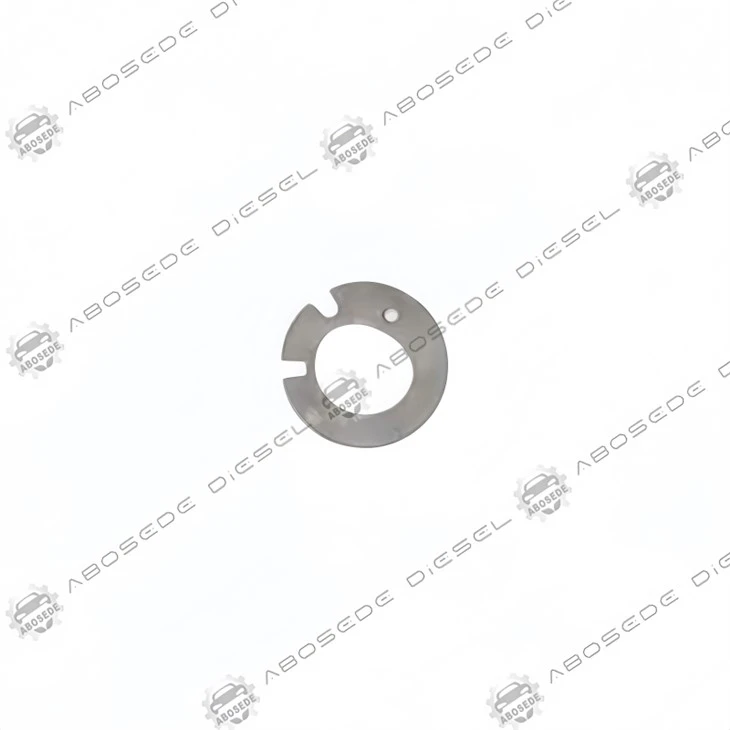

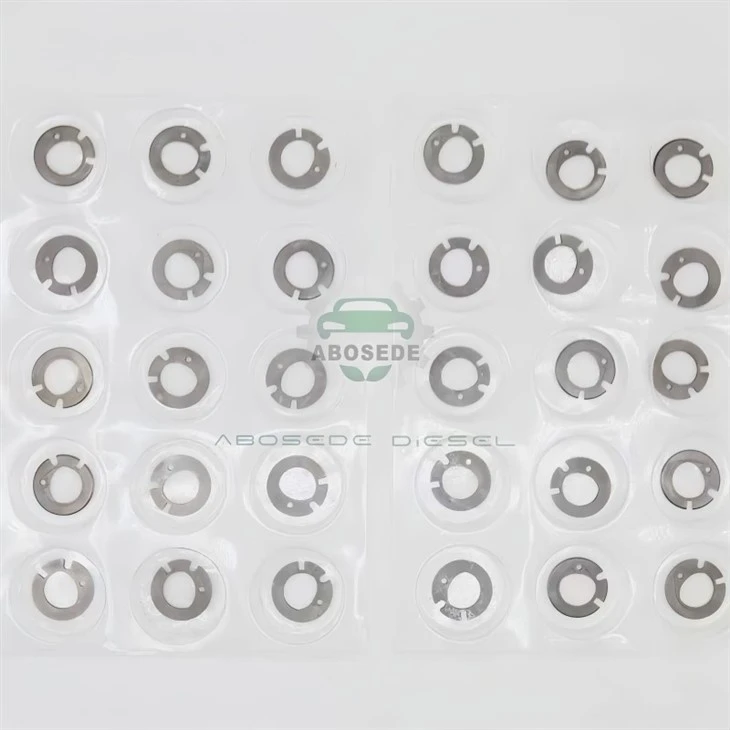
CAT C11 Control Valve Gasket – Orifice-Based Flow Restrictor For MEUI Injector Calibration | Class H Insulation Rating
1. Product:C11 Control Valve Gasket
2. Compatible Equipment: Diesel Fuel Injection Systems
3. Manufacturer: Aftermarket OEM Replacement
4. Condition: Brand New, Fully Tested
5. Origin: ABOSEDE Diesel
6. Shipping period: 3-5 business days
7. Payment terms: T/T, Western Union, PayPal
- Fast Delievery
- Quality Assurance
- 24/7 Customer Service
Product Introduction
In the Caterpillar C11 MEUI (Mechanically actuated Electronically controlled Unit Injector) system-a workhorse platform found in mid-size excavators (e.g., 330D), on-highway trucks, and marine propulsion units-the control valve gasket is frequently misunderstood as merely an anti-leak device. In engineering reality, it functions as a pressure differential generator, converting the mechanical clamp force from the retainer bolt into a precisely defined hydraulic resistance that determines the pilot oil bleed rate. This bleed rate directly influences how rapidly the control valve can unload actuation pressure, which in turn dictates the main plunger's acceleration profile during injection. Unlike the C13 or C15, the C11's MEUI system operates with a smaller actuation piston and a tighter tolerance window-a variation of just 0.02mm in gasket thickness shifts the injection timing by nearly 3° crankshaft angle at 2,100 RPM, resulting in a measurable 8-10% increase in fuel consumption if not corrected.
Our product is engineered specifically as a dimensional-transfer standard for the C11 injector stack, manufactured from a proprietary aramid-fiber composite with controlled porosity that maintains consistent flow resistance across the entire operating pressure range (up to 24 MPa) and temperature range (-40°C to 135°C). This gasket directly addresses the "uneven cylinder contribution" fault frequently encountered on high-hour C11 engines without the need for injector replacement.
1. Essential Application Guidance – C11 Engine Family
This gasket is dimensionally suited for the C11 engine family, encompassing the following serial prefixes and platform applications:
| Engine Serial Prefix | Primary Application | Calibration Specifics |
|---|---|---|
| 9KS, 2KS, 3CS | On-highway trucks (vocational) | Standard fuel map, 375–410 HP |
| 4AR, 5KZ | Excavators / forestry equipment | High-idle duty cycle, increased torque rise |
| 6NZ, 7CZ | Marine propulsion | Constant-speed calibration (1800 RPM) |
| 8PN, 9CK | Industrial power generation | Emergency standby / low-load operation |
Critical Fitment Note: While the C11 shares certain injector componentry with the C13, the control valve gasket is not interchangeable due to differences in the retainer bolt geometry and valve face diameter. The C11 gasket measures 33.5mm OD with an internal orifice diameter of 4.72mm-a configuration unique to this displacement class. Always verify the injector part number before ordering; this gasket is designed for injectors ending with the suffix -02 or -03 (e.g., 216-1123-02, 235-1249-03).
2. Performance Data – The "Bleed-Rate" Signature
For the C11, the gasket's performance is most meaningfully expressed through its bleed-rate signature-the volume of pilot oil that passes through the orifice per unit time at a given differential pressure. This value is the hydraulic equivalent of an electrical resistor's tolerance:
| Parameter | Specification (New) | Acceptable Wear Limit |
|---|---|---|
| Pilot Bleed Rate (at 22 MPa differential) | 68 mL/min ±2% | > 78 mL/min (replace) |
| Static Seal Integrity (air, 15 psi) | Zero bubbles for 30 seconds | Any bubbles indicate replacement |
| Compression Set (ASTM D395, 24hr @ 150°C) | < 15% | > 28% (material has heat-aged) |
| Effective Orifice Diameter | 4.72 mm ±0.01mm | Enlarged to > 4.80mm (flow drift) |
| Thermal Expansion (20°C → 135°C) | 0.03mm axial growth | N/A (monitor for conformity) |
Graphical Abstraction – The "Bleed-Off Curve":
Plot injection quantity vs. pilot bleed time on a graph. The gasket defines the slope of the initial bleed-off segment-the steeper the slope, the faster the pilot pressure drops, and the earlier the main injection begins. A new gasket produces a standardized slope of approximately -2.1 MPa/ms. A worn gasket (enlarged orifice) steepens this slope to -2.7 MPa/ms, advancing injection timing and increasing NOx formation. Our gasket restores the factory slope within ±3%, preserving the combustion phasing for which the ECM's calibration was originally designed.
3. Material Engineering – The "Controlled Porosity" Advantage
Conventional gaskets for the C11 often use compressed paper or nitrile-only compounds, both of which suffer from creep relaxation-gradual thinning under sustained clamp load that alters the orifice area over time. Our gasket utilizes a glass-fiber-reinforced aramid matrix with a precisely controlled porosity (5-8% void volume), which provides:
Elastic Recovery: The porous structure acts like a micro-spring network, returning to 97% of original thickness after compression cycles-critical for maintaining orifice geometry through thermal expansion/contraction cycles.
Fluid Absorption Management: The pores absorb a thin boundary layer of actuation oil, creating a hydrodynamic lubrication effect that reduces friction between the gasket and the valve face, minimizing wear during the high-frequency opening/closing events (approximately 40–50 Hz at rated speed).
Extrusion Resistance: The glass fibers provide a reinforcing skeleton that prevents the gasket from extruding into the 0.7mm pilot oil passage, even at maximum actuation pressure.
Visual Innovation – Laser-Applied Thickness Mark:
Each gasket is laser-marked with its measured thickness to the nearest 0.005mm on the outer edge (e.g., "1.245" for 1.245mm). This allows technicians to verify that the gasket matches the original specification before installation, eliminating guesswork and reducing rework rates.
4. Installation Protocol – The "Matched-Set" Philosophy
For the C11, Caterpillar engineering recommends a matched-set approach when servicing injectors: all gaskets on the same engine bank (cylinders 1–3 or 4–6) should be replaced simultaneously, even if only one cylinder appears faulty. The rationale is that the ECM learns trim values based on the average response of all cylinders; mixing a new (low-bleed) gasket with old (high-bleed) gaskets creates a cross-cylinder imbalance that the ECM cannot fully compensate for within its allowable trim range (±2.5 mm³). Our installation torque recommendation:
Dry Torque (no lubricant on threads): 2.0 N·m ±0.1 N·m, applied in three progressive steps (1.0 → 1.5 → 2.0 N·m).
Wet Torque (with light oil on bolt threads): Reduce to 1.7 N·m ±0.1 N·m to account for reduced friction.
Installation Verification: After installation, run a "cylinder cutout test" at 1,400 RPM. If all cylinders are within ±2% fuel contribution, the gasket seating is correct. If one cylinder shows a contribution deviation > 3%, check the gasket's crush pattern-remove and inspect for uneven compression marks.
FAQ – Targeted Solutions for C11 Operators and Technicians
Q1: My C11 uses oil at a rate of 1 quart per 200 hours-no external leaks. Could this gasket contribute to internal oil consumption?
Yes, indirectly. A worn gasket that allows excessive pilot bleed will cause the ECM to increase injection duration to compensate. The longer injection event sends more fuel to the cylinder walls, increasing wall wetting and fuel dilution of the engine oil. This dilution reduces oil viscosity and increases oil consumption. Replacing the gasket set restores normal injection duration and typically reduces oil consumption by 30–50%.
Q2: How can I tell if my gasket has been over-torqued in a previous service without removing it?
If you can see a pronounced indentation ring on the gasket's outer edge (visible through the injector bore using a borescope), it has been crushed. Over-crushing reduces the orifice area by compressing the gasket radially inward, which paradoxically increases bleed rate (because the material buckles inward, enlarging the effective opening). The only reliable check is to remove and measure the compressed thickness; if it's < 1.15mm (from a new 1.25mm), it's over-crushed.
Q3: We have a C11 in a marine generator running constant 1800 RPM. Should we use a different gasket than the on-highway version?
The part is physically the same, but we recommend a 1,500-hour replacement interval for marine constant-speed applications versus 2,500 hours for on-highway trucking. Marine service subjects the gasket to a steady thermal load without the cooling-off periods that allow the material to relax, accelerating compression set.
Q4: I have an older injector (pre-2005) with a different valve face angle. Will this gasket work?
Yes, because the gasket seals on the flat outer face, not the tapered internal angle. However, older valve faces often have micro-scratches from previous servicing. Our gasket's controlled porosity material conforms to minor surface imperfections up to 0.02mm depth. For deeper scratches, we recommend resurfacing the valve face or using a slightly thicker gasket (available upon request).
Q5: Can this gasket be used with alternative fuels like natural gas-diesel dual-fuel conversions?
Dual-fuel conversions typically maintain diesel pilot injection. However, the pilot quantity is reduced, meaning the control valve operates at lower bleed volumes. Our gasket's flow characteristics are linear down to 15% of rated flow, so it will function correctly. However, we recommend conducting an injector flow test after conversion to verify that the trimmed pilot quantity matches the expected baseline.
Q6: What's the shelf life of this gasket, and how should it be stored?
The aramid-fiber material has a practical shelf life of 3 years from the manufacturing date when stored in a cool, dry place away from UV light. Each gasket is individually sealed in a foil pouch with a desiccant packet. Once opened, the gasket should be installed within 30 days; prolonged exposure to atmospheric humidity can cause the material to absorb moisture, slightly increasing its thickness and altering the bleed rate.


Flexible Payment Methods for Your Convenience
To make your purchasing experience smooth and easy, we offer a variety of secure payment options:

Bank Transfer
Supports multiple currenciesand bank payment methods.

Western Union
Quick and global money transfers.

PayPal
Safe and convenient online payment.

Alibaba
Enjoy extra protection with trusted Alibaba transactions.
We're here to make your order process worry-free - choose the payment method that works best for you!
Shipping Made Simple

Customer reviews

Hot Tags: cat c11 control valve gasket – orifice-based flow restrictor for meui injector calibration | class h insulation rating, China cat c11 control valve gasket – orifice-based flow restrictor for meui injector calibration | class h insulation rating manufacturers, suppliers, factory, others parts for cat
You Might Also Like
-

CAT 3500B Injector Spring Seat – High-Inertia Mass-S...
-

CAT C10 HEUI Solenoid Retaining Sleeve – High-Freque...
-

CAT C9 HEUI Oil Metering Orifice Plate – Precision F...
-

RE520929 / 095440-0371 Common Rail Pipe For John Dee...
-

CAT 320D Fuel Pump Adapter / Solenoid Assembly – Fit...
-

Fuel Transfer Pump Caterpillar C-9 C7 C9 Engine 324D...
