


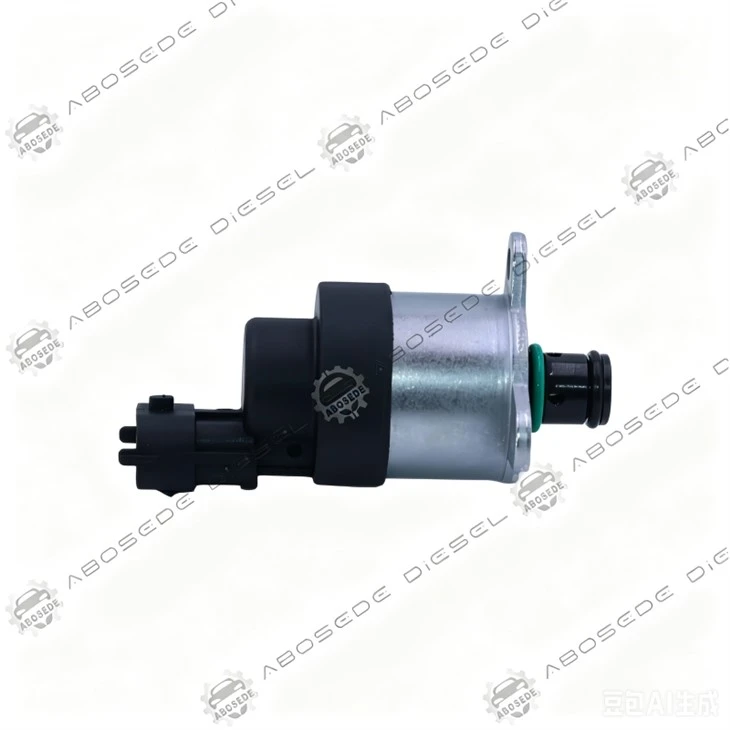


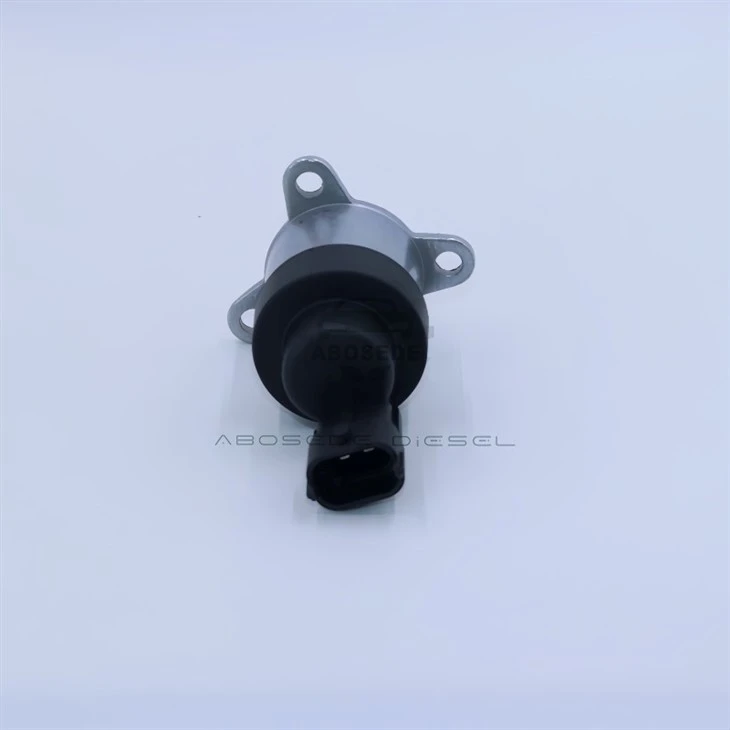
Bosch 0928400715 – The Metering Valve That Delivers Consistency From One Pulse To The Next
1. Product:0928400715
2. Compatible Equipment: Diesel Fuel Injection Systems
3. Manufacturer: Aftermarket OEM Replacement
4. Condition: Brand New, Fully Tested
5. Origin: ABOSEDE Diesel
6. Shipping period: 3-5 business days
7. Payment terms: T/T, Western Union, PayPal
- Fast Delievery
- Quality Assurance
- 24/7 Customer Service
Product Introduction
In a common‑rail system, fuel is not delivered as a continuous stream – it is metered in discrete pulses, each corresponding to a PWM duty cycle. The ECU assumes that each pulse produces the same flow as the previous pulse at the same duty, and it bases its injection timing calculations on this assumption. If the valve's flow varies from one pulse to the next, the actual injected quantity deviates from the commanded quantity, causing combustion instability that the ECU cannot correct quickly enough. The 0928400715 is engineered for minimal pulse‑to‑pulse variation, ensuring that what the ECU commands on one cycle is exactly what it delivers on the next – and the one after that. This consistency is the foundation of smooth idle, clean emissions, and predictable power delivery.
The Stability Gap – Why Pulse Repetition Matters
When a metering valve opens and closes at a typical PWM frequency of 150‑200 Hz, the armature moves less than 0.5 mm, and it does so 200 times per second. Any inconsistency in this movement – a slight variation in opening time, a momentary sticking point, or a change in spring dynamics – translates directly into a different fuel volume for that pulse. The ECU's feedback loop operates at a slower rate; it cannot correct individual pulses, only the average over several cycles. If the pulse‑to‑pulse variation is significant, the ECU will see the average as correct, but individual injection events will be off, leading to a rough idle and increased particulate emissions. The 0928400715 reduces this variation to less than ±1.5 % from pulse to pulse, which is a critical improvement over the typical ±4‑5 % found in non‑optimised valves. This stability is achieved through a combination of low‑friction armature guidance, consistent spring force, and a magnetic circuit that delivers a predictable force profile with every cycle.
The Mechanical Sources of Pulse‑to‑Pulse Variation
Pulse‑to‑pulse variation arises from three primary sources: friction, spring force consistency, and electromagnetic hysteresis. Friction in the armature guide is the most common contributor – if the armature sticks momentarily, the opening time changes, and the fuel volume for that pulse is reduced. Spring force consistency is the second factor – a spring that has lost tension or has a variable spring rate will produce different opening characteristics from one cycle to the next. Electromagnetic hysteresis, the residual magnetism left in the core after a pulse is switched off, can affect the next pulse's opening timing if it is not properly dissipated. The 0928400715 addresses all three: the armature guide is coated with a solid lubricant that reduces friction variation; the spring is made from a high‑grade alloy with a consistent spring rate; and the magnetic core material is selected for low hysteresis, ensuring that the armature returns to its starting position uniformly after each pulse.
Failure Patterns Related to Consistency Loss
The most common symptom of a valve losing its pulse‑to‑pulse consistency is not a fault code – it is a rough idle that the ECU cannot fully smooth out. The engine may sound uneven at idle, with slight fluctuations in engine speed that are visible on a tachometer but do not trigger a diagnostic code. As the consistency degrades further, the roughness may extend to light throttle, and the engine may produce visible smoke during steady‑state operation due to uneven combustion. The genuine 0928400715 resists this degradation through the solid lubricant coating on the armature guide – a treatment that lasts for over 200,000 km of normal service. The low‑hysteresis magnetic core also prevents the build‑up of residual magnetism that can cause inconsistent armature release in older valves.
Installation – The Steps That Preserve Consistency
Installing the 0715 is similar to other CP4 valves – clean the mounting surface, replace the O‑ring and backup ring, torque the retaining nut to 22 Nm ± 2 Nm. However, there are two steps specific to preserving the valve's pulse‑to‑pulse consistency:
Lubricate the armature guide – before installation, apply a small drop of clean diesel to the armature guide to ensure initial smooth movement. The valve is shipped with a protective coating, but a diesel rinse improves the first start behaviour.
Perform a "pulse learn" procedure – some diagnostic tools have a specific function that learns the valve's individual pulse response. This is different from the standard adaptation reset. If your tool supports it, run this procedure after installation to allow the ECU to tune its dither frequency to match the valve's response time, further reducing pulse‑to‑pulse variation.
Frequently Asked Questions
Q1: How can I tell if my valve is losing pulse‑to‑pulse consistency without specialised equipment?
→ Monitor the engine speed stability at idle – if the rpm fluctuates by more than ± 15 rpm on a warm engine with no load, and the fluctuation does not correspond to a misfire from a specific cylinder, the metering valve is likely the cause. The ECU can correct for slow variations but cannot compensate for pulse‑to‑pulse inconsistencies.
Q2: Can I test the pulse‑to‑pulse consistency of a new aftermarket valve before installing it?
→ Not without a specialised solenoid test bench – and even then, the test conditions may not replicate real engine operation. The only reliable approach is to use a genuine Bosch valve, which has been tested to the same standard as the original equipment.
Q3: Why does my Transit idle smoothly after a cold start but develop a slight roughness when fully warm?
→ This is a classic symptom of friction variation that becomes worse as the fuel temperature increases. The fuel's lubricity decreases at higher temperatures, causing the armature guide to experience intermittent sticking. The 0715's solid lubricant coating is designed to maintain consistent friction across the full temperature range.
Q4: Is the 0928400715 suitable for Euro 6 applications with start‑stop functionality?
→ Yes. The start‑stop system increases the number of start cycles, which can accelerate wear in standard valves. The 0715's low‑friction coating and low‑hysteresis magnetic core are designed to withstand the increased cycle count of start‑stop operation.
Q5: I replaced the valve but still have a noticeable roughness at idle – what else should I check?
→ Verify that the low‑pressure fuel supply is stable (no air ingress in the fuel lines) and that the injectors have been coded correctly. Also, ensure that the engine oil is at the correct level and has been changed at the specified interval – worn engine mounts can transmit vibration that mimics a fuel system issue.
Q6: What is the recommended diagnostic parameter to confirm the valve is operating consistently?
→ Use live data to observe the "fuel metering valve current" and "rail pressure actual" simultaneously. If the current shows a smooth wave but the rail pressure has a high‑frequency oscillation (above 100 Hz) that does not correspond to engine speed harmonics, the valve may be producing inconsistent pulse delivery.


Flexible Payment Methods for Your Convenience
To make your purchasing experience smooth and easy, we offer a variety of secure payment options:

Bank Transfer
Supports multiple currenciesand bank payment methods.

Western Union
Quick and global money transfers.

PayPal
Safe and convenient online payment.

Alibaba
Enjoy extra protection with trusted Alibaba transactions.
We're here to make your order process worry-free - choose the payment method that works best for you!
Shipping Made Simple

Customer reviews

Hot Tags: bosch 0928400715 – the metering valve that delivers consistency from one pulse to the next, China bosch 0928400715 – the metering valve that delivers consistency from one pulse to the next manufacturers, suppliers, factory, 0445120066, 0445120067, Bosch Volvo Deutz Renault, Diesel Control Valve, F00BC80045, F00RJ01479
You Might Also Like
-

0928400760 Bosch Fuel Metering Valve – High-Mileage ...
-

0928400739 Bosch Fuel Metering Valve – Precision Fla...
-

0928400492 Bosch Inlet Metering Valve – Coil Insulat...
-

0928400644 Bosch Inlet Metering Valve – Multi-Stage ...
-

DRV Valve 0281002500 – Diesel Rail Pressure Control ...
-

F00RJ01479 Fuel Injector Valve Assembly – Precision ...
