


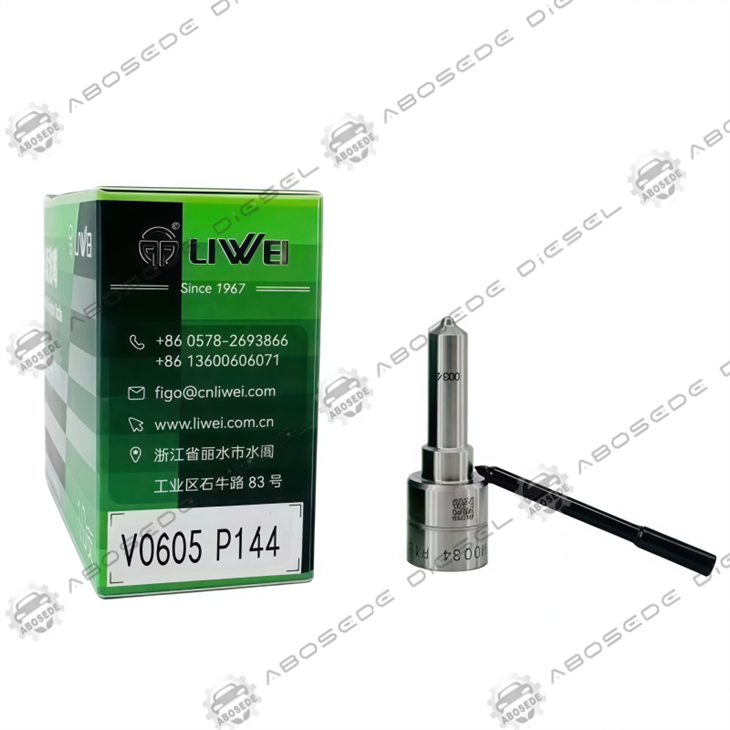

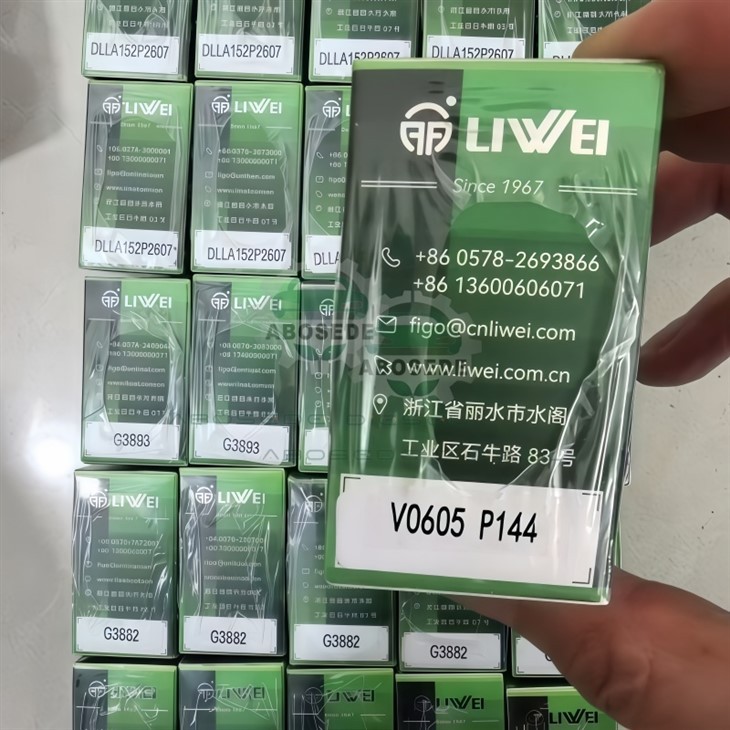
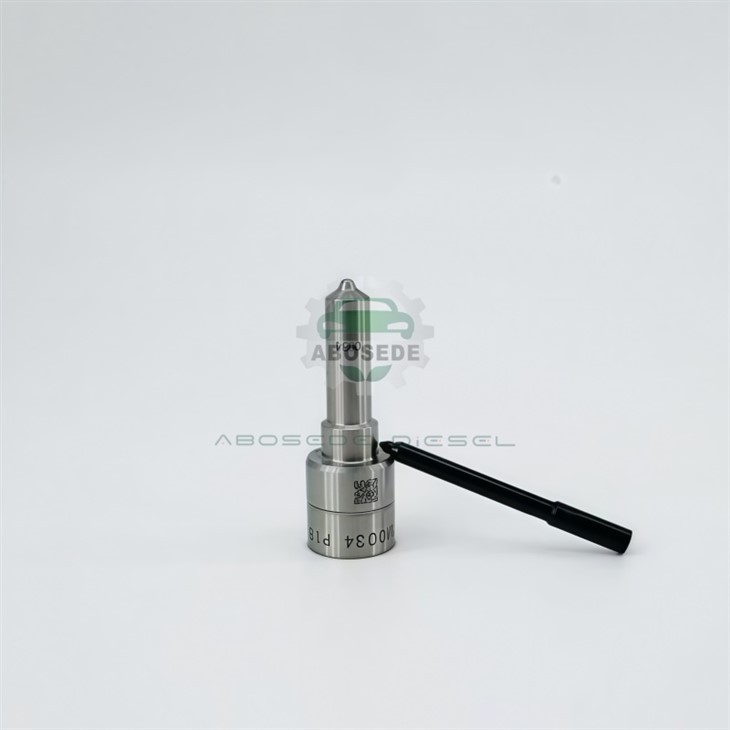
Liwei V0605P144 Diesel Injector Nozzle: Orifice Cavitation, Hole-to-Hole Flow Spread & DLC Coking Resistance in Common-Rail Systems
1. Product:V0605P144
2. Compatible Equipment: Diesel Fuel Injection Systems
3. Manufacturer: Aftermarket OEM Replacement
4. Condition: Brand New, Fully Tested
5. Origin: ABOSEDE Diesel
6. Shipping period: 3-5 business days
7. Payment terms: T/T, Western Union, PayPal
- Fast Delievery
- Quality Assurance
- 24/7 Customer Service
Product Introduction
The injector nozzle is the final flow restrictor in a common-rail system. Rail pressure, pulse width and IQA/trim code decide how much fuel the ECM commands, but the nozzle decides how that fuel is distributed. The Liwei V0605P144 is a six-hole, narrow-angle diesel injector nozzle referenced for high-output commercial diesel platforms. It is not a complete injector assembly. Its service identity depends on hole geometry, hole-to-hole flow spread, needle-to-nozzle lapping, seat sealing and DLC coating condition. If any of these drift, common-rail diagnostics can misread the fault as rail pressure, control valve or injector solenoid failure. This guide focuses on orifice cavitation, hole-to-hole flow spread, DLC coking resistance and installation verification.
📌 Fitment & Nozzle Identification
The V0605P144 is a bare nozzle. It must be matched to a specific injector body, needle and control valve assembly. It is commonly referenced for Bosch CRI and Denso G2 injector families with a 6 × 0.205 mm geometry, but cross-reference does not guarantee fitment. Confirm injector part number, nozzle number, needle diameter, seat angle, opening pressure and lapping requirement before ordering. Do not install a bare nozzle without verifying injector body condition. Also confirm whether the application uses the nozzle in a high-swirl commercial combustion bowl or a different bowl geometry.
📊 Nozzle Geometry & Flow Data
| Parameter | Service target | Diagnostic meaning |
|---|---|---|
| Nozzle type | Inward-opening, differential pressure | Common-rail nozzle family |
| Number of holes | 6 | Spray distribution and flow area |
| Orifice diameter | ≈ 0.205 mm | Flow capacity and penetration |
| Spray angle | 144° | Narrow-angle penetration |
| Static flow @ 100 bar | ≈ 1,020 cc/min | Hydraulic baseline |
| Hole-to-hole flow variation | ≤ 1.8% | Spray balance and soot control |
| Opening pressure | ≈ 220 ± 10 bar | Start of injection |
| Needle guide diameter | ≈ 4.5 mm | Needle alignment and friction |
| Needle-to-nozzle clearance | ≈ 4–6 µm | Leakage and seizure risk |
| Seat angle | ≈ 60° conical | Sealing and after-dribble control |
| Needle lift | ≈ 0.24 mm | Flow area at full lift |
| DLC coating | ≈ 1.5 µm on guide | Friction and coking resistance |
| Surface hardness | ≈ 60–64 HRC | Wear resistance |
| Guide surface finish | Ra ≤ 0.08 µm | Needle movement stability |
⚙️ Orifice Cavitation & Discharge Coefficient
At common-rail pressure, fuel accelerates through the nozzle holes at very high velocity. If the hole inlet has a sharp edge, local pressure drops below vapour pressure and cavitation forms. Cavitation reduces the effective flow area and changes the discharge coefficient. It also erodes the hole inlet over time, increasing flow and distorting the spray. The V0605P144's 6 × 0.205 mm geometry uses fewer, larger orifices than some 7- or 8-hole nozzles. This raises fuel velocity through each hole and improves penetration in high-swirl combustion bowls. However, the same geometry makes inlet condition critical. A damaged or carbon-blocked hole inlet can shift flow without setting an injector code. The ECM may then correct cylinder balance with trim, but it cannot correct individual hole-to-hole imbalance.