


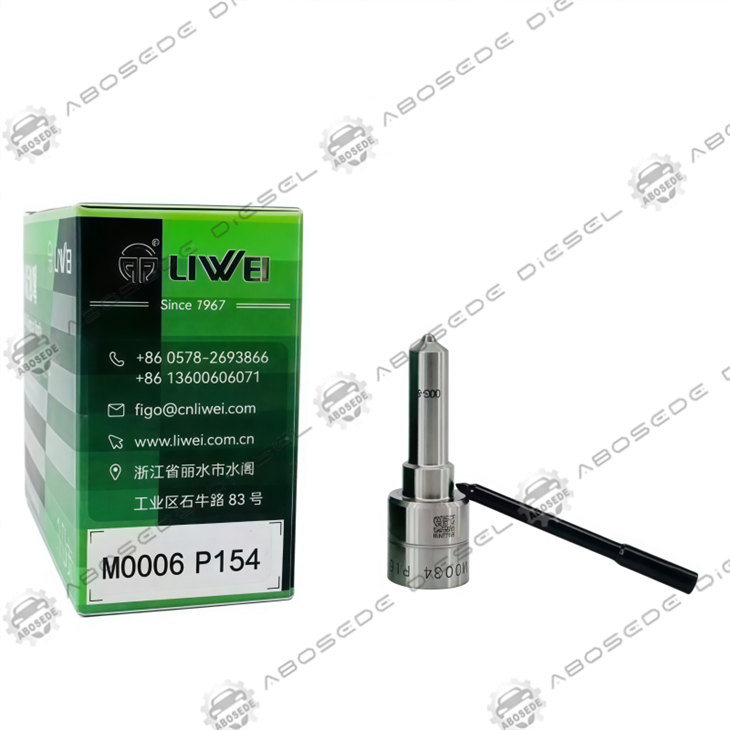

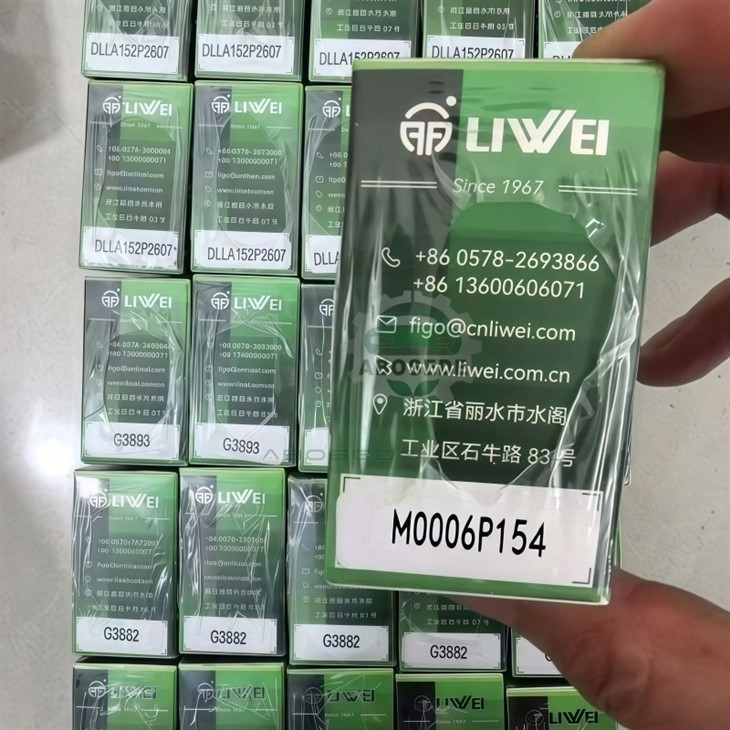
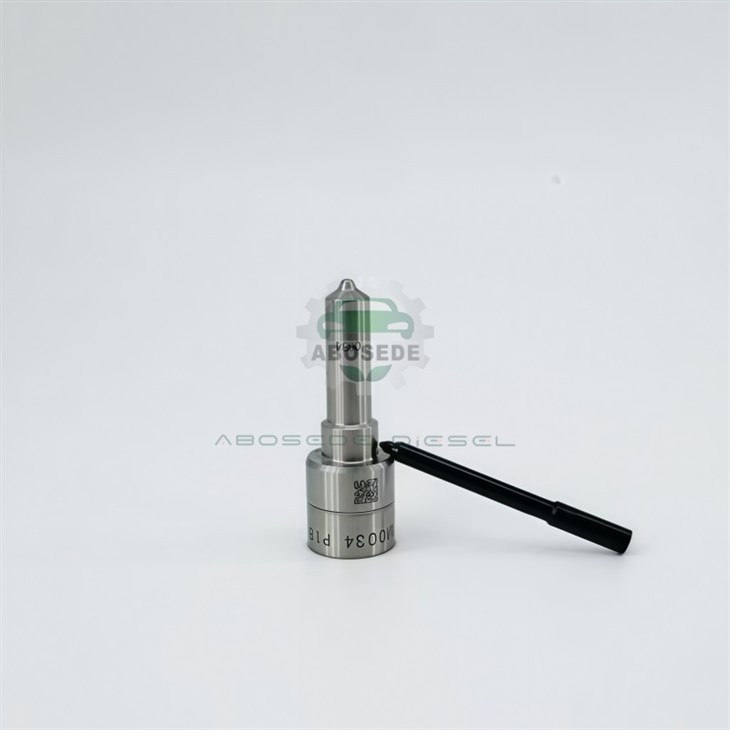
Liwei M0006P154 Diesel Injector Nozzle: 154° Spray Cone, ECM Trim Learning Boundary & Euro 6 Compliance in Common-Rail Engines
1. Product:M0006P154
2. Compatible Equipment: Diesel Fuel Injection Systems
3. Manufacturer: Aftermarket OEM Replacement
4. Condition: Brand New, Fully Tested
5. Origin: ABOSEDE Diesel
6. Shipping period: 3-5 business days
7. Payment terms: T/T, Western Union, PayPal
- Fast Delievery
- Quality Assurance
- 24/7 Customer Service
Product Introduction
One degree of spray angle does not sound significant. In a Euro 6 common-rail engine with a shallow-bowl piston, it can decide whether the ECM's long-term fuel trim stays inside its learning window or drifts toward its correction limit. The Liwei M0006P154 is a seven-hole, 154° diesel injector nozzle referenced for 2.0L Euro 5/6 common-rail engines. It is a bare nozzle, not a complete injector. Its 154° cone is one degree wider than the 153° M0005P153 and four degrees wider than a standard 150° nozzle. That extra width shortens penetration and changes where the fuel cloud lands in the bowl. If nozzle flow, hole-to-hole variation or seat lapping are not matched to the injector body, the ECM must learn a correction that does not belong to the hardware. This guide focuses on spray-cone tolerance, ECM trim learning boundary, Euro 6 compliance and installation verification.
📌 Fitment & Nozzle Identification
The M0006P154 must be matched to the correct injector body, needle, control valve, seat angle, opening pressure and needle lift. It is commonly referenced for Bosch CRI and Denso G2/G3 injector families with a 7 × 0.185 mm geometry. Confirm injector part number, nozzle number, needle diameter, seat angle, lapping requirement and copper washer specification before ordering. Do not install a bare nozzle without checking injector body wear and sleeve condition. Also confirm the piston bowl type. A 154° cone is intended for shallow-bowl Euro 5/6 pistons. A mismatched bowl changes spray targeting and can increase wall wetting, soot and DPF loading.
📊 Spray Cone & Flow Data
| Parameter | Service target | Diagnostic meaning |
|---|---|---|
| Nozzle type | Inward-opening, differential pressure | Common-rail nozzle family |
| Number of holes | 7 | Flow area and plume count |
| Orifice diameter | ≈ 0.185 mm | Atomization and short penetration |
| Spray angle | 154° | Shallow-bowl matching |
| Static flow @ 100 bar | ≈ 800 cc/min | Hydraulic baseline |
| Spray penetration @ 1,600 bar | ≈ 41 mm | Bowl reach and wall clearance |
| Opening pressure | ≈ 220 ± 10 bar | Start of injection |
| Needle guide diameter | ≈ 4.1 mm | Concentricity and friction |
| Needle-to-nozzle clearance | ≈ 4–6 µm | Leakage and seizure risk |
| Seat angle | ≈ 60° conical | Sealing and after-dribble control |
| Seat diameter | ≈ 3.7 mm | Seat contact and flow transition |
| Needle lift | ≈ 0.21 mm | Partial-lift and pilot stability |
| Material | M42 high-speed steel | Hot hardness and wear resistance |
| DLC coating | ≈ 1.5 µm on guide | Friction and soot resistance |
| Max rail pressure | ≈ 1,800 bar | Pressure compatibility |
⚙️ 154° vs 153° vs 150°: Why One Degree Matters
Spray angle decides where the fuel plume lands inside the bowl. A 150° cone is standard for many 2.0L engines. A 153° cone is slightly wider and shorter. A 154° cone is wider still. In a shallow-bowl Euro 6 piston, that extra width moves the plume closer to the squish zone and further from the bowl wall. The result is better air utilization at low and medium load, but less margin if the nozzle tip protrudes too far or the copper washer is too thick. The ECM cannot measure spray trajectory. It only sees cylinder balance, fuel trim and exhaust temperature. A 1° error in cone angle, combined with tolerance stack-up in tip protrusion, can shift EGT and soot output enough to trigger DPF regeneration more often. This is why spray angle should be verified as an installed dimension, not only a nozzle specification.