


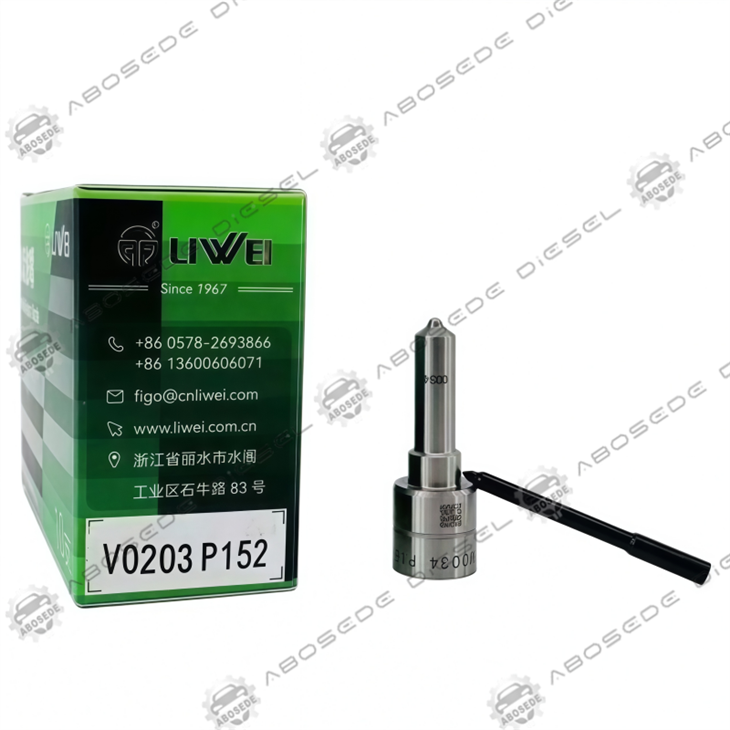

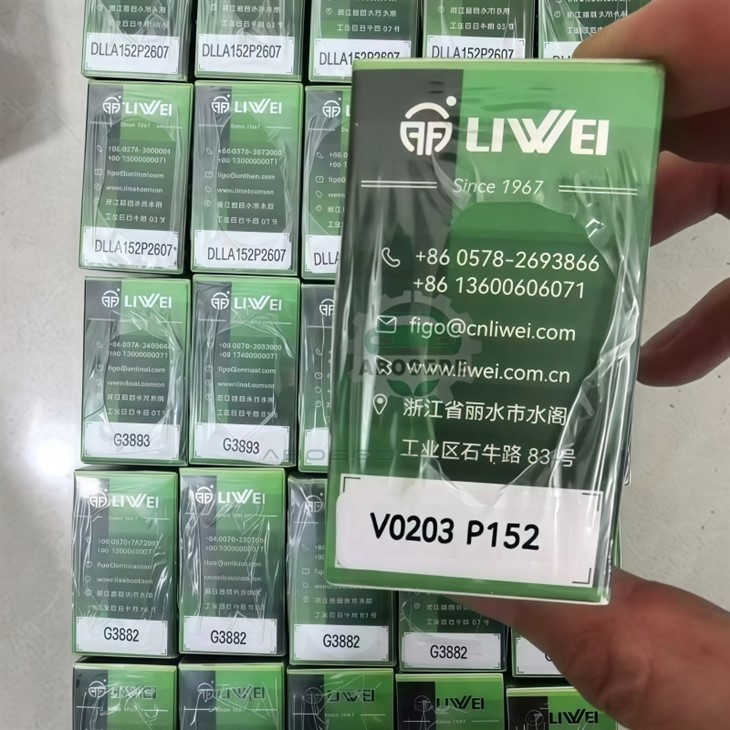
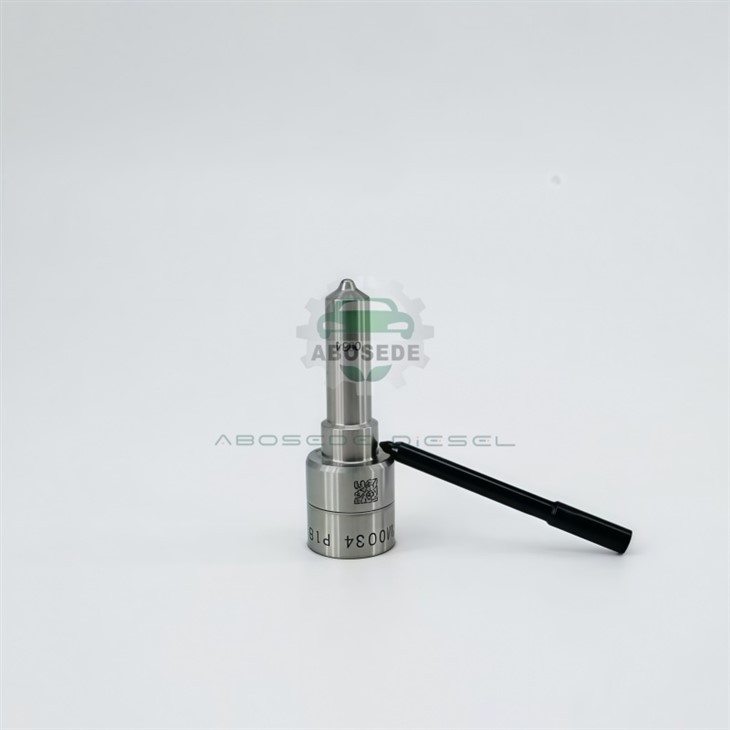
Liwei V0203P152 Diesel Injector Nozzle: Shallow-Bowl Spray Matching, Wall Wetting & Nozzle Tip Thermal Management
1. Product:V0203P152
2. Compatible Equipment: Diesel Fuel Injection Systems
3. Manufacturer: Aftermarket OEM Replacement
4. Condition: Brand New, Fully Tested
5. Origin: ABOSEDE Diesel
6. Shipping period: 3-5 business days
7. Payment terms: T/T, Western Union, PayPal
- Fast Delievery
- Quality Assurance
- 24/7 Customer Service
Product Introduction
A common-rail nozzle does not fail only when it leaks or cokes. It also fails when the spray angle no longer matches the piston bowl. The Liwei V0203P152 is a seven-hole, 152° diesel injector nozzle referenced for 2.2L–3.0L common-rail engines with shallow-bowl Euro 5/6 pistons. A 152° cone is wider than a 144° or 150° design. That width reduces spray penetration and keeps the fuel cloud inside the bowl at low and medium load. But if the nozzle is installed in a deep-bowl piston, or if the hole inlets are eroded, the plume hits the bowl wall or the cylinder liner. The ECM cannot see wall wetting. It only sees cylinder balance and fuel trim. This guide covers spray-angle matching, wall-wetting diagnostics, tip thermal management, lapping and installation.
📌 Fitment & Nozzle Identification
The V0203P152 is a bare nozzle. It must be matched to the correct injector body, needle, control valve and seat angle. It is commonly referenced for Bosch CRI and Denso G2/G3 injector families with a 7 × 0.190 mm geometry. Confirm injector part number, nozzle number, needle diameter, seat angle, opening pressure and lapping requirement before ordering. Do not install a bare nozzle without verifying injector body condition. Also confirm the piston bowl type. A 152° nozzle is intended for shallow-bowl pistons. Installing it in a deep-bowl engine changes spray targeting and can increase soot, wall wetting and oil dilution.
📊 Nozzle Geometry & Spray Data
| Parameter | Service target | Diagnostic meaning |
|---|---|---|
| Nozzle type | Inward-opening, differential pressure | Common-rail nozzle family |
| Number of holes | 7 | Flow area and spray distribution |
| Orifice diameter | ≈ 0.190 mm | Atomization and flow rate |
| Spray angle | 152° | Shallow-bowl matching |
| Static flow @ 100 bar | ≈ 870 cc/min | Hydraulic baseline |
| Spray penetration @ 1,600 bar | ≈ 42 mm | Bowl reach and wall wetting risk |
| Needle-to-nozzle clearance | ≈ 4–6 µm | Leakage and seizure risk |
| Seat angle | ≈ 60° conical | Sealing and after-dribble control |
| Opening pressure | Injector-specific | Start of injection |
| Material | M42 high-speed steel | Hot hardness and wear resistance |
| DLC coating | ≈ 1.5 µm on guide | Friction and deposit resistance |
| Guide surface finish | Ra ≤ 0.08 µm | Needle movement stability |
| Max rail pressure | ≈ 1,800 bar | Pressure compatibility |
⚙️ Spray Angle vs Piston Bowl Geometry
Spray angle decides where the fuel plume lands inside the bowl. A 152° cone is wider and shorter than a 144° or 150° cone. In a shallow-bowl Euro 5/6 piston, that width distributes fuel across the bowl radius and uses available air more evenly. In a deep-bowl piston, the same plume may reach the bowl wall too early, causing wall wetting, soot and oil dilution. If the spray angle is too narrow for a shallow bowl, the fuel concentrates near the centre, leaving outer air unused and raising smoke. This is why nozzle selection must match the piston bowl, not only the injector body. A common-rail ECM can adjust fuel mass and timing, but it cannot change the physical spray angle.