


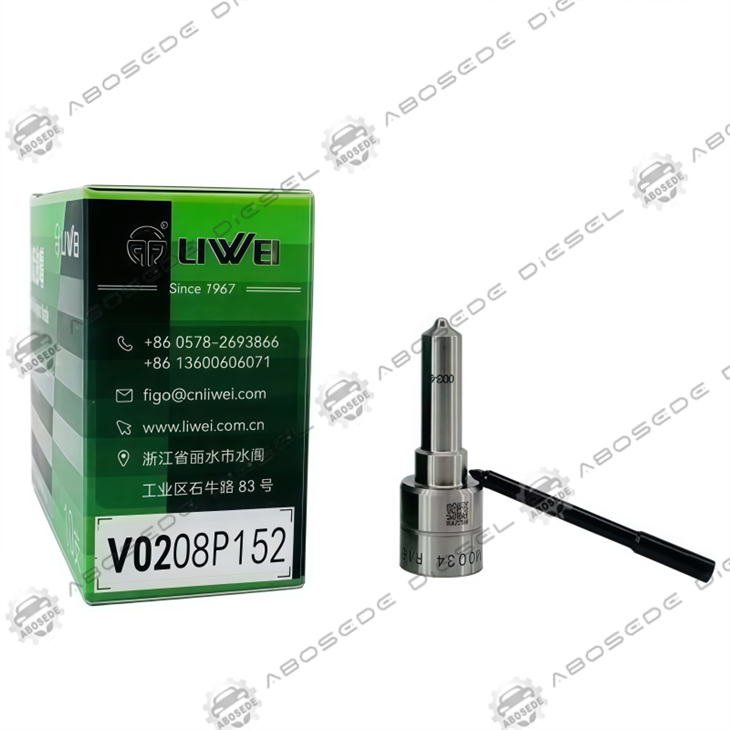

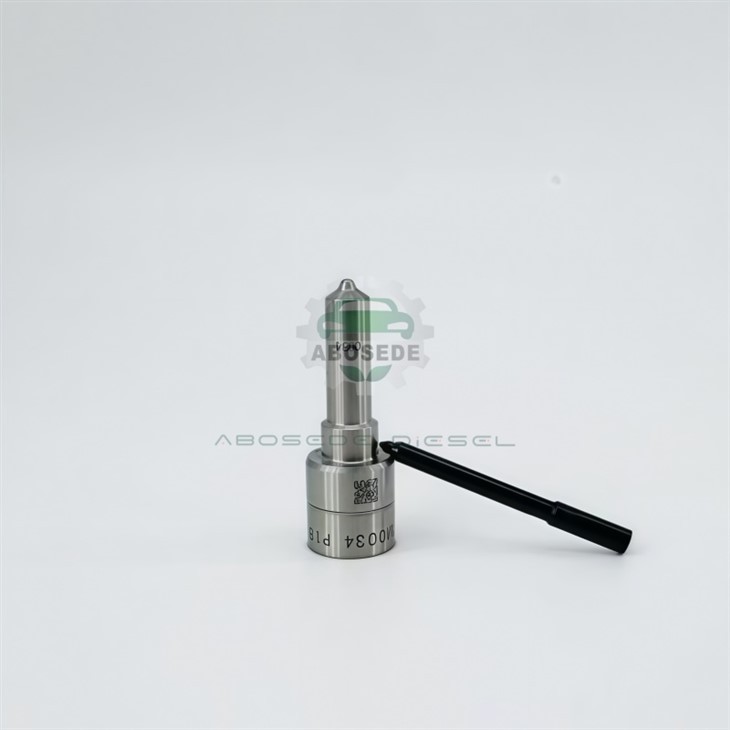
Liwei V0208P152 Diesel Injector Nozzle: Orifice Inlet Radius, Flow Coefficient & Needle Concentricity for Euro 5/6 Common-Rail Engines
1. Product:V0208P152
2. Compatible Equipment: Diesel Fuel Injection Systems
3. Manufacturer: Aftermarket OEM Replacement
4. Condition: Brand New, Fully Tested
5. Origin: ABOSEDE Diesel
6. Shipping period: 3-5 business days
7. Payment terms: T/T, Western Union, PayPal
- Fast Delievery
- Quality Assurance
- 24/7 Customer Service
Product Introduction
Two nozzles can share the same hole count, the same spray angle and the same static flow, yet behave differently in a common-rail engine. The difference is inlet geometry. The Liwei V0208P152 is a seven-hole, 152° diesel injector nozzle referenced for 2.0L–2.2L Euro 5/6 common-rail engines with intermediate-depth piston bowls. It is a bare nozzle, not a complete injector. Its real service identity depends on orifice inlet radius, discharge coefficient (Cd), effective flow area and needle-to-seat concentricity. When these drift, the ECM may compensate with cylinder balance and fuel trim - but spray symmetry, soot distribution and oil dilution change in ways the ECM cannot see. This guide focuses on inlet rounding, Cd calibration, needle concentricity and verification.
📌 Fitment & Nozzle Identification
The V0208P152 must be matched to the correct injector body, needle, control valve and seat angle. It is commonly referenced for Bosch CRI 2.0/2.2 and Denso G2/G3 injector families with a 7 × 0.180 mm geometry. Confirm injector part number, nozzle number, needle diameter, seat angle, opening pressure and lapping requirement before ordering. Do not install a bare nozzle without verifying injector body condition. Also confirm the piston bowl type: the 152° cone is intended for intermediate-depth bowls in Euro 5/6 small-displacement engines. A mismatched bowl changes spray targeting and increases wall-wetting risk.
📊 Inlet Geometry & Flow Data
| Parameter | Service target | Diagnostic meaning |
|---|---|---|
| Nozzle type | Inward-opening, differential pressure | Common-rail nozzle family |
| Number of holes | 7 | Flow area and spray distribution |
| Orifice diameter | ≈ 0.180 mm | Atomization and penetration |
| Spray angle | 152° | Intermediate-bowl matching |
| Orifice inlet radius | Hydro-eroded, rounded edge | Discharge coefficient and cavitation control |
| Discharge coefficient Cd | ≈ 0.72–0.78 | Effective flow vs geometric area |
| Static flow @ 100 bar | ≈ 790 cc/min | Hydraulic baseline |
| Hole-to-hole flow variation | ≤ 1.5% | Spray balance and soot control |
| Opening pressure | ≈ 215 ± 10 bar | Start of injection |
| Needle guide diameter | ≈ 4.0 mm | Concentricity and friction |
| Needle-to-nozzle clearance | ≈ 3–5 µm | Leakage and seizure risk |
| Seat angle | ≈ 60° conical | Sealing and after-dribble control |
| Needle lift | ≈ 0.20 mm | Effective flow area at full lift |
| DLC coating | ≈ 1.2 µm on guide | Friction and EGR soot resistance |
| Guide surface finish | Ra ≤ 0.08 µm | Needle movement stability |
| Max rail pressure | ≈ 1,800 bar | Pressure compatibility |
⚙️ Orifice Inlet Radius & Flow Coefficient
The geometric hole diameter is not the effective flow area. Fuel entering a sharp-edged hole separates from the wall, creating a vena contracta that reduces the effective area. A hydro-eroded inlet radius keeps the flow attached, raising the discharge coefficient and reducing cavitation. The V0208P152's 0.180 mm holes are smaller than the 0.190 mm or 0.205 mm used in larger-displacement nozzles. Small holes are more sensitive to inlet condition: a rounded inlet improves Cd, while a sharp or damaged inlet causes spray asymmetry and soot. This is why a nozzle can pass a static flow test and still fail a spray symmetry check. The ECM sees total fuel mass, not individual hole condition.