


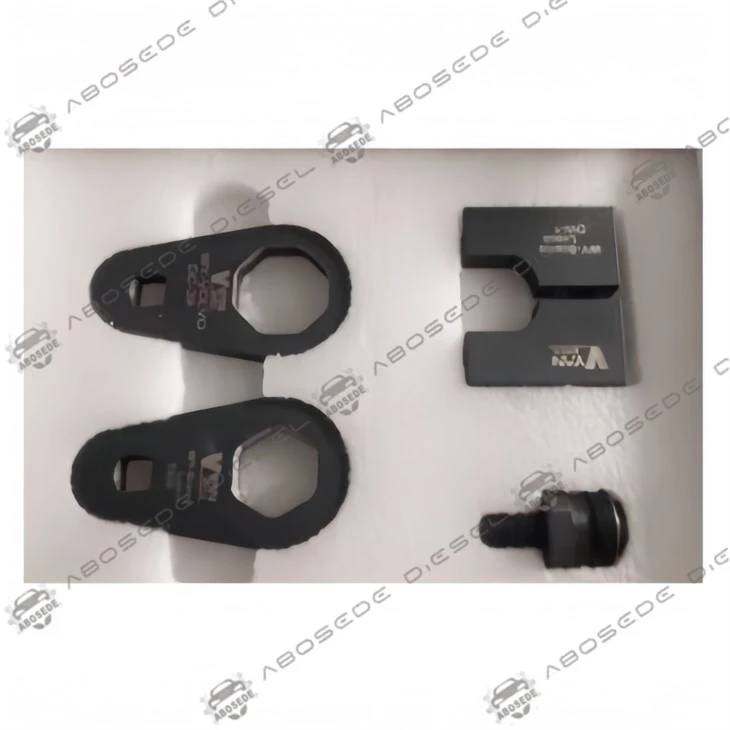


Professional Scania Injector Service Tools – Precision Tooling For Common Rail Repairs
1. Product: tools for scania injector
2. Compatible Equipment: Diesel Fuel Injection Systems
3. Manufacturer: Aftermarket OEM Replacement
4. Condition: Brand New, Fully Tested
5. Origin: Original :ABOSEDE DIESEL
6. Shipping period: 3-5 business days
7. Payment terms: T/T, Western Union, PayPal
- Fast Delievery
- Quality Assurance
- 24/7 Customer Service
Product Introduction
The Tools for Scania Injector range comprises specialized workshop equipment engineered for the removal, calibration, and installation of Scania unit injectors and common rail fuel systems. Designed to interface precisely with DC09, DC12, DC13, and DC16 engine platforms, this tooling addresses the rigorous demands of modern high-pressure injection, operating at pressures up to 3,000 bar. By integrating OEM-specified tolerances, these implements ensure that injector coding, torque adherence, and mechanical lift settings are executed with absolute repeatability, eliminating the guesswork associated with generic tools and safeguarding against performance degradation in Euro 5 and Euro 6 compliant powertrains.
🔧 Precision Engineering and Technical Specifications
This portfolio is distinguished by strict adherence to Scania's repair parameters. The flagship setting tool 99 365 functions as a high-precision reference gauge, designed to establish the critical 66.9 ± 0.1 mm lift dimension between the reference plane and the valve spring collar-a measurement directly influencing injection timing and cylinder balance. For removal operations, the slide hammer 87 596 is engineered with a specific engagement geometry to extract unit injectors without stressing the solenoid valve, mitigating costly component damage. Torque requirements are equally rigid: the lock nut on the rocker arm is secured to 39 Nm, while the injector fork clamp bolt requires a 20 Nm + 75° angle-tightening procedure, precisely executed using the torque screwdriver 588 179. Consumables such as the mandatory O-ring grease (part No. 1 402 039) are essential for lubricating seals during insertion, preventing extrusion or premature wear.
🚛 Engine Platform Compatibility and Application Scope
| Scania Engine Series | Fuel System Type | Critical Tool Application | Key Parameter |
|---|---|---|---|
| DC09 / DI9 | Unit Injector / Common Rail | Installation & Removal (PDE) | Injector Height Adjustment |
| DC12 | HPI | Slide Hammer Extraction | Solenoid Valve Clearance |
| DC13 / DC16 | XPI | Setting Tools 99 365 / 99 414 | 66.9 mm Lift Dimension |
| G-Series (e.g., G460) | XPI Common Rail | Torque Wrench & Diagnostic Interface | ECU Coding & Pressure Calibration |
🛣️ Critical Installation Points and Mechanical Workflow
The installation sequence demands strict procedural compliance to prevent unit injector misalignment. A fundamental prerequisite involves depressurizing the fuel rail via diagnostic software to eliminate residual high pressure. Prior to insertion, the injector seat must be meticulously cleaned to ensure no old sealing washers remain, which would alter seating depth. The process requires lubricating O-rings with specified grease and applying a new sealing washer to guarantee a gas-tight barrier. During installation of XPI or HPI injectors, technicians must utilize the specific setting tool to achieve the 66.9 mm calibration; a rough pre-adjustment with a sliding caliper is mandatory before fine-tuning with the dial indicator to avoid performance faults. This is followed by precise tightening of the fork bolt and rocker arm lock nut to defined torque values. A final leak check and fault code clearing via Scania Diagnos are non-negotiable post-installation steps to validate repair integrity.
💡 Value Proposition in the Common Rail Aftermarket
For a professional diesel repair workshop, this tooling represents a strategic investment that directly curtails downtime and repeat repairs. The diagnostic capability permits differentiation between mechanical injector failure and ECU calibration errors, a common friction point in modern workflows. By enabling precise measurement of the scania injector code and mechanical lift, these implements accommodate exacting tolerances for Bosch and Delphi injector variants, ensuring replacements function at OEM-level efficiency. This precision yields tangible benefits: improved fuel atomization reduces DPF clogging, accurate timing lowers consumption, and proper seating eliminates combustion gas leakage that degrades engine oil. For parts distributors, this tooling mitigates the high cost of injector returns caused by faulty installation, reinforcing supply chain professional integrity.
❓ FAQ – Common Concerns for Repair Shops and Wholesalers
Q1: Does this tooling cover both PDE unit injectors and XPI common rail systems on Scania engines?
A: Yes. The range includes dedicated implements for PDE mechanical unit injectors on older DC-series engines as well as full compatibility with XPI high-pressure systems on Euro 5 and Euro 6 platforms, ensuring workshop versatility.
Q2: What is the typical service life of the setting tool 99 365 under daily shop use?
A: With proper handling and routine calibration checks, the gauge maintains its reference accuracy for over five years in a high-volume workshop environment, although annual verification against master standards is recommended.
Q3: Can these tools be used to install aftermarket injector brands, or are they strictly for OEM Scania parts?
A: They are designed to OEM Scania physical interfaces, which means they are fully compatible with both genuine Scania and high-quality aftermarket replacements that replicate the original mechanical footprint and coding protocols.
Q4: How critical is the 66.9 mm setting, and what happens if I deviate from this specification?
A: That dimension directly governs the injector plunger stroke. Deviations as small as ±0.1 mm alter injection quantity and timing, leading to rough idling, increased smoke emissions, and potential DPF damage over time.
Q5: Is there a risk of damaging the injector solenoid when using the slide hammer during extraction?
A: No. The slide hammer 87 596 features a specific engagement geometry that distributes extraction force to the injector body, isolating the solenoid valve from shock loads and preserving its electrical integrity.
Q6: Do I require additional software or electronic tools to complete the installation after mechanical replacement?
A: Yes. After mechanical installation, you must use Scania Diagnos or equivalent software to clear fault codes, perform injector coding, and reset fuel trim values, as these steps are essential for the ECU to recognize the new component tolerances.


Flexible Payment Methods for Your Convenience
To make your purchasing experience smooth and easy, we offer a variety of secure payment options:

Bank Transfer
Pay directly in 15 supported currencies.

Western Union
Quick and global money transfers.

PayPal
Safe and convenient online payment.

Alibaba
Enjoy extra protection with trusted Alibaba transactions.
We're here to make your order process worry-free - choose the payment method that works best for you!
Shipping Made Simple

Customer reviews

Hot Tags: professional scania injector service tools – precision tooling for common rail repairs, China professional scania injector service tools – precision tooling for common rail repairs manufacturers, suppliers, factory
You Might Also Like
-

C7 C9 Measuring Tools – Precision Diagnostic Solutio...
-

SIEMENS Measuring Tool & Shims For Common Rail Injec...
-

Test Bench Flow Sensor Custom OEM/ODM Service – Besp...
-

Piezo Injector Removal Tool Kit – Professional Diese...
-

Abosede Diesel 25.5T Bosch Piezo Injector Actuator C...
-

Multi-Functional Adaptors – Versatile Tools For Dies...
