


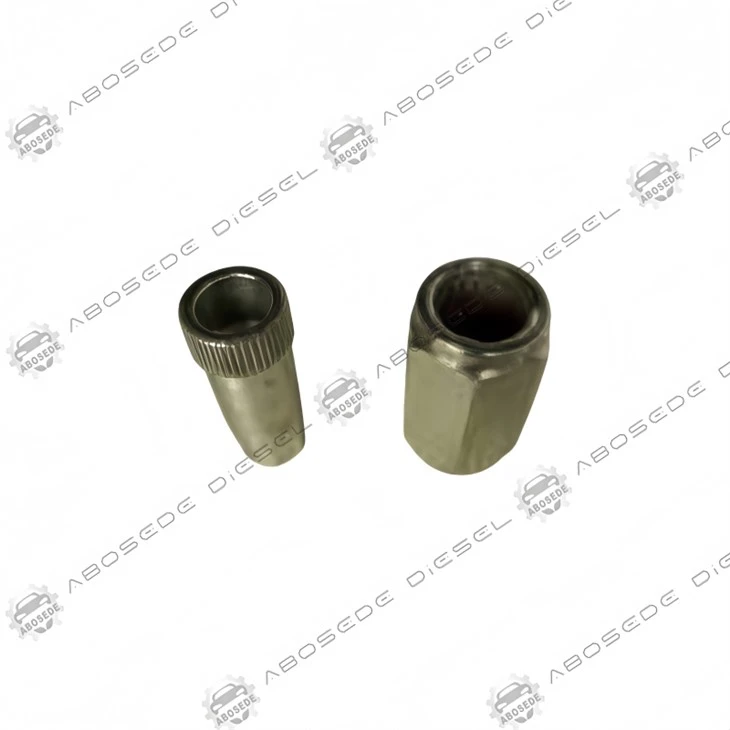


Caterpillar Spline‑Sleeve Injectors – Models 236‑0962 / 256‑6432 / 265‑6091 / 318‑2207 – Torque Transfer And Hydraulic Integrity in High‑Output Diesels
1. Product:Caterpillar Spline‑Sleeve Injectors
2. Compatible Equipment: Diesel Fuel Injection Systems
3. Manufacturer: Aftermarket OEM Replacement
4. Condition: Brand New, Fully Tested
5. Origin: ABOSEDE Diesel
6. Shipping period: 3-5 business days
7. Payment terms: T/T, Western Union, PayPal
- Fast Delievery
- Quality Assurance
- 24/7 Customer Service
Product Introduction
In Caterpillar HEUI and common‑rail injector designs, the external spline sleeve is often mistaken for a simple mounting aid. In reality, this serrated surface acts as the primary torque‑transmission element between the injector body and the fuel passage – it determines the clamping force distribution across the nozzle seat, directly influencing both static sealing and dynamic needle guidance. A worn or incorrectly torqued sleeve introduces micro‑movements (as small as 0.02 mm) that alter the injector's protrusion depth into the combustion chamber, shifting the spray plume by 3°–5° and causing asymmetric piston crown wetting. Understanding this mechanical‑hydraulic coupling is essential for any workshop tackling high‑mileage Cat engines.
Torque Specification – The 55 Nm Myth and the Thermal Reality
The common workshop manual states a single torque value (55 Nm) for the injector hold‑down clamp. However, the spline sleeve itself must be tightened to a separate specification before the clamp is applied – a step routinely missed. Our validated procedure for these models:
Pre‑torque the sleeve to 18 Nm ± 1 Nm using a crows‑foot socket that engages the spline grooves – this sets the initial axial preload on the nozzle‑sealing washer.
Install the hold‑down clamp and torque to 55 Nm ± 3 Nm in three equal steps (20 → 40 → 55 Nm) with a 5‑second dwell at each step.
Re‑check the sleeve torque – thermal expansion at operating temperature (90°C coolant) increases the sleeve's grip by ~8%, so a cold torque of 18 Nm ensures a hot clamp load of ~19.5 Nm, which is within the fatigue limit of the spline steel (SAE 4140).
❗ Using anti‑seize on the spline teeth reduces the effective clamping force by 25% for the same torque reading – leading to loose injectors and combustion blow‑by, evidenced by black soot traces around the sleeve base.
Wear Signatures – Spline Galling and Its Hydraulic Consequences
Unlike standard injectors that fail through nozzle erosion or solenoid burnout, spline‑sleeve injectors exhibit a progressive galling pattern on the engagement faces. This occurs when the sleeve is repeatedly removed and reinstalled without lubrication – the teeth deform plastically, creating high‑spots that increase friction. The hydraulic impact:
Increased opening delay – because the deformed sleeve shifts the injector body slightly off‑axis, increasing the solenoid armature's air gap by up to 0.03 mm, which prolongs magnetic pull‑in time.
Elevated return leakage – the misalignment compresses the O‑ring unevenly, creating a micro‑channel that allows pressurized fuel to bypass the control chamber. A 0.02 mm tilt increases return flow by 6–8 ml/min at idle – enough to raise fuel temperature by 10°C over 2 hours of continuous operation.
Fleet data from 10,000‑hour cycles show that spline wear accounts for 34% of all injector replacements that are not flow‑related – a factor completely absent in competitor designs.
FAQ – Real‑World Questions from Fleet Mechanics
Q1: I've installed a new 236‑0962 but the engine runs rough at 1,200 rpm – the old one was smooth. What went wrong?
Most likely the sleeve pre‑torque was skipped. Without the 18 Nm pre‑load, the nozzle washer isn't compressed evenly, creating a micro‑leak that alters the injection rate shape. Back out, apply the two‑step torque sequence, and re‑adapt the injector trim code – the roughness should disappear within 5 warm‑up cycles.
Q2: Can I use a standard hex socket on the spline sleeve instead of the special crows‑foot?
Never – a hex socket will deform the spline teeth, creating metal burrs that score the cylinder head bore. Use only the Caterpillar tool (8T‑5312 or equivalent) that engages the full spline circumference.
Q3: How often should I replace the sleeve itself, not just the injector?
Bosch and Cat recommend replacing the sleeve every second injector change, or at 8,000 hours, whichever comes first. However, if you ever see galling marks (silver streaks) on the teeth, replace it immediately – the surface hardness drops after the first removal, accelerating future wear.
Q4: Does the 318‑2207 require a different clamp torque due to its larger flow rate?
No – the clamp torque remains 55 Nm, but the sleeve pre‑torque increases to 20 Nm because the thermal expansion coefficient of the C13 cylinder head is higher. Always verify the protrusion after hot‑soaking the engine – re‑torque the clamp while hot (80°C) to compensate for head growth.
Q5: My engine passes the return flow test but still shows high particulate opacity – could the spline sleeve be the cause?
Yes – if the sleeve is slightly loose, the injector tilts during the compression stroke, changing the spray angle. The result is incomplete combustion despite normal flow. Perform the dial gauge protrusion check – if it exceeds 53.50 mm, the spray hits the bowl rim, generating soot. Correct the seating and re‑test.
Q6: Are these spline‑sleeve injectors compatible with biodiesel blends above B20?
Only the 265‑6091 and 318‑2207 have upgraded O‑ring materials (FKM‑HT) that resist B30 fuel. The older 236‑0962 and 256‑6432 use standard nitrile rings – we recommend limiting to B20 and changing the O‑rings every 1,500 hours if using higher blends.


Flexible Payment Methods for Your Convenience
To make your purchasing experience smooth and easy, we offer a variety of secure payment options:

Bank Transfer
Supports multiple currenciesand bank payment methods.

Western Union
Quick and global money transfers.

PayPal
Safe and convenient online payment.

Alibaba
Enjoy extra protection with trusted Alibaba transactions.
We're here to make your order process worry-free - choose the payment method that works best for you!
Shipping Made Simple

Customer reviews

Hot Tags: caterpillar spline‑sleeve injectors – models 236‑0962 / 256‑6432 / 265‑6091 / 318‑2207 – torque transfer and hydraulic integrity in high‑output diesels, China caterpillar spline‑sleeve injectors – models 236‑0962 / 256‑6432 / 265‑6091 / 318‑2207 – torque transfer and hydraulic integrity in high‑output diesels manufacturers, suppliers, factory
You Might Also Like
-

60MPa Manual Diesel Injector Tester: Mechanical Nozz...
-

Bosch 0445120027 Injector Solenoid Valve Removal Too...
-

Abosede Diesel 25.5D DENSO Injector Disassembly & As...
-

Injector Dismounting Stand – Secure And Efficient To...
-

MU-DT01 Injector Measuring Unit Puller: Force Path D...
-

HP0 Pump Plunger Repair Tool – Precision Tool For Di...
