


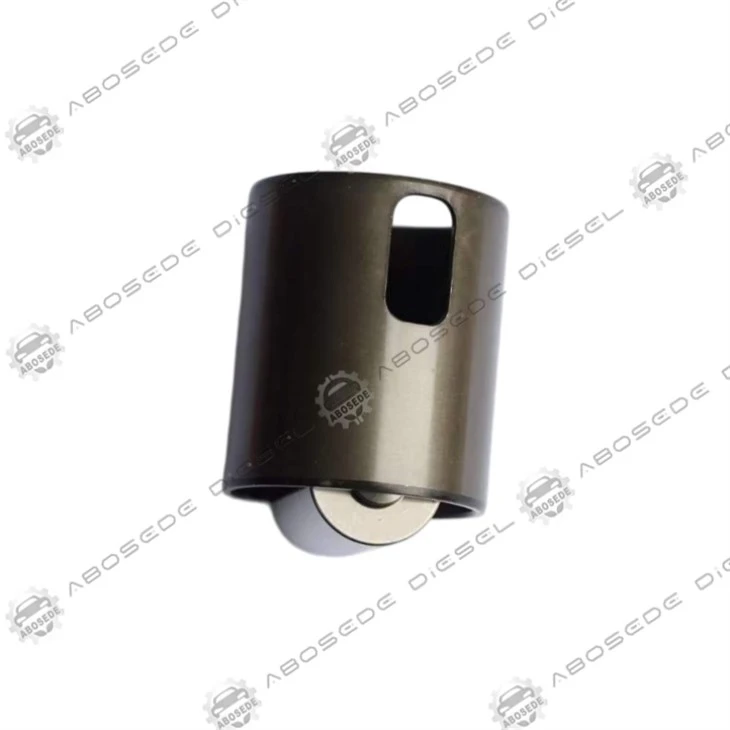

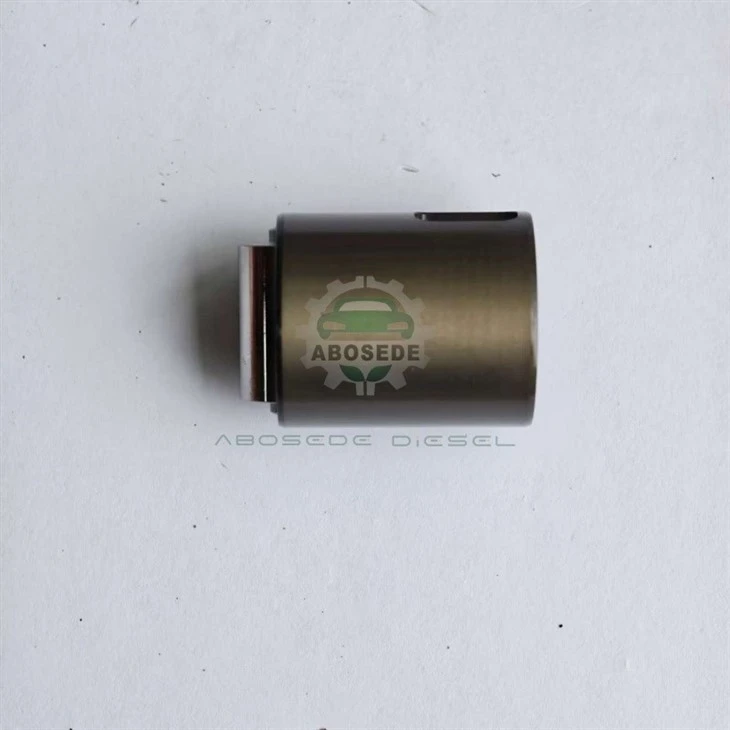
22100-0E020 Roller – Contact Kinematics, Case Depth & Debris Signature in Denso HP3/HP4 Radial Pump Assemblies
1. Product:22100-0E020 Roller
2. Compatible Equipment: Diesel Fuel Injection Systems
3. Manufacturer: Aftermarket OEM Replacement
4. Condition: Brand New, Fully Tested
5. Origin: ABOSEDE Diesel
6. Shipping period: 3-5 business days
7. Payment terms: T/T, Western Union, PayPal
- Fast Delievery
- Quality Assurance
- 24/7 Customer Service
Product Introduction
The 22100-0E020 roller is the smallest load-transfer element in the Toyota 1GD-FTV and 2GD-FTV high-pressure pump assembly, yet it carries the highest contact stress per unit area. It sits between the cam ring and the plunger shoe. As the cam lobe rises, the roller converts rotary motion into linear plunger stroke while keeping friction low enough to survive on diesel as the only lubricant. When a roller degrades, the pump does not simply lose pressure. It begins generating hardened steel particles that travel downstream into the rail, the pressure limiting valve, and the injector inlet. That contamination path is why roller condition deserves attention beyond a visual check.
⚙ Rolling Versus Sliding: Where the Roller Actually Slips
A perfect roller would roll without slip. In a radial pump, it cannot. The cam ring contact and the shoe contact have different radii and different surface velocities. The difference produces a small but persistent slip component at one interface. This slip is normal and is accounted for in the design. It becomes destructive when the slip percentage increases. Causes include a worn shoe pocket that no longer holds the roller squarely, a cam ring with a polished or scuffed lobe, or a roller that has lost its crown profile. Once slip rises, the lubricating film breaks down and metal-to-metal contact begins. The 22100-0E020 roller is crowned slightly to manage this, and that crown is lost first when wear starts.
📐 Hertzian Contact Stress and Why Case Depth Matters
Contact between a crowned roller and a cam lobe is a line contact under high load. The resulting stress distribution is not uniform. Peak stress occurs slightly below the surface. This is why rollers are case-hardened rather than through-hardened. A hard, shallow case resists wear, while a tough core supports the case and prevents subsurface crack initiation. If the case is too thin, the peak stress sits in softer material and spalls. If the case is too thick, the core becomes brittle and the roller can fracture under shock load. Original 22100-0E020 rollers use a controlled case depth matched to the expected load spectrum. Aftermarket rollers with unspecified case depth are a common source of early spalling.
💧 Diesel as Lubricant: Film Thickness Limits
Diesel has low viscosity compared with engine oil, and its viscosity falls further as fuel temperature rises. The lubricating film between roller and cam is therefore thin, often in the sub-micron range. Surface finish becomes critical at this scale. A roughness average that works in a gearbox is far too coarse here. Roller surfaces are superfinished to reduce asperity contact. When fuel temperature rises above the normal operating window, or when fuel is aerated, the film collapses and asperity contact begins. That is why a roller can fail in an engine that never ran low on oil but did run hot or aerated fuel.
🧲 Debris Signature: Reading the Filter After a Roller Failure
Roller spalling produces a distinctive debris pattern. Particles are typically flat, flake-like, and magnetic, with a bright metallic appearance when fresh. They concentrate in the filter housing and on the magnetic drain plug if fitted. Unlike injector wear debris, which is often finer and darker, roller debris appears in the 100–500 micron range initially. Once these particles reach the pressure limiting valve seat or the injector inlet, secondary damage follows quickly. A filter cut open after a low rail pressure complaint can therefore indicate whether the root cause sits upstream in the pump or downstream in the injector. This single inspection step frequently redirects the repair away from unnecessary injector replacement.
❓ FAQ
Q1: Can a worn 22100-0E020 roller cause low rail pressure without a pump failure?
Yes. A slipping roller reduces pumping efficiency at high cam speed, which appears as pressure loss under load. The pump may still pass a low-speed test while failing at operating speed.
Q2: Why is roller case depth more important than overall hardness?
Peak contact stress occurs below the surface. Case depth determines whether that peak sits in hard or soft material. A hard surface with the wrong case depth can still spall.
Q3: How does aerated fuel damage the roller?
Air reduces film thickness and lubricity. Asperity contact increases, surface temperature rises, and spalling begins earlier than it would with air-free fuel.
Q4: Can I polish a scored roller and reuse it?
No. Polishing removes the crown profile and changes the graded diameter. Both affect slip behavior and pocket fit. Replacement is the only reliable option.
Q5: What does roller debris look like in the fuel filter?
Flat, flake-like, magnetic particles with a bright metallic appearance, typically larger than injector wear debris. Their presence points upstream to the pump.
Q6: Are rollers graded and matched to shoes during rebuild?
Yes. Rollers are graded by diameter in micron increments and matched to shoe pocket clearance. Mixing grades without matching increases slip or preload.
Basic Information about the Company


Flexible Payment Methods for Your Convenience
To make your purchasing experience smooth and easy, we offer a variety of secure payment options:

Bank Transfer
Pay directly in 15 supported currencies.

Western Union
Quick and global money transfers.

PayPal
Safe and convenient online payment.

Alibaba
Enjoy extra protection with trusted Alibaba transactions.
We're here to make your order process worry-free - choose the payment method that works best for you!
Shipping Made Simple

Customer reviews

Hot Tags: 22100-0e020 roller – contact kinematics, case depth & debris signature in denso hp3/hp4 radial pump assemblies, China 22100-0e020 roller – contact kinematics, case depth & debris signature in denso hp3/hp4 radial pump assemblies manufacturers, suppliers, factory
You Might Also Like
-

31303612 / 095600-5261 BMAS MASTER Common Rail Pipe ...
-

Common Rail Pipe 095600-5450 / RE550294 – Direct Fit...
-

Pump Plate Pump Plate 294183-0260 – Field-Proven Sea...
-

294180-0100 Transfer Pump Rotor – Precision Rotating...
-

Gear Pump For Denso HP3 HP4 HP5 HP6 HP7 Diesel Injec...
-

Pump Cover For Denso HP3 / HP4 / HP5 / HP6 / HP7 Pumps
