


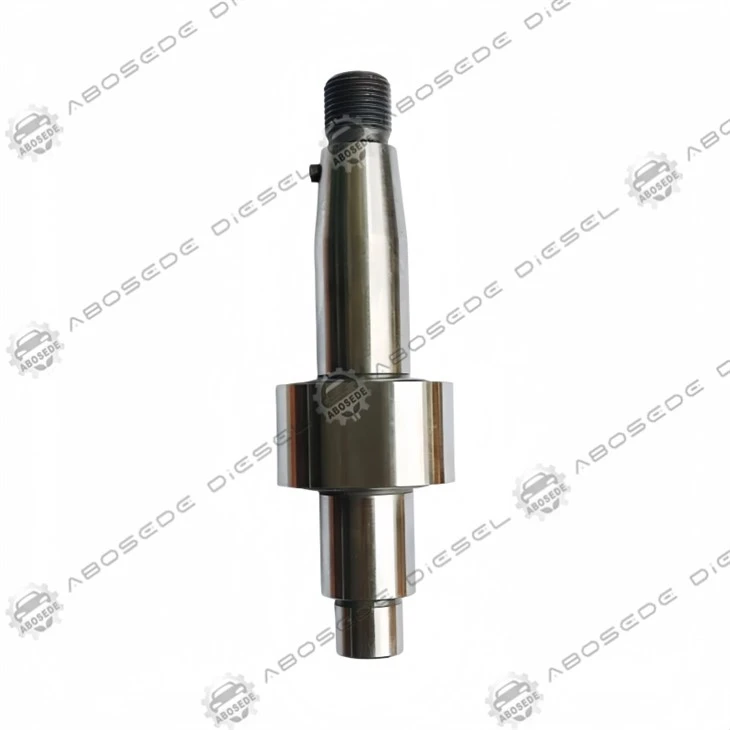

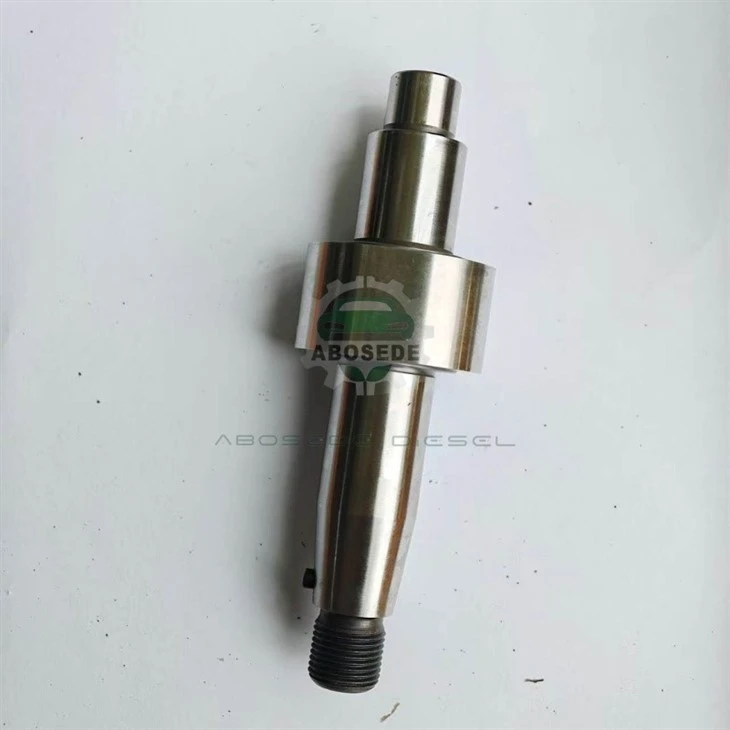
22100-0E020 Camshaft – Lobe Profile, Phase Angle & Bending Stiffness in Denso HP3/HP4 Common Rail Pump Drives
1. Product:22100-0E020 Camshaft
2. Compatible Equipment: Diesel Fuel Injection Systems
3. Manufacturer: Aftermarket OEM Replacement
4. Condition: Brand New, Fully Tested
5. Origin: ABOSEDE Diesel
6. Shipping period: 3-5 business days
7. Payment terms: T/T, Western Union, PayPal
- Fast Delievery
- Quality Assurance
- 24/7 Customer Service
Product Introduction
The 22100-0E020 camshaft is usually described as the part that drives the plungers. That description hides the engineering. In a Denso HP3/HP4 pump for Toyota 1GD-FTV and 2GD-FTV engines, the camshaft is a motion-programming component. Its lobe profile decides how fast fuel is displaced on each stroke. Its phase angle decides when each plunger delivers into the high-pressure circuit. Its bending stiffness decides how much the shaft deflects under the combined radial loads of three plungers. Change any of these and rail pressure behaviour changes, even if the pump still builds pressure. This article looks at the camshaft as a timing and stiffness element, not as a simple rotating part.
📈 Lobe Profile: Pumping Rate Is Programmed, Not Constant
A plunger does not deliver fuel at a constant rate. Delivery rate follows the cam lobe velocity, not the cam lift. Two lobes with the same peak lift can have very different velocity curves. A steep flank delivers fuel quickly and creates a sharp pressure rise. A gentle flank delivers fuel over a longer crank angle and creates a smoother pressure rise. The 22100-0E020 camshaft is ground so that the delivery rate matches the rail volume and the injector flow demand of the target engine. When a camshaft is reground or replaced with a non-OEM profile, the pump can still reach target pressure but the pressure trace becomes noisy. The ECM then fights the pressure oscillation with metering valve corrections, which shortens valve life.
⏱ Phase Angle and Pressure Pulsation Overlap
Three plungers do not deliver at the same instant. They are spaced by a phase angle so that delivery overlaps smoothly. If the phase angle is correct, the sum of the three deliveries is nearly continuous. If it drifts, two plungers can deliver into the rail at the same time, creating a pressure spike, followed by a gap where no plunger is delivering, creating a pressure dip. The ECM sees this as rail pressure ripple. On 1GD and 2GD engines the rail volume is small, so ripple is not absorbed easily. Phase angle error usually comes from incorrect camshaft timing during assembly, a sheared keyway, or a camshaft ground with the wrong index. Always check phase against the pump timing marks, not against the engine alone.
🌀 Bending Stiffness and Radial Load Sharing
Each plunger exerts a radial reaction on the camshaft as the roller climbs the lobe. With three plungers, these radial forces do not cancel. They create a rotating bending moment. The camshaft must be stiff enough to keep deflection small at the bearing journals. Excessive deflection tilts the roller contact and concentrates load on one edge of the lobe. That edge then spalls first. A camshaft with insufficient stiffness, or one supported by worn bearings, shows a wear pattern concentrated on one side of the lobe rather than across the full face. This is a stiffness signature, not a lubrication signature.
🔥 Surface Hardness and Contact Fatigue
The lobe surface is in rolling contact with the roller under high Hertzian stress. The camshaft is case-hardened so that the hard surface resists wear while the core absorbs shock. If the case is too thin, subsurface fatigue starts and the lobe pits. If the case is too thick, the lobe can crack under sudden load. The 22100-0E020 camshaft uses a controlled case depth matched to the pump's load spectrum. Aftermarket camshafts with unknown case depth are a frequent cause of early lobe pitting, especially when fuel lubricity is marginal.
❓ FAQ
Q1: Can a camshaft with correct lift still cause rail pressure ripple?
Yes. Ripple depends on lobe velocity and phase angle, not only peak lift. A camshaft with the right lift but the wrong flank shape or phase will produce pressure oscillation.
Q2: How does phase angle error show up in diagnostics?
As rail pressure ripple that the ECM tries to correct with metering valve duty. When correction saturates, pressure deviation appears under load and the engine may derate.
Q3: Why does camshaft bending stiffness matter in a three-plunger pump?
Radial loads from three plungers create a rotating bending moment. Low stiffness tilts roller contact and concentrates wear on one lobe edge, leading to early spalling.
Q4: What does lobe pitting indicate?
Subsurface fatigue from incorrect case depth, marginal lubricity, or contamination. Pitting usually begins below the surface and appears as small craters on the lobe face.
Q5: Can I check camshaft phase without a degree wheel?
Not accurately. A degree wheel and dial indicator are the reliable method. Timing marks help, but they do not reveal small phase errors between lobes.
Q6: Is a reground camshaft safe for a common rail pump?
Only if the profile, phase, and case depth are restored to specification. Regrinding without re-hardening removes the case and shortens lobe life.
Basic Information about the Company


Flexible Payment Methods for Your Convenience
To make your purchasing experience smooth and easy, we offer a variety of secure payment options:

Bank Transfer
Pay directly in 15 supported currencies.

Western Union
Quick and global money transfers.

PayPal
Safe and convenient online payment.

Alibaba
Enjoy extra protection with trusted Alibaba transactions.
We're here to make your order process worry-free - choose the payment method that works best for you!
Shipping Made Simple

Customer reviews

Hot Tags: 22100-0e020 camshaft – lobe profile, phase angle & bending stiffness in denso hp3/hp4 common rail pump drives, China 22100-0e020 camshaft – lobe profile, phase angle & bending stiffness in denso hp3/hp4 common rail pump drives manufacturers, suppliers, factory
You Might Also Like
-

096140-0030 Valve Disc – High‑Cycle Fatigue‑Rated Po...
-

Common Rail Assembly 1465A404 – Profit Protection Fo...
-

Common Rail Pipe Assembly 095440-0600 / 31440-45700 ...
-

Common Rail Pipe 095600-5450 / RE550294 – Direct Fit...
-

Pump Plate Pump Plate 294183-0260 – Field-Proven Sea...
-

294180-0100 Transfer Pump Rotor – Precision Rotating...
