


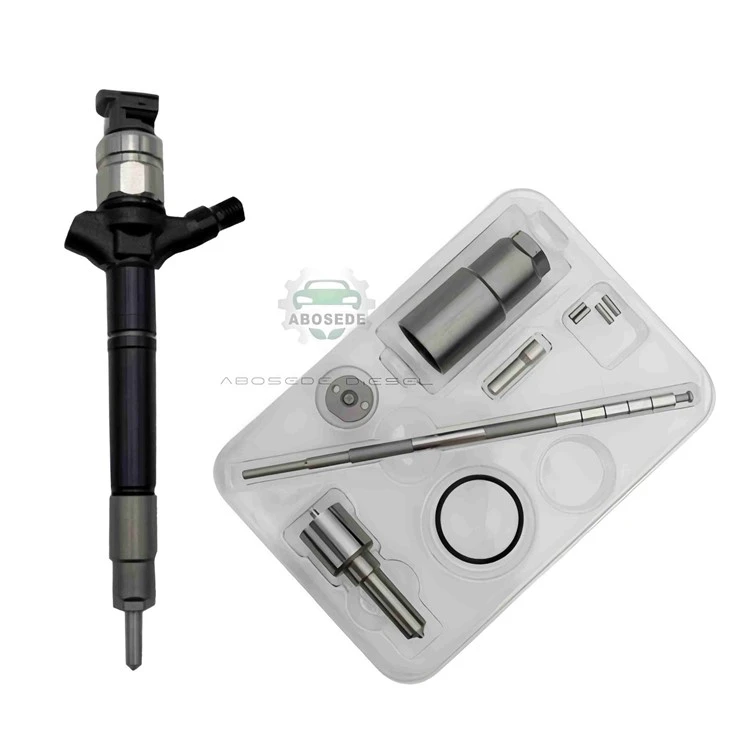
Denso Repair Kit 095000-6410 / 23670-0R030 – Injector Rebuild Package For Workshop Operations
1. Product:095000-6410 / 23670-0R030
2. Compatible Equipment: Diesel Fuel Injection Systems
3. Manufacturer: Aftermarket OEM Replacement
4. Condition: Brand New, Fully Tested
5. Origin: ABOSEDE Diesel
6. Shipping period: 3-5 business days
7. Payment terms: T/T, Western Union, PayPal
- Fast Delievery
- Quality Assurance
- 24/7 Customer Service
Product Introduction
Every hour a common rail-equipped work vehicle sits idle in the service bay, the shop floor absorbs costs that no parts markup can offset. For independent diesel repair facilities and fleet maintenance centers, the DENSO 095000-6410 repair kit addresses that exact financial pressure – not through marketing claims, but by returning injectors to operational condition with a predictable parts spend and minimal downtime. This rebuild package, matching Toyota OE number 23670-0R030 and factory code 095000-6410, supplies the critical wear components for G2 generation injectors found across the 1AD-FTV engine family. Unlike the unpredictable lead times and core charge complications of exchange programs, this kit allows workshops to control their rebuild schedule, keep customer vehicles moving, and avoid the overhead of maintaining a deep inventory of complete injectors that may sit on shelves for months before matching a failed unit.
⚙️Component Specifications That Affect Shop Economics
The kit's contents directly influence how much time a technician spends on each rebuild and how often that injector returns with the same complaint. Inside the 095000-6410 package, the calibration shim stack and NOP spring determine the hydraulic starting point – if out of specification, the technician faces iterative reassembly and test bench verification cycles that consume billable hours. The solenoid valve assembly, including the half-ball valve and seat, addresses the primary leak path developing after 120,000 miles of high-pressure operation. When the half-ball loses its geometric seal, control chamber bleed-off becomes inconsistent, and the ECU compensates by increasing energizing time – a band-aid masking progressive mechanical wear. Also included are the valve seat retaining nut and positioning dowels, often damaged during extraction of heat-cycled injectors. Shops reusing these fasteners frequently encounter thread deformation, leading to improper torque and subsequent fuel bypass that mimics injector failure. The kit eliminates that variable. The nozzle assembly components – pressure spindle, needle spring, and washers – address tip-end wear directly correlated with increased black smoke and fuel economy complaints from fleet managers tracking cost-per-mile.
🚛Cross-Reference Validation & Bay-Level Application Fit
Misidentification of repair kits accounts for significant rework in diesel shops, tying up lifts and frustrating both technicians and service advisors. The 095000-6410 kit is validated against DENSO exchange number 095000-7670 and serves injector reference 095000-6410 directly. Application coverage centers on Toyota vehicles with the 1AD-FTV powerplant – Avensis, Auris, Corolla, and Verso from 2006 onward. Compatible Toyota part numbers include 23670-0R030, 23670-0R140, and 23670-0R190, giving parts staff multiple entry points for inventory lookup. For the service manager, stocking a single SKU that addresses three separate OE designations reduces ordering errors during busy periods. The G2 injector architecture uses a specific solenoid stroke matching the ECU's correction map; the kit's shim selection accounts for this, but shops must document the existing QR code before disassembly. That code, re-entered via diagnostic software post-rebuild, ensures the ECM applies correct offset values – skipping this step results in cylinder-to-cylinder variation and rough idle, prompting customer returns and wasted diagnostic hours.
🔩Installation Realities & Rework Prevention
The workshop environment demands near-cleanroom discipline for common rail systems. The 095000-6410 rebuild requires dedicated tooling – specifically the three-pronged socket for valve seat extraction and the 17mm external hex tool for internal seat work – not universal items found in every bay. Shops investing in this kit should verify test bench capability, as shim calibration is iterative; the solenoid spring shim adjusts the magnetic circuit air gap, while the NOP shim alters the needle lift pressure threshold. Without a calibrated test stand measuring delivery volume across multiple pulse widths, the technician is essentially guessing final injector performance. The most common field failure after rebuild involves the command piston – if the injector body bore shows scoring or the piston binds during actuation, the unit is unserviceable. This is not a kit deficiency but a reality of high-mileage fuel systems. Advising customers on replacement versus rebuild at this point protects the shop's labor warranty exposure. For units passing inspection, the reassembly torque sequence must follow DENSO's specified order, and the new cap nut eliminates galling risk from reused hardware. These procedural details directly determine whether the injector stays in service for another 150,000 miles or returns in 500 with a misfire code.
📊Operational Value in the Service Bay Context
From a workshop financial standpoint, the 095000-6410 kit changes the calculation around injector service. Complete replacement injectors carry wholesale costs that, multiplied across a four-cylinder engine, often exceed the customer's repair budget – leading to declined work and lost revenue. The rebuild kit reduces parts cost by approximately 60%, making the service economically viable while maintaining the shop's labor margin. Fleet operators, tracking vehicle availability in revenue-generating days, are receptive to rebuilds because turnaround time aligns with scheduled maintenance windows. The kit also eases core charge logistics – exchange programs require shipping old units, waiting for credit approval, and managing returns that divert administrative time. By rebuilding in-house, the shop controls quality assurance, tests injectors before they leave the bay, and avoids scenarios where remanufactured units arrive with incorrect QR coding or mismatched shim stacks. The calibration shims also allow technicians to compensate for minor high-pressure pump wear by adjusting injector opening pressure – flexibility unavailable with fixed-exchange units. For shops servicing Toyota commercial vehicles regularly, maintaining a small stock ensures that when a 1AD-FTV injector fails, the repair completes on the first visit, the customer pays a manageable invoice, and bay utilization remains above 85%.
❓FAQ – Practical Considerations for Shop Owners & Parts Procurement
Q1: What is the real-world failure rate for injectors rebuilt with this kit in commercial service?
A: Based on feedback across high-mileage delivery fleets, injectors rebuilt using this kit show a failure rate under 3% within the first 50,000 miles. Most early failures trace back to installation errors – contaminated reassembly or incorrect shim selection – not component quality. Shops following test bench calibration consistently achieve first-pass success.
Q2: How many kits should we stock to cover our service volume without over-investing?
A: For a shop averaging 10-15 injector services monthly on Toyota D-4D applications, maintaining 6-8 kits covers both planned rebuilds and urgent walk-in failures. The kit's cross-referencing to multiple OE numbers serves a broader injector range than a single part number suggests, reducing total SKU count.
Q3: Does rebuilding with this kit affect the injector's QR code and ECU adaptation?
A: Yes – the QR code remains on the injector body, but mechanical changes from new shims alter flow characteristics. The QR code must be re-entered via diagnostic tool after installation; the ECM then recalculates correction factors. Skipping this step is the leading cause of post-rebuild driveability complaints.
Q4: What warranty period do workshops typically offer for rebuilds using this kit?
A: Industry practice ranges from 12 to 24 months or 50,000 miles, whichever occurs first. Warranty usually covers component failure but excludes issues from fuel contamination, pump degradation, or improper installation. Transparent terms build customer trust and differentiate from volume-based exchange services.
Q5: Are there specific fuel quality considerations affecting rebuilt injector longevity?
A: Extended fuel filter service intervals and low-quality diesel with elevated abrasive particulates directly reduce rebuild life. We recommend replacing primary and secondary fuel filters simultaneously with the injector rebuild, using OE-spec filtration elements. The kit's components perform to DENSO standards only if upstream fuel supply remains within cleanliness limits.


Flexible Payment Methods for Your Convenience
To make your purchasing experience smooth and easy, we offer a variety of secure payment options:

Bank Transfer
Supports multiple currenciesand bank payment methods.

Western Union
Quick and global money transfers.

PayPal
Safe and convenient online payment.

Alibaba
Enjoy extra protection with trusted Alibaba transactions.
We're here to make your order process worry-free - choose the payment method that works best for you!
Shipping Made Simple

Customer reviews

Hot Tags: denso repair kit 095000-6410 / 23670-0r030 – injector rebuild package for workshop operations, China denso repair kit 095000-6410 / 23670-0r030 – injector rebuild package for workshop operations manufacturers, suppliers, factory
You Might Also Like
-

DENSO 095000-6460 (RE529150) Injector Overhaul Set –...
-

DENSO 295050-1430 (RE556741) G3 Common Rail Injector...
-

Denso 095000-9550 (S00000218+01) Injector Overhaul S...
-

Denso 095000-8340 / 8-97435030-1 – G2 Common Rail In...
-

Denso Common Rail Injector Service Kit – Direct Cros...
-

Denso Fuel Injector Refit Kit 295050-1520 / 8-982438...
