


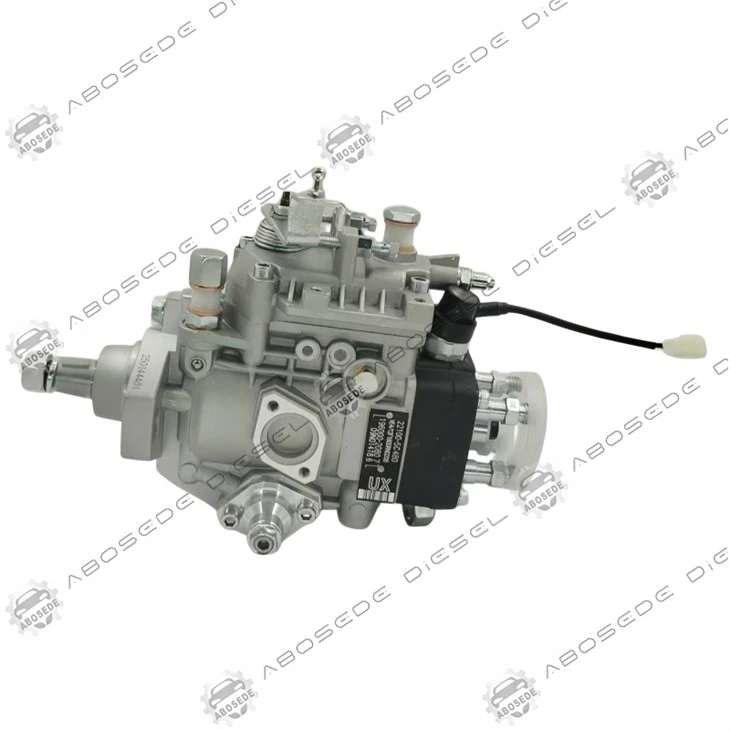

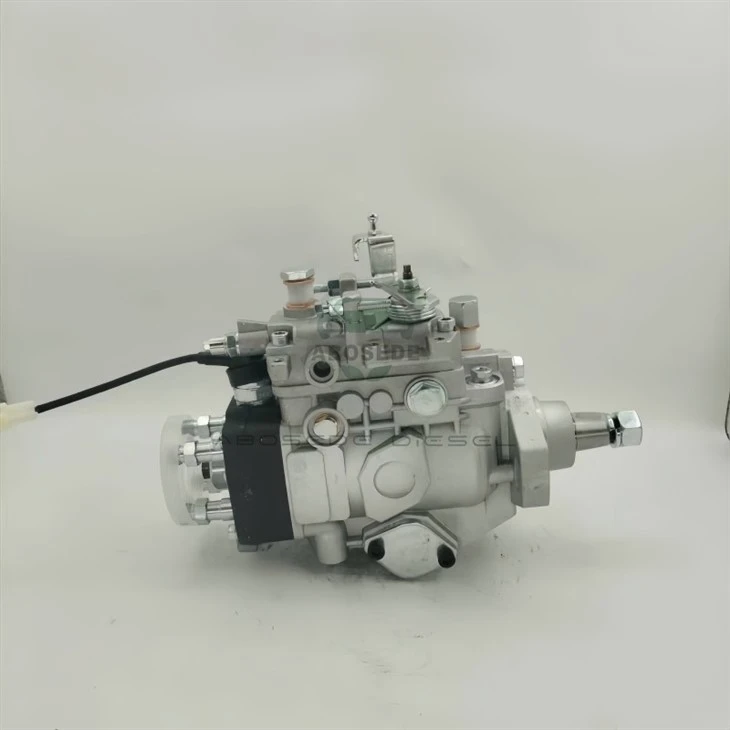
Toyota 22100-5C480 / Denso 196000-2080 – The HP4 Pump That Delivers Fuel On Demand, Not Constant Flow
1. Product:22100-5C480 / 196000-2080
2. Compatible Equipment: Diesel Fuel Injection Systems
3. Manufacturer: Aftermarket OEM Replacement
4. Condition: Brand New, Fully Tested
5. Origin: ABOSEDE Diesel
6. Shipping period: 3-5 business days
7. Payment terms: T/T, Western Union, PayPal
- Fast Delievery
- Quality Assurance
- 24/7 Customer Service
Product Introduction
The high-pressure fuel pump in a common-rail system is often thought of as a constant-displacement device – it delivers a fixed volume per revolution, and the metering valve simply restricts the amount that reaches the plungers. But that model overlooks a more intelligent approach: variable delivery. The 22100-5C480 (Toyota's service number) and its Denso equivalent 196000-2080 represent the HP4 generation of fuel pumps, which use an internal suction control valve (SCV) to vary the effective plunger stroke. The pump does not simply pump everything it can and then discard the excess – it pumps only what the engine needs at any given moment, reducing the energy wasted in compressing fuel that is later returned to the tank. This on-demand delivery is the foundation of the fuel efficiency that the 1KD-FTV and 1GD-FTV engines are known for.
The SCV Principle – Variable Stroke vs. Fixed Stroke
In a conventional CP3 pump, the plungers always complete their full stroke, and the metering valve on the inlet controls how much fuel enters the plunger chamber. Excess fuel is compressed and then returned to the tank – an energy loss that is reflected in higher drive torque and increased fuel consumption. In the HP4 pump used in the 22100-5C480, the SCV is positioned at the pump inlet and modulates the amount of fuel allowed into the plunger chamber on each suction stroke. At low engine load, the SCV partially closes, allowing only a small amount of fuel into the plunger – the plunger draws a partial charge, compresses only that small volume, and delivers it to the rail. At high load, the SCV opens fully, and the plunger fills completely. This variable filling reduces the compression work at low load, improving fuel economy by approximately 3-5 % compared to fixed-stroke pumps.
The SCV Valve – Electromagnetic Control of Plunger Fill
The SCV is a normally-open solenoid valve that is controlled by the ECU via a PWM signal. When the ECU demands a certain rail pressure, it calculates the required plunger fill fraction and sets the SCV duty cycle accordingly. At 0 % duty (fully open), the plunger fills completely, delivering maximum flow. At 50 % duty, the valve partially closes, reducing the fill fraction to approximately 60 % of maximum. At 90 % duty, the valve is nearly closed, and the plunger fills only enough to maintain idle pressure. The SCV responds in less than 15 ms to a step change in duty, allowing the pump to transition from idle to full load delivery within two engine revolutions. This fast response is critical for transient performance – when the driver tips in, the SCV opens rapidly, and the rail pressure rises without the lag that would occur if the pump had to rely solely on the metering valve.
Failure Patterns – SCV Wear and Response Degradation
The most common failure in the HP4 pump is not a plunger or barrel problem but a loss of SCV performance. The SCV is a high-frequency solenoid, subject to continuous cycling – at 2,000 rpm, the pump is turning at approximately 3,000 rpm (1.5x engine speed), and the SCV is adjusting every revolution. Over time, the SCV's magnetic force may degrade, or the armature guide may wear, increasing the response time. The first symptom is often a delay in boost response – the SCV opens slowly, and the rail pressure lags behind the demand. The 22100-5C480 / 196000-2080 uses a SCV with a hardened armature guide and a high-temperature coil insulation that reduces wear and thermal degradation, extending the SCV's service life to match that of the pump's mechanical components.
Installation – The SCV Initialisation Procedure
Installing the 22100-5C480 / 196000-2080 is a mechanical procedure – remove the old pump, align the drive gear with the timing marks, torque the pump mounting bolts to specification, and connect the fuel lines. However, the HP4 pump has a specific electronic step: perform the SCV initialisation using a diagnostic tool. The ECU stores the SCV's individual response characteristics – a learned value that compensates for the specific valve's opening time. If this value is not reset, the ECU will apply the old valve's compensation to the new pump, causing a short period of slight hesitation until the ECU re-learns. The initialisation procedure is typically found in the diagnostic tool under "fuel system adaptation" and takes approximately 30 seconds to complete.
Frequently Asked Questions
Q1: How can I tell if my current pump's SCV is degrading without removing the pump?
→ Monitor the "SCV command current" and "rail pressure actual" during a rapid acceleration from idle to 2,500 rpm. If the rail pressure lags behind the demand by more than 0.5 bar for more than 1.5 seconds, the SCV response may be degraded – a healthy pump will track the demand within 0.3 bar and 1 second.
Q2: Can I replace just the SCV on the HP4 pump, or do I need a complete pump?
→ The SCV is available as a separate service part for the HP4 pump. However, if the pump has accumulated more than 150,000 km, the plunger and barrel wear may also be significant. A complete pump replacement is often more cost-effective than replacing the SCV alone on a high-mileage pump.
Q3: Why does my engine show a P0087 code at high altitude but not at sea level?
→ At high altitude, the air density is lower, and the engine requires less fuel – but the ECU still commands a certain rail pressure. The lower inlet pressure at altitude (due to thinner air) reduces the SCV's ability to fill the plungers. The 22100-5C480 is designed for a wide altitude range, but if the lift pump pressure is at the lower limit, altitude can push the system over the edge.
Q4: What is the recommended fuel filter change interval for the HP4 pump in a Hilux?
→ Toyota recommends a fuel filter change every 20,000 km for the 1KD-FTV, but we suggest 15,000 km if the vehicle is used in dusty conditions or with biodiesel blends. The HP4 pump's SCV is sensitive to particles – clean fuel is the best protection against SCV failure.
Q5: I installed a new pump but the fuel consumption increased – is the pump at fault?
→ After installation, the ECU must re-learn the pump's SCV calibration. The increased consumption typically lasts for 100-200 km while the adaptation completes. If the increase persists beyond 200 km, check the SCV initialisation was performed and that the pump timing is correct.
Q6: Does the HP4 pump require a specific low-pressure supply pressure?
→ Yes – the pump requires a minimum inlet pressure of 5 bar at rated speed. If the lift pump pressure drops below this, the SCV cannot achieve the required fill fraction. The genuine pump includes a pressure sensor port that can be used to verify the inlet pressure during diagnosis.


Flexible Payment Methods for Your Convenience
To make your purchasing experience smooth and easy, we offer a variety of secure payment options:

Bank Transfer
Supports multiple currenciesand bank payment methods.

Western Union
Quick and global money transfers.

PayPal
Safe and convenient online payment.

Alibaba
Enjoy extra protection with trusted Alibaba transactions.
We're here to make your order process worry-free - choose the payment method that works best for you!
Shipping Made Simple

Customer reviews

Hot Tags: toyota 22100-5c480 / denso 196000-2080 – the hp4 pump that delivers fuel on demand, not constant flow, China toyota 22100-5c480 / denso 196000-2080 – the hp4 pump that delivers fuel on demand, not constant flow manufacturers, suppliers, factory, denso pump
You Might Also Like
-

33106-42030 Fuel Injection Pump | VE4/10F1900RNP2219...
-
146402-2520 Denso Fuel Pump – Energy-Efficient Deliv...
-

146402-4720 Denso Fuel Pump – Low‑Pulsation Delivery...
-

Denso HP3 Fuel Injection Pump 294000-0039– Efficient...
-

Fuel Injection Pump 294000-0618 Diesel Pump Diesel E...
-

HP5 Pump 22100-0E020 For 1GD Engine
