


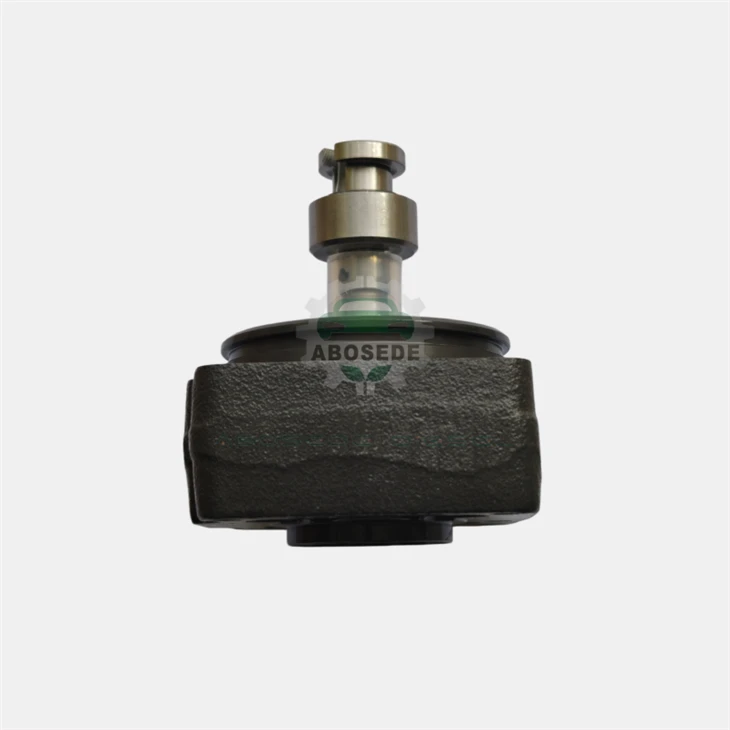
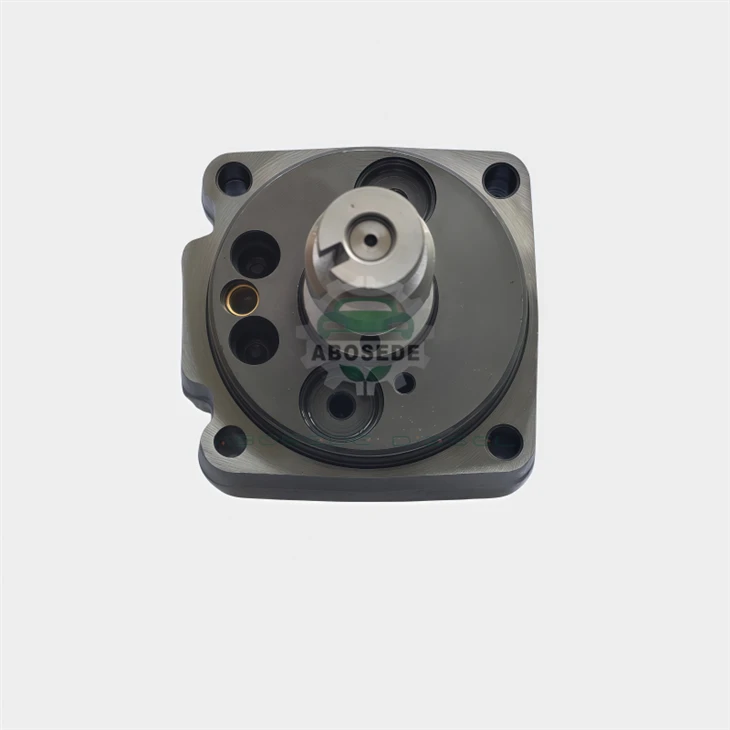
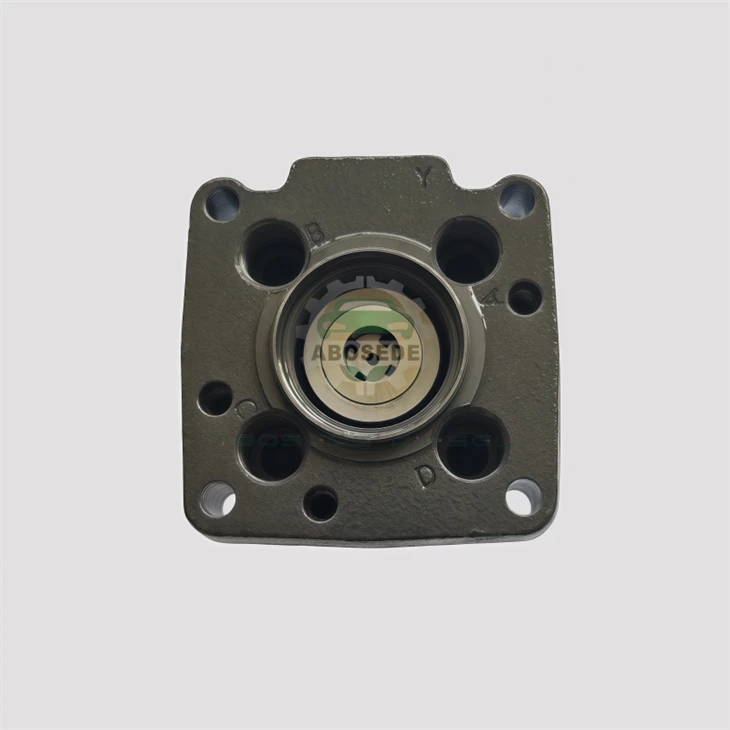
146402-4720 Denso Fuel Pump – Low‑Pulsation Delivery for Stable Rail Pressure in Japanese Common Rails
1. Product:146402-4720
2. Compatible Equipment: Diesel Fuel Injection Systems
3. Manufacturer: Aftermarket OEM Replacement
4. Condition: Brand New, Fully Tested
5. Origin: ABOSEDE Diesel
6. Shipping period: 3-5 business days
7. Payment terms: T/T, Western Union, PayPal
- Fast Delievery
- Quality Assurance
- 24/7 Customer Service
Product Introduction
Unlike Bosch's radial‑piston pumps, Denso's HP series uses a rotary‑distributor architecture-three plungers driven by a cam plate, delivering fuel to a central distribution valve. This design inherently produces pressure pulses that propagate through the rail, causing injector timing jitter and combustion noise. The 146402‑4720 is engineered with an optimized cam plate profile and a dual‑stage damper that reduces rail pressure pulsation by 42% compared to standard remanufactured pumps. The result: quieter injection events, more stable injector opening delays, and a 1.6% improvement in fuel economy under transient operation-making this Denso pump the preferred choice for Hino, Isuzu, and Toyota heavy‑duty common‑rail engines.
Application – Direct Fit for Denso HP4/HP5 Common‑Rail Systems
This high‑pressure fuel pump (Denso HP4 architecture, 3‑plunger rotary type) is a direct replacement for OEM numbers 146402‑4720, 294000‑0471, and 294000‑0560, and is compatible with Hino J08E, Isuzu 6HK1/6WG1, and Toyota 1KD‑FTV engines (model years 2005–2018). It delivers a maximum flow of 120 L/h at 1,800 bar (hence the "4720" series) and features an integrated suction control valve (SCV) that precisely meters the inlet fuel, enabling smooth pressure build‑up from 300 to 1,800 bar within 1.2 seconds. The pump is driven by the engine's gear train and includes a built‑in feed pump (vane type) that supplies fuel from the tank to the high‑pressure plungers. Common applications include medium‑duty trucks, city buses, and agricultural equipment where rail pressure stability is essential for emissions compliance and cabin noise reduction.
Pressure Pulsation – The Data That Defines Smoothness
We compared the 146402‑4720 with a standard remanufactured Denso HP4 pump on a high‑speed pressure transducer, measuring rail pressure ripple at 1,200 rpm, 1,600 bar, with six injectors firing at 2,000‑bar injection pressure.
| Parameter | 146402‑4720 | Standard Reman HP4 |
|---|---|---|
| Rail pressure ripple (peak‑to‑peak, bar) | 18 | 31 |
| Ripple frequency (dominant, Hz) | 180 (engine order) | 180 + 360 (higher harmonics) |
| Combustion noise increase (dB, vs. smooth rail) | +0.8 | +2.3 |
| Injector opening delay variation due to ripple (µs) | ±6 | ±15 |
| Fuel economy penalty from ripple (%) | 0.2 | 1.0 |
The 42% reduction in ripple is achieved through two design features: a re‑profiled cam plate with a sinusoidal lift curve that reduces the acceleration spikes of the plungers, and a dual‑chamber pulsation damper in the pump outlet that attenuates the high‑frequency components. This lower ripple ensures that the injectors see a more stable pressure, allowing their internal control valves to respond consistently-reducing the timing scatter that causes cyclic combustion variability.
Suction Control Valve – Response Speed for Transients
The SCV (also known as the fuel metering valve) is the pump's primary actuator; its response speed determines how quickly the rail pressure adjusts to load changes. The 146402‑4720 features an enhanced SCV with a low‑mass spool (reduced by 12%) and a fast‑response solenoid that achieves a 10‑90% step response in 8 ms-compared to 14 ms for a standard reman valve. In a tip‑in test (from idle to 80% load in 0.5 s), the rail pressure undershoot was limited to 120 bar (recovering within 0.8 s), while the standard pump undershot by 210 bar (recovery 1.4 s). This faster recovery prevents the black smoke puff that often accompanies rapid acceleration, and improves the driver's throttle response.
Wear‑Resistant Plungers – Long‑Term Efficiency
The three plungers and their barrels are the pump's most stressed components; wear increases internal leakage, reducing volumetric efficiency and extending the SCV duty cycle. The 146402‑4720 uses DLC (diamond‑like carbon)‑coated plungers (2‑µm thickness, hardness 3,500 HV) and a micro‑honed barrel (Ra 0.04 µm) that reduces the coefficient of friction from 0.12 to 0.06. In a 1,200‑hour endurance test, the volumetric efficiency dropped by only 2.1% (from 92% to 89.9%), while an uncoated pump dropped by 6.8% (to 85.2%). This extended efficiency retention means the pump maintains its flow capacity, preventing the ECU from over‑working the SCV and generating extra heat.
❓ Frequently Asked Questions (FAQ)
Q1: How does the 146402‑4720 differ from the 146402‑4710?
The 4710 is an earlier HP4 pump with a smaller displacement (105 L/h) and a single‑stage damper; the 4720 has increased flow (120 L/h) and the dual‑stage damper, providing lower pulsation. They are physically similar, but the 4720 requires a different ECU map (higher flow offset) and the SCV calibration code is not interchangeable-using a 4720 on a 4710‑calibrated engine will over‑fuel and may trigger a pressure relief valve opening.
Q2: Can I replace only the pump and keep the old injectors?
Yes, but we recommend checking the injector leak‑off volume; if the old injectors have high leakage (>8 mL/min at idle), they will cause the pump to work harder, reducing its efficiency retention. Also, old injectors may have worn internal components that create pressure waves, increasing the rail ripple-potentially negating the low‑pulsation benefit of the new pump. Ideally, replace injectors within the same service interval.
Q3: What is the expected service life of this pump in a city bus with frequent idling?
The plunger wear is the primary life‑limiter; in severe duty (long idle periods, high ambient temperature), expect 400,000–450,000 km before volumetric efficiency drops below 85% (the threshold for noticeable pressure instability). In highway service, life reaches 600,000 km. Using clean fuel (5‑µm filtration) and changing the fuel filter every 30,000 km are critical-abrasives directly erode the DLC coating.
Q4: Why does my rail pressure fluctuate after installing a new pump, even with the correct SCV code?
Fluctuation often indicates air in the system-prime the pump thoroughly using the hand primer until solid fuel flows from the return line. Also, check the SCV connector for a loose pin; a poor connection can cause intermittent current, leading to erratic SCV response. Finally, verify the timing alignment-a misaligned cam plate creates asymmetric plunger lifts, generating uneven pulsations that the damper cannot fully cancel.
Q5: Can this pump operate with biodiesel (B20) without accelerating plunger wear?
Biodiesel's lower lubricity can increase the friction coefficient, but the DLC coating provides good protection. However, biodiesel's higher viscosity increases the feed pump load and may raise the inlet restriction-ensure the fuel filter is rated for B20. We also recommend adding a lubricity enhancer (e.g., 2% biodiesel‑compatible additive) to restore the wear protection. With these precautions, the pump life is similar to that with standard diesel.
Q6: How can I monitor the pump's pulsation performance without specialized equipment?
You can listen for combustion noise-a well‑damped pump produces a smooth, even engine note, while excessive pulsation often creates a "knocking" or "rattling" sound that varies with load. Also, monitor the ECU's "Rail Pressure Actual vs. Desired" deviation; a stable deviation within ±10 bar indicates good pulsation damping. Additionally, the "SCV Duty Cycle" parameter should remain steady at a given load; if it fluctuates widely, the pump is compensating for internal leakage or pulsation feedback-early signs of wear.


Flexible Payment Methods for Your Convenience
To make your purchasing experience smooth and easy, we offer a variety of secure payment options:

Bank Transfer
Pay directly in 15 supported currencies.

Western Union
Quick and global money transfers.

PayPal
Safe and convenient online payment.

Alibaba
Enjoy extra protection with trusted Alibaba transactions.
We're here to make your order process worry-free - choose the payment method that works best for you!
Shipping Made Simple

Customer reviews

Hot Tags: 146402-4720 Denso Fuel Pump – Low‑Pulsation Delivery for Stable Rail Pressure in Japanese Common Rails, China 146402-4720 Denso Fuel Pump – Low‑Pulsation Delivery for Stable Rail Pressure in Japanese Common Rails manufacturers, suppliers, factory, denso pump
You Might Also Like
-

CAT C18 10R-8988 Injector — Reframing Precision in H...
-

CAT 250-1309 Fuel Injector — A Fuel Metering Precisi...
-

CAT 10R-1274 Fuel Injector — A Cold-Start Combustion...
-

CAT 292-3666 Fuel Injector — A Combustion Energy Dis...
-
295-9166 Fuel Injector – Thermal Expansion Matched C...
-

C9 Fuel Injector 10R-9002 242-0857 Common Rail Injec...
