


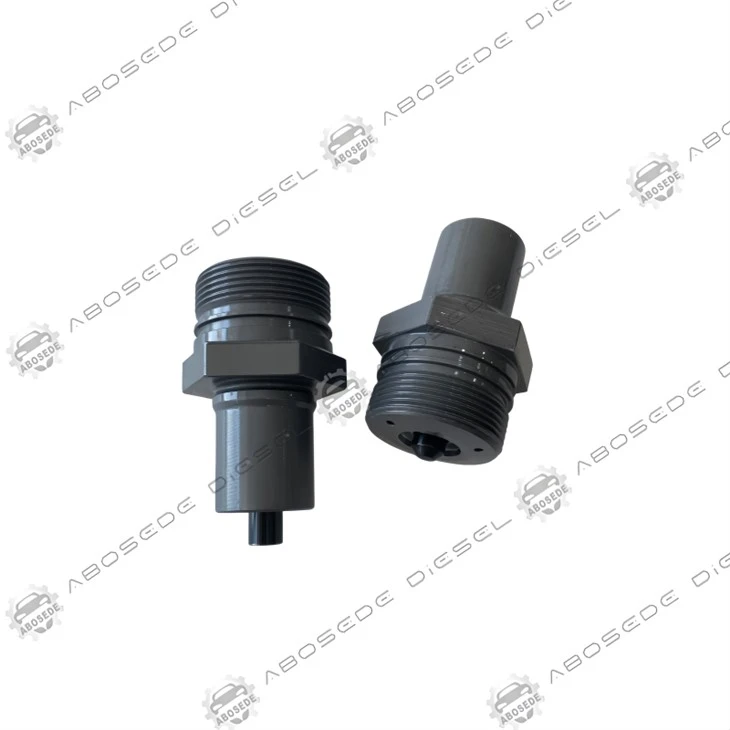

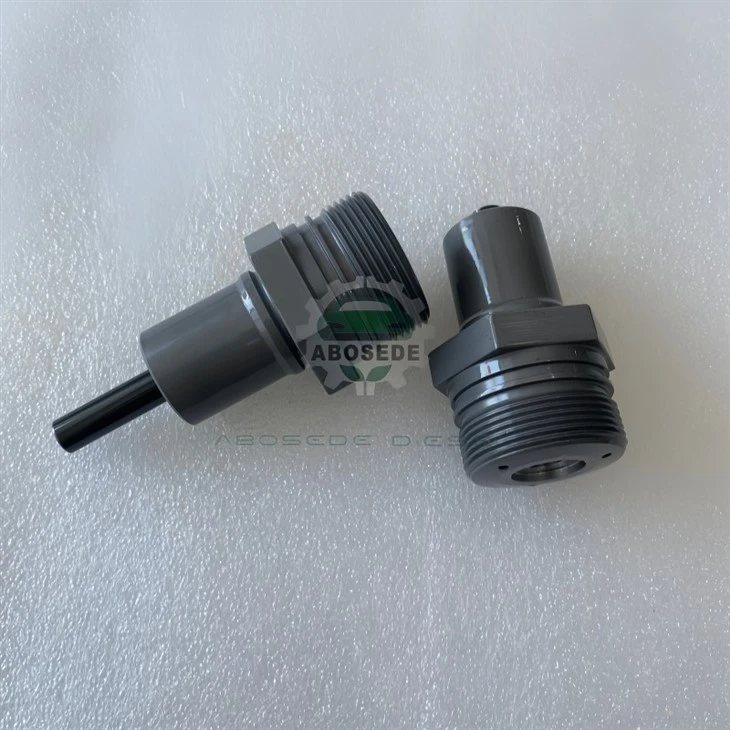
Cummins X15 Plunger – The Metering Core For High-Pressure Common-Rail Precision
1. Product: Cummins X15 Plunger
2. Compatible Equipment: Diesel Fuel Injection Systems
3. Manufacturer: Aftermarket OEM Replacement
4. Condition: Brand New, Fully Tested
5. Origin: ABOSEDE Diesel
6. Shipping period: 3-5 business days
7. Payment terms: T/T, Western Union, PayPal
- Fast Delievery
- Quality Assurance
- 24/7 Customer Service
Product Introduction
In the Cummins X15 XPI fuel system, the plunger is not a simple cylindrical displacer-it is a dynamic metering element that must simultaneously deliver volumetric displacement and maintain a controlled leakage film that acts as a hydrodynamic bearing. This plunger operates at rail pressures exceeding 2,400 bar, where the instantaneous clearance between the plunger and its barrel becomes the single most influential variable affecting injection quantity consistency. A variation of 0.002mm in radial clearance alters the leakage flow by approximately 12%, which translates to a 1.5% drift in fuel delivery per stroke-enough to trigger the ECM's fuel trim adaptation beyond its ±6% compensation window. Consequently, the X15 plunger is engineered as a precision-fit component, where surface topography, material phase stability, and edge geometry converge to define the injector's hydraulic efficiency across the entire operating envelope.
Geometrical Authority – Diameter, Stroke, And The Leakage Triangle
The X15 plunger features a nominal diameter of Ø9.975mm with a total stroke length of 5.8mm, providing a swept volume of approximately 452 mm³ per stroke. However, the effective delivery volume is reduced by the plunger's helical metering port-a spiral groove machined into the upper land that communicates with the spill port. The helix angle of 28° relative to the plunger axis determines the start- and end-of-injection timing by controlling the effective stroke length electronically via the Fuel Control Actuator (FCA). Unlike conventional in-line pumps, the X15's plunger helix is laser-engraved with a tolerance of ±0.01° to ensure that the spill timing deviation remains below 0.3° crank angle at rated rpm.
The clearance between the plunger and its barrel is specified at 0.008–0.015mm when measured at 20°C, using a differential air-gauge system. This clearance is approximately 40% tighter than older mechanical pump plungers, reflecting the increased rail pressure demands. At operating temperature (85°C fuel), the steel plunger expands by 0.004mm (based on a coefficient of 11.5×10⁻⁶ /°C and 65°C rise), reducing the clearance to 0.004–0.011mm-a regime where hydrodynamic lift generated by the high-pressure fuel film becomes significant. This lift effect, proportional to the relative sliding velocity and fuel viscosity, prevents metal-to-metal contact at high speeds, but only if the surface roughness (Ra) of the plunger and barrel are kept below 0.08μm and 0.05μm, respectively.
Surface Metallurgy – Tailoring The X15 Plunger For Ultra-Low Sulfur Diesel
Modern ultra-low sulfur diesel (ULSD) possesses inherently lower lubricity compared to older diesel blends, with a High-Frequency Reciprocating Rig (HFRR) wear scar often exceeding 520μm-well above the 460μm threshold recommended for pump durability. To counteract this, the X15 plunger undergoes a three-stage surface engineering process:
Carbonitriding – The plunger base material (SAE 5120 steel) is gas-carbonitrided to a depth of 0.25–0.35mm, achieving a surface hardness of 60–62 HRC while retaining a core hardness of 30 HRC for toughness. This gradient hardness reduces the risk of brittle fracture under the high compressive stresses (up to 850 MPa) generated during the pumping stroke.
Diamond-Like Carbon (DLC) Coating – A 2.0μm thick DLC layer (a-C:H with 20% sp³ bonds) is applied via plasma-enhanced chemical vapor deposition. This coating reduces the coefficient of friction from 0.12 (uncoated steel) to 0.06–0.07 under boundary lubrication, effectively compensating for the lost lubricity of ULSD. Bench tests on X15 plungers show that the DLC coating extends the onset of scuffing from 4,500 hours to over 11,000 hours at 2,200 rpm full-load operation.
Honing Plateaus – The barrel bore is finished with a plateau-honing process that creates a cross-hatch pattern with a 45° intersect angle. This pattern retains a thin layer of fuel on the bore wall, acting as an oil reservoir that prevents dry starts. The plateau roughness (Rpk) is maintained below 0.02μm, ensuring high conformability with the DLC-coated plunger.
Dynamic Response – Elastic Deformation And Injection Rate Shaping
At 2,400 bar, the plunger experiences a diametral expansion of approximately 0.003mm due to Poisson's effect (calculated from elastic modulus 210 GPa and internal pressure). This expansion is not instantaneous; it occurs within the first 0.3ms of the pressure rise, coinciding with the initial injection phase. The resulting reduction in clearance increases the hydraulic resistance to leakage, effectively "sealing" the pumping chamber during the most critical part of injection. This transient self-sealing behavior allows the X15 plunger to achieve a volumetric efficiency of 92% at rated conditions, compared to 87% for uncoated, non-optimized designs.
Furthermore, the plunger's return stroke is assisted by a pair of helical springs that exert a combined force of 78 N at full lift. The spring rate is matched to the plunger mass (approx. 42g) to avoid valve float at the end of stroke, ensuring that the plunger follows the cam profile without separation. The dwell time at the bottom dead center is precisely 22° crank angle, giving the fuel sufficient time to refill the chamber through the inlet port, whose diameter (5.5mm) limits the fill velocity to below 2.5 m/s-preventing cavitation pitting on the plunger head.
Installation Protocol & Wear Diagnostics
➔ Handling: Before installation, inspect the plunger's measuring points-marked by two ground flats-for any nicks or burrs using a 10x magnifying glass. Even a 0.005mm burr can score the barrel during the first 20 strokes, causing permanent damage.
➔ Lubrication: Dip the plunger in clean diesel fuel, then apply a thin film of assembly lube (containing zinc dialkyldithiophosphate) to the lower land. Do not use grease or graphite, as they clog the spill holes.
➔ Torque Sequence: The barrel's retaining nut (M24x1.5) must be tightened to 250 N·m in four equal steps (62.5 N·m increments), rotating the plunger by hand between each step to verify smooth movement. A sticky spot indicates misalignment-back off and re-synchronize the plunger with the barrel's alignment mark.
Field diagnostics for plunger wear are typically performed by measuring the leakage flow through the bleed orifice when the engine is cranking with the fuel shut-off. A leakage rate exceeding 15 ml/min at 200 rpm suggests that the plunger-barrel clearance has increased beyond 0.025mm, warranting replacement. An alternative method is to remove the plunger and inspect the pressure-bearing face for cavitation craters-characteristically appearing as a "ring of pits" near the spill edge when running on high-sulfur fuel or with water contamination.
Frequently Asked Questions
Q1: The plunger and barrel are matched as a set-can I replace only the plunger and reuse the old barrel?
No. Each plunger and barrel pair is individually air-gauged and sorted by clearance class (A, B, or C). Mixing components from different classes will either result in a seizure (too tight) or excessive leakage (too loose), with the latter causing a fuel quantity drift of up to 8% across cylinders. Always replace the complete plunger-and-barrel assembly.
Q2: How does fuel temperature affect the DLC coating's performance, and should I add a lubricity additive?
The DLC coating remains effective up to 150°C; fuel temperatures beyond that are uncommon. Adding lubricity improvers (e.g., 2-ethylhexyl nitrate) is not necessary if you use commercially certified ULSD. Overdosing additives can deposit carbon on the DLC surface, reducing its low-friction benefit-so stick to manufacturer-recommended fuels.
Q3: What are the visible signs of cavitation erosion on the plunger, and how can I differentiate it from abrasive wear?
Cavitation erosion creates localized, deep pits with a spongy appearance, typically located on the plunger top near the spill port edge, caused by vapor bubble collapse during decompression. Abrasive wear, on the other hand, produces parallel scratches following the stroke direction, originating from particulates in the fuel. If pitting is present, also inspect the barrel for mirror-image pits-if found, replace both components.
Q4: Can I re-use the retaining nut and O-ring after removing the plunger, or must they be replaced?
The retaining nut can be reused provided its threads are clean and undeformed. However, the copper gasket (used for sealing the fuel gallery) must always be replaced with a new one, as it undergoes compression yielding. The O-ring seal on the outer barrel also requires replacement-it is a single-use item made of FKM, and reusing it risks fuel dilution into the engine oil.
Q5: My X15 shows a fuel pressure derate at high altitude; could the plunger be the culprit?
High altitude reduces ambient air density and thus exhaust backpressure, but it does not directly affect plunger performance. However, lower barometric pressure can reduce fuel system inlet pressure, causing the plunger to cavitate due to insufficient NPSH. Before condemning the plunger, measure the inlet fuel pressure-if it's below 0.4 MPa at full load, install a lift pump primer or check the pre-filter, as the plunger itself is likely functioning correctly.
Q6: Is there a recommended break-in procedure for a new X15 plunger to maximize service life?
Yes. Run the engine at idle (600 rpm) for 15 minutes without load, then increase to 1,200 rpm for 5 minutes, and finally perform three light-throttle accelerations (0–70% load) to allow the DLC coating to conform to the barrel. Avoid full-load operation during the first 2 hours of operation; this gradual loading allows the hydrodynamic film to establish fully, reducing the risk of initial micro-seizure.


Flexible Payment Methods for Your Convenience
To make your purchasing experience smooth and easy, we offer a variety of secure payment options:

Bank Transfer
Supports multiple currenciesand bank payment methods.

Western Union
Quick and global money transfers.

PayPal
Safe and convenient online payment.

Alibaba
Enjoy extra protection with trusted Alibaba transactions.
We're here to make your order process worry-free - choose the payment method that works best for you!
Shipping Made Simple

Customer reviews

Hot Tags: cummins x15 plunger – the metering core for high-pressure common-rail precision, China cummins x15 plunger – the metering core for high-pressure common-rail precision manufacturers, suppliers, factory, 1724537, 4307217 injector, 4326959 injector, 456 3493 injector, 5491515, P4384781FSW
You Might Also Like
-

2894868 Data Line Integrity: Optimizing ECM Signal S...
-

4089540 X15 Timing Actuator: Optimizing Combustion P...
-

Not Just Motion, But Metering Intelligence: Understa...
-

3348700 Cummins X15 Gear Fuel Pump 4076574 4088848 4...
-

Diesel Injector Nozzles P4384025, P2894920, P4984843...
-

High-Precision Needle Valves for Nozzles Of Cummins ...
