


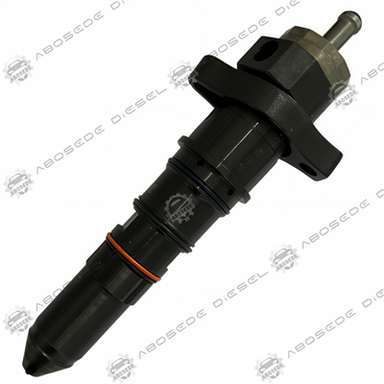
3018566 PT Injector: Top Stop Height and Hydraulic Cooling Flow in N855 Mechanical Injection vs Common Rail
1. Product:3018566
2. Compatible Equipment: Diesel Fuel Injection Systems
3. Manufacturer: Aftermarket OEM Replacement
4. Condition: Brand New, Fully Tested
5. Origin: ABOSEDE Diesel
6. Shipping period: 3-5 business days
7. Payment terms: T/T, Western Union, PayPal
- Fast Delievery
- Quality Assurance
- 24/7 Customer Service
Product Introduction
Modern common rail injectors are judged by solenoid response, control chamber dynamics, and ECU correction margin. The 3018566 PT injector belongs to a different engineering world. It is a cam-driven unit pump built for Cummins N855 engines. It does not use a rail. It does not use a solenoid to time injection. It creates pressure mechanically inside the cylinder head and uses fuel as both a hydraulic medium and a coolant. For technicians trained on common rail, the diagnostic sequence changes. Instead of reading fuel trim and rail pressure deviation, you measure Top Stop height, return flow, and crankcase fluid level. This article explains how 3018566 works, where it fails, and how its cooling flow logic compares with common rail thermal management.
⚙️ Top Stop Height: The Mechanical Timing and Metering Reference
In a PT injector, the plunger is driven by the camshaft through a rocker arm. The Top Stop is the mechanical limit that sets plunger position when fully depressed. That position defines the effective stroke and the start of injection. If Top Stop height is wrong, timing shifts. If it is set too low, injection starts early and duration increases. If it is set too high, injection starts late and duration shortens. The 3018566 requires Top Stop height to be set to the engine CPL specification. Typical tolerance is within ±0.05 mm. A mis-set Top Stop can shift timing by 1–2° crank angle, changing combustion phasing, exhaust temperature, and fuel consumption. In common rail systems, timing is set by ECU mapping and solenoid opening. In PT systems, timing is set mechanically. That makes Top Stop calibration a critical service step, not an optional adjustment.
📊 3018566 Key Data and Diagnostic Thresholds
| Parameter | Specification |
|---|---|
| Product | 3018566 PT injector |
| Primary fitment | Cummins N855 series |
| Fuel system | PT pressure-time, cam-driven |
| Peak injection pressure | Approx. 100–120 MPa |
| Top Stop height tolerance | ±0.05 mm |
| Cooling bypass flow | Approx. 80% of supply |
| Return flow at rated speed | Application-specific, verify by CPL |
| Plunger-barrel fit | Lapped matched pair |
| Check ball seat | Hardened, replaceable in rebuild |
| After-drip limit | Zero visible drip after injection |
| Common rail contrast | Mechanical cooling flow vs. ECU thermal trim |
These values matter because PT injectors use fuel to cool the injector tip. If return flow is restricted, the injector overheats. If the check ball leaks, after-drip causes carbon buildup and hard starting. In common rail systems, the ECU can compensate for some thermal drift. In PT systems, cooling flow must be mechanically adequate.
🔬 Hydraulic Cooling Flow and Return Line Diagnostics
In a PT injector, most of the fuel entering the injector does not burn. It bypasses the plunger, absorbs heat from the cylinder head and injector tip, and returns to the tank. That cooling flow is not optional. If the return line is kinked, restricted, or clogged, the injector overheats. The plunger can seize. The tip can coke. Unlike common rail injectors, which receive cooling from rail flow and can tolerate some return restriction, PT injectors depend on continuous bypass flow. To diagnose cooling flow, measure return flow at idle and at rated speed. Compare to CPL specification. A drop above 20% indicates restriction or internal blockage. Check return line for kinks, crushed sections, or clogged fittings. Check fuel temperature at the return manifold. A rise above 10°C versus supply suggests poor cooling. Check crankcase fluid level. A rising level indicates fuel dilution, often caused by failed injector O-rings or a leaking needle seat.
🧪 Installation, Calibration, and Common Rail Contrast
Before installing a 3018566, verify the engine CPL and injector part number. Many N855 injectors look identical but have different flow rates and Top Stop settings. Check plunger and barrel condition. They are a lapped matched pair. Never mix components from different injectors. Set Top Stop height with a dial indicator and the correct service tool. Check rocker arm and pushrod condition. Wear in those components changes effective stroke. After installation, run the engine and check return flow, exhaust temperature per cylinder, and crankcase fluid level. In common rail service, you monitor rail pressure and injector correction. In PT service, you monitor return flow and mechanical timing. The logic is the same: quantify flow and timing, and look for deviation from specification.
❓ FAQ: 3018566 PT Injector and N855 Service
Q1: What happens if Top Stop height is set incorrectly?
Injection timing and duration shift. A 0.05 mm error can move timing by 1–2° crank angle. That changes exhaust temperature, fuel consumption, and combustion noise. Always set Top Stop to CPL specification.
Q2: How can I tell if cooling flow is restricted?
Measure return flow at idle and rated speed. A drop above 20% from specification indicates restriction. Check for kinked return lines, clogged fittings, or internal blockage. Also monitor return fuel temperature and crankcase fluid level.
Q3: Why does my crankcase fluid level rise after installing a new 3018566?
Rising crankcase fluid usually means fuel dilution. Check injector O-rings and needle seat sealing. A leaking seat or failed O-ring allows fuel to enter the crankcase. Stop the engine and inspect before continued operation.
Q4: Can I use 3018566 in any N855 engine?
No. N855 injectors differ by flow rate and Top Stop setting. You must verify the engine CPL number. Using the wrong injector can cause power imbalance, high exhaust temperature, or poor fuel economy.
Q5: How does PT injector cooling differ from common rail thermal management?
PT injectors rely on continuous bypass flow for cooling. Common rail injectors receive cooling from rail flow and can tolerate some return restriction. PT injectors cannot. Return restriction quickly leads to overheating and seizure.
Q6: What causes after-drip in a PT injector?
After-drip occurs when the check ball does not seat properly. Contamination, wear, or a damaged seat can cause it. After-drip leads to carbon buildup, hard starting, and smoke. Inspect and replace the check ball and seat during rebuild.
Basic Information about the Company


Flexible Payment Methods for Your Convenience
To make your purchasing experience smooth and easy, we offer a variety of secure payment options:

Bank Transfer
Pay directly in 15 supported currencies.

Western Union
Quick and global money transfers.

PayPal
Safe and convenient online payment.

Alibaba
Enjoy extra protection with trusted Alibaba transactions.
We're here to make your order process worry-free - choose the payment method that works best for you!
Shipping Made Simple

Customer reviews

Hot Tags: 3018566 PT Injector: Top Stop Height and Hydraulic Cooling Flow in N855 Mechanical Injection vs Common Rail, China 3018566 PT Injector: Top Stop Height and Hydraulic Cooling Flow in N855 Mechanical Injection vs Common Rail manufacturers, suppliers, factory, cummins injector
You Might Also Like
-
Cummins 4914328 Fuel Injector – High-Flow Precision ...
-

Heavy-Duty Fuel Injector F00BJ60578 For Cummins QSK1...
-

High-Pressure MCR Injector 4326782 For QSK60 | Preci...
-

Cummins 4928260 Fuel Injector For QSKX15 & ISX15 | X...
-

Heavy-Duty Pulse: The Cummins 4088327 Injector & The...
-

3349860 Cummins PT Fuel Injector for KTA19 / KTA38 /...
