


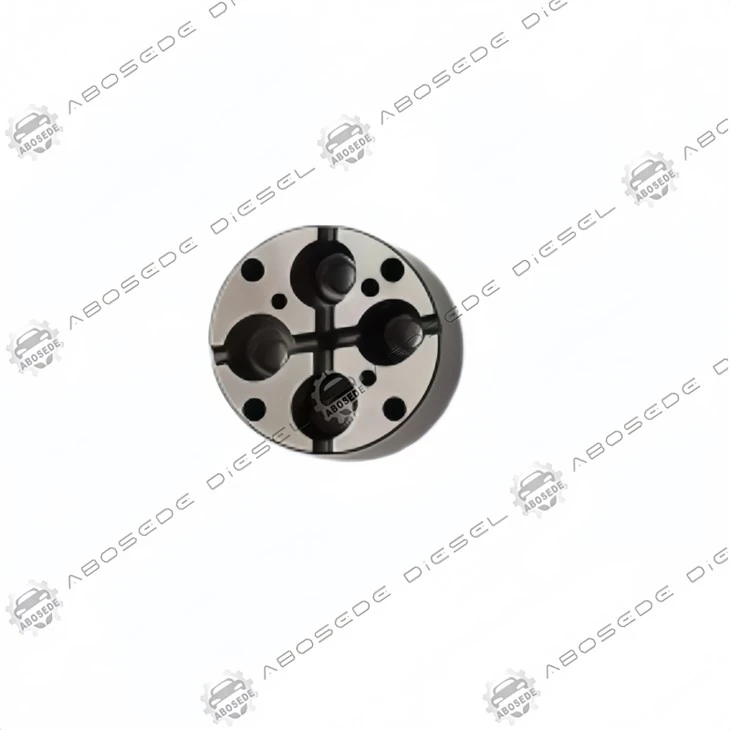

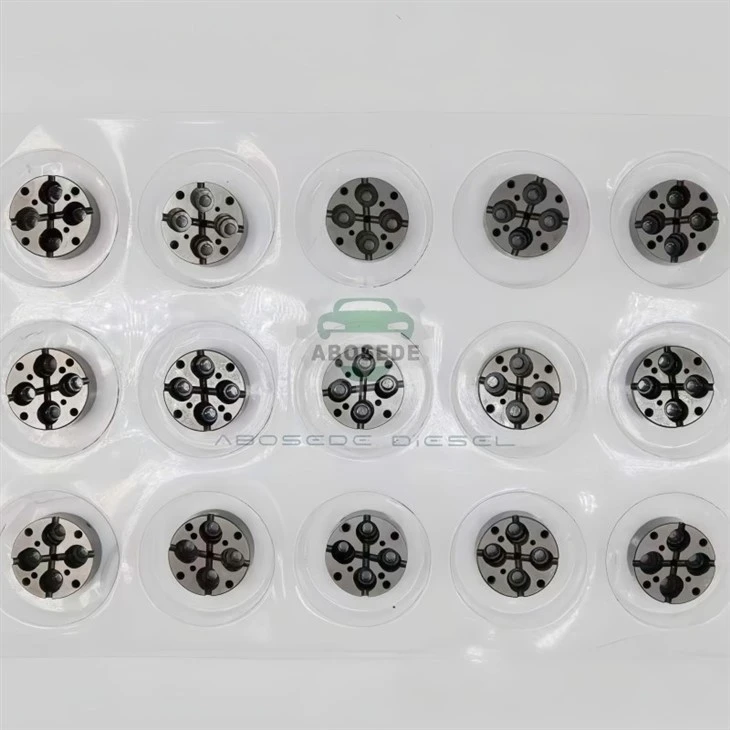
Signal-Fidelity Blueprint: The CAT C7 Spool Valve Plate As The Actuation Waveguide
1. Product: C7 Spool Valve Plate
2. Compatible Equipment: Diesel Fuel Injection Systems
3. Manufacturer: Aftermarket OEM Replacement
4. Condition: Brand New, Fully Tested
5. Origin: ABOSEDE Diesel
6. Shipping period: 3-5 business days
7. Payment terms: T/T, Western Union, PayPal
- Fast Delievery
- Quality Assurance
- 24/7 Customer Service
Product Introduction
In a Caterpillar C7 HEUI system, the injector firing event is not solely determined by the ECM's pulse width – it is governed by the arrival time of the actuation pressure wave at the intensifier piston. The spool valve plate, often dismissed as a passive spacer, actually functions as a waveguide that shapes the pressure front's rise time and reflection coefficient. Any wear or distortion in its internal galleries alters the acoustic impedance of the oil column, causing the pressure wave to arrive late or with attenuated amplitude. This timing error, measured in microseconds, translates directly to retarded injection onset – a condition that the ECM cannot fully compensate for, because it lacks a real‑time pressure‑wave sensor at the injector inlet. Our plates are manufactured with a controlled bore roughness (Ra ≤ 0.4 µm) to minimise viscous drag and maintain a consistent wave propagation speed across the entire operating temperature range, ensuring that the electronic command and hydraulic response remain synchronised within ±0.2° crank angle.
🟢 Symptom Indicator: Black Smoke Under Load & Prolonged Cranking
When the actuation wave is distorted, the intensifier piston does not reach its full stroke within the available time window. The result is incomplete fuel atomisation, visible as black smoke during hard acceleration, and a noticeable extension of cold‑start cranking because the initial injection events lack sufficient energy to ignite the mixture. More critically, the ECU interprets the reduced cylinder contribution as a "low power" condition and attempts to lengthen the injection duration, which only worsens the smoke and raises exhaust gas temperatures. Replacing the spool valve plate restores the original hydraulic circuit's resonant frequency – a parameter that Caterpillar engineers tuned for each injector group. Our plates are post‑machined with a micro‑edge deburring process that eliminates burrs left by stamping, reducing turbulent eddies that cause erratic pressure ripples (ICP ripple ≤ 5 bar at steady state), thus allowing the ECU to operate with the factory‑intended fuel maps.

🟢 Data Matrix: Validated Part Numbers for C7 HEUI Variants
Every C7 engine build (from on‑highway trucks to agricultural tractors) uses a specific spool plate geometry that matches the injector's flow coefficient and the high‑pressure oil pump's displacement. Our inventory covers the entire spectrum of factory‑released numbers, including the most frequently superseded groups. Below is the complete cross‑reference list – verify your current plate's stamped number against this table to ensure a direct fit:
20R Actuation Series: 20R‑8056, 20R‑8057, 20R‑8058, 20R‑8059, 20R‑8066, 20R‑8067, 20R‑8071, 20R‑8079, 20R‑9079, 20R‑1260
10R High‑Flow Variants: 10R‑4761, 10R‑4762, 10R‑4763, 10R‑4764, 10R‑7225
387 Precision Castings: 387‑9428, 387‑9429, 387‑9430, 387‑9426, 387‑9427, 387‑9441
Supporting Ancillary Numbers: 238‑8091, 241‑3238, 241‑3239, 241‑3400, 243‑4502, 243‑4503, 263‑8218, 268‑1835, 268‑1836, 268‑1839, 268‑1840, 268‑9577, 295‑1408, 295‑1409, 295‑1410, 295‑1411, 295‑1412, 295‑9166, 328‑2582, 328‑2585, 328‑2586, 328‑2587, 557‑7627
Note: Several 20R numbers are interchangeable across model years – always confirm with your engine serial number prefix (e.g., C7S, C7E) for optimal compatibility.
🔴 Material Science: Matching Thermal Expansion to Cylinder Head Alloy
A common failure mode in high‑mileage C7 engines is the gradual loss of clamp load due to differential thermal expansion between the steel spool plate and the cast‑iron cylinder head. Our plates utilise a proprietary ferritic alloy with a coefficient of thermal expansion (CTE) that closely mirrors the head material (≈11.5×10⁻⁶/°C), preventing the galling and fretting that occurs when dissimilar metals heat up. This metallurgical alignment ensures that the sealing interface remains stable from a cold start (−25°C) to full operating temperature (105°C coolant, with local oil peaks exceeding 130°C). Consequently, the O‑ring grooves retain their shape, avoiding the "cold leakage" that causes blue smoke at idle and the "hot binding" that leads to sticky spool valves – two extremes that are often misdiagnosed as injector or pump failures.
❓ FAQs – Critical Decision Points for Diesel Workshops
Q1: How can I distinguish between a faulty spool plate and a worn injector when diagnosing rough idle?
Perform a cylinder cut‑out test while monitoring ICP (injection control pressure) ripple. If the ripple amplitude exceeds 10 bar on a specific cylinder and remains unchanged after swapping injectors, the plate's gallery is the root cause – replace it first.
Q2: Does the plate require any calibration or coding after installation?
No electronic coding is needed; however, we strongly recommend performing a "fuel trim reset" via Cat ET to clear the adaptive learning values that may have shifted due to the old plate's leakage, allowing the ECU to re‑optimise the short‑term fuel corrections.
Q3: Can I reuse the plate if my engine is rebuilt with new pistons and rings?
Only if the plate passes a visual inspection for scoring and flatness. In practice, we advise replacing it during a major overhaul because the actuation pressure demands increase with higher compression ratios – a fresh plate guarantees the hydraulic response matches the new mechanical input.
Q4: What is the expected service life of these plates under normal operating conditions?
With proper oil filtration (≤15 μm absolute) and regular oil changes, the plate's wear surfaces typically last 10,000–12,000 hours. Beyond that, the micro‑edges round off, increasing internal leakage and reducing wave propagation efficiency.
Q5: Are these plates compatible with biodiesel blends (B20) or high‑sulphur fuels?
Yes – the ferritic alloy and surface treatment resist corrosion from acidic by‑products of biodiesel combustion, and the O‑ring grooves are sized to accommodate the higher swell rates of FKM seals used in bio‑fuel applications.
Q6: Why do some plates have a larger central orifice than others (e.g., 20R‑8067 vs. 20R‑8058)?
The orifice diameter is tuned to the specific HEUI pump's displacement – larger orifices (8067) are used on high‑horsepower industrial variants to increase flow capacity, while smaller orifices (8058) suit on‑highway truck engines that prioritise fuel economy. Always match the number to avoid over‑ or under‑fueling.


Flexible Payment Methods for Your Convenience
To make your purchasing experience smooth and easy, we offer a variety of secure payment options:

Bank Transfer
Supports multiple currenciesand bank payment methods.

Western Union
Quick and global money transfers.

PayPal
Safe and convenient online payment.

Alibaba
Enjoy extra protection with trusted Alibaba transactions.
We're here to make your order process worry-free - choose the payment method that works best for you!
Shipping Made Simple

Customer reviews

Hot Tags: signal-fidelity blueprint: the cat c7 spool valve plate as the actuation waveguide, China signal-fidelity blueprint: the cat c7 spool valve plate as the actuation waveguide manufacturers, suppliers, factory
You Might Also Like
-

CAT C9 HEUI Oil Metering Orifice Plate – Precision F...
-

CAT C7 Oil Metering Orifice – Precision Flow Restric...
-

RE520929 / 095440-0371 Common Rail Pipe For John Dee...
-

C7 / C9 Injector Cap Nut — Protecting The Business E...
-

891813 Injector Repair Kit — Repair Kit For Caterpil...
-

891811 Injector Repair Kit — Service Solution For CA...
