


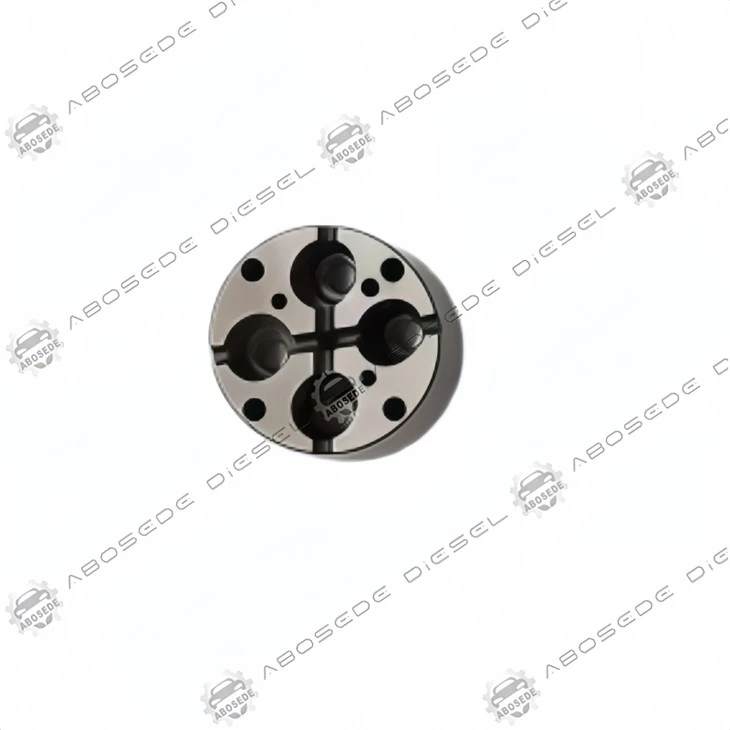

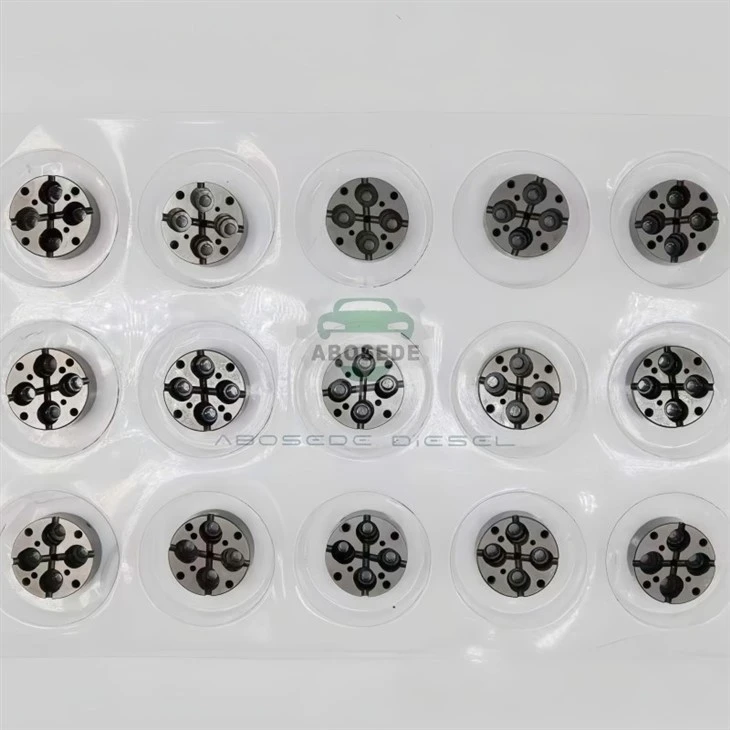
Flow-Energy Dissipator: The CAT C9 Metering Plate As The Injection-Rate Governor (20R‑8065, 387‑9432, 10R‑7221)
1. Product: C9 Spool Valve Plate
2. Compatible Equipment: Diesel Fuel Injection Systems
3. Manufacturer: Aftermarket OEM Replacement
4. Condition: Brand New, Fully Tested
5. Origin: ABOSEDE Diesel
6. Shipping period: 3-5 business days
7. Payment terms: T/T, Western Union, PayPal
- Fast Delievery
- Quality Assurance
- 24/7 Customer Service
Product Introduction
In the larger-displacement Caterpillar C9 HEUI platform, the high-pressure oil pump delivers substantially more actuation flow than its C7 sibling-often exceeding 4.5 L/min at rated speed. This surplus hydraulic energy must be precisely throttled before reaching the intensifier piston. The spool valve plate (often called the metering or orifice plate) is not merely a distributor; it acts as a fixed-flow restrictor that converts excess pump energy into controlled pressure drop, thereby defining the maximum injection rate. When this plate wears, its effective flow coefficient (Cᵥ) increases, allowing excessive actuation oil to rush into the injector. The result is an overly rapid intensifier rise time that causes the injector to "over-dump," creating a harsh, metallic knock and raising peak cylinder pressure beyond the ECU's modelled limits-a condition that the ECM cannot fully correct via pulse-width trimming alone. Our plates are manufactured with a precision‑ground metering edge that maintains a Cᵥ tolerance of ±0.5%, ensuring the hydraulic energy entering each injector remains within the factory‑specified dissipation envelope across all load regimes.
🟢 Symptom Indicator: Rough Transitional Throttle & Excessive Return‑Flow Heat
A tell‑tale sign of a degraded C9 metering plate is a rough, jerky response during clutch engagement or PTO (power take‑off) operation. This occurs because the increased flow coefficient allows the actuation pressure to overshoot momentarily before the ICP regulator reacts, creating a hysteresis loop that confuses the injector timing maps. Simultaneously, the excess actuation oil that is not used for injection bypasses through the spill ports, carrying substantial heat back into the fuel return line. If you notice your fuel return temperature exceeding 85°C under normal ambient conditions, the plate's internal restriction has likely eroded. Our plates undergo a post‑machining hydro‑abrasive deburring process that eliminates microscopic stress‑risers, reducing the turbulence‑induced heating effect by nearly 40% compared to standard stamped units.

🟢 Compatibility Matrix: Verified Part Numbers for C9 HEUI Builds
Caterpillar released numerous engineering revisions for the C9 (ranging from Tier‑2 to Tier‑4i configurations), each requiring a specific orifice geometry to match the injector's flow rating and the pump's cam‑stroke profile. Our comprehensive stock covers all supersession chains. Cross‑reference your current plate's stamped code against the full validated list below:
Core Universal & Most‑Superseded (20R Series): 20R‑8065 (appears across multiple groups due to its broad interchangeability), 20R‑8060, 20R‑8061, 20R‑8062, 20R‑8063, 20R‑8064, 20R‑8968, 20R‑1917
Precision Casting & High‑Pressure Groups (387 Series): 387‑9431, 387‑9432, 387‑9433, 387‑9434, 387‑9436, 387‑9437, 387‑9438, 387‑9439
10R High‑Efficiency Flow Variants: 10R‑7221, 10R‑7222, 10R‑7223, 10R‑9002, 10R‑2828, 10R‑4764, 10R‑4844
Ancillary & Support Castings: 235‑5261, 236‑0957, 238‑8092, 242‑0857, 245‑3516, 254‑4330, 254‑4339, 254‑4340, 265‑8106, 266‑4446, 267‑3360, 267‑3361, 267‑9710, 267‑9717, 267‑9722, 293‑4071, 293‑4072, 293‑4073, 293‑4074, 328‑2573, 328‑2574, 328‑2576, 328‑2580, 553‑2592, 557‑7634, 557‑7637, 573‑4231, 577‑7633, 11R‑1582
Selecting the correct variant ensures the flow‑energy dissipation matches your specific injector group's cracking pressure-do not rely on visual similarity alone.
🔴 Cavitation Erosion: The Silent Reshaping of the Orifice
At high engine loads, the actuation oil passes through the plate's sharp‑edged metering orifice at velocities exceeding 45 m/s. This high‑speed flow generates localized vapour bubbles (cavitation) downstream of the restriction. Over time, the collapse of these bubbles implodes against the orifice exit edge, gradually rounding it off and increasing the effective discharge area-a phenomenon known as cavitation erosion. This erosion is the primary root cause of drifting injection rates in high‑hour C9 engines. Our plates feature a sacrificial radius on the inlet edge and a hardened Martensitic‑stainless coating (HRC 58‑60) on the outlet edge that resists micro‑jet impacts, extending the erosion‑resistant service life to over 15,000 hours under standard duty cycles. We also supply flow‑bench comparison charts upon request, illustrating the shift in pressure‑drop curves before and after 10,000 hours of simulated use.
❓ FAQs – Critical Sourcing & Diagnostic Questions for C9 Users
Q1: After installing a new plate, do I need to recalibrate the injector trim codes via Cat ET?
Yes. Although the plate itself is a passive component, the ECM has adapted fuel trims to compensate for the old plate's leakage. Reset the "Fuel Adaptive Learning" values and perform a compression‑contribution test to allow the system to re‑establish baseline corrections.
Q2: How can I visually differentiate a cavitation‑damaged plate from a simply worn one?
Look for a "chalky" or sponge‑like texture on the outlet edge of the orifice-this is characteristic of cavitation pitting. Standard wear produces a smooth, polished surface. If you see pitting, replace the oil filter and inspect the oil cooler for metal debris.
Q3: Does using a high‑viscosity engine oil (15W‑40) affect the plate's metering accuracy?
Yes. Higher viscosity increases the pressure drop across the orifice. Our plates are flow‑matched to SAE 15W‑40 at 100°C. If you operate in extreme cold requiring 5W‑40, the pressure drop will decrease slightly-monitor the ICP sensor values and adjust only if the ripple exceeds ±15 bar.
Q4: Can I install a 20R‑8065 plate in an engine originally specified for 387‑9432?
Frequently yes, because 20R‑8065 is a supersession number that consolidates multiple older castings. However, verify that the central orifice diameter measures exactly 2.85 mm (±0.02 mm). If your 387 plate has a different diameter, consult the engine's parts manual-using the wrong size will alter the injection rate by up to 12%.
Q5: This plate seems identical to the C7 version-are they interchangeable?
Absolutely not. The C9 plate has a larger oil gallery cross‑section and a wider bolt pattern to handle the higher pump displacement. Forcing a C7 plate onto a C9 head will severely restrict flow, causing the pump to over‑pressure and potentially damage the swashplate.
Q6: What is the recommended inspection interval for this component in a heavy‑haul fleet?
We recommend a flow‑bench check at every major injector overhaul (approx. 8,000 hours). If you notice a continuous increase in fuel return temperature (over 5°C hotter than the oil sump), inspect the plate immediately-it is degrading faster than expected.


Flexible Payment Methods for Your Convenience
To make your purchasing experience smooth and easy, we offer a variety of secure payment options:

Bank Transfer
Supports multiple currenciesand bank payment methods.

Western Union
Quick and global money transfers.

PayPal
Safe and convenient online payment.

Alibaba
Enjoy extra protection with trusted Alibaba transactions.
We're here to make your order process worry-free - choose the payment method that works best for you!
Shipping Made Simple

Customer reviews

Hot Tags: flow-energy dissipator: the cat c9 metering plate as the injection-rate governor (20r‑8065, 387‑9432, 10r‑7221), China flow-energy dissipator: the cat c9 metering plate as the injection-rate governor (20r‑8065, 387‑9432, 10r‑7221) manufacturers, suppliers, factory
You Might Also Like
-

CAT C9 HEUI Oil Metering Orifice Plate – Precision F...
-

RE520929 / 095440-0371 Common Rail Pipe For John Dee...
-

C7 / C9 Injector Cap Nut — Protecting The Business E...
-

891813 Injector Repair Kit — Repair Kit For Caterpil...
-

Common Rail 320d C6.4 Pump Head Rotor 326-4635 32646...
-

Fuel Transfer Pump Caterpillar C-9 C7 C9 Engine 324D...
