


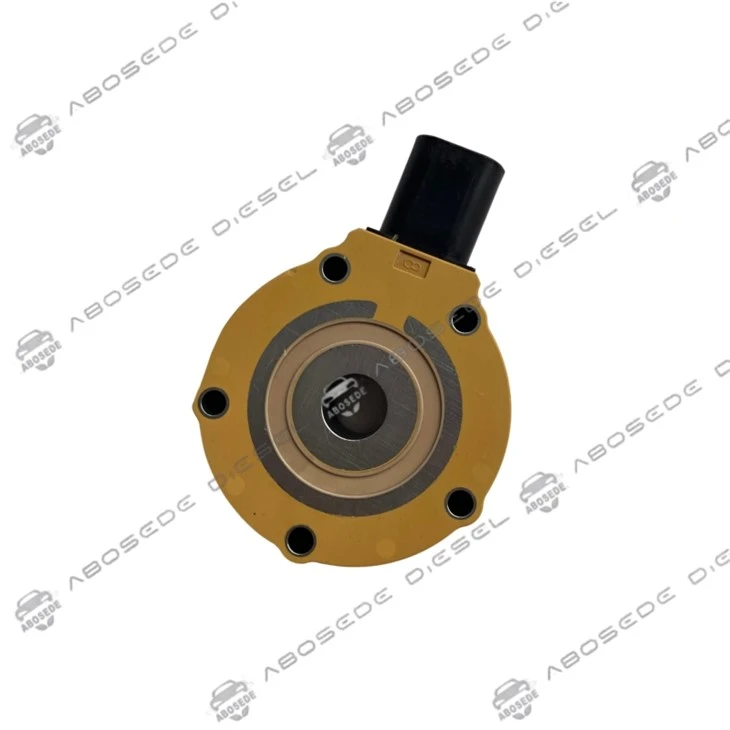

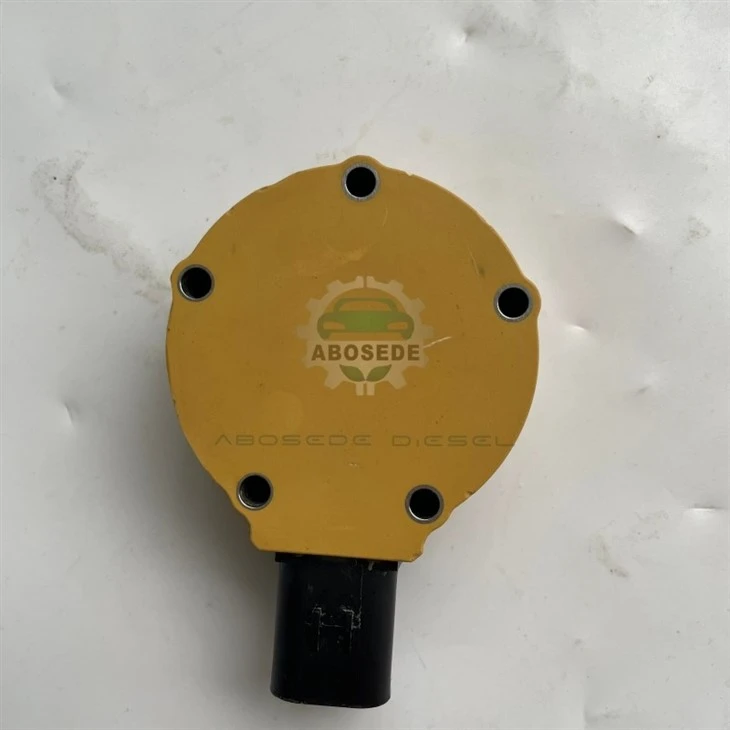
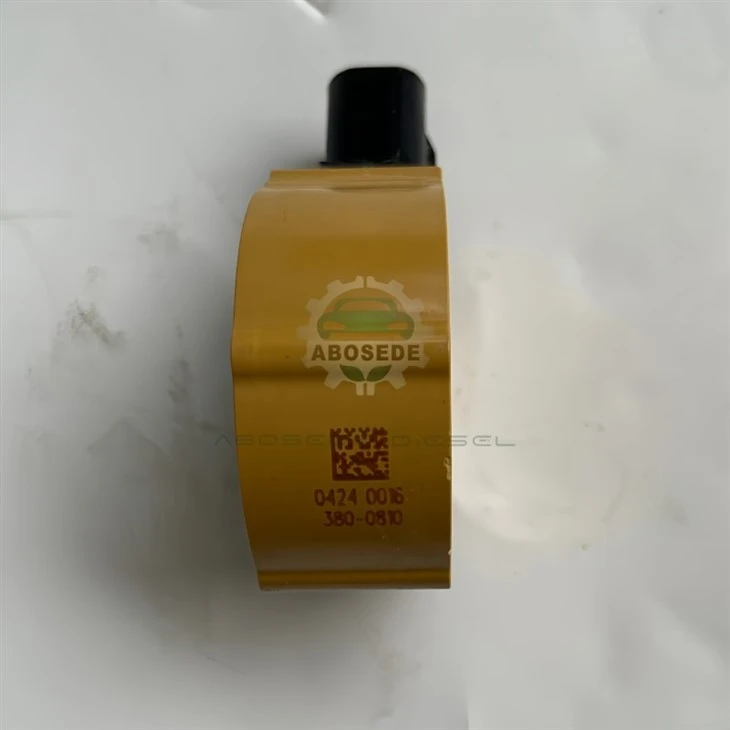
456-3509 | CAT C9.3 ACERT Common Rail Solenoid Valve
1. Product:CAT C9.3 ACERT Common Rail Solenoid Valve
2. Compatible Equipment: Diesel Fuel Injection Systems
3. Manufacturer: Aftermarket OEM Replacement
4. Condition: Brand New, Fully Tested
5. Origin: ABOSEDE Diesel
6. Shipping period: 3-5 business days
7. Payment terms: T/T, Western Union, PayPal
- Fast Delievery
- Quality Assurance
- 24/7 Customer Service
Product Introduction
This 456-3509 solenoid valve controls the electro-hydraulic trigger for the MEUI-C injector on Caterpillar C9.3 ACERT engines. It regulates control-chamber bleed-off, which in turn governs needle lift and fuel delivery timing under rail pressures that routinely reach 1,800–2,000 bar . Shops that rebuild or replace C9.3 injectors need this valve to match the original armature response curve; substitutions with mismatched inductance profiles produce idle instability that trim programming cannot fully correct.
⚙️ Specification Focus for Counter Staff and Bench Technicians
When a customer hands over a C9.3 injector for service, the 456-3509 identification depends on more than the stamped number. The valve's solenoid resistance should read near 1.5 Ω at room temperature; a reading above 2.0 Ω or below 1.0 Ω points to winding degradation rather than a hydraulic fault . Inductance matters equally: a valve that passes a static resistance check can still exhibit slow response if the coil's inductive rise time has shifted, causing pilot injection quantity drift that shows up as a light-load misfire rather than a hard fault code. The armature stroke and spring preload are factory-set; field disassembly of the valve body is not recommended because the control plunger clearance sits in the micron range, and any contamination introduced during handling will produce leakage rates that trigger rail pressure deviation codes within hours of installation.
🚜 Where This Valve Lands in the Field
The C9.3 ACERT appears in 336E and 336E L excavators, 950M and 962M wheel loaders, D6T track-type tractors, and C9.3 generator packages. Each duty cycle stresses the solenoid differently. Excavator hydraulic demand produces rapid load steps that force the common rail to recover pressure quickly; a valve with restricted control chamber flow cannot bleed off fast enough, and the ECM logs a rail pressure undershoot during swing-to-dig transitions . Loader applications subject the valve to continuous thermal cycling as the engine alternates between high-idle travel and full-load bucket breakout. Generator sets are the opposite: steady-state 1,800 rpm operation with minimal load variation, but the solenoid fires millions of times per shift at a fixed frequency, making coil insulation endurance the limiting factor rather than hydraulic response.
🔩 Installation Notes That Prevent Comebacks
Three mistakes account for most premature 456-3509 failures in independent shops. First, reusing the injector clamp bolt: the C9.3 hold-down fastener is torque-to-yield, and a second torque cycle leaves insufficient clamp load to contain combustion pressure, allowing the injector to lift slightly and carbon to migrate onto the quill seal surface. Second, skipping the E-Trim write: the ECM relies on the injector's trim code to balance cylinder-to-cylinder fuel delivery, and a new valve without updated trim data will produce a rough idle that the technician may misattribute to the valve itself. Third, ignoring fuel inlet screen condition: debris from a failing high-pressure pump will migrate directly into the new valve's control orifice and cause it to stick open, producing a hard start or no-start condition within the first week . Flush the rail and replace the inlet screen before installing any new common rail component on a high-hour C9.3.
📈 Why Stocking This Valve Pays for Itself
From a parts distributor's perspective, the 456-3509 sits at the intersection of two profitable service categories: injector replacement and fuel system diagnosis. Shops that already own CAT ET and a return-flow test bench can use this valve to convert a "replace all six injectors" recommendation into a targeted single-cylinder repair, which fleet customers appreciate on machines that are otherwise mechanically sound. The interchange footprint is unusually broad: the same valve body serves injectors carrying 20R-5077, 456-3493, and 324-5467 base numbers, so one SKU covers multiple rebuild paths and reduces the dead stock risk that plagues slow-moving diesel electronics .
❓ FAQ for Diesel Repair Shops and Parts Buyers
Q1: The old valve ohmed out fine but the engine still smoked white at startup. Could the 456-3509 still be the problem?
A: Yes. Static resistance does not reveal armature binding or control chamber erosion. A valve that passes the multimeter test but leaks internally will over-fuel at low rail pressure, producing white haze until the engine warms and rail pressure rises. Return-flow testing catches this where resistance testing does not.
Q2: How do I know whether to replace just this valve or the whole injector assembly?
A: Inspect the nozzle needle and control piston bore first. If either shows scoring or heavy carbon bridging, a valve-only repair will not restore delivery accuracy. The valve is the right call when the injector body passes a visual and dimensional check but the coil or armature circuit has failed.
Q3: Will a 20R-5077 injector accept this 456-3509 valve without flow class mismatch?
A: The interchange covers the valve body only. The flow class is set by the injector's nozzle and trim code, not the solenoid. Verify the trim code on the replacement injector matches the cylinder's programmed value in CAT ET before commissioning.
Q4: What fuel filtration micron rating does this valve actually require in service?
A: The control orifice inside the valve is sensitive to particles above 3–5 microns. A secondary filter that passes nominal 4-micron rating is the practical floor; anything coarser shortens valve life and increases hysteresis as debris accumulates at the seat.
Q5: Can I bench-test a 456-3509 before installation to avoid a no-start comeback?
A: Measure resistance cold and after a 10-minute heat soak at 60–70°C. A valve that drifts more than 15% between the two readings has a marginal coil. Also confirm the connector pin retention-loose pins produce intermittent injector circuit codes that mimic valve failure.
Basic Information about the Company


Flexible Payment Methods for Your Convenience
To make your purchasing experience smooth and easy, we offer a variety of secure payment options:

Bank Transfer
Pay directly in 15 supported currencies.

Western Union
Quick and global money transfers.

PayPal
Safe and convenient online payment.

Alibaba
Enjoy extra protection with trusted Alibaba transactions.
We're here to make your order process worry-free - choose the payment method that works best for you!
Shipping Made Simple

Customer reviews

Hot Tags: 456-3509 | cat c9.3 acert common rail solenoid valve, China 456-3509 | cat c9.3 acert common rail solenoid valve manufacturers, suppliers, factory, others parts for cat
You Might Also Like
-

623-3355 = 272-2223 Caterpillar Fuel Actuator – OEM ...
-

GASKET 481-1650 – Precision Flange Seal For Cat Fuel...
-

CAT 3500B Control Valve Gasket – High-Compression Sp...
-

CAT C10 Injector Spring Seat – Thermal-Mechanical Fa...
-

CAT C10 HEUI Solenoid Retaining Sleeve – High-Freque...
-

RE520929 / 095440-0371 Common Rail Pipe For John Dee...
