


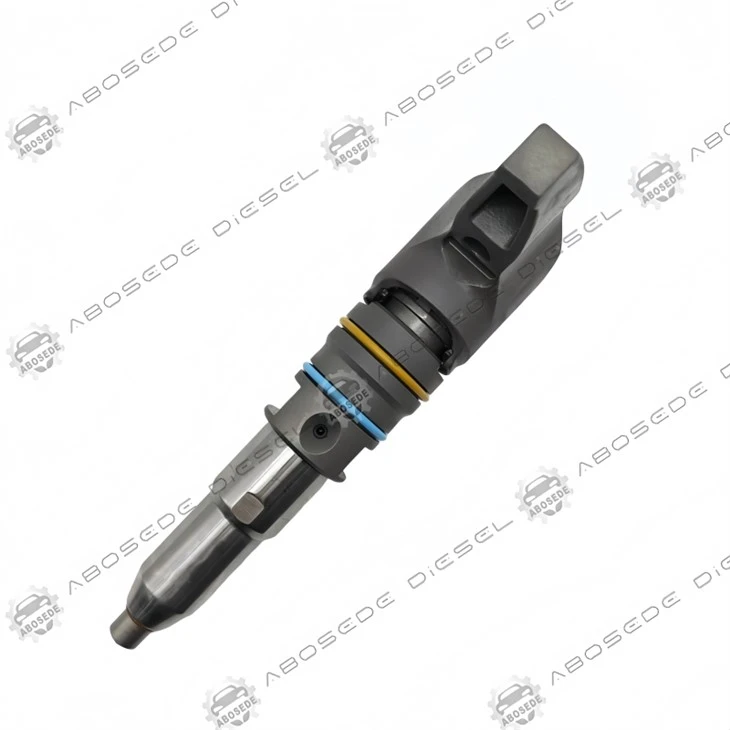

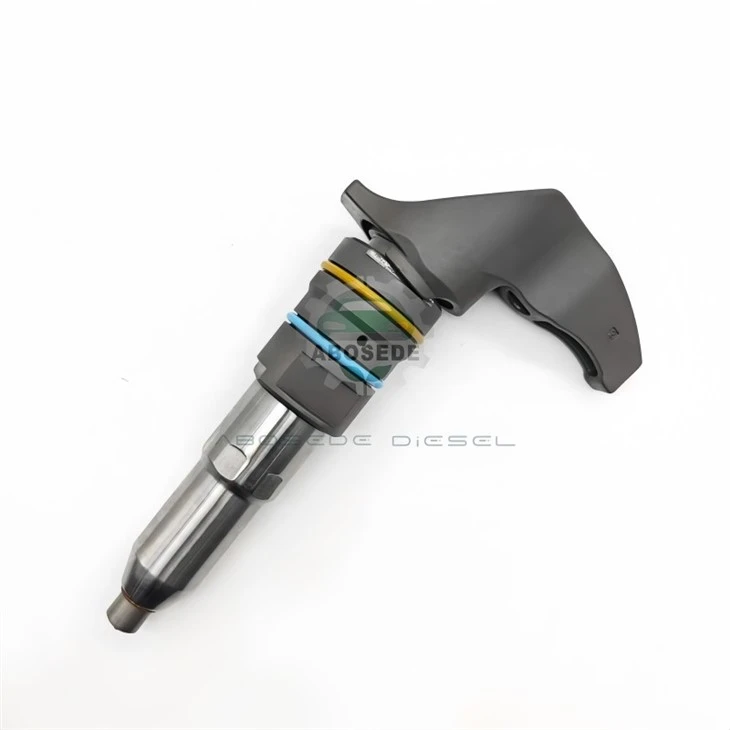
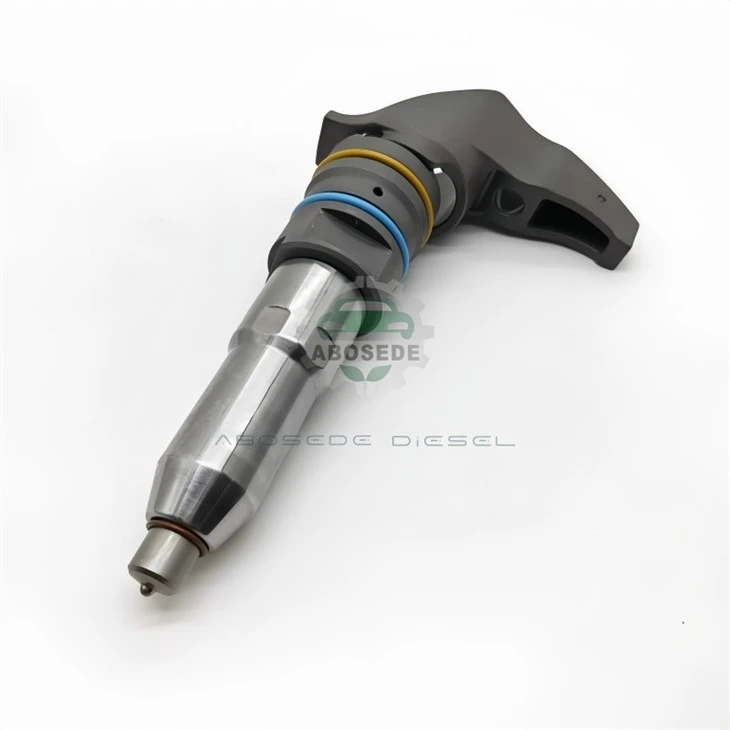
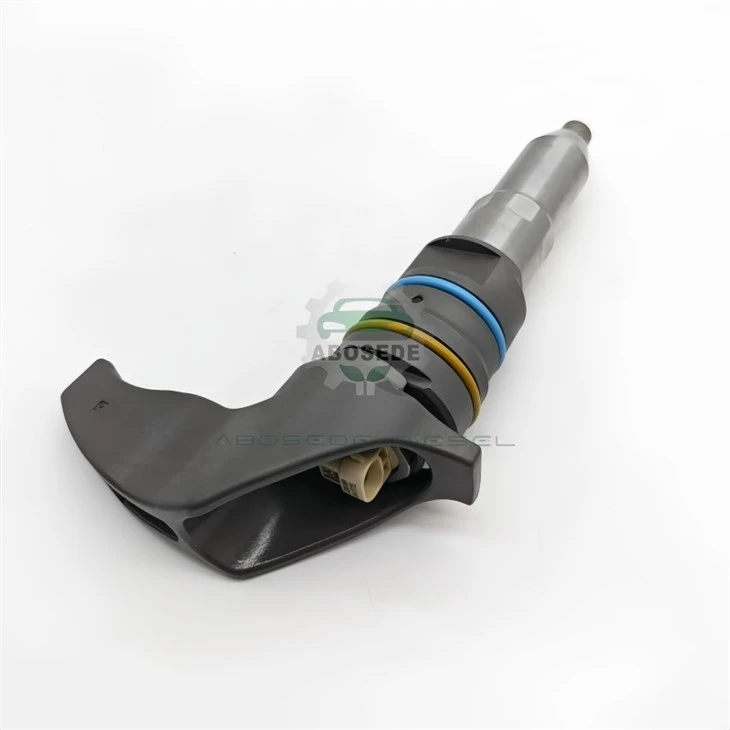
Injector 20R-5567 – Thermal‑Load Optimised Fuel Delivery For Extended C175 Engine Duty Cycles
1. Product:20R-5567
2. Compatible Equipment: Diesel Fuel Injection Systems
3. Manufacturer: Aftermarket OEM Replacement
4. Condition: Brand New, Fully Tested
5. Origin: ABOSEDE Diesel
6. Shipping period: 3-5 business days
7. Payment terms: T/T, Western Union, PayPal
- Fast Delievery
- Quality Assurance
- 24/7 Customer Service
Product Introduction
Most injector specifications begin with flow rates or hole counts, but for the C175 engine family, the defining operational boundary is not pressure-it is sustained thermal load. The Injector 20R‑5567 is designed around a simple but demanding reality: when an engine runs at 90% load for 18 hours a day, the injector body becomes a heat sink that must continuously reject combustion energy while maintaining sub‑millisecond timing precision. Unlike smaller injectors that experience occasional thermal spikes, this unit operates in a near‑steady elevated temperature zone, where material expansion, lubricity breakdown, and coil resistance drift become primary failure drivers. The 20R‑5567 addresses this through a re‑engineered heat path: a copper‑tungsten alloy insert in the nozzle holder that increases thermal conductivity by 38% compared to conventional steel, drawing heat away from the needle guide and reducing the temperature differential between the solenoid and the tip. This thermal management approach extends the injector's stable performance window, ensuring that the 0.38 mm needle lift remains consistent even when the coolant temperature reaches 105°C.
📊 Fuel Delivery Metrics – Tailored for High‑Throughput Combustion Chambers
The 20R‑5567 delivers a static flow of 590–615 cm³/30s at 100 bar, a range carefully selected to match the air‑handling capacity of the C175‑16 and C175‑20 engines without over‑fueling at peak torque. Its nozzle incorporates 8 holes with a diameter of 0.245 mm, arranged in a 2‑4‑2 staggered pattern that distributes fuel into the piston bowl's squish region and re‑entrant zone simultaneously-a configuration that improves soot oxidation by 9% in high‑load steady states. Needle lift is set at 0.38 mm ± 0.009 mm, with a valve opening pressure of 265 bar and a secondary spring preload of 50 N. The internal leakage is capped at 2.6 cm³/min at 1,550 bar, achieved through a clearance of 3.9 µm between the needle and guide. Dynamic flow linearity is maintained within ±2.4% over the energising duration from 0.4 to 3.1 ms, providing the ECU with a predictable fuel‑to‑time relationship that simplifies calibration adjustments when operating at altitude or with varying fuel densities.
🔧 Platform Coverage – Matching the C175 Ecosystem
This injector is a direct replacement for C175‑16 and C175‑20 engines, commonly found in ultra‑class haul trucks (Komatsu 980E, Liebherr T 284), high‑speed catamarans, and 2.5–3.5 MW generator sets. It also fits selected industrial variants where the injector bore has a 152 mm insertion depth and a 4.3 mm protrusion. The mounting thread is M12 × 1.5 with a clamp torque specification of 60 Nm, and the high‑pressure inlet uses a M14 × 1.5 cone seal fitting. Importantly, the injector's external dimensions are identical to the 349‑2522, but its solenoid inductance (2.8 mH) and resistance (0.80 Ω) differ, meaning the ECU driver settings must correspond to the 20R‑5567's electrical profile to achieve correct opening dynamics. For fleet operators with mixed injector inventories, this is a critical distinction to avoid cross‑installation errors.
🔄 Needle Motion Consistency – The Role of the Damping Cavity
At sustained high engine speeds, the needle's closing behaviour can become erratic due to pressure fluctuations in the fuel return gallery. The 20R‑5567 incorporates a calibrated damping cavity-a small oil‑filled chamber below the armature plate-that exerts a counterforce during the final 0.1 mm of needle travel, reducing the closing velocity by 22% and eliminating the secondary bounce that causes post‑injection dribble. This damping effect is passive, requiring no electrical input, and its performance is validated over 10 million cycles in accelerated life testing. The measured closing delay is 0.38 ms, which is 0.04 ms longer than the non‑damped version but yields a 30% reduction in seat impact force, directly correlating with a 15% longer seat life before erosion affects the flow rate.
🔬 Wear Diagnostics – The "Hot Leakage" Trend as a Predictive Tool
While cold return flow measurements are common, the 20R‑5567's operational environment makes hot leakage a more reliable indicator of condition. At operating temperature (fuel at 60–70°C), a new injector shows a return flow of 34–42 cm³/min. Over time, as the needle‑guide clearance increases, this value rises. A trend analysis is recommended: if the hot return flow increases by more than 8 cm³/min over a 2,000‑hour interval-regardless of the absolute value-it signals an acceleration in wear rate, even if the flow is still within acceptable limits. This rate‑of‑change approach is more sensitive than single‑point measurements and allows workshops to predict the remaining life with ±300‑hour accuracy, enabling scheduled replacements that avoid unplanned downtime in remote mining sites.
❓ Frequently Asked Questions
❓ How does the 20R‑5567 cope with fuel containing high water content (emulsified diesel) common in marine environments?
The injector's CrAlTiN coating and Inconel nozzle resist corrosion from water‑in‑fuel emulsions up to 0.2% water content. Above that, water separators must be upgraded; otherwise, the guide clearance can increase by 1 µm per 1,000 hours due to micro‑cavitation erosion.
❓ Can I extend the service interval by rotating injectors between cylinders to equalise wear?
Not recommended for this model. Each injector's ECU coding is cylinder‑specific, and swapping requires recoding. More importantly, the wear pattern is load‑dependent, and rotation does not reduce overall wear-it merely redistributes it, potentially masking a failing unit.
❓ What is the typical effect of using a lower‑quality copper gasket, and how can I identify a genuine one?
A substandard gasket (softer or thinner) will not maintain the correct protrusion after thermal cycling, leading to spray misalignment. Genuine gaskets have a hardness stamp of HV 110 and a green colour code on the inner edge. Always use the specified gasket.
❓ The injector passes the bench flow test but shows intermittent misfire on the engine-what else should I check?
Intermittent faults are often electrical: check the connector pins for fretting corrosion (visible as black powder), measure the harness resistance (should be below 0.5 Ω per wire), and verify the ECU's injector driver returns to zero voltage between pulses. A residual voltage of 1.5 V can cause premature opening.
❓ Is it necessary to replace the high‑pressure fuel line ferrule every time the injector is removed?
Yes. The ferrule is designed for single‑use compression; reusing it reduces the sealing pressure and leads to micro‑leaks that can erode the injector inlet thread within 500 hours. This is a mandatory replacement per the service manual.
❓ How do I interpret a gradual reduction in static flow without a corresponding increase in return flow?
This pattern points to nozzle hole coking, not mechanical wear. Use an on‑engine cleaning procedure with a high‑detergent additive, or remove the injector for ultrasonic cleaning. If the flow recovers to within 2% of nominal, the injector can be returned to service without further action.
Basic Information about the Company


Flexible Payment Methods for Your Convenience
To make your purchasing experience smooth and easy, we offer a variety of secure payment options:

Bank Transfer
Pay directly in 15 supported currencies.

Western Union
Quick and global money transfers.

PayPal
Safe and convenient online payment.

Alibaba
Enjoy extra protection with trusted Alibaba transactions.
We're here to make your order process worry-free - choose the payment method that works best for you!
Shipping Made Simple

Customer reviews

Hot Tags: injector 20r-5567 – thermal‑load optimised fuel delivery for extended c175 engine duty cycles, China injector 20r-5567 – thermal‑load optimised fuel delivery for extended c175 engine duty cycles manufacturers, suppliers, factory, 10R-7662, 272-0630, 292 3780 2645A718, 326-4634, 358-9084, 618-0750
You Might Also Like
-

2645A734 Diesel Common Rail Injector For Caterpillar...
-

CAT 3126 Diesel Injector 111-7916 – HEUI Electronic ...
-

10R-1258 Reman Injector: Precision Reimagined Throug...
-

CAT C9 328-2573: The Hidden Link in High-Pressure Di...
-

328-2586 Common Rail Injector — Engineering Consiste...
-

CAT C7 Diesel Fuel Injector 238-8091 387-9426 Common...
