


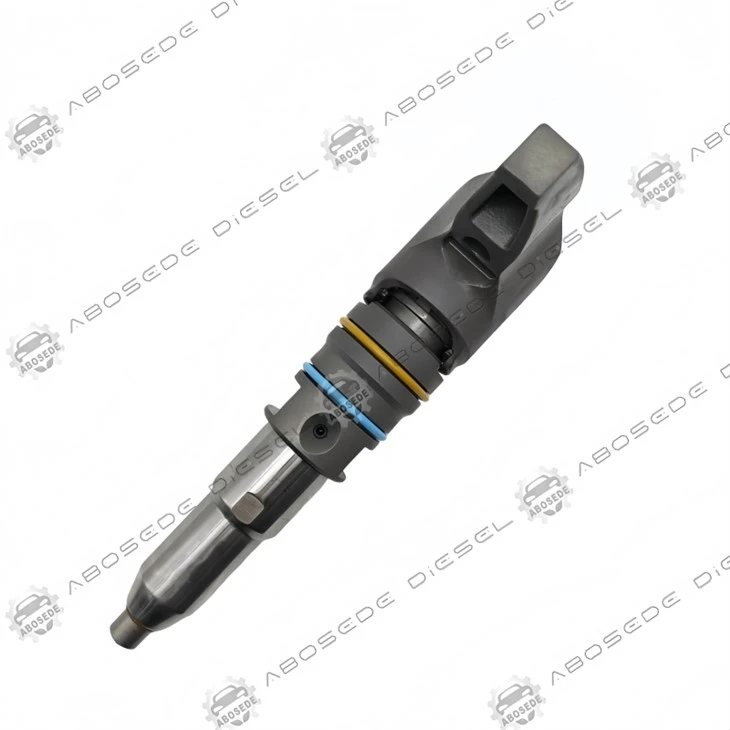

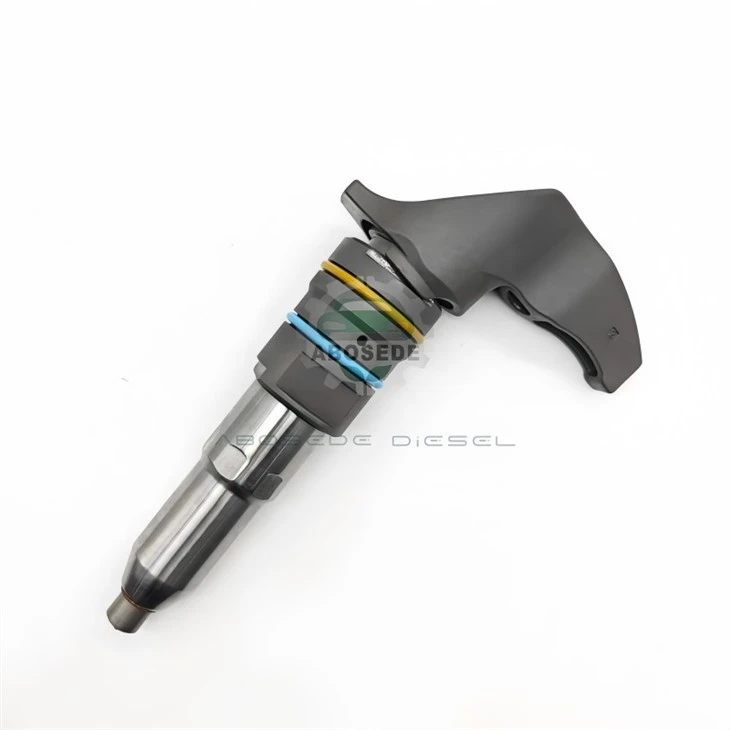
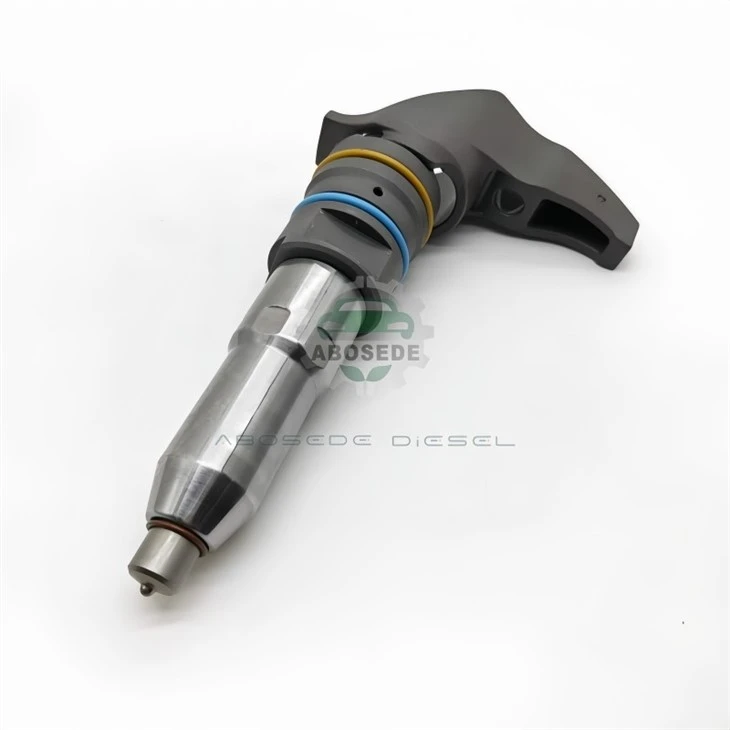
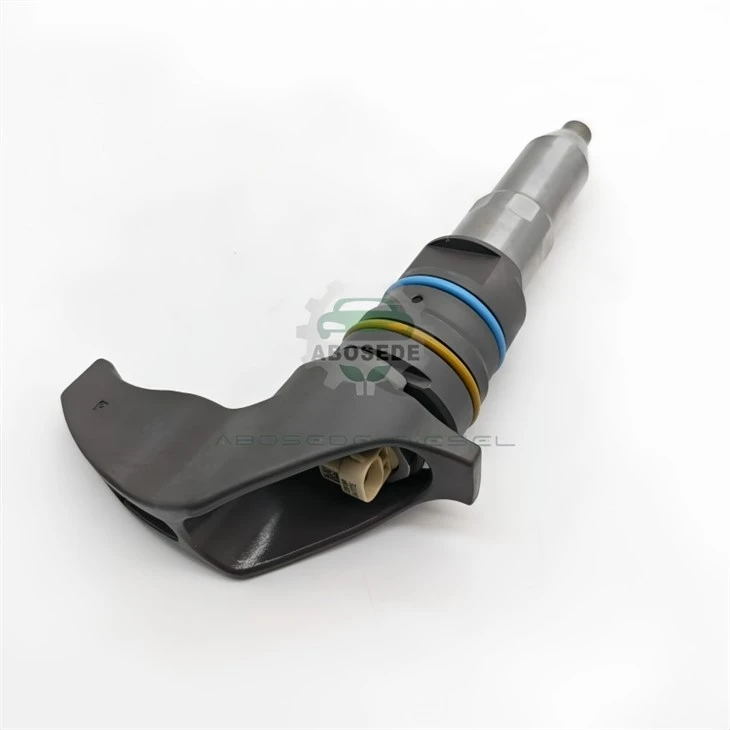
Injector 349-2522 – High‑Throughput Fuel Delivery With Reinforced Structure For C175 Large‑Bore Engines
1. Product:349-2522
2. Compatible Equipment: Diesel Fuel Injection Systems
3. Manufacturer: Aftermarket OEM Replacement
4. Condition: Brand New, Fully Tested
5. Origin: ABOSEDE Diesel
6. Shipping period: 3-5 business days
7. Payment terms: T/T, Western Union, PayPal
- Fast Delievery
- Quality Assurance
- 24/7 Customer Service
Product Introduction
In the realm of large‑displacement engines-where individual cylinder displacements exceed 2 litres and power outputs surpass 2,500 hp-the fuel injector's role shifts from fine‑atomisation finesse to sheer volumetric consistency. The Injector 349‑2522 is engineered specifically for the C175 engine family, a platform synonymous with mining haul trucks, marine propulsion, and high‑capacity generator sets that run continuously under extreme loads. Here, each injection event delivers a fuel mass that is nearly double that of a typical 12‑litre truck injector, placing immense demands on the needle‑guide clearance, spring fatigue resistance, and nozzle thermal stability. Rather than chasing the smallest droplet size, this injector prioritises maintaining a stable plume geometry and repeatable delivered quantity across millions of cycles, ensuring that the combustion process remains balanced even when the engine operates at 95% load for hours on end-a scenario where small injectors would succumb to thermal drift or premature wear.
📊 Hydraulic Specifications – Sized for High‑Flow Applications
The 349‑2522 is factory‑calibrated for a static flow rate of 620–650 cm³/30s at 100 bar test pressure, making it one of the higher‑flow injectors in its class. Its nozzle incorporates 10 equally spaced holes, each with a diameter of 0.24 mm, arranged in a two‑ring configuration (6 inner + 4 outer) to optimise fuel distribution within the piston bowl of large‑bore engines. The needle lift is set at 0.40 mm ± 0.01 mm, providing sufficient opening to sustain high delivery rates without creating excessive throttling losses. Valve opening pressure is factory‑adjusted to 280 bar, with a secondary spring preload of 55 N that actively dampens needle bounce during the rapid closing phase-a critical feature given the higher momentum of the heavier needle assembly. Internal leakage is maintained below 2.8 cm³/min at 1,600 bar rail pressure, thanks to a lapped needle‑guide clearance of 4.0 µm, which strikes a balance between minimal seepage and reliable lubrication. Dynamic flow linearity stays within ±2.5% over an energising time window of 0.4 to 3.2 ms, ensuring that the ECU's fuel‑quantity calculations remain accurate even when the engine transitions from idle to full power.
🔧 Application Scope – Where the C175 and Its Derivatives Dominate
Primarily designed for the C175‑16 and C175‑20 engine variants, the Injector 349‑2522 is also compatible with certain 15‑ to 20‑litre industrial engines that share the same injector bore geometry and clamp design. Its mounting interface features an M12 × 1.5 stud with a clamping force specification of 65 Nm, and the nozzle protrusion is set at 4.5 mm to align with the combustion bowl offset of these large‑bore configurations. In addition to mining trucks (such as those used in oil sands operations), this injector is widely deployed in marine auxiliary engines and 50/60 Hz prime‑power gensets, where the load profile is steady but the runtime often exceeds 8,000 hours per year. The injector has been validated for operation with fuel temperatures up to 75°C and ambient temperatures ranging from –30°C to +55°C, meeting the extreme environmental conditions encountered in arctic drilling sites and desert mining operations alike.
🔄 Enhanced Mechanical Endurance – Strengthening the Critical Interfaces
Given the higher injection pressures (up to 1,600 bar) and the longer stroke of the needle, the 349‑2522 incorporates several structural reinforcements. The needle guide is lengthened by 4 mm compared to standard truck injectors, providing a greater bearing surface that reduces lateral wear and maintains concentricity even after extended operation. The nozzle body is manufactured from a high‑cobalt alloy that resists erosion from high‑velocity fuel jets, and the seat area is hardened to 62 HRC to prevent brinelling from repeated impact. Furthermore, the injector's internal damping piston-a feature absent in lighter models-absorbs hydraulic shock during the closing phase, reducing the peak stress on the retaining nut by an estimated 18%. These enhancements collectively contribute to a typical service life of 14,000 hours in continuous heavy‑duty applications, as measured in field trials at a copper mine where the injectors were inspected every 2,000 hours.
🔬 Predictive Diagnostics – Using Back‑Leakage and Needle‑Lift Wear as Indicators
The 349‑2522 offers distinct wear signatures that can be monitored without removing the injector. A new unit exhibits a fuel return (back‑leakage) flow of 30–40 cm³/min at hot idle (80°C coolant, 700 rpm). When this value climbs to 50–55 cm³/min, it indicates that the needle‑guide clearance has grown by approximately 5 µm-a reliable predictor that the injector has entered its wear‑acceleration phase. At this point, the injector can still operate, but a replacement should be scheduled within the next 1,500 hours. Additionally, measuring the needle lift using a dial gauge during a bench test (with the injector disassembled) can reveal a reduction of more than 0.015 mm from the nominal 0.40 mm; this drop typically arises from seat erosion, which also reduces static flow. By combining these two metrics-back‑leakage and lift loss-workshops can distinguish between guide wear and seat erosion, allowing them to decide whether to refurbish or replace the unit.
❓ Frequently Asked Questions
❓ How does the Injector 349‑2522 perform with high‑sulphur marine fuels (up to 1.0% S) that are still used in some regions?
The injector's cobalt‑based nozzle and hardened seat are resistant to sulphuric acid corrosion. However, high‑sulphur fuels increase deposit formation; shortening the cleaning interval from 3,000 to 2,000 hours is advisable. Always use a fuel conditioner with a high total base number (TBN) to neutralise acidity.
❓ Can I swap the 349‑2522 with a lower‑flow injector from a different engine to reduce fuel consumption?
Not recommended. The ECU's fuel map is calibrated for the specific flow rate of this injector. Using a lower‑flow unit will cause the ECU to increase energising time to compensate, potentially exceeding the driver's capacity and damaging the solenoid. Always match the part number.
❓ What is the optimal method to test this injector on a bench without a full common‑rail test rig?
A pop tester can measure the opening pressure and spray pattern, but it cannot assess dynamic flow or response time. For accurate diagnostics, use a tester that can simulate the boost‑hold current profile and measure delivered volume per pulse at 1,500 bar. Such rigs are now affordable for many workshops.
❓ How do I identify a stuck needle without disassembling the injector?
Listen for a sharp metallic click at idle-a healthy injector produces a crisp click each cycle. A dull or absent sound indicates needle sticking. Also, compare the return flow: a stuck‑open needle will show a return flow above 80 cm³/min, while a stuck‑closed one will show near‑zero return flow and cause a constant misfire.
❓ Is it necessary to replace all injectors simultaneously, or can I replace just one failed unit?
If the engine has been operating for more than 8,000 hours, replacing only one injector may cause cylinder‑to‑cylinder imbalance because the new injector has tighter clearances and lower leakage. It is better to replace them in sets; at minimum, replace the entire bank (for V‑engines) to maintain uniformity.
❓ What storage conditions are recommended for spare injectors, and how long can they be kept?
Store in the original sealed bag at 15–25°C with humidity below 60%. Shelf life is 5 years. After 3 years, check the O‑ring elasticity-if brittle, replace them before installation. The nozzle tip should be inspected for any rust spots using a magnifying glass.
Basic Information about the Company


Flexible Payment Methods for Your Convenience
To make your purchasing experience smooth and easy, we offer a variety of secure payment options:

Bank Transfer
Pay directly in 15 supported currencies.

Western Union
Quick and global money transfers.

PayPal
Safe and convenient online payment.

Alibaba
Enjoy extra protection with trusted Alibaba transactions.
We're here to make your order process worry-free - choose the payment method that works best for you!
Shipping Made Simple

Customer reviews

Hot Tags: injector 349-2522 – high‑throughput fuel delivery with reinforced structure for c175 large‑bore engines, China injector 349-2522 – high‑throughput fuel delivery with reinforced structure for c175 large‑bore engines manufacturers, suppliers, factory, 10R-7228, 20R-8048, 211-3027, 253-0597, 320 0690 2645A749, cat injector
You Might Also Like
-

Premium Remanufactured Diesel Injector 10R-7668 For ...
-
High-Flow Diesel Common Rail Injector 326-4740 For C...
-

Caterpillar 3116 Injector 0R-3580: Optimizing Mechan...
-

The 2500 Bar Standard: Precision Engineering Of The ...
-

CAT 355-6110 Injector When Timing Becomes Power: Syn...
-

CAT C10 874-822 Fuel Injection Component — Reducing ...
