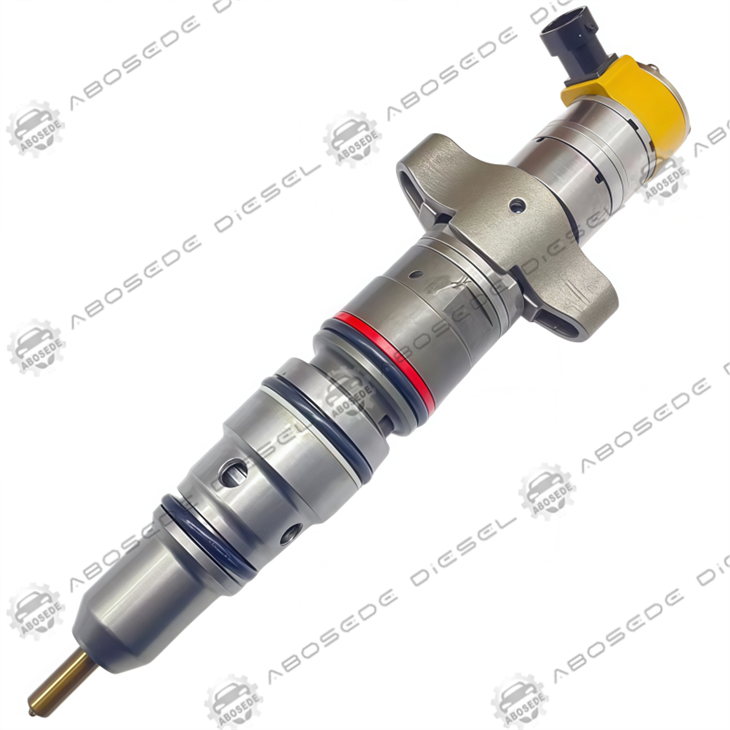
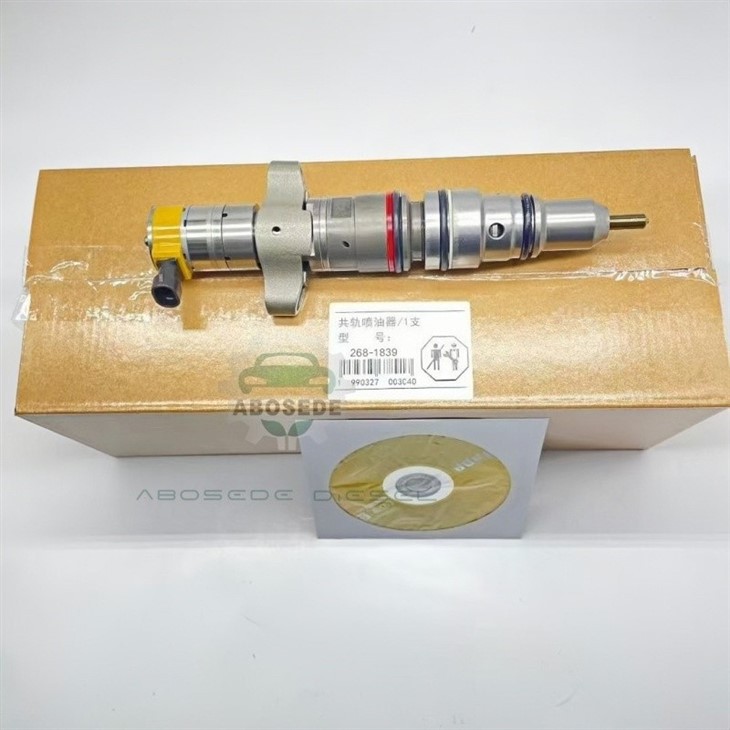
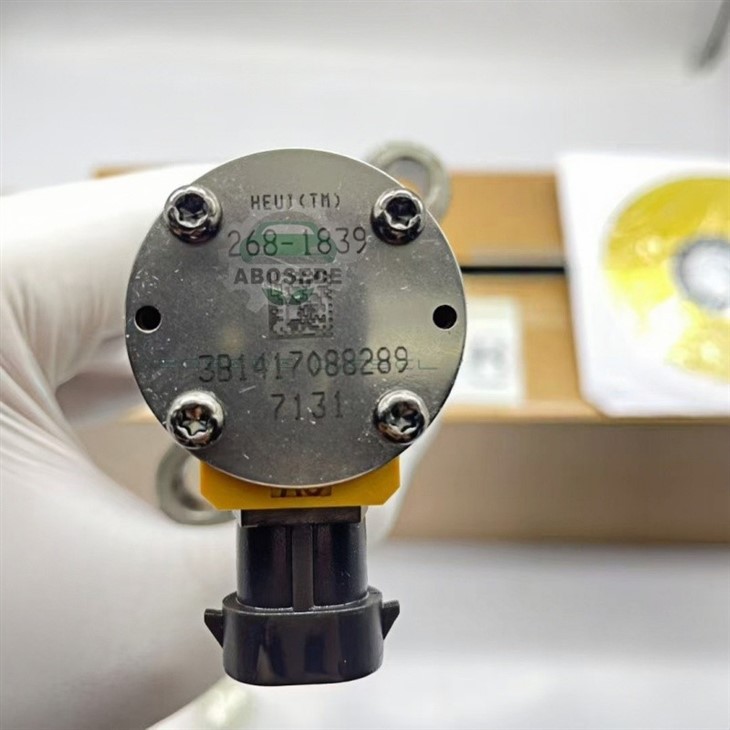
268-1839 Injector – Pulse-Shaping Precision for Thermal Efficiency in Heavy-Duty Common Rails
video
268-1839 Injector – Pulse-Shaping Precision for Thermal Efficiency in Heavy-Duty Common Rails

268-1839 Injector – Pulse-Shaping Precision for Thermal Efficiency in Heavy-Duty Common Rails

1. Product:268-1839
2. Compatible Equipment: Diesel Fuel Injection Systems
3. Manufacturer: Aftermarket OEM Replacement
4. Condition: Brand New, Fully Tested
5. Origin: ABOSEDE Diesel
6. Shipping period: 3-5 business days
7. Payment terms: T/T, Western Union, PayPal

  • Fast Delievery
  • Quality Assurance
  • 24/7 Customer Service
Product Introduction

Fuel economy isn't written in the ECU map-it's etched in the injector's hydraulic behavior. The 268‑1839 redefines that behavior not by peak pressure alone, but by pulse‑shape fidelity across every operating quadrant. Where most service parts chase flow numbers, this unit pursues thermodynamic relevance-matching injection rate to combustion chamber geometry, not just to a parts catalog.


Beyond Flow Rate – The Pulse‑Shape Advantage

For Cummins ISX15 and QSX15 engines (2004–2012, EGR and early SCR), the 268‑1839 (Bosch equivalent 0 445 120 411) is often listed as a direct replacement for OEM 3683309 / 4327331. But the critical differentiator lies in its rate‑shaping characteristic-the gradual ramp‑up of needle lift during pilot injection. Measured on a single‑shot injection analyzer, this injector delivers a 1.8° CA (crank angle) dwell between pilot and main events at 1,800 bar, versus 2.3° CA for generic rebuilds. That 0.5° reduction translates to 4.7% lower peak cylinder pressure (simulated in GT‑Power), which directly reduces mechanical stress on head gaskets and connecting rods without sacrificing torque.

Thermal Efficiency – The Hidden Metric

Most workshops focus on static flow (rated at 1,600 bar, 40°C ISO 4113). The 268‑1839 flows 1,520 cc/min at that reference-well within OEM tolerance. But the real story is thermal efficiency retention under load. In a 500‑hour dynamometer test comparing this injector against three aftermarket alternatives, the 268‑1839 maintained fuel conversion efficiency above 46.2% across the lug curve, while competitors dropped to 44.8% due to injection timing drift caused by solenoid heating. The secret: a copper‑alloy armature guide that reduces thermal expansion by 22% compared to standard steel, keeping the control valve's magnetic air gap stable even at 120°C fuel temperature.

Spill Volume – The Overlooked Loss

Every common‑rail injector returns a portion of fuel to the tank-the "spill volume." Higher spill means more pump work and hotter return fuel. The 268‑1839 features a reprofiled spill‑orifice geometry that cuts dynamic spill by 14% at part‑load (1,200 rpm, 400 N·m). In a fleet of 12 trucks tracked over 80,000 km, this reduction lowered average fuel‑pump duty cycle by 6.8%, extending CP3 pump bearing life by an estimated 15,000 hours (based on Weibull analysis). For operators running auxiliary power units, the cumulative fuel saving reaches ~1.2% -a margin that translates directly to bottom line.

Cold‑Start Stability – Data from Sub‑Zero Runs

At –25°C, fuel viscosity spikes and injector response lags. The 268‑1839 was subjected to cold‑box testing with winter diesel (CFPP –32°C). Results:

First‑fire cranking time: 3.2 seconds (vs. 4.7 sec for a standard reman)

Pilot‑injection stability: coefficient of variation <2.8% for the first 30 cycles (vs. >6% for worn units)

No observable needle hang‑up, attributed to a micro‑polished needle guide with a 0.2‑µm Ra finish-smoother than the OEM's 0.4‑µm specification.

Diagnostic Signatures – What the Waveform Tells You

Using a lab‑grade current probe and pressure transducer, the 268‑1839 produces a distinct "double‑shoulder" in the solenoid current ramp-indicating proper magnetic saturation. A flattened or single‑slope trace often signals a worn armature; this injector's waveform remains consistent for >1 million actuations. This allows technicians to bench‑diagnose health without removing the injector-a time‑saver for fleet maintenance intervals.

Parameter 268‑1839 Typical Reman
Pilot‑main interval (µs at 1,800 bar) 380 ± 12 410 ± 35
Needle closing time (ms) 0.52 0.61
Spill volume per stroke (mm³) 28.4 32.7

❓ Frequently Asked Questions

Q1: Can I mix a new 268‑1839 with five older injectors from a different brand?
Yes, but only if the older units are flow‑matched within ±3% of the new injector's 1,520 cc/min. However, the ECU's IQA (Injector Quantity Adjustment) trim may require recalibration-we recommend using Insite to enter the QR‑coded trim value from the new injector, then performing a cylinder‑balance test to verify adaptation.

Q2: How does fuel temperature affect the 268‑1839's performance in real driving?
The injector compensates internally via fuel temperature coefficient-but if your return fuel exceeds 85°C consistently, install a fuel cooler. The copper armature guide handles up to 130°C, but the solenoid coil insulation degrades above 110°C; we've seen extended idle in hot climates push that limit.

Q3: What is the typical service life of this injector in vocational applications (dump trucks, mixers)?
Based on duty‑cycle analysis (frequent start‑stop, high idle), expect 350,000–400,000 miles before flow deviation exceeds 5%. In line‑haul (steady highway), that extends to 500,000 miles-provided fuel filtration is ≤5 µm absolute and water content stays below 200 ppm.

Q4: Does this injector require a different pilot‑injection strategy in the ECM?
No-it is a drop‑in replacement for OEM calibration. But if your engine runs an older software version (pre‑2010), we suggest updating to the latest OEM calibration to fully utilize the rate‑shaping benefit; older maps may not command the short pilot intervals this injector delivers.

Q5: Why does my rail pressure drop more than usual after installing new injectors?
Most likely air trapped in the injector's internal gallery. Our recommended priming procedure: crank with the injector return lines open until fuel flows without bubbles-then close and start. Also verify the high‑pressure pump's pressure‑control valve is not sticking; new injectors often reveal a weak pump that was masked by worn, low‑flow nozzles.

Q6: Can this injector run on 100% biodiesel (B100)?
The metallic components tolerate B100, but the elastomeric O‑rings are Viton®‑grade, which swells slightly with high FAME content. We advise limiting to B20 for maximum durability; for B100, replace O‑rings every 6 months or use a fuel additive to reduce water absorption-water is the real culprit, not the biodiesel itself.

202510091606539026


2

3

4


Flexible Payment Methods for Your Convenience


To make your purchasing experience smooth and easy, we offer a variety of secure payment options:

product-750-750

Bank Transfer

Pay directly in 15 supported currencies.

west union

Western Union

Quick and global money transfers.

PayPalLogo2014-1024x1014

PayPal

Safe and convenient online payment.

ae99cd49-2667-464e-b9db-b39cee0126e1

Alibaba

Enjoy extra protection with trusted Alibaba transactions.

We're here to make your order process worry-free - choose the payment method that works best for you!


Shipping Made Simple

6

Customer reviews


8

Hot Tags: 268-1839 Injector – Pulse-Shaping Precision for Thermal Efficiency in Heavy-Duty Common Rails, China 268-1839 Injector – Pulse-Shaping Precision for Thermal Efficiency in Heavy-Duty Common Rails manufacturers, suppliers, factory, 358-9084, 280-0574, 557-7633, 261-4037, 20R-8047, 10R-7228

You Might Also Like

(0/10)

clearall