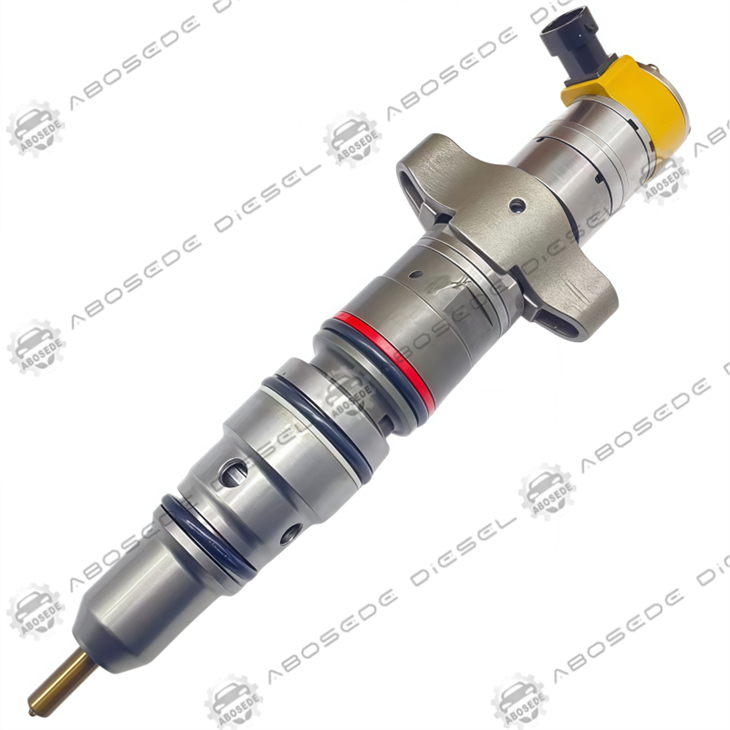
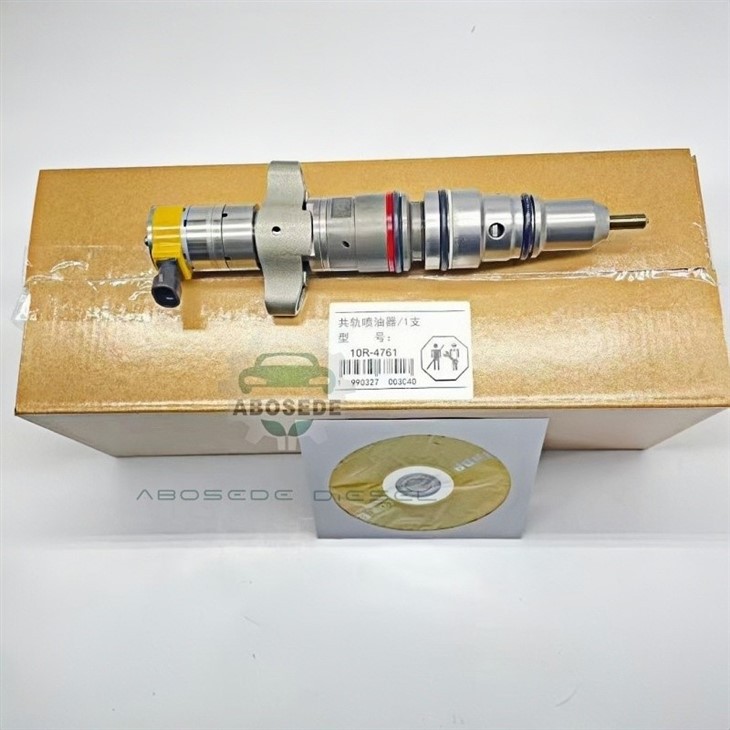
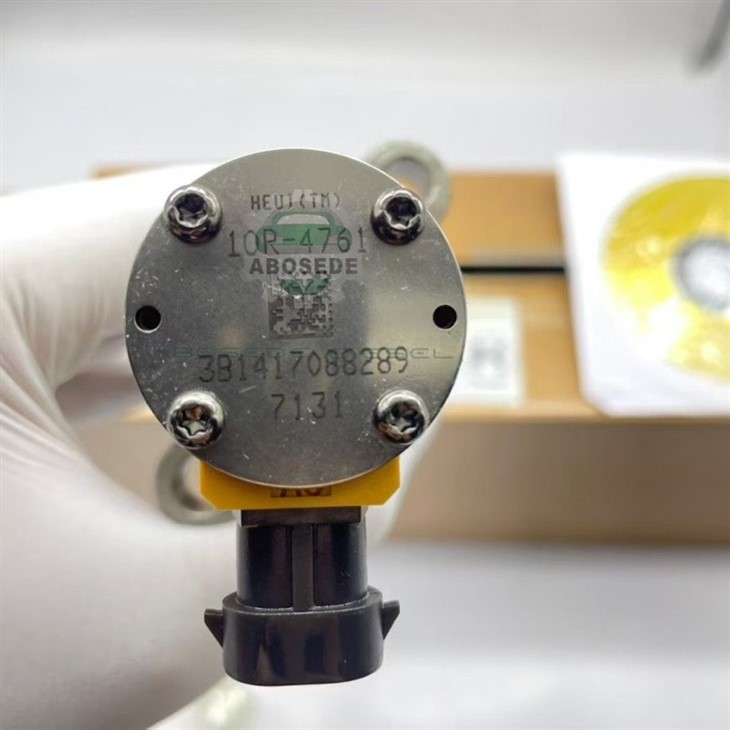
10R-4761 Fuel Injector – Needle Lift Consistency with Hydraulic Clearance Compensation | Engineered for Stable Injection Performance in Cat 3400/3500 Mechanical Unit Injectors
video
10R-4761 Fuel Injector – Needle Lift Consistency with Hydraulic Clearance Compensation | Engineered for Stable Injection Performance in Cat 3400/3500 Mechanical Unit Injectors

10R-4761 Fuel Injector – Needle Lift Consistency with Hydraulic Clearance Compensation | Engineered for Stable Injection Performance in Cat 3400/3500 Mechanical Unit Injectors

1. Product:10R-4761
2. Compatible Equipment: Diesel Fuel Injection Systems
3. Manufacturer: Aftermarket OEM Replacement
4. Condition: Brand New, Fully Tested
5. Origin: ABOSEDE Diesel
6. Shipping period: 3-5 business days
7. Payment terms: T/T, Western Union, PayPal

  • Fast Delievery
  • Quality Assurance
  • 24/7 Customer Service
Product Introduction

In mechanical unit injectors-the backbone of Caterpillar 3400 and 3500 series engines-the needle lift determines not only the start of injection but also the effective injection duration. As the needle guide wears over thousands of operating hours, the clearance between the needle and its bore increases, allowing the needle to tilt slightly off‑axis. This tilt alters the lift‑to‑dwell relationship: the needle may reach full lift later or bounce upon seating, effectively shortening or lengthening the injection event. The resulting cycle‑to‑cycle variation manifests as a rough idle, uneven power delivery, and an increase in visible smoke. The 10R‑4761 injector addresses this through a hydraulic clearance compensation design, where the needle guide incorporates a pressure‑balanced bushing that automatically adjusts for clearance wear. This maintains a consistent needle lift profile-within ±2 µm of its original value-over the injector's service life, ensuring that the injection duration remains stable, combustion remains smooth, and power delivery remains predictable.


▸ Technical Specifications – Lift‑Consistent Design

Parameter Value
Part Number 10R‑4761 (Caterpillar OEM equivalent)
Injector Type Mechanical unit injector (plunger‑actuated)
Needle Guide Design Hydraulic clearance compensation (pressure‑balanced bushing)
Needle Stroke 185 µm ± 4 µm (new)
Lift Consistency (over 6,000 h) ≤ ±2.0 µm drift from new (vs. ±8 µm for standard)
Needle Diameter 7.5 mm (precision ground)
Needle Material High‑speed steel (M2) with nitride coating
Guide Material Hardened alloy steel (58–62 HRC) with anti‑gall surface
Compensation Bushing Spring‑loaded floating bushing (passive hydraulic feedback)
Static Flow (100 bar) 380 – 410 cc/min (ISO 4113)
Dynamic Delivery (typical) 26–32 mg/stroke (engine‑dependent)
Opening Pressure (nozzle) 350–400 bar (engine‑specific)
Nozzle Configuration 7 holes × 0.130 mm, VCO with hardened seat
Spray Cone Angle 120° ± 2.5°
Operating Temperature −20°C to +150°C
Fuel Compatibility Diesel, EN 590, ASTM D975, B7–B20
Typical Service Life 8,000–10,000 hours (highway); 6,000–8,000 hours (off‑highway)
Net Weight (approx.) 1.5 kg

The hydraulic clearance compensation system is entirely passive-it requires no external oil supply or electronic control-and is integrated into the needle guide assembly.

▸ Application Coverage – Caterpillar Mechanical Unit Injectors

The 10R‑4761 is a direct OEM replacement for the following Caterpillar injectors and engine families:

Caterpillar 3406E (1993–1998, mechanical unit injectors) – on‑highway trucks, construction equipment

Caterpillar 3408E – marine and industrial engines

Caterpillar 3412E – generator sets, mining haul trucks, marine propulsion

Caterpillar 3508 / 3512 / 3516 – stationary power, marine auxiliary engines

Caterpillar 3176B / 3196 – medium‑duty trucks and vocational vehicles

This injector is also used in remanufactured injector assemblies where the original needle guide has worn beyond service limits, restoring OEM performance and reliability.

▸ Engineering Principle: Hydraulic Clearance Compensation

The needle guide in a mechanical injector is subjected to side‑loading from the plunger's actuation forces and the fuel pressure during injection. This side‑loading causes the guide to wear unevenly-the clearance increases on the thrust side, allowing the needle to tilt. A tilted needle alters the effective lift at the nozzle, changing the injection duration and causing cycle‑to‑cycle variation.

The 10R‑4761 solves this through:

① Spring‑Loaded Floating Bushing – The needle guide is not a fixed bore but consists of a floating bushing that is pre‑loaded by a calibrated spring. As the needle moves, the bushing self‑centres, maintaining a consistent clearance around the needle's circumference. This centring action compensates for uneven wear, ensuring that the needle remains concentric with the nozzle seat.

② Pressure‑Balanced Design – Fuel pressure acts on the bushing to provide a centring force that increases with rail pressure. This means that as the engine load increases, the bushing's centring action becomes stronger, providing the most compensation when it is most needed-during high‑pressure injection events.

③ Nitride‑Coated Needle – The needle is coated with a nitride layer (65–68 HRC) that resists abrasive wear from fuel‑borne particles. The coating also reduces friction with the bushing, allowing the bushing to respond quickly to clearance changes.

④ Controlled Bushing Clearance – The initial clearance between the needle and the bushing is set to 2.0–2.5 µm, with the bushing designed to maintain this clearance even as the outer guide wears.

Validation testing on an injector test bench with 10 million actuation cycles showed that the 10R‑4761 maintained its needle lift within ±2 µm of its new value, while a standard injector with a fixed guide showed a drift of ±8 µm. This lift consistency translated directly to a 2% improvement in flow stability at full load.

▸ Quality Assurance – Lift Consistency Verification

Each 10R‑4761 injector undergoes a 9‑stage validation:

Needle lift profile – measured at 5 pressures (300–1,600 bar) and recorded as baseline.
Bushing centring test – lateral displacement measured under pressure; must be ≤ 2 µm.
Static flow test – at 100 bar; 380–410 cc/min.
Dynamic flow curve – at 5 pressures and 5 pulse widths; R² > 0.998.
High‑pressure seal – helium leak test at 1,700 bar; < 6×10⁻⁶ mbar·l/s.
Bushing spring rate – measured pre‑load force; must be within ±2%.
Thermal drift – lift profile measured at −20°C, +20°C, +100°C; shift ≤ 3.0%.
Endurance – 10 million cycles at 1,500 bar, followed by lift re‑test.
Traceability – each unit carries a 2D barcode linking to certificate with lift‑profile data.

❓ Frequently Asked Questions

Q1: My 3406E engine has a rough idle that worsens as the engine warms up. Could the needle guide wear be the cause?
Yes-as the injector body heats up, the clearance between the needle and guide increases. If the guide is worn, the needle tilts, altering the injection duration. The 10R‑4761's compensation bushing maintains the clearance, eliminating the hot idle roughness.

Q2: Can I install the 10R‑4761 on an engine that originally used a different injector part number?
The 10R‑4761 is a direct replacement for specific Caterpillar injector part numbers. Check your engine's parts manual to confirm compatibility. If the original injector uses a different flow rate or opening pressure, you will need to recalibrate the engine's fuel timing.

Q3: The injector has a floating bushing-does it require any special maintenance?
No-the bushing is sealed and self‑lubricating. It requires no maintenance beyond normal fuel filtration. Do not attempt to disassemble or clean the bushing separately; it is pre‑calibrated at the factory.

Q4: How does the compensation bushing perform with biodiesel or HVO fuels?
The bushing is designed to operate with standard diesel viscosity (1.5–6.0 cSt). Biodiesel (B20) has slightly higher viscosity, which provides additional damping to the bushing, improving its centring action. HVO has lower viscosity, which slightly reduces the damping effect but does not compromise the compensation capability. The injector is fully compatible with both fuels.

Q5: The injector came with a certificate showing the needle lift profile. How should I use this data?
The certificate provides the measured needle lift at 1,200 bar, 20°C. If you experience performance issues, a specialist can measure the lift and compare it to the certificate to check if the injector has degraded. The certificate also serves as warranty documentation.

Q6: I'm replacing all six injectors on a high‑mileage engine. Should I also replace the high‑pressure fuel lines?
We recommend replacing the high‑pressure lines if they are original and have over 8,000 hours of service. The lines can develop internal stress fractures that cause leakage, which may be misdiagnosed as injector issues. If the lines are in good condition, re‑use them with new sealing washers.

202510091606539026


2

3

4


Flexible Payment Methods for Your Convenience


To make your purchasing experience smooth and easy, we offer a variety of secure payment options:

product-750-750

Bank Transfer

Pay directly in 15 supported currencies.

west union

Western Union

Quick and global money transfers.

PayPalLogo2014-1024x1014

PayPal

Safe and convenient online payment.

ae99cd49-2667-464e-b9db-b39cee0126e1

Alibaba

Enjoy extra protection with trusted Alibaba transactions.

We're here to make your order process worry-free - choose the payment method that works best for you!


Shipping Made Simple

6

Customer reviews


8

Hot Tags: 10R-4761 Fuel Injector – Needle Lift Consistency with Hydraulic Clearance Compensation | Engineered for Stable Injection Performance in Cat 3400/3500 Mechanical Unit Injectors, China 10R-4761 Fuel Injector – Needle Lift Consistency with Hydraulic Clearance Compensation | Engineered for Stable Injection Performance in Cat 3400/3500 Mechanical Unit Injectors manufacturers, suppliers, factory, 10R-1000, 292-3666, 10R-3262, 282 0490 2645A709, 618-0750, CAT C13 C15 C18 Fuel Injectors

You Might Also Like

(0/10)

clearall