


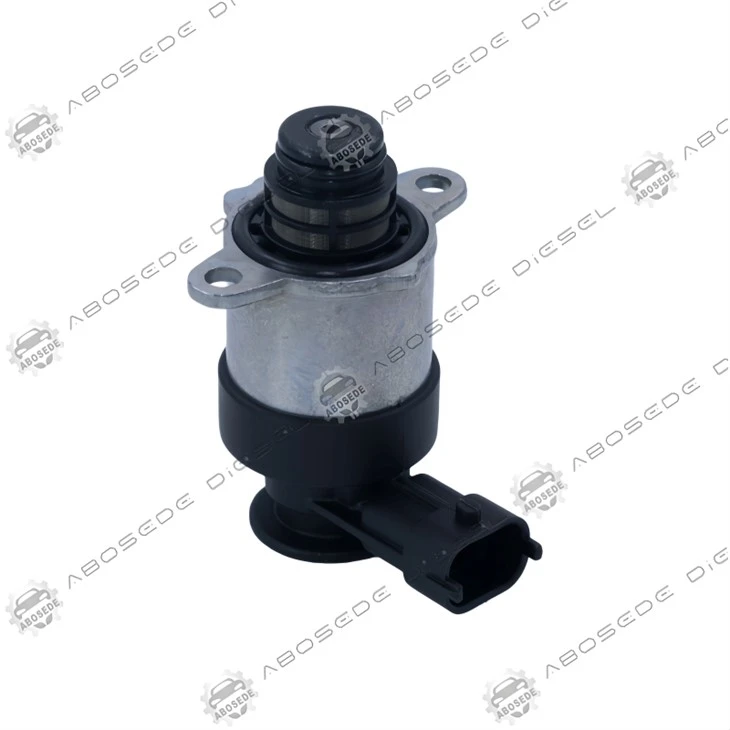

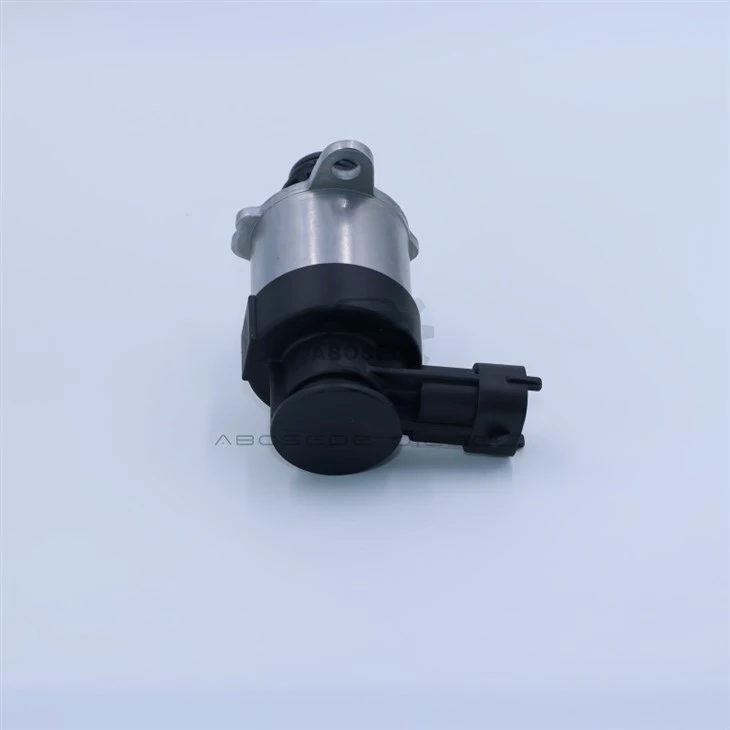
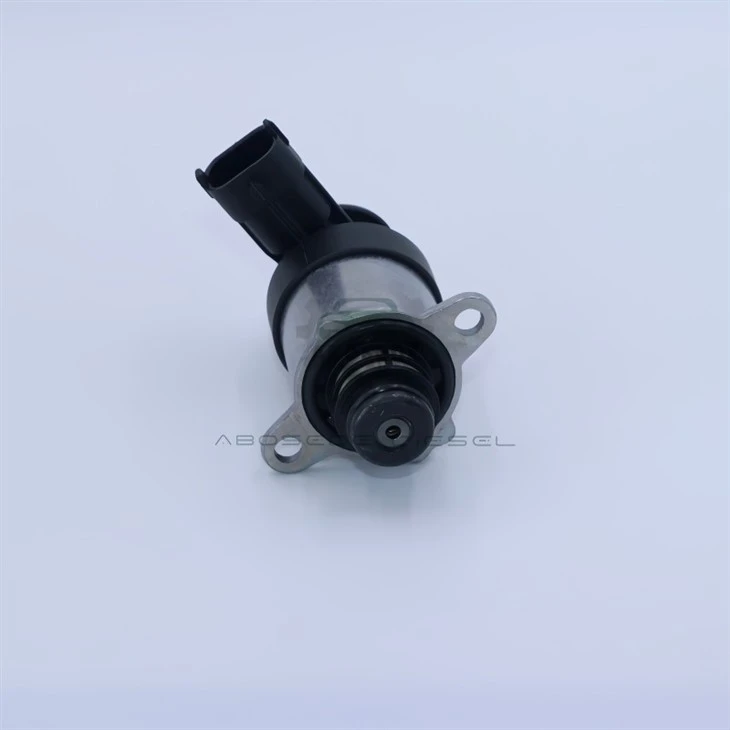
0928400769 Bosch Fuel Metering Valve – PWM Frequency Stability & Spool Resonance Avoidance For CP3/CP1H Pumps On Heavy-Duty Diesel Engines
1. Product:0928400769
2. Compatible Equipment: Diesel Fuel Injection Systems
3. Manufacturer: Aftermarket OEM Replacement
4. Condition: Brand New, Fully Tested
5. Origin: ABOSEDE Diesel
6. Shipping period: 3-5 business days
7. Payment terms: T/T, Western Union, PayPal
- Fast Delievery
- Quality Assurance
- 24/7 Customer Service
Product Introduction
The 0928400769 is a Bosch inlet metering valve for CP3 and CP1H high-pressure common rail pumps. Inside every metering valve, the spool is moved by a magnetic force that pulses on and off at the PWM frequency - typically between 200 and 500 hertz. The spool and its return spring form a mechanical system with its own natural frequency. If that natural frequency happens to align with the PWM pulsing, the spool can begin to vibrate in resonance. The vibration may be small - a few microns - but it is enough to disrupt the precise metering of fuel. Rail pressure becomes unstable, and the engine computer detects errors it cannot correct smoothly. The 0928400769 is designed with a return spring whose natural frequency is set well above the operating PWM range, and with an internal hydraulic damping chamber that suppresses any tendency to oscillate. This ensures the spool follows the commanded duty cycle without adding its own vibration, keeping fuel flow steady and the engine running smoothly. This valve fits heavy-duty diesel engines using Bosch CP3 or CP1H high-pressure pumps.
Mechanical Resonance in a Pulsed System
The spool inside a metering valve is not rigidly locked in place. It is suspended between the magnetic force of the solenoid and the mechanical force of the return spring. Because the PWM signal switches current on and off hundreds of times per second, the magnetic force pulses at the same frequency. The spool, with its mass and the spring stiffness, has a natural resonant frequency - the frequency at which it would naturally vibrate if tapped. If the PWM frequency approaches this natural frequency, each small force pulse adds energy to the spool's motion. Instead of holding a steady position, the spool begins to oscillate around its commanded position. The amplitude of this oscillation may be only a few microns, but the metering slots are only microns wide. A small oscillation can change the effective flow area enough to cause a measurable fluctuation in rail pressure. The engine computer then tries to correct this fluctuation by adjusting the duty cycle, but because the oscillation is mechanical, the computer's corrections often arrive out of phase and can even amplify the problem.
Frequency Separation for Clean Operation
The 0928400769 avoids resonance by ensuring the spool's natural frequency is well above the highest PWM frequency used by the engine computer. The return spring is manufactured from chrome-silicon wire with a specific coil count, wire diameter, and heat treatment that produce a natural frequency above 800 hertz - safely higher than the typical 200–500 hertz PWM range. This frequency separation means the PWM pulses cannot excite the spool into resonant vibration. The spool responds only to the average current, which is what the engine computer intends to control. In addition, the valve body contains a small hydraulic damping chamber filled with fuel. This chamber acts as a shock absorber: any tendency of the spool to vibrate is resisted by the need to push fuel through a narrow damping orifice. This dissipates vibrational energy and keeps the spool moving smoothly and quietly. The combination of frequency separation and hydraulic damping ensures that the valve's spool position accurately reflects the engine computer's command at all engine speeds and PWM frequencies.
Symptoms of Resonance in a Worn or Non-Optimized Valve
A metering valve that is not designed with resonance avoidance can produce symptoms that are difficult to diagnose. The most common is a subtle but persistent rail pressure oscillation at a specific engine speed or duty cycle. Because the PWM frequency may vary slightly with engine RPM or the computer's control strategy, the resonance may appear only in a narrow RPM band. A driver might report a light vibration or surge at a particular highway speed that disappears above or below that speed. A technician may see a rail pressure trace on the scan tool that shows regular, small waves at a fixed frequency, even when the engine is running at steady state. Replacing the valve with a resonance-free design like the 0928400769 eliminates the oscillation. The rail pressure trace flattens, and the surge disappears.
Frequently Asked Questions
Q1: My truck has a vibration that I can only feel at about 1,500 RPM in top gear. The engine runs perfectly above and below that speed. Could the metering valve cause this?
Yes. This is a classic pattern of mechanical resonance in the fuel system. If the PWM frequency at that engine speed happens to align with the spool's natural frequency, it can cause a small but noticeable vibration. The 0928400769 is designed with its natural frequency well above the PWM range to prevent this.
Q2: Can a resonance problem damage the fuel system over time?
The oscillation itself is small and usually does not cause immediate damage, but the continuous vibration can accelerate wear on the spool and bore surfaces. Eliminating the resonance helps the valve maintain its calibration longer.
Q3: How can I tell resonance from an injector or pump problem?
Resonance is speed-specific and produces a regular, rhythmic rail pressure oscillation. Injector problems usually affect one cylinder and show up in cylinder balance tests. Pump problems usually produce pressure ripples at three times pump speed regardless of engine RPM. If the symptom is confined to a narrow speed band, resonance is a strong possibility.
Q4: Does the 0928400769 need a specific PWM frequency setting from the ECU?
No. The valve's frequency separation is a mechanical characteristic. It works with the standard PWM frequency used by the Bosch CP3 and CP1H engine management system without any adjustment.
Q5: Will this valve make the fuel system quieter?
It can reduce or eliminate a high-frequency hum or buzz that sometimes accompanies spool resonance. The hydraulic damping also reduces the sharp pressure pulses that can travel through the fuel lines as noise.
Q6: Is the 0928400769 compatible with all Bosch CP3 and CP1H pumps?
It is mechanically and electrically compatible with pumps that specify this part number. Always verify fitment using the engine serial number.


Flexible Payment Methods for Your Convenience
To make your purchasing experience smooth and easy, we offer a variety of secure payment options:

Bank Transfer
Supports multiple currenciesand bank payment methods.

Western Union
Quick and global money transfers.

PayPal
Safe and convenient online payment.

Alibaba
Enjoy extra protection with trusted Alibaba transactions.
We're here to make your order process worry-free - choose the payment method that works best for you!
Shipping Made Simple

Customer reviews

Hot Tags: 0928400769 bosch fuel metering valve – pwm frequency stability & spool resonance avoidance for cp3/cp1h pumps on heavy-duty diesel engines, China 0928400769 bosch fuel metering valve – pwm frequency stability & spool resonance avoidance for cp3/cp1h pumps on heavy-duty diesel engines manufacturers, suppliers, factory, 0445120067, bosch valve, Bosch Volvo Deutz Renault, Diesel Control Valve, F00RJ01479, Fuel Injector Valve
You Might Also Like
-

0928400789 Bosch Fuel Metering Valve – Consistent Fu...
-

0928400487 Bosch Inlet Metering Valve – Hot Soak Vap...
-

0928400607 Bosch Inlet Metering Valve – Fuel Aeratio...
-

0928400802 Bosch Inlet Metering Valve – Injection Pr...
-

Fuel Rail Pressure Sensor 45PP3-5 (aka 45PP35 / R45P...
-

Bosch 0445224047 — Common-Rail Fuel Distributor Pipe...
