


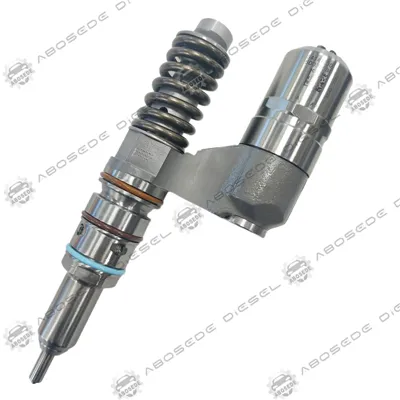
Precision Fuel Injector 0445110262 – Optimized Hydraulic Calibration For Medium-Duty Common Rail Powerplants
1. Product:0445110262
2. Compatible Equipment: Diesel Fuel Injection Systems
3. Manufacturer: Aftermarket OEM Replacement
4. Condition: Brand New, Fully Tested
5. Origin: ABOSEDE Diesel
6. Shipping period: 3-5 business days
7. Payment terms: T/T, Western Union, PayPal
- Fast Delievery
- Quality Assurance
- 24/7 Customer Service
Product Introduction
Every combustion cycle in a Cummins ISBe, QSB, or 6BT diesel engine hinges on the microsecond‑level hydraulic response of a single component: the injector 0445110262. This Bosch‑origin unit is not a passive fuel conduit; it houses a servo‑hydraulic amplifier that translates solenoid current into needle lift, orchestrating the split‑second release of fuel at pressures up to 1,800 bar. Its internal geometry directly dictates the rate of injection, which in turn governs ignition delay, peak cylinder pressure, and particulate matter formation. Unlike generic replacement parts that only match external dimensions, the 0445110262 must preserve a specific flow‑force balance to maintain the engine's original combustion phasing, especially under transient load conditions where rail pressure fluctuates by ±200 bar within milliseconds. The injector's true value emerges when its hydraulic circuit remains stable across fuel temperatures ranging from –10°C to 110°C, a non‑negotiable requirement for construction and agricultural machinery operating in extreme ambient environments.
1. Hydraulic Flow Matching and IQA Code Significance
Each 0445110262 injector carries a laser‑etched IQA (Injector Quantity Adjustment) code, typically a seven‑character alphanumeric string, which encodes the individual flow deviation from the master calibration curve. This code is not a production artifact-it is the ECU's reference point for applying individual trim corrections to equalise cylinder‑to‑cylinder output. When replacing this injector, the new unit must be selected with an IQA value that falls within ±3 % of the original to avoid excessive fuel adaptation range exhaustion. Bench flow testing at 100 bar differential pressure yields a nominal static flow rate of 98–102 mm³/stroke, with the internal control piston clearance maintained at 4‑6 micrometres to limit internal leakage. More critically, the return fuel volume-measured at 1,200 bar-should remain below 12 ml/min; any reading above 18 ml/min indicates significant wear in the guiding plunger pair, which the N14 control valve (used in earlier generations) cannot compensate for, as the wear is now located in the injector body itself.
2. Nozzle Hole Configuration and Spray Penetration Dynamics
The 0445110262 employs a five‑hole nozzle with a nominal orifice diameter of 0.165 mm and a spray cone angle of 150° ± 1°. This geometry is optimised for the re‑entrant piston bowl design found in Euro III to Euro V Cummins engines, ensuring that the fuel plume reaches the squish region without wetting the cylinder liner. Spray penetration length, measured at 1,600 bar, stabilises at 42‑45 mm within 0.6 ms after the start of energisation-a parameter that heavily influences the air‑fuel mixing rate. Deviations in hole diameter as small as 3 micrometres shift the penetration curve by roughly 8 %, leading to incomplete combustion and increased soot loading on the EGR cooler. The injector also incorporates a sac‑volume reduction feature (down to 0.3 mm³), which minimises post‑injection dribble and unburned hydrocarbon emissions-a critical advantage for engines required to meet non‑road mobile machinery (NRMM) emission limits without after‑treatment retrofits.
3. Diagnosing Performance Drift – Leakage, Return Flow, and Pilot Deviation
Service records indicate that three primary failure modes affect the 0445110262 after 6,000‑8,000 operating hours. The first is control‑chamber leakage caused by ball‑seat erosion, which manifests as a gradual increase in back‑leak from 8 ml/min to over 20 ml/min at idle, directly lengthening the energising time required to achieve the same pilot quantity. The second is needle guide wear, which introduces asymmetrical lift and results in a shot‑to‑shot variation exceeding ±4 % during pilot injections-a condition detectable through the ECU's smooth‑running control values, which will drift beyond the ±1.5 mg/stroke threshold. The third involves solenoid armature residual magnetism, which delays the closing event by 0.05‑0.08 ms, causing an unwanted post‑injection effect. For workshop diagnostics, measuring the return‑fuel temperature difference between the injector inlet and outlet provides a quick screening indicator: a temperature rise exceeding 8°C across the injector body suggests excessive internal friction or hydraulic restriction, warranting immediate disassembly.
4. Replacement Workflow – Torque, Sealing, and High‑Pressure Integrity
Proper installation of the 0445110262 demands meticulous attention to the high‑pressure connection interface. The clamping nut must be tightened to a torque of 40 N·m followed by an additional 90° angle‑tightening stage, ensuring that the conical seat (angle 60°) deforms elastically to form a metal‑to‑metal seal capable of withstanding 2,000 bar impulse pressures. The high‑pressure fuel return pipe-often overlooked-requires a new copper sealing washer with a hardness grade of HV 80‑100; reusing the old washer introduces micro‑leaks that reduce the common rail pressure by 50‑80 bar under full load. Before final installation, the injector bore in the cylinder head must be cleaned of carbon deposits using a specialised reamer, as residual soot layers can misalign the nozzle tip, altering the spray trajectory by up to 2° off‑axis. After installation, a minimum of five running‑in cycles (each comprising idle, partial load, and full load) are recommended to allow the ECU's adaptive fuel trim to settle within its normal correction bandwidth.
❓ Frequently Asked Questions
Q1: How can I tell if my 0445110262 injector has a nozzle flow deviation without using a test bench?
A: While a test bench is the definitive method, you can monitor the ECU's cylinder balance correction values via diagnostic software (e.g., INCA or Jaltest). If one cylinder shows a correction consistently above +3.5 mg/stroke while others are near zero, that injector likely has a reduced flow coefficient. Additionally, a distinctive sharp knocking sound at light load-caused by uneven pilot injection-often precedes measurable flow deviation.
Q2: After replacing the 0445110262, the engine produces white smoke during cold starts. Is the injector defective?
A: White smoke typically indicates retarded injection timing or poor atomisation. However, with a new injector, the most common cause is air trapped in the high‑pressure line. Loosen the delivery pipe union and crank the engine for 10 seconds to purge the air. If the smoke persists, verify that the IQA code entered into the ECU matches the new injector's trim value-a mismatch forces the ECU to operate in a default backup map.
Q3: Can this injector be used in performance‑tuned engines with rail pressures exceeding 2,000 bar?
A: The 0445110262 is validated for a maximum static rail pressure of 1,850 bar. Sustained operation above 1,900 bar accelerates nozzle hole erosion by a factor of 2.5 and risks hydraulic locking of the control plunger. For tuned applications, we recommend stepping up to the 0445110xxx series designed specifically for 2,200 bar systems.
Q4: Does fuel lubricity significantly affect the service life of this injector?
A: Absolutely. The injector relies on fuel boundary lubrication for its plunger and ball‑valve assembly. Fuels with a wear scar diameter (WS 1.4) above 460 µm, per ISO 12156‑1, reduce plunger pair life by up to 40 %. Using a high‑quality cetane improver or lubricity additive (e.g., 250 ppm of fatty acid ester) is strongly advised for regions with ultra‑low sulphur diesel.
Q5: Is it mandatory to replace all six injectors simultaneously on a 6‑cylinder engine?
A: Not mandatory, but highly recommended if the engine has exceeded 5,000 hours. Mismatched flow rates across cylinders force the ECU to apply large trim corrections, which can saturate the fuel adaptation limits and trigger a diagnostic trouble code (typically P0200‑P0206). If replacing only one, select an injector with an IQA code within 1.0 mg/stroke of the average of the remaining five.
Q6: What is the recommended shelf‑life protocol for a spare 0445110262 injector?
A: The injector is factory‑filled with a preservation fluid and sealed in a vapor‑proof bag. Once opened, if not installed within 6 months, the internal moving parts may develop superficial corrosion due to atmospheric humidity. We recommend storing unopened units at 15‑25°C with relative humidity below 60 %. Before installing a stored injector, submerge its nozzle tip in clean diesel for 2 hours to re‑lubricate the needle guide.


Flexible Payment Methods for Your Convenience
To make your purchasing experience smooth and easy, we offer a variety of secure payment options:

Bank Transfer
Supports multiple currenciesand bank payment methods.

Western Union
Quick and global money transfers.

PayPal
Safe and convenient online payment.

Alibaba
Enjoy extra protection with trusted Alibaba transactions.
We're here to make your order process worry-free - choose the payment method that works best for you!
Shipping Made Simple

Customer reviews

Hot Tags: precision fuel injector 0445110262 – optimized hydraulic calibration for medium-duty common rail powerplants, China precision fuel injector 0445110262 – optimized hydraulic calibration for medium-duty common rail powerplants manufacturers, suppliers, factory, bosch injector
You Might Also Like
-

0414720363 Unit Injector – Product Page
-
0986441102 Bosch Iveco Exchange: The Fluid Dynamics ...
-

0445110927 Bosch Common Rail Injector: Control Chamb...
-

0445110508 Bosch Common Rail Injector: Body Thermal ...
-

Bosch 0445110857 Common Rail Injector – Advanced Fue...
-

Bosch Common Rail Injector 0445110646 – OE-Level Fue...
