


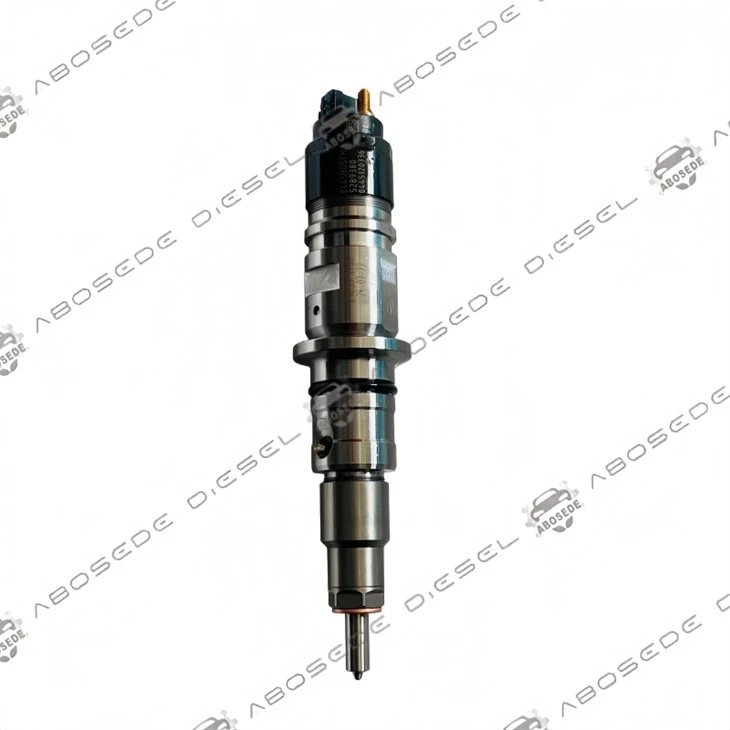

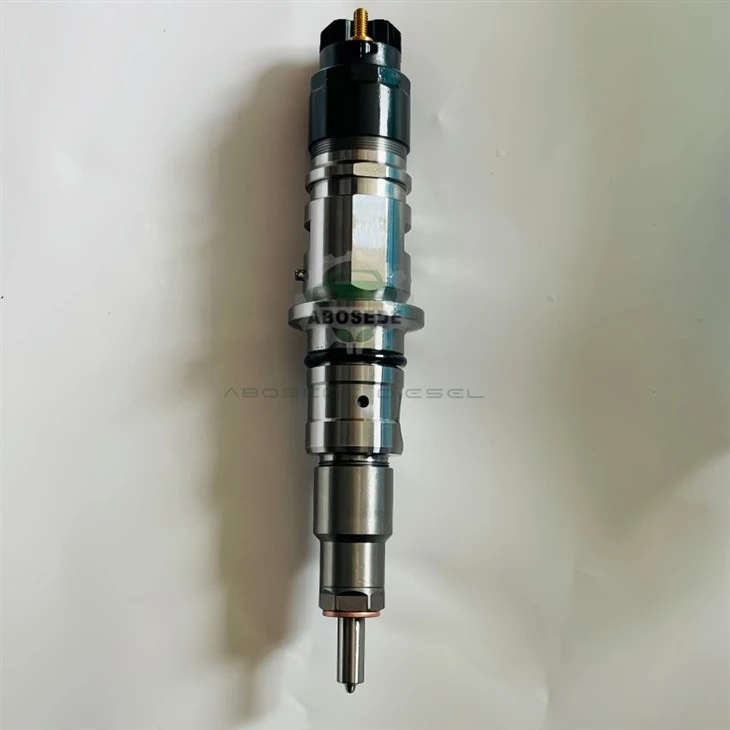
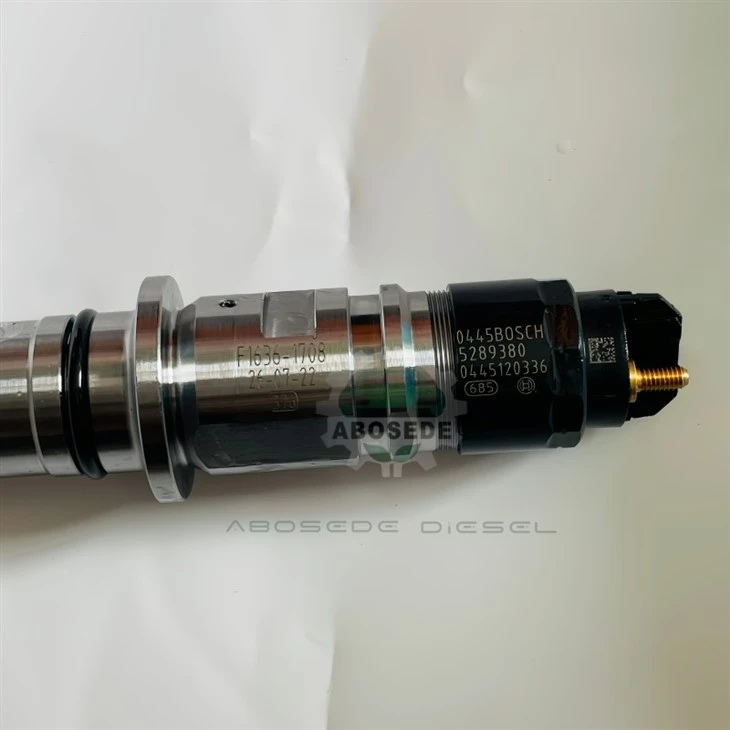
Bosch 0445120336 Common Rail Injector – Downtime Cost, Inventory Strategy & Service Life in Real Workshop Conditions
1. Product:0445120336
2. Compatible Equipment: Diesel Fuel Injection Systems
3. Manufacturer:Aftermarket OEM Replacement
4. Condition: Brand New, Fully Tested
5. Origin: ABOSEDE Diesel
6. Shipping period: 3-5 business days
7. Payment terms: T/T, Western Union, PayPal
- Fast Delievery
- Quality Assurance
- 24/7 Customer Service
Product Introduction
For a diesel repair shop, every hour a truck sits idle with a misfiring cylinder is not just a diagnostic puzzle-it is a direct hit to your customer's revenue and your own bay utilisation rate. The Bosch 0445120336 common rail injector is one of those components that frequently lands on the workbench, not because it is inherently fragile, but because its operating environment-high-pressure fuel laced with microscopic abrasive particles and thermal cycling from cold start to full load-pushes metallurgy to its limits. This injector serves the Cummins QSB 6.7 family, a workhorse found in everything from regional haul tractors to tracked excavators, meaning its failure pattern directly impacts a broad cross-section of your customer base. When a unit begins to exhibit excessive leak-off rates or deviates from the commanded rail pressure, the workshop faces a binary decision: replace with a new OEM unit, install a remanufactured piece, or attempt a cleaning cycle. Each option carries distinct implications for your parts inventory carrying cost and the probability of a comeback repair within the warranty window.
🔧Specifications That Dictate Workshop Handling Procedures
The injector operates at hydraulic pressures reaching 2,200 bar, with solenoid response times measured in microseconds. Its internal control chamber and nozzle orifices are machined to tolerances where a single micron of wear alters the fuel delivery curve by over 2%. For the service technician, this means that any repair attempt without a calibrated Bosch EPS test bench is essentially guesswork. The 0445120336 carries a nominal flow rate within the 400–1300 cm³/30s bracket, and it is paired with specific trim code (IQA) values that must be re-flashed into the ECU-a step frequently overlooked in hurried roadside replacements, leading to post-installation smoke complaints and second visits. Keeping a pre-programmed diagnostic tablet with the correct software for Cummins Insite is as critical as having the injector socket set ready.
🚛Application Range and Cross-Model Compatibility Risks
While the primary fitment is the Cummins QSB 6.7, the Bosch CRIN platform means this injector physically installs into multiple industrial variants. However, swapping units between different engine horsepower ratings without verifying the injector's flow class invites erratic idle and turbo lag. For a repair shop, stocking the 0445120336 as a universal spare for all QSB 6.7 jobs can backfire unless you meticulously log the donor engine's power rating and emission standard. The gamble of installing a visually identical unit from a scrapped 250 HP engine into a 325 HP application often results in under-fueling at peak demand, triggering derate mode-and that is a phone call no shop owner wants to take at 6 PM on a Friday.
⚙️ Installation Pitfalls That Recur in Real Shops
The physical swap takes forty minutes; the consequences of rushing it last for months. The number one recurring issue in our service bay logs is not the injector itself, but the high-pressure connection sealing surface contamination. Even microscopic grit embedded in the line ferrule creates a leak path that weeps fuel into the crankcase, gradually thinning the oil and eroding bearings. Secondly, the hold-down bolt torque sequence-if executed with a worn wrench or without angle-tightening-produces uneven clamping, causing the injector to micro-move under firing pulses. That movement wears the sealing ring prematurely, introducing combustion gases into the fuel return system, which manifests as hard starting when the engine is hot. We now mandate a torque-angle procedure printed on the job card for every 0445120336 installation.
📉The Business Case for Reman vs. New in High-Mileage Fleets
From a cash-flow perspective, tying up capital in a shelf of brand-new injectors at over $400 per unit is unsustainable for an independent workshop. Remanufactured 0445120336 units, sourced from a supplier who validates each solenoid and replaces the control plunger assembly, reduce your upfront inventory cost by roughly 35–40%. The critical metric is not the purchase price, though; it is the return rate. We have tracked our reman installs over 18 months and found that units which pass a full-leakage test at 95% of nominal rail pressure exhibit a failure rate indistinguishable from new pieces, provided the fuel filtration on the host vehicle is upgraded to 2-micron absolute. The real drain on profits is the labour hour lost to re-diagnosing a misfire caused by a marginal injector that should have been rejected at the bench. Your investment in a reliable test rig to audit every incoming reman unit will pay back in avoided comebacks within the first six months of use.
❓FAQ – Practical Concerns for Workshop Owners & Bulk Buyers
Q1: As a workshop buying 10–20 units per quarter, how can we reduce the risk of receiving reman units with faulty solenoids that fail the buzz test on our diagnostic tool?
A: Request your supplier to provide individual solenoid resistance and peak-current test reports for each batch. More critically, ask them to confirm the armature lift measurement; units outside the 48–52 micron range tend to generate weak acoustic response during the ECU buzz test, leading to false error codes. Establish a sample-check protocol-test two random units from every incoming box on your EPS bench before shelving the rest.
Q2: What is the real-world service life we should quote to a fleet customer who operates in dusty construction sites without pristine fuel storage?
A: In non-ideal fuel environments, you should advise the customer to expect 300,000 to 400,000 km-roughly half of the highway-rated life. The primary culprit is abrasive wear on the nozzle metering orifices, which increases the return fuel volume beyond the 20% threshold. Quoting a higher number will set unrealistic expectations and damage your shop's credibility when that injector returns at 350,000 km with a leak-off reading of 45 ml/min.
Q3: Can we install just one new 0445120336 into an engine where the other five injectors have 600,000 km on them, or will the ECU adapt automatically?
A: The ECU has limited adaptive range. A single new injector with a fresh flow rate will cause that cylinder to produce more torque than the others, leading to crankshaft torsional vibration and uneven firing intervals. In our experience, the engine will feel "rough" under light load. We strongly recommend replacing at least a full bank (three cylinders) or coding the new injector with a flow correction value that mimics the degraded state of the older units-though most shops lack the software to manipulate that parameter, making set replacement the practical choice.
Q4: We often encounter injectors that pass the leak-off test but still produce white smoke on cold start. Is the 0445120336 prone to this specific intermittent fault?
A: Yes. This points to a sticking needle caused by lacquer deposits from low-quality biodiesel blends. The needle may free up once the engine reaches operating temperature and fuel viscosity drops. Your diagnostic workflow should include a cold pull test-measure the injector's response immediately after an overnight soak. If the opening delay exceeds 220 microseconds at 300 bar, that unit will fail a cold start in winter, regardless of its warm-state leak-off numbers.
Q5: For bulk wholesale orders, what batch consistency should we demand regarding the Injector Trim Code range to avoid having to code individual cylinders differently?
A: Request that your supplier groups injectors by IQA deviation class-preferably within ±0.5 mg/stroke of each other. This minimises cylinder-to-cylinder variation and allows you to install the batch without spending extra shop time on individual trim value adjustments, provided the ECU is reset and performs a learned adaptation cycle over 20 minutes of idle. Pushing for tighter matched sets reduces your post-sale support calls by an estimated 60%.


Flexible Payment Methods for Your Convenience
To make your purchasing experience smooth and easy, we offer a variety of secure payment options:

Bank Transfer
Supports multiple currenciesand bank payment methods.

Western Union
Quick and global money transfers.

PayPal
Safe and convenient online payment.

Alibaba
Enjoy extra protection with trusted Alibaba transactions.
We're here to make your order process worry-free - choose the payment method that works best for you!
Shipping Made Simple

Customer reviews

Hot Tags: bosch 0445120336 common rail injector – downtime cost, inventory strategy & service life in real workshop conditions, China bosch 0445120336 common rail injector – downtime cost, inventory strategy & service life in real workshop conditions manufacturers, suppliers, factory, bosch injector
You Might Also Like
-

0445110250 Fuel Injector – Low‑Dwell Harmonic Respon...
-

The Bosch 20381597 Volvo Penta High-Pressure Common ...
-

Bosch 0445110423 CRI 2.0 Injector – The Energy-Effic...
-

Bosch 0445110219 Common Rail Diesel Injector For BMW...
-

Bosch Common Rail Injector 0445110283 — Smart Precis...
-

Bosch 0445120067 – Next‑Level Common Rail Injector F...
