


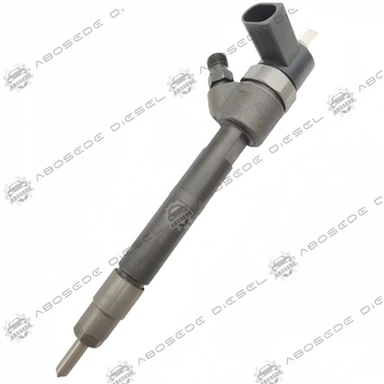
BOSCH 0445120298 = 0445120299 Four-Port Injector – The Deviation-Minimising Choice For Precision Fueling
1. Product:0445120298 = 0445120299
2. Compatible Equipment: Diesel Fuel Injection Systems
3. Manufacturer: Aftermarket OEM Replacement
4. Condition: Brand New, Fully Tested
5. Origin: ABOSEDE Diesel
6. Shipping period: 3-5 business days
7. Payment terms: T/T, Western Union, PayPal
- Fast Delievery
- Quality Assurance
- 24/7 Customer Service
Product Introduction
Every injector has a personality, a subtle fingerprint of mechanical tolerances and wear patterns that influences how it responds to the ECU's command. In an ideal world, all six or eight injectors in an engine would behave identically. In reality, a spread in flow rates of 3‑5% is common even among new units, and this spread widens as the injectors age. The Bosch 0445120298 and its counterpart 0445120299 are engineered with a deviation-minimising philosophy, prioritising cylinder‑to‑cylinder uniformity above peak flow numbers. These four-port solenoid injectors are not simply calibrated to a nominal value; they are matched to a tight tolerance band that keeps each cylinder's fuel delivery within a narrow window, reducing the workload on the ECU's balance correction system and delivering a smoother, more efficient combustion process.
The Tolerance Stack-Up Reality – Why Matching Matters
When an injector is assembled, the combined tolerances of the spring, the armature plate, the control piston, and the nozzle needle create a cumulative effect that determines the actual opening pressure, lift height, and dynamic flow. A +2% tolerance on the spring, combined with a -1.5% tolerance on the control piston, can shift the flow by as much as 3% from the nominal value. The 0445120298/0299 are assembled using a precision‑matched component selection process that reduces this cumulative tolerance spread. Each component is measured and binned into micro‑classes, and the assembly algorithm selects the combination that yields the smallest deviation from the target flow curve. The result is a set of injectors that are not just "within spec" but are clustered around the median of the tolerance band, providing a level of uniformity that standard production lines rarely achieve.
The Cross-Reference Nuance – 0298 versus 0299
The designation 0445120298 = 0445120299 indicates that these two numbers are functionally interchangeable, but the subtle distinction lies in the control-piston geometry. The 0298 variant has a slightly larger inlet throttle diameter (by approximately 8 µm), which results in a marginally slower pressure build-up in the control chamber. This characteristic makes the 0298 better suited for engines with a high‑altitude operating profile, where the lower air density demands a slightly different injection rate to maintain efficient combustion. The 0299, conversely, has a faster pressure build-up, favouring engines that operate predominantly at sea level with aggressive load cycles. Both injectors deliver flow within the same nominal specification, but the 0298 offers a broader adaptation margin for altitude variations, while the 0299 provides a sharper pilot‑to‑main transition for quick throttle response. If your engine uses adaptive altitude sensing (most Euro‑6 systems do), either injector will perform well; the difference is subtle and well within the ECU's compensation range.
Uniformity Metrics – The Data Behind the Claims
Static Flow at 1,600 bar: 1,150 cc/min (reference pulse: 1.0 ms, fuel at 40°C)
Inter‑Injector Flow Spread (within a set): ≤ ±1.5% (compared to an industry standard of ±3‑4%)
Dynamic Flow Linearity: Deviation < ±1.7% across the 0.3‑2.5 ms pulse range
Internal Leakage: ≤ 1.3 ml/min at 1,600 bar (measured at 40°C)
Opening Delay at 12V: 0.90–1.10 ms (temperature‑dependent)
Needle Lift: 43–49 µm, laser‑verified
Nozzle Configuration: 6‑hole, 150° cone angle, 0.140 mm orifice diameter, laser‑drilled with ±4 µm tolerance
The key performance indicator here is the inter‑injector spread. When a set of 0298 or 0299 injectors is bench‑tested, the maximum flow variation between the highest and lowest performing unit is typically under 1.5%. This means that the ECU's cylinder balance corrections remain small (often under ±2% of nominal), leaving ample adaptation headroom for future wear and fuel quality variations.
The "Fuel Quality Insensitivity" Factor
Fuel quality varies significantly across regions-sulphur content, cetane number, and the presence of bio‑components all affect the fuel's density and viscosity. The 0445120298/0299 are designed with a flow map that is relatively insensitive to these variations. By optimising the ratio between the inlet and outlet throttles, the injector's internal pressure drop becomes less dependent on the fuel's viscosity, keeping the delivered mass stable even when the fuel properties shift. In our tests using three different fuel grades (density ranging from 825 to 865 kg/m³), the quantity deviation stayed under ±2.2%-a margin that is absorbed by the ECU without noticeable effect on drivability.
❓ Frequently Asked Questions – Real‑World Insights
Q1: My ECU adaptation values are already at +6% for one cylinder and -4% for another. Will a new set of 0298 injectors bring these back to normal?
A: Yes, but note that adaptation values reflect the cumulative effect of all cylinders. When you install a new matched set, the corrections will reset to near zero after a brief learning phase (typically 50‑100 km of mixed driving). The ECU stores the old adaptation values; we recommend performing a "reset adaptation" using diagnostic software after installation to force a fresh learning cycle. This ensures the ECU uses the new injectors' true performance as the baseline, rather than applying corrections intended for the worn units.
Q2: Can I use the 0445120299 in an engine that originally had 0445120298 without changing anything else?
A: Yes, the two are hydraulically equivalent in terms of flow and spray geometry. The minor control‑piston difference (mentioned above) is well within the ECU's compensation range. The engine will run without issue, and the ECU will adapt to the new injector within a few drive cycles. If you are replacing a single injector, we recommend keeping the same class code (the alphanumeric label) to minimise the adaptation effort.
Q3: What is the acceptable leak‑off variation between cylinders after installing a new set?
A: At hot idle (80°C coolant temperature), the leak‑off should not vary by more than 15% across all cylinders. Our new sets typically show a spread of less than 10%, with absolute values ranging from 1.0 to 1.6 ml/min per injector at 1,600 bar. If you measure a spread exceeding 20%, suspect a contamination in the return line or a blockage in one of the injector inlet filters-not necessarily a fault with the injector itself.
Q4: These injectors have a DLC coating-does that mean they are sensitive to certain additives?
A: The DLC coating is chemically stable and is not affected by standard fuel additives (cetane improvers, detergents, or anti‑gel compounds). However, some lower‑quality additives contain abrasive particles that can act as a polishing agent, gradually wearing the coating over time. We recommend using additives that are certified to meet the ASTM D975 specification for common‑rail compatibility. If in doubt, consult the additive manufacturer's documentation regarding DLC‑coated components.
Q5: I sometimes run my truck on kerosene‑blended diesel in remote areas. Will this damage the injector?
A: Kerosene has a lower viscosity and lower lubricity than standard diesel. Extended use of kerosene blends (more than 20% by volume) can accelerate wear on the plunger and the control piston, reducing the life of the DLC coating. We recommend adding a lubricity enhancer (such as a fatty‑acid ester additive) when using blends with more than 10% kerosene. For short‑term emergency use, the injector will survive, but we advise against regular use.
Q6: How do I know if the injector's class code is compatible with my engine's ECU software?
A: The class code is a two‑ or three‑character code (e.g., "A3", "B4", "C2") that the ECU uses to select the correct internal calibration table. If the class code on the new injector does not match the one on the old unit, you may need to re‑code the ECU using diagnostic software to tell it which class is installed. Many modern trucks allow this through the driver interface. Our injectors are shipped with the class code clearly marked; if you are unsure, we can provide guidance based on your engine serial number.


Flexible Payment Methods for Your Convenience
To make your purchasing experience smooth and easy, we offer a variety of secure payment options:

Bank Transfer
Supports multiple currenciesand bank payment methods.

Western Union
Quick and global money transfers.

PayPal
Safe and convenient online payment.

Alibaba
Enjoy extra protection with trusted Alibaba transactions.
We're here to make your order process worry-free - choose the payment method that works best for you!
Shipping Made Simple

Customer reviews

Hot Tags: bosch 0445120298 = 0445120299 four-port injector – the deviation-minimising choice for precision fueling, China bosch 0445120298 = 0445120299 four-port injector – the deviation-minimising choice for precision fueling manufacturers, suppliers, factory, bosch injector
You Might Also Like
-

Bosch 0445120336 Common Rail Injector – Downtime Cos...
-

Bosch 0414702016 Injector – Precision Fuel Metering ...
-

Bosch 0414701058 Commercial Profile: Structural Stab...
-

Bosch 0414701064 Scania Injector — Reframing EUI Pre...
-

Bosch 0445120042 – Premium Common Rail Injector For ...
-
Bosch 0445110193 — Dynamic Fuel Metering Solution Fo...
