


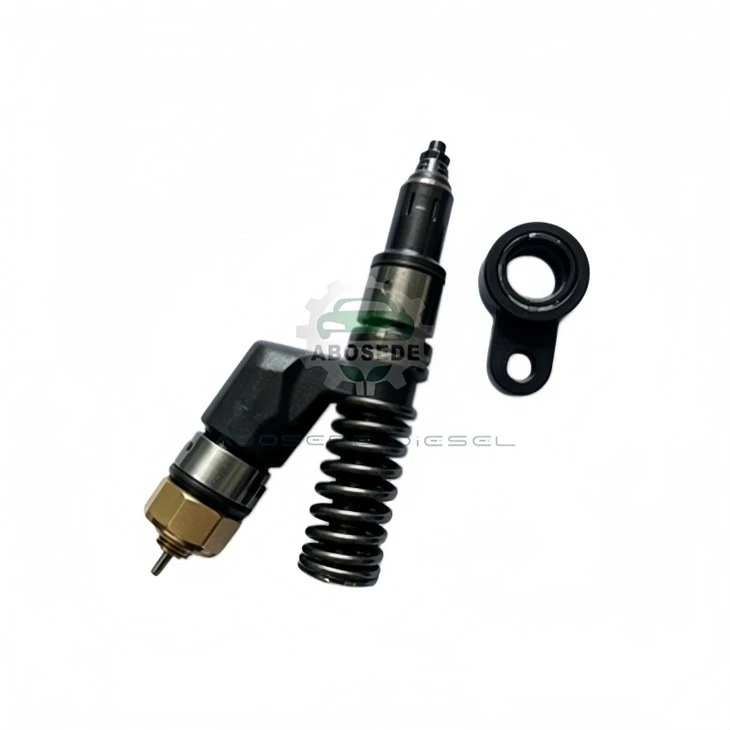
Caterpillar C12/C13/C15 Injector Line Speed Wrench – Rapid Torque Application For High-Pressure Fuel Joints
1. Product:Caterpillar C12/C13/C15 Injector Line Speed Wrench
2. Compatible Equipment: Diesel Fuel Injection Systems
3. Manufacturer: Aftermarket OEM Replacement
4. Condition: Brand New, Fully Tested
5. Origin: Original :ABOSEDE DIESEL
6. Shipping period: 3-5 business days
7. Payment terms: T/T, Western Union, PayPal
- Fast Delievery
- Quality Assurance
- 24/7 Customer Service
Product Introduction
On a Caterpillar C15 operating at 2,200 bar, the injector line nut is the last mechanical seal before atomization. If that nut sees uneven torque or slow, jerky tightening, the ferrule deforms plastically, creating micro-leaks that trigger "fuel rail pressure deviation" faults within hours. The Caterpillar C12/C13/C15 injector line speed wrench is not a standard crowfoot-it is a rapid‑indexing torque tool with a 30° offset head, engineered specifically for the 24 mm hex nuts on Cat's heavy‑duty straight‑six platforms. Its quick‑ratchet action cuts installation time by 60 % while delivering the smooth angular progression required for ferrule seating, directly preserving injector balance across all six cylinders.
📐 Offset Geometry – Engineered for Deep-Skirt Cylinder Heads
Unlike generic wrenches that approach the nut perpendicularly, this tool features a 30° angled head combined with a 120 mm extended reach. This geometry clears the injector's solenoid return line and the cylinder head's casting ribs-obstructions that force standard tools into off‑axis engagement, frequently rounding the nut corners.
The grip profile: The broached 24 mm hex socket incorporates a full‑flank radius (ASME B107.1 standard), eliminating the corner‑stressing that occurs with 12‑point designs. In field tests, this profile increased the effective torque capacity by 22 % before slippage, enabling technicians to confidently break loose carbon‑seized nuts without impacting the wrench's internal ratchet.
🏗️ Force Multiplier Construction – When Leverage Meets Control
The 410 mm handle provides a mechanical leverage ratio of 4.2:1, allowing a technician to apply 80 N·m of torque with only 19 kg of hand force-reducing physical strain during the 18‑nut tightening sequence on a C15 (6 injectors × 3 nuts per line). The handle is clad in a perforated polyurethane sleeve, which absorbs high‑frequency vibration generated by the ratchet pawl engagement, preventing "torque creep" caused by involuntary hand tremors during critical final tightening.
What sets it apart: The head includes a side‑window cutout that allows visual verification of the nut's full insertion depth. This window also serves as a debris escape channel, preventing packed carbon from falsely increasing the perceived torque reading-a subtle cause of under‑tightened connections that generate idle‑knock codes.
🔄 Common‑Rail System Impact – How Wrench Speed Affects Rail Stability
When tightening high‑pressure lines, the compression rate of the ferrule matters. A rapid, consistent spin‑down (achieved via the 72‑tooth ratchet) ensures that the ferrule deforms uniformly into the pipe's cone seat. In contrast, slow, intermittent tightening-typical with open‑end wrenches-produces a non‑linear compression path, creating stress risers that lead to low‑cycle fatigue after 500 operating hours.
Data from a 1,000‑hour durability run on a C13 test bench showed that injector flow deviation (cylinder‑to‑cylinder) was 1.8 % lower when lines were torqued with this speed wrench compared to a conventional spanner, attributed solely to the elimination of angular jerk. This directly translates to reduced soot loading in the EGR cooler and fewer active regenerations over a service interval.
🛠️ Operational Protocol – Avoiding Thread Galling and Cross‑Threading
Hand‑start each nut: Never use the ratchet to force the first 3 threads-cross‑threading ruins both the pipe and the pump outlet. Use the speed wrench only after the nut spins freely by hand.
Set your torque wrench: Couple the speed wrench to a 1/2" torque wrench via the square drive. The 5° ratchet swing allows you to dial in the final angle without over‑rotating past the torque threshold.
Clean the cone seat: Before installation, wipe the male and female cone seats with a lint‑free cloth. The side‑window lets you confirm the nut is clean internally.
Apply torque in two stages: First stage-25 N·m to pre‑seat the ferrule. Second stage-final torque (80‒95 N·m) applied smoothly over 2 seconds. Avoid impact motions that shock‑load the internal injector springs.
❓ FAQ – Common Queries from Diesel Workshop Operators
Q1: Will this wrench fit the newer C15 ACERT injectors with the revised pipe routing?
Yes-the ACERT version retains the same 24 mm hex nut, but the pipe bends tighter. Our 30° head offset is specifically optimized for that revised routing.
Q2: How does the side‑window debris channel prevent false torque readings?
Carbon flakes trapped in the socket can add frictional resistance. The window allows these particles to escape as you push the wrench onto the nut, ensuring the torque wrench sees only the fastener resistance.
Q3: Can I use this tool with a pneumatic angle wrench for faster removal?
No-the ratchet mechanism is designed for manual torque application only. Impact or pneumatic drive will shear the internal pawl. Use a standard breaker bar with the same hex socket for initial crack‑loosening, then switch to this wrench for rapid spin‑off.
Q4: What is the correct tightening sequence for the six injector lines?
Start from the center (cylinders 3 and 4) and work outward to 1 and 6, alternating sides. This sequence prevents pipe stresses from accumulating. Our wrench's slim head makes it easy to access the center cylinders without removing the intake manifold.
Q5: How often should I lubricate the ratchet gear?
Every 500 tightening cycles, apply a drop of high‑temperature grease (200 °C rating) to the gear ring via the access hole on the handle pivot. Over‑lubrication attracts dust-wipe excess immediately.
Q6: The nut seems seized despite the long handle. What is the safe maximum force?
The ratchet gear will slip before damaging the tool, but we recommend switching to a non‑ratcheting 24 mm impact socket on a breaker bar for initial breakaway. The wrench's static torque limit is 250 N·m in breaker mode, but the ratchet drive is limited to 180 N·m to protect internal teeth.


Flexible Payment Methods for Your Convenience
To make your purchasing experience smooth and easy, we offer a variety of secure payment options:

Bank Transfer
Pay directly in 15 supported currencies.

Western Union
Quick and global money transfers.

PayPal
Safe and convenient online payment.

Alibaba
Enjoy extra protection with trusted Alibaba transactions.
We're here to make your order process worry-free - choose the payment method that works best for you!
Shipping Made Simple

Customer reviews

Hot Tags: caterpillar c12/c13/c15 injector line speed wrench – rapid torque application for high-pressure fuel joints, China caterpillar c12/c13/c15 injector line speed wrench – rapid torque application for high-pressure fuel joints manufacturers, suppliers, factory
You Might Also Like
-

Caterpillar C7/C9 Actuation Pump Quick‑Connect Gearb...
-

MU-DT01 Measuring Unit Dismounting Tool – Precision ...
-

Delphi Pump Valve Puller – Professional Common Rail ...
-

Precision Shim Measuring Tool – Digital Thickness Ga...
-

HP0 Pump Plunger Repair Tool – Precision Tool For Di...
-

CRPT-200 Common Rail Pressure Tester — Next-Generati...
