


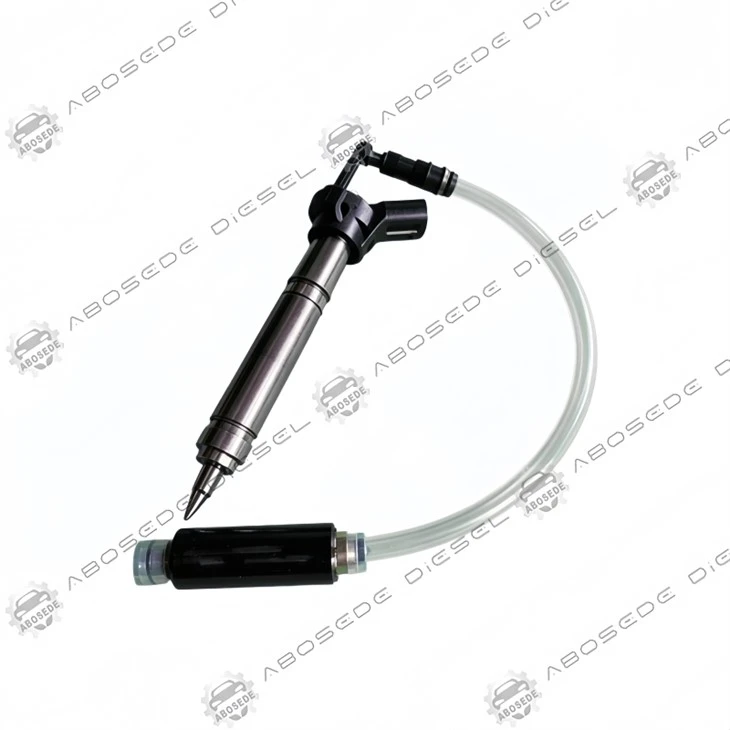

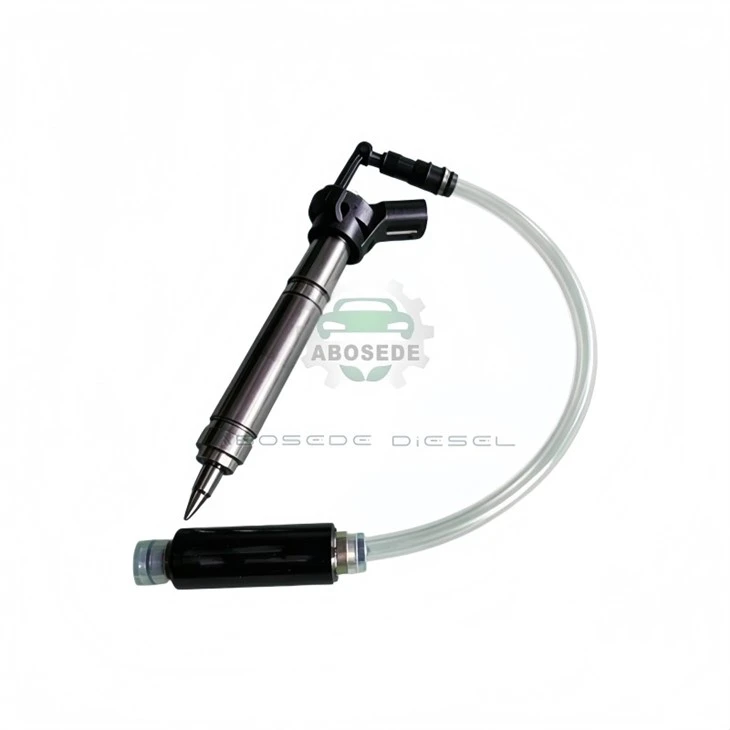
Bosch Piezo Injector Backpressure Valve — Dynamic Counter‑Pressure Simulation For Piezo‑Actuated Testing
1. Product:Bosch Piezo Injector Backpressure Valve
2. Compatible Equipment: Diesel Fuel Injection Systems
3. Manufacturer: Aftermarket OEM Replacement
4. Condition: Brand New, Fully Tested
5. Origin: Original :ABOSEDE DIESEL
6. Shipping period: 3-5 business days
7. Payment terms: T/T, Western Union, PayPal
- Fast Delievery
- Quality Assurance
- 24/7 Customer Service
Product Introduction
Bosch piezoelectric common rail injectors (CRI Piezo, CRIN Piezo) operate on a fundamentally different principle from their solenoid‑based counterparts: the piezo stack expands when electrically charged, acting directly on the nozzle needle via a hydraulic coupler. However, unlike solenoid injectors, piezo injectors have no dedicated return fuel connection for leakage flow-all internal leakage returns through the high‑pressure inlet line. This means that during bench testing, the injector's internal pressure balance is governed entirely by the inlet pressure and the backpressure at the nozzle outlet. Without a controlled backpressure, the piezo actuator's expansion is counteracted by an artificially low counter‑force, resulting in over‑lift and shortened opening delays that do not reflect in‑vehicle performance. This Bosch Piezo Injector Backpressure Valve introduces a precisely adjustable hydraulic resistance at the injector outlet, replicating the dynamic counter‑pressure present when the injector is installed in the cylinder head-a critical factor for accurate flow and response measurements.
⚙️ Pressure Regulation Principle - From Atmospheric to Realistic
The backpressure valve is a spring‑loaded, variable‑orifice restriction installed between the injector's nozzle outlet (or the injector's leak‑off line) and the atmospheric return. The valve maintains a set backpressure by modulating the orifice opening based on the flow rate through the injector. Its key characteristics:
| Parameter | Specification |
|---|---|
| Backpressure range | 0–30 bar (0–435 psi), continuously adjustable |
| Setting resolution | 0.5 bar (with fine‑adjustment screw) |
| Flow capacity | 0–200 L/h (diesel at 40°C) |
| Maximum inlet pressure | 2,500 bar (connected to injector high‑pressure side) |
| Hysteresis | < 0.3 bar (over full flow range) |
| Media compatibility | Diesel, test oil (ISO 4113), biodiesel blends up to B20 |
The valve's internal piston‑and‑spring mechanism is isolated from the high‑pressure fuel by a diaphragm, ensuring the setting remains stable even when the injector is pulsed at frequencies up to 250 Hz. The adjustment knob is calibrated with a colour‑coded scale: green (0–5 bar) for initial pilot injection testing, yellow (5–15 bar) for main injection simulation, and red (15–30 bar) for post‑injection and late‑delivery analysis.
🔩 Operational Integration - On the Test Bench
Connection - Install the backpressure valve between the injector's high‑pressure outlet (or leak‑off port) and the bench's fuel return. Use the appropriate adapter for the specific injector series.
Setting - Adjust the valve's knob to the recommended pressure for the injector type (refer to the colour‑coded scale). Fine‑tune by observing the pressure gauge on the valve's secondary port-turn the knob clockwise to increase, counter‑clockwise to decrease.
Verification - Run a pre‑test at idle conditions (3–5 pulses, low energy) to ensure the backpressure stabilises within ±0.5 bar of the set value. If the pressure fluctuates, check for air in the system or a clogged return line.
Full Testing - Proceed with the full injection test sequence (flow measurement, response timing, and pilot/main/post profiles). The valve maintains the set backpressure throughout the pulse train, even at frequencies up to 300 Hz.
Post‑Test - Release the backpressure (rotate the knob to fully open) before disconnecting the injector to prevent fuel spray from the open adapter.
The valve's spring‑loaded bypass opens automatically if the backpressure exceeds the set value by more than 5 bar-a safety feature that prevents over‑pressurising the injector's internal seals.
🧪 Diagnostic Capability - Detecting Leakage and Wear
Beyond providing the correct backpressure, the valve functions as a diagnostic tool in its own right:
Static leakage check - With the injector energised (but not pulsed), any sustained flow through the valve indicates internal leakage; the valve's flow meter (optional accessory) quantifies the leak rate.
Dynamic response verification - By observing the pressure ripple on the valve's gauge during injection, the technician can detect abnormal oscillations that point to worn actuator components or a sticking needle.
Seat‑seal integrity - A rapid drop in backpressure during the dwell period indicates the needle is not sealing correctly; the valve's check valve prevents reverse flow, isolating the injector from the return line, making this test possible.
These diagnostic functions transform the backpressure valve from a passive test‑bench accessory into an active diagnostic component, capable of identifying injector issues that would otherwise require a full strip‑down.
🛡️ Construction and Service Life
The valve body is machined from 17‑4PH stainless steel (H900 condition, 44 HRC), with a hard chrome‑plated internal bore for the piston. The spring is manufactured from music wire (ASTM A228) with a fatigue rating of 1×10⁸ cycles at full deflection. The adjustment mechanism uses a precision lead screw (0.5 mm pitch) with a detented knob that provides tactile and audible feedback for each 0.5 bar increment-eliminating the need to constantly monitor the gauge during adjustment. The valve is rated for 10,000 test cycles before the spring requires replacement; a spring kit is available as a consumable.
❓ FAQ
Q1: Why does a piezo injector require a different backpressure setting than a solenoid injector?
Piezo injectors have no dedicated return line-the internal leakage flows back through the inlet line, creating a closed hydraulic circuit. Without backpressure, the actuator expands against a minimal counter‑force, causing over‑lift. Solenoid injectors, by contrast, have a separate leak‑off port that maintains a lower, more stable backpressure.
Q2: Can I use the valve with a test bench that already has a built‑in backpressure regulator?
Yes, but the valve acts as a dedicated, high‑precision trim adjustment. If the bench's regulator provides coarse pressure (e.g., ±2 bar), the valve can be used in series to fine‑tune the setting to the exact 0.5‑bar resolution required for piezo testing. Set the bench regulator slightly higher than the target, and use the valve to finalise the pressure.
Q3: What happens if I set the backpressure too high (above 30 bar)?
The valve has an internal pressure relief that opens at 32 bar, venting the excess to the return line. Operating above 30 bar does not damage the valve, but it may cause the injector's needle to remain slightly open, affecting flow measurements. Always consult the reference table for the correct setting.
Q4: How do I clean the valve after extended use with dirty test oil?
The valve's piston assembly is removable (with a retaining ring tool, included in the kit). Disassemble, clean with a diesel‑based solvent, and inspect the sealing surfaces for scratches. Reassemble and recalibrate using the supplied pressure gauge-the procedure takes less than 10 minutes. A full service kit (O‑rings, piston seal, spring) is available.
Q5: Does the valve support fast, dynamic pressure changes during the injection event?
Yes. The valve's diaphragm‑isolated piston responds to flow changes within 5 ms, maintaining the set backpressure despite the rapid flow variation during the injection pulse. The pressure ripple observed on the gauge is typically < 0.5 bar peak‑to‑peak at 250 Hz.
Q6: Can I use this valve for both bench testing and on‑engine diagnostics?
The valve is designed for bench testing with the injector removed from the engine. On‑vehicle, the injector is already subjected to cylinder pressure (which acts as a backpressure). Attempting to insert the valve into the vehicle's fuel return system would alter the return flow and could affect engine operation-we do not recommend this application.


Flexible Payment Methods for Your Convenience
To make your purchasing experience smooth and easy, we offer a variety of secure payment options:

Bank Transfer
Pay directly in 15 supported currencies.

Western Union
Quick and global money transfers.

PayPal
Safe and convenient online payment.

Alibaba
Enjoy extra protection with trusted Alibaba transactions.
We're here to make your order process worry-free - choose the payment method that works best for you!
Shipping Made Simple

Customer reviews

Hot Tags: bosch piezo injector backpressure valve — dynamic counter‑pressure simulation for piezo‑actuated testing, China bosch piezo injector backpressure valve — dynamic counter‑pressure simulation for piezo‑actuated testing manufacturers, suppliers, factory
You Might Also Like
-

Precision Service Tooling For Caterpillar HEUI C7 & ...
-

Bosch 120 Injector Valve Puller – Precision Extracti...
-

HP0 Pump Plunger Repair Tools – Precision Service Ki...
-

H20 Injector Adaptor For CAT 320D – Common Rail Test...
-

Denso Common Rail Injector Comprehensive Overhaul Ki...
-

DFICT-08 / AB-CRINJ08 8-Piece Common Rail Injector S...
