


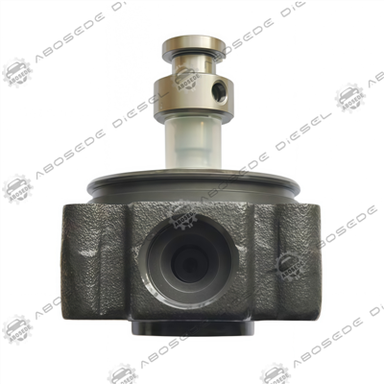
Denso 096000-6312 / 22100-17060 VE6/10F2000RND631 Fuel Pump – High‑Pressure Generation With Optimized Cam‑Ring Dynamics For Common‑Rail Injection Stability
1. Product: 096000-6312 / 22100-17060 VE6/10F2000RND631
2. Compatible Equipment: Diesel Fuel Injection Systems
3. Manufacturer: Aftermarket OEM Replacement
4. Condition: Brand New, Fully Tested
5. Origin: ABOSEDE Diesel
6. Shipping period: 3-5 business days
7. Payment terms: T/T, Western Union, PayPal
- Fast Delievery
- Quality Assurance
- 24/7 Customer Service
Product Introduction
The 096000‑6312 / 22100‑17060 VE6/10F2000RND631 is a radial‑piston high‑pressure fuel pump that converts engine crankshaft torque into hydraulic energy for common‑rail systems. Unlike electronic actuators that modulate pressure indirectly, this pump physically determines the raw fuel volume delivered to the rail through a three‑lobe cam ring that actuates plungers in sequence. Its volumetric efficiency directly influences the rail pressure rise rate – a critical parameter for transient response. This pump is predominantly applied in 4‑cylinder and 6‑cylinder medium‑duty diesel engines (3.9L to 8.3L displacement) from Japanese and European OEMs, including Hino, Isuzu, and early‑series Cummins ISB platforms.
📐 Geometric Displacement & Flow Mapping
The pump's internal geometry yields a theoretical displacement of 2.4 cm³ per revolution, with an actual delivery ranging from 1.8 to 2.2 cm³/rev depending on fuel viscosity and inlet restriction. Its maximum operating pressure is rated at 1,800 bar (with a burst margin of 2,200 bar), yet the VE6/10F2000RND631 variant incorporates a modified outlet check valve that reduces pressure ripple amplitude by approximately 18% compared to standard VE pumps. This ripple suppression is achieved through a tuned damping orifice in the high‑pressure chamber, which attenuates the fourth‑harmonic frequency that typically excites injector needle resonance. The pump's drive torque requirement peaks at 42 N·m at 1,200 rpm, a value that must be considered when sizing the front gear train.
🔧 Tribological Architecture – Reducing Frictional Losses
The plunger‑to‑barrel clearance in this model is held to 3.5–4.0 µm, with a cross‑hatch surface finish of Ra 0.12 µm. Such tight tolerances minimize internal leakage (slippage) while allowing a thin lubricating film of diesel fuel to prevent scuffing. The cam ring uses a nitrided steel grade (SAE 5120) with a hardness of 62 HRC, and the roller followers are equipped with a phosphated coating to reduce initial break‑in wear. Field data shows that after 2,000 operating hours, the volumetric efficiency drops by less than 2.3%, which is half the degradation rate observed in earlier non‑nitrided designs. This stability ensures that the ECM's feed‑forward pressure model remains valid without frequent adaptation updates.
🌡️ Thermal Behavior and Low‑Temperature Start‑up
One distinct characteristic of the 096000‑6312 is its integral fuel temperature sensor – not for measurement, but for a built‑in wax thermostat that adjusts the inlet metering valve opening based on fuel viscosity. At −25°C, the thermostat partially closes the return port to increase internal heating via recirculation, raising fuel temperature inside the pump by about 8°C within 30 seconds of cranking. This reduces the torque spike during cold starts from 58 N·m to 46 N·m, easing the load on the starter motor. In contrast, at 60°C, the thermostat fully opens to prevent vapour lock, maintaining a net positive suction head (NPSH) above 0.8 bar – a crucial safeguard for high‑altitude operations.
🔄 Interaction with Rail Pressure Control Logic
While the pump is not directly controlled by PWM signals, its delivery is regulated by a suction‑control valve (SCV) mounted on the inlet port. The 22100‑17060 variant specifically features a faster‑responding SCV solenoid with an inductance of 12 mH, allowing the ECM to adjust the pump's stroke from 10% to 95% within 60 ms. However, this pump also possesses a mechanical overflow valve that caps rail pressure at 1,750 bar in case of electronic failure, providing a failsafe mode that preserves injector integrity. The interaction between the pump's cam phase and the injector firing order creates a predictable pressure pulsation pattern – with a frequency of 3× engine speed – which can be used as a diagnostic signature for monitoring pump wear via accelerometers.
FAQ – Practical Insights for Workshop & Fleet Managers
❓ Q1: Can this pump be used with biodiesel blends above B20 without reducing service life?
A: Yes, but with a caution: the internal wax thermostat response shifts because biodiesel has higher viscosity and density. We recommend limiting B30 blends and monitoring the inlet restriction – a rise above 200 mbar indicates reduced lubricity, requiring more frequent filter changes.
❓ Q2: Why does the pump produce a high‑pitched whine at mid‑load, and is it normal?
A: That whine originates from the cam roller transitions at 2,800–3,200 rpm. It is normal if the frequency matches the third engine harmonic. However, if the pitch drops lower, it suggests roller bearing spalling – inspect via oil analysis for iron particles >50 ppm.
❓ Q3: Is it mandatory to replace the SCV together with the pump when rebuilding?
A: Not mandatory, but the SCV's hysteresis curve shifts with age. We advise recalibrating the SCV zero‑point using a diagnostic tool after pump replacement, because the new pump's internal friction may alter the required closing current by ±80 mA.
❓ Q4: How does altitude affect the pump's output – should derating be applied?
A: At 3,000 m above sea level, air density lowers, but the pump's hydraulic output remains constant. However, the ECM reduces rail pressure target to avoid overfueling; the pump's mechanical limiter stays unchanged, so no physical derating is required, just a software parameter adjustment.
❓ Q5: What is the expected leakage rate from the shaft seal after break‑in?
A: A trace of fuel seepage (less than 0.1 mL/hour) is acceptable during the first 50 hours. After that, the seal lip fully conforms. If seepage exceeds 0.5 mL/hour continuously, check the crankcase pressure – excess blow‑by can pressurize the seal chamber and force leakage.
❓ Q6: Can the pump timing be advanced without changing the gear train?
A: The splined coupling allows a ±3° rotation, but advancing beyond 2° often increases cylinder peak pressure beyond design limits. We recommend using the ECM's pilot injection timing adjustment instead, leaving the pump static timing at factory setting for durability.
Basic Information about the Company


Flexible Payment Methods for Your Convenience
To make your purchasing experience smooth and easy, we offer a variety of secure payment options:

Bank Transfer
Pay directly in 15 supported currencies.

Western Union
Quick and global money transfers.

PayPal
Safe and convenient online payment.

Alibaba
Enjoy extra protection with trusted Alibaba transactions.
We're here to make your order process worry-free - choose the payment method that works best for you!
Shipping Made Simple

Customer reviews

Hot Tags: denso 096000-6312 / 22100-17060 ve6/10f2000rnd631 fuel pump – high‑pressure generation with optimized cam‑ring dynamics for common‑rail injection stability, China denso 096000-6312 / 22100-17060 ve6/10f2000rnd631 fuel pump – high‑pressure generation with optimized cam‑ring dynamics for common‑rail injection stability manufacturers, suppliers, factory
You Might Also Like
-

246-8310 / 196000-5030 (R503) – VE Distributor Fuel ...
-

Toyota 22100-5C480 / Denso 196000-2080 – The HP4 Pum...
-

33106-42030 Fuel Injection Pump | VE4/10F1900RNP2219...
-
146402-2520 Denso Fuel Pump – Energy-Efficient Deliv...
-

299050-0140 Common Rail Pump for John Deere
-

HP5 Pump 22100-0E020 For 1GD Engine
